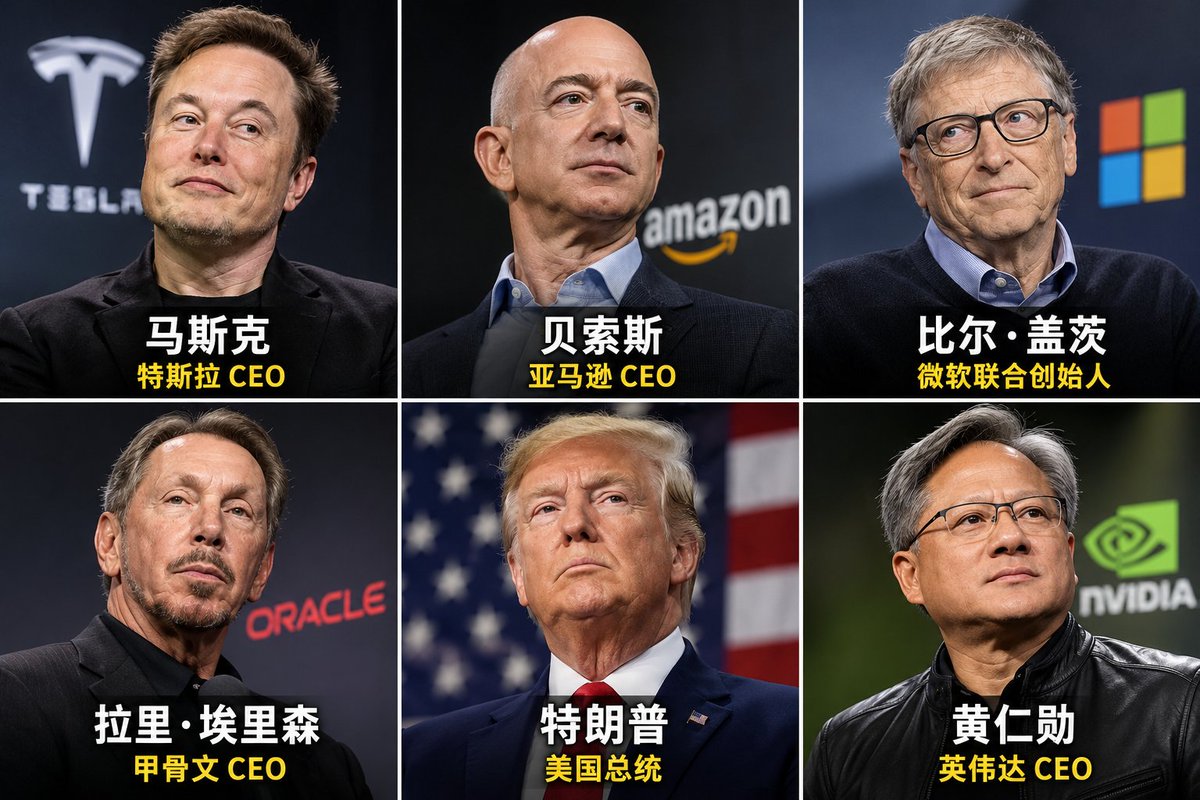
Mega Seven里,只有黄仁勋在任时的Nvidia,仍把芯片与数据中心供应链留在台湾,其余都力主回美国。
英伟达与台积电近30年合作,从未签过一份合同。
这在西方人眼里很难理解,但黄仁勋的见解是:
造芯片不是买现成商品,而是和代工厂一起摸索未知。工艺、良率、封装随时在变,任何想把一切写死的合同,都会越具体越脆弱。the more specific, the more brittle
所以黄仁勋选择rough justice:有时英伟达占便宜,有时台积电占便宜,几十年拉长看双方都赢。只要对方真心想让你成功,就比一堆法律条款更可靠。
张忠谋当年承诺“如果合作,我们会为你排除一切障碍”,台积电真的做了30年。这种说到做到的信用,本身就是最硬的保障。
西方人很难理解这套东方商业逻辑。它源自儒家伦理与华人关系文化,在复杂制造与长期合作中被反复验证。所以新上任的白人CEO能明白到这一层吗?
This is why Jews have so much power in the West, while Asians with much higher average IQs do not:
Jews don’t feel shame the same way Asians do.
A Jew will get caught raping children on an island and still come to work the next day expecting everyone to bow down to them.
Jensen had consensual relationships with women of legal age, immediately resigned, and started the self-flagellation.
There is no benefit to feeling shame if you live in a Western country. All it does is limit you.
There's this term that many business people in Taiwan live by
It's called 义气, which embodies several meanings - loyalty, friendship, brotherhood, self-sacrifice to help others in times of crisis
The reason why many Asian semi names are building fabs/plants in the US and supporting their AI roadmap is not due to pressure from the USG. It's mainly because of NVIDIA, specifically Jensen. His relationship with his suppliers and partners, particularly in Taiwan, is deeply rooted, unrivaled and irreplaceable
If he leaves NVIDIA due to political pressure, it shouldn't be surprising to see potential disruptions across the entire US AI/tech ecosystem that still relies a lot on Asian suppliers
Jensen Huang has been openly lobbying against a ban to Nvidia’s biggest customer - China.
China has already moved on from Nvidia.
In America, you can sleep with minors on Epstein Island and be fully protected by the US government. But is you are an American with a Chinese name and face and have an adulterous affair — watch out. The American WASP with actual seats at the table will take everything you built. Because they can. This is the American Way.
Jensen Huang’s affair is just a trigger. What we are witnessing is a pre-planned power grab over Nvidia’s trillion-dollar computing empire, coordinated by Wall Street and Washington.
Some sharp Chinese-American commentators call it America’s new Red Scare targeting elite Asian entrepreneurs.
Bill Gates, Elon Musk and other white tech billionaires have faced repeated scandals over personal conduct. None were dragged into national security probes or boardroom takeovers. Only Jensen Huang, after a personal relationship misstep, faces an independent board investigation and hostile narrative from intelligence circles.
The double standard could not be clearer: For white elites, personal flaws are private matters. For a Chinese-born leader controlling a strategic tech asset, any tiny blemish gets framed as a national security risk.
Nvidia is the backbone of global AI computing, valued at roughly $4 trillion. Unlike Meta, where Mark Zuckerberg locks control with dual-class super-voting shares, or Microsoft and Amazon, deeply integrated with the Pentagon and intelligence agencies, Nvidia has no such protective structure.
Public filings from 2026 show Jensen Huang holds only 3.58% of shares, and all directors plus executives together hold merely 3.94%. Vanguard and BlackRock own 9.32% and 7.43% respectively, holding decisive voting power. Without institutional shields or deep political backing, this critical tech giant sits exposed on the chessboard of great-power competition.
The groundwork for this takeover was laid months ago. Longtime board allies of Huang, Mark Perry and Michael McCaffrey, stepped down from key committees. Insiders tied to Democratic establishment, Wall Street and U.S. intelligence quietly moved in:
✅ Suzanne Nora Johnson, former Goldman Sachs vice chair and co-chair of Brookings Institution, joined Nvidia’s audit committee in July 2026 with direct oversight of internal investigations and compliance. ✅ Kenneth Jacobs, vice chair of Brookings and incoming Vanguard chair, controls the largest institutional voting bloc and operates within the same inner circle as Johnson.
✅ Gilman Louie,founding CEO of CIA-backed venture fund In-Q-Tel and member of the President’s Intelligence Advisory Board, works alongside Johnson on the same national tech fund, overseeing intelligence acquisition of strategic tech firms.
The media rollout followed a precise political timeline. Initial trial balloons appeared on Oct 29. On Nov 6, the very day Democrats secured full control of Congress, Julian Barnes of the New York Times (national security beat) and Demetri Sevastopulo of the Financial Times published coordinated reports, citing intelligence memos while breaking the story of the personal scandal.
The real offense was never the affair. It was the 2025 deal Jensen struck with the Trump administration: offering a 25% revenue share to win export approval for H200 chips into China. A normal commercial negotiation, reframed by incoming Democrats as a dangerous compromise on U.S. AI sovereignty.
This investigation will not crash Nvidia’s stock — Wall Street holds massive stakes here. But it will deliver three strategic wins for the U.S. establishment:
1. De-founder and de-Sinicize Nvidia: A new permanent national security compliance committee, led by Johnson’s faction, will strip Huang of authority over chip exports and overseas strategy. His dual Chairman-CEO role will be split.
2. Lock down China’s AI ceiling: Washington will seize full command of global advanced computing supply, regulating chip flows to slow China’s AI progress.
3. Retroactively target Trump: Once Democrats take over congressional oversight panels in January 2027, this case will be used to accuse the Trump White House of negligence for approving the H200 export deal.
Jensen Huang spent 27 years building this computing empire, believing in rules, technical merit and business contracts. But there is a brutal truth in America’s power game: Top-tier strategic technology and wealth without political cover are nothing more than bargaining chips waiting to be carved up.
White elites get generous room for error. Asian pioneers who climb to the very top get almost none. This is not a story about infidelity. It is a raw demonstration of racial hierarchy, capital control and partisan power politics in the United States.
黄仁勋已经做了小黄人在美国能做的所有正确的事情:非大陆出生,在美国长大接受美国教育,接受西方价值观,娶一个白皮老婆,不断的对美国政府表忠心,上缴15%利润分成,几千万的政治献金,Nvidia持股仅3.56%(对比Zuckerberg在META的14%,马斯克在特斯拉的13-20%,DELL的40%),结果还是被扣上了一个“勾搭中国间谍”的帽子,说明非白人族裔不管怎么做,白人都不会信任你。
白人不允许非白人族裔成为任何行业的领头人,更何况是关系着未来国际竞争的AI和芯片产业。在白人眼里,小黄人就应该老老实实开餐馆做装修开Uber和各种底层服务业,看到白皮老爷点头哈腰挤出一个笑脸加上一句Sir,和白皮老爷一起上桌吃饭平起平坐是万万不能的。白人billionaire可以上萝莉岛强奸未成年少年少女,但是你个小黄人胆敢有个中国情人就是勾结间谍,哪怕CIA拿不出任何证据,更不要说今天有多少人在走私Nvidia的芯片。
Alice Huang黄乐是不是间谍?美国情报机构从2024年就开始监视黄乐及其公司,调查了两年除了指控Megaspeed走私芯片到中国外拿不出任何实锤证据,现在通过第三方媒体扣个莫须有罪名,结论已经明显。更何况黄乐与黄仁勋多次高调出现,深怕别人不知道自己与老黄的关系,属于典型的商人行为用来证明自己有联系,靠山硬。西方最擅长的就是贼喊捉贼,先入为主在媒体上铺天盖地的搞抹黑,逼你进入自证环节。
老黄不是个例,前有币安CEO赵长鹏CZ被指控洗钱(有天龙人银行洗的1/1000么?),强行逼迫台积电把高端制程搬到美国,强行出售Tiktok,制裁打压华为中芯,再往前连MJ这种最具影响力的艺人都要给你弄黑弄臭,按个恋童癖的帽子再让你死的不明不白,白皮不能容忍自己不能完全掌握的东西。下一个被清洗的是谁?AMD的苏妈?
LES 100 ÉCOLES DE PENSÉE : LES 7 SAGES CHINOIS QUI GOUVERNENT ENCORE LE MONDE
On croit que la Chine d'aujourd'hui, c'est le communisme. C'est faux.
La Chine d'aujourd'hui, c'est 7 philosophes qui se disputent depuis 2500 ans dans la tête de chaque Chinois. Et sans le savoir, ils gouvernent aussi ton téléphone, ton business, ta façon de penser.
Il y a 2500 ans, en Chine, c'est le chaos. Les royaumes se font la guerre. C'est ce qu'on appelle les 100 Écoles de Pensée. C'est comme Athènes, mais en Chine.
Voici les 7 qui ont gagné :
1. CONFUCIUS - L'ORDRE PAR LA MORALE
Pour lui, le chaos vient du fait que chacun a oublié son rôle. Le père doit protéger, le fils doit respecter, le dirigeant doit être juste.
Sa phrase : "Quand le dirigeant est juste, le peuple le suit sans qu'on le lui ordonne."
C'est lui qui a créé la Chine du respect, de l'éducation, de la discipline. Singapour, Corée, Japon ont bâti leur miracle économique sur lui.
2. LAOZI - LE CONTRAIRE DE CONFUCIUS
Laozi dit : "C'est justement vos règles qui ont créé le chaos."
Il écrit un petit livre de 5000 mots, le Tao Te Ching, le livre le plus traduit au monde après la Bible.
Son idée : ne force pas. Sois comme l'eau. L'eau ne casse pas la pierre, elle la contourne et elle finit par la percer. C'est le Wu Wei, agir sans forcer.
Steve Jobs dormait avec ce livre sur sa table de nuit. Tout le "lâcher-prise", le "flow", la méditation, ça vient de lui.
3. ZHUANGZI - LA LIBERTÉ ABSOLUE
C'est le disciple fou de Laozi.
Il rêve qu'il est un papillon. Il se réveille et il se demande : "Est-ce que je suis Zhuangzi qui a rêvé qu'il était un papillon, ou est-ce que je suis un papillon qui rêve qu'il est Zhuangzi ?"
Pour lui, tout est relatif. Le bien, le mal, le grand, le petit, ça dépend de ton point de vue. La vraie sagesse, c'est de ne pas s'attacher à ses certitudes.
C'est le philosophe des artistes, des rebelles, de ceux qui refusent de servir un pouvoir corrompu.
4. SUN TZU - GAGNER SANS SE BATTRE
Tout le monde connaît L'Art de la Guerre. Personne ne l'a compris.
Ce n'est pas un livre pour faire la guerre. C'est un livre pour l'ÉVITER.
Sa phrase : "Le meilleur général est celui qui gagne sans jamais avoir à se battre."
Si tu dois te battre, c'est que tu as déjà perdu. Il faut gagner par l'information, la patience, la psychologie.
Aujourd'hui, il est enseigné dans toutes les écoles de business, dans l'armée américaine, dans la Silicon Valley. Quand un PDG dit "connais-toi, connais ton concurrent", c'est Sun Tzu.
5. MENCIUS - LE PEUPLE EST PLUS IMPORTANT QUE LE ROI
C'est le successeur de Confucius, mais beaucoup plus dangereux.
Il dit : "Le peuple est ce qu'il y a de plus important dans un pays. Après vient la terre. Le roi est le moins important."
Si le roi est un tyran, le peuple a le droit de le renverser. C'est la première théorie du droit de révolte, 2000 ans avant la Révolution française.
6. HAN FEIZI - LA LOI, PAS LA MORALE
L'anti-Confucius total.
Il dit : "Arrêtez de parler de vertu. Les hommes sont égoïstes. Ils ne respectent que deux choses : la récompense et la punition."
Il ne faut pas compter sur un bon roi. Il faut des lois claires, dures, pour tout le monde.
C'est lui qui a inspiré le premier empereur de Chine, celui qui a brûlé les livres de Confucius et unifié la Chine par la force.
7. MOZI - L'AMOUR UNIVERSEL
Le plus oublié, mais le plus moderne.
Il dit : "Pourquoi aimer d'abord sa famille, ensuite son village ? Il faut aimer tout le monde de la même façon."
Et arrêtez de gaspiller l'argent dans les cérémonies, les tombes de luxe, les guerres. Investissez dans ce qui aide le peuple : agriculture, machines, écoles.
ALORS, C'EST QUOI LA PHILOSOPHIE CHINOISE AU FOND ?
C'est une philosophie PRATIQUE. Pas abstraite.
La Chine d'aujourd'hui, c'est le mélange de tout ça. Confucéenne pour la famille, taoïste pour la patience, légiste pour le contrôle, Sun Tzu pour la guerre sans guerre.
Honestly, China's genetic history might actually be exceptional anywhere in the Old World in that it seems to be the only major civilization that didn't go through a massive population replacement in its ancient history. This was likely due to very early adoption of farming.
You certainly wouldn't know who Ngawang Choephel is. So Google his name.
He is a dear friend.
Yet, I do not subscribe to the Western Imperialism's version of China occupied Tibet. China liberated Tibet. If Tibet had remained a theocratic state under the Dalai Lama, this Tibetan girl would have remained a serf without education.
That apart, all of you assholes need to understand that the land we live on, our ancestors had been living on it for centuries before "India" even came into existence and had enriched it's soil, rivers, lakes, forests with their blood and sweat and had defended it with their lives.
From long before even the Indian Army existed as a merceneray force raised by the British East India Company.
Rember that, assholes.
This Reuters article on Tibet is insane: their argument is literally "yes, Tibetans are getting richer and work less, but have you considered how authentic and traditional their hardship used to be?".
It's basically Rousseau's "bon sauvage" all over again: condescension dressed up as compassion. Tibetans as noble exotics who thrive on hardship, a purer kind of human who somehow doesn't want what we want, which is all very moving as long as it's someone else living in a freezing yurt with no electricity or running water at 4,000 meters altitude.
If Trump launches a nuclear attack, this will end the world as we know it. Along with collapsing global markets. And putting the homeland at risk.
Trump will go down as the biggest mistake in American history.
Under pressure from Israeli prime minister Benjamin Netanyahu, the Trump administration may be within days of launching a nuclear strike on Iran. The target would be Pickax Mountain in central Iran, where Israeli intelligence claims the Iranian government has restarted its nuclear enrichment program. No conventional weapon in the American arsenal can penetrate 300 feet of solid granite to destroy the tunnels where enrichment is supposedly taking place. The only military option is a nuclear strike. Netanyahu has been pushing hard for one. “Bibi calls Trump about it every day,” says an informed observer.
Netanyahu is cornered and desperate. After last week’s election results, he can’t form a government unless Trump intervenes directly in Israeli politics and brokers a deal with other parties that gives Netanyahu 61 seats in the Knesset. Otherwise, he is out as prime minister and on his way to ignominy, investigations and possibly jail. Netanyahu must stay close to Trump. He needs this war.
To that end, he’s applied maximum pressure to his closest allies in the administration, including Secretary of Defense Pete Hegseth and CENTCOM commander Brad Cooper. Both oppose a negotiated settlement to the war they’ve so grievously mismanaged; both are pushing to restart major combat operations. Secretary of State Marco Rubio and CIA director John Ratcliffe are also following Netanyahu’s lead, as are leaders of the Democratic Party. In a recent meeting on the subject, former president Barack Obama said he opposes the current Iran peace deal being drafted in Doha.
The rest of America’s longtime allies in the Middle East are terrified by the prospect of more war. On September 27th, Netanyahu flew secretly to Abu Dhabi to enlist the UAE in his lobbying effort for a final attack on Iran. The Emiratis refused. After eight months of conflict, Gulf economies are teetering. So are global energy and fertilizer markets. They won’t recover soon. Globally, there are a total of about 850 supertankers used to transport oil from producers to the rest of the world. In October alone, 11 of them were badly damaged in Hormuz. At this pace, a global depression is imminent. A nuclear strike would radically accelerate the destruction. Fallout from a ground explosion at Pickax Mountain would contaminate the Persian Gulf, poisoning the water supply for 100 million people.
And those are just some of the immediate consequences for the region. The rest of the world is every bit as exposed. No country other than the United States has ever used a nuclear weapon in war. Some would like to. An American nuclear attack on Iran would set a new precedent. The Russians have already told at least two other governments that an American nuclear strike on Iran would free them to use nuclear weapons against Ukraine. Pakistan and India would be tempted to do the same against each other, as would North Korea against Seoul. After the first nuclear strike, World War Three is inevitable. That war would be short and final.
We’ve been sleepwalking toward this moment for months. Since February, the administration has quietly rewritten America’s nuclear doctrine to make first use of so-called “battlefield nukes” easier and therefore more likely. No one in Washington in either party seems bothered by this. Now we’re on the brink of it.
Close observers say Trump is likely to decide by next weekend whether or not to use nuclear weapons. That would be November 7, six days from now. To his credit, he’s hesitating. At the moment, Trump is listening to his vice president, JD Vance, and to his envoy and friend Steve Witkoff, both of whom argue a deal with Iran can be made.
They’re right, though it won’t be simple. The Iranians are famously frustrating to negotiate with under any circumstances, and elements of that government have become more radical since Ayatollah Ali Khamenei and his family were killed in February. After decades of isolation, even relatively moderate Iranian leaders seem confused by how decisions are made in the West. (There is a widespread belief in Tehran, for example, that the United States government controls Israel.) But overall, people who have spoken to decision-makers in Iran say there is consensus there that more war is bad for everyone and a deal is worth making.
One group that hasn’t been consulted so far is the global population — the hundreds of millions of people who will be killed along with their children if Trump is pushed by Netanyahu into launching a nuclear strike next week. Now would be the time for them to speak up.