"You don't ask the perpetrator of genocide."
In a searing interview with the BBC, paediatrician Dr Tanya Haj Hassan condemned the broadcaster for echoing Israeli government talking points as she recounted her harrowing experiences in Gaza.
Dr Haj Hassan, who recently returned from volunteering with Medical Aid for Palestinians, shared the devastating story of her colleague, Dr Alaa, a paediatric emergency doctor at Nasser Hospital.
While Dr Alaa was on call at the hospital, her home was bombed and nine of her children were killed, their bodies charred and dismembered beyond recognition. Her husband remains in critical condition.
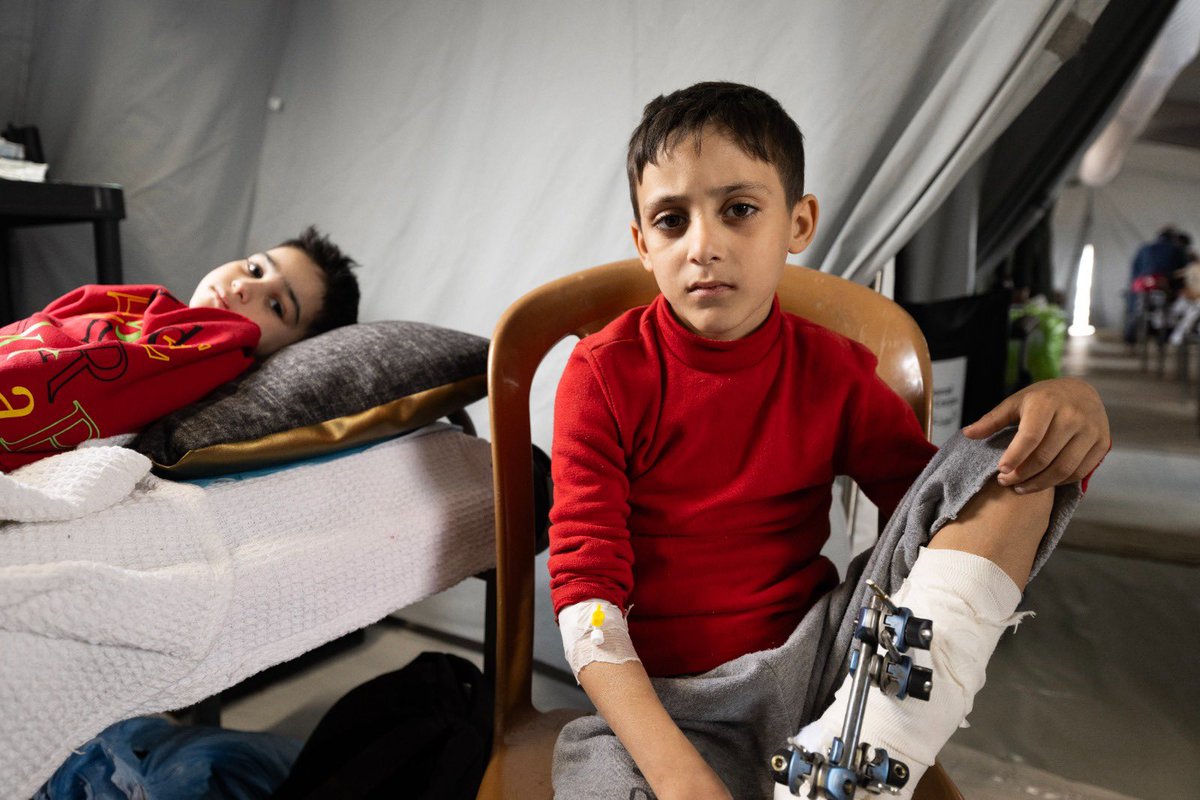
Dr Haj Hassan described a healthcare system in collapse: intensive care units overflowing with maimed, orphaned children – many the sole survivors of their families.
She also questioned why the BBC has delayed the release of 'Medics Under Fire', a documentary it commissioned about systematic attacks on Gaza’s healthcare workers, calling for its immediate release.
150.000 Menschen sind in Gaza entweder tot, verletzt oder vermisst, sagt der UN Hochkommissar für Menschenrechte.
Aber gerne weiter wegsehen, liebe österreichische Politik, man kann ja danach „fassungslos“ sein. https://t.co/nDZ0XqHjLn
When is enough enough?
A full 5 months of hellish conditions in #Gaza:
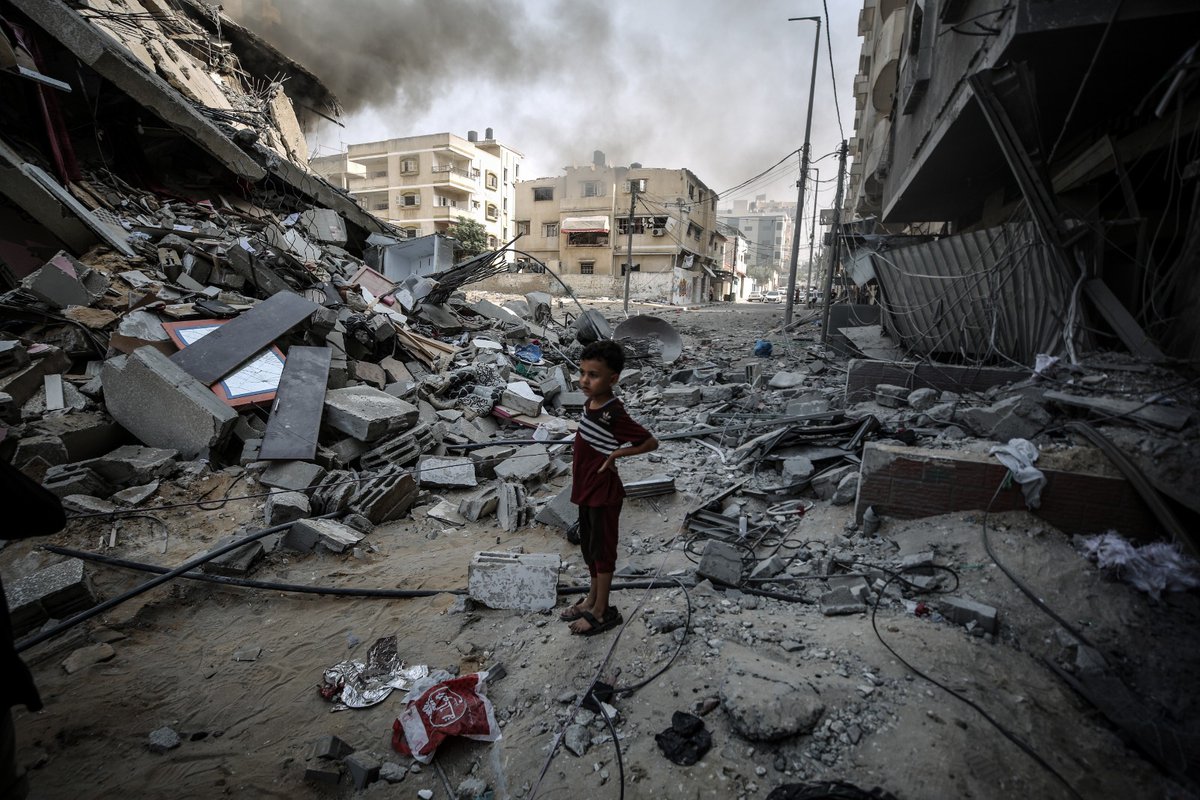
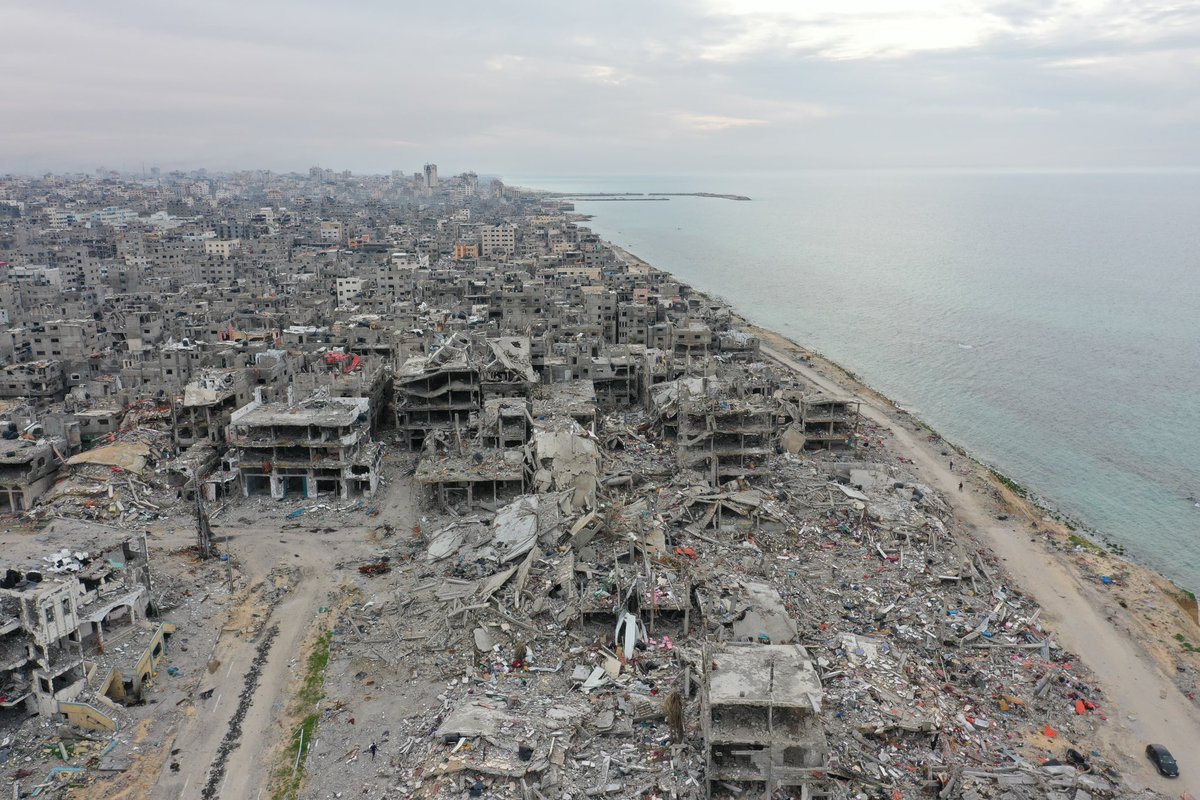
Almost 31,000 people have lost their lives, 72,000+ have been injured, thousands are missing
406 attacks on health care
118 health workers are in detention
1 in 3 hospitals is only partially or minimally functional
Disease outbreaks on the rise
Humanitarian access limited
Starvation
Constant bombing
Nowhere to flee
Ceasefire.
On March 7th, President Biden announced plans for the US military to build a temporary pier on the coast of Gaza in the Mediterranean Sea in order to help deliver humanitarian aid.
Today the US also issued a joint statement with the European Commission, the Republic of Cyprus, the United Arab Emirates, and the United Kingdom announcing the activation of a "maritime corridor" to support humanitarian assistance.
Our statement from @avrilbenoit:
""The US plan for a temporary pier in Gaza to increase the flow of humanitarian aid is a glaring distraction from the real problem: Israel’s indiscriminate and disproportionate military campaign and punishing siege.
The food, water, and medical supplies so desperately needed by people in Gaza are sitting just across the border. Israel needs to facilitate rather than block the flow of supplies.
This is not a logistics problem; it is a political problem.
Rather than look to the US military to build a work-around, the US should insist on immediate humanitarian access using the roads and entry points that already exist."
https://t.co/gVPgb2X9L6
“I have never… seen a place… so bombarded for such a long time with such a trapped population without any escape. People are traumatized beyond belief.” Jan @NRC_Egeland of @NRC_Norway is in Gaza for the first time since Oct 7. “I’m pretty shaken, actually, from what I saw.”
Destroying Gaza’s health care system is a war crime. The ICC should prosecute Israelis responsible for bombing hospitals, denying access to medicines and vaccines, and causing excessive civilian harm. https://t.co/V3yKsZ5xeG
“Healthcare staff in Gaza are holding the values of humanity in a time of great darkness.
Meanwhile, the people who have the power to stop this humanitarian catastrophe do not do so.
While they hesitate, doctors, nurses, Palestinians are being massacred...”
Today, Norway transfers $26 million to @UNRWA, the UN Agency that supports Palestinian refugees.
UNRWA is the backbone of humanitarian efforts in Gaza. Its services are critical for millions of people in extreme need. https://t.co/4dIcCaEEun
“Just as there is no escape from the airstrikes, it seems that there is also no escape from grief.” Watch @nadaabashir’s latest report on grief and death in Gaza.
"This was the third time a humanitarian convoy led by @UNRWA has been hit"
@JulietteTouma confirms to @AJEnglish that yesterday an @UNRWA led convoy was hit while carrying food to people in northern📍#Gaza - where there are the highest levels of starvation among the population.
WEST BANK ABOUT TO EXPLODE
While the massive death & destruction continues in Gaza, the West Bank is on the verge of explosion. Millions of Palestinians in the West Bank can not sit by idly while their brothers & sisters are being killing in Gaza. Israeli raids into Palestinian towns and cities are killing Palestinians almost everyday and tens are being arrested every night. Whole communities are under attack by violent settler who are protected by Israeli soldiers. Palestinian towns and cities are cut off and surrounded by Israeli blockades. There was no Christmas in Bethlehem this year. Al Aqsa has been basically off limits to Muslim prayers since the beginning of the war. Inside Israel's prisons, Palestinian prisoners are being tortured, starved, put in solitary confinement in the dark and no visits are allowed by families and sometimes even lawyers. This will explode - it is just a matter of time if there is no real change.
In this somber moment, it's hard to wish those celebrating “Merry Christmas”, with ongoing loss, grief & destruction
Our teams are doing the impossible to help people in need. We mourn the loss of more @UNRWA colleagues killed in #Gaza, now 142, the majority with their families
WHO delivers health supplies to Al-Shifa Hospital, appeals for continued access to address urgent needs in north #Gaza
WHO staff participated in a joint UN mission to Al-Shifa Hospital in north Gaza on 16 December to deliver health supplies and assess the situation in the facility. Partners on today’s mission included OCHA, UNDSS, and UNMAS. The team delivered medicines and surgical supplies, orthopedic surgery equipment, and anesthesia materials and drugs to the hospital.
Al-Shifa Hospital, currently minimally functional, needs to urgently resume at least basic operations to continue serving the thousands in need of lifesaving health care.Once the most important and largest referral hospital in Gaza, Al-Shifa now houses only a handful of doctors and a few nurses, together with 70 volunteers, working under what WHO staff described as “unbelievably challenging circumstances" and calling it a “hospital in need of resuscitation.” The operating theatres and other major services remain nonfunctional due to a lack of fuel, oxygen, specialized medical staff, and supplies.
The hospital is only able to provide basic trauma stabilization, has no blood for transfusion, and hardly any staff to care for the constant flow of patients. Dialysis is being provided to approximately 30 patients a day, with the dialysis machines operating 24 hours a day, seven days a week, using a small generator.The team described the emergency department as a “bloodbath”, with hundreds of injured patients inside and new patients arriving every minute.
Patients with trauma injuries were being sutured on the floor, and limited to no pain management is available at the hospital.
WHO staff said that the emergency department is so full that care must be exercised to not step on patients on the floor. Critical patients are being transferred to Al-Ahli Arab Hospital for surgeries.
Tens of thousands of displaced people are using the hospital building and grounds for shelter. A multi-pronged humanitarian response is needed to provide them with food, water and shelter. Many of them asked our team to tell the world what is happening in the hope that their suffering might soon be eased.
Al-Shifa Hospital continues to experience a severe shortage of food and safe water for health workers, patients, and displaced people. This reflects grave and growing concerns around persistent hunger across the Gaza Strip, and the consequences of malnutrition on people’s health and susceptibility to infectious diseases.
WHO is committed to strengthening Al-Shifa Hospital in the coming weeks, so that it can resume at least basic functionality and continue to provide the lifesaving services that are needed at this critical time. Up to 20 operating theatres in the hospital, as well as post-operative care services, can be activated if provided with regular supplies of fuel, oxygen, medicines, food, and water. Substantial additional specialized medical, nursing and support staff, including emergency medical teams, are also urgently needed.Currently, Al-Ahli Arab Hospital remains the only partially functional hospital in north Gaza, along with three minimally functional hospitals—Al-Shifa, Al Awda and Al Sahaba Medical Complex—down from 24 before the conflict.
WHO is also gravely concerned about the unfolding situation at Kamal Adwan Hospital and is gathering information urgently.
As hostilities continue and health needs across the Gaza Strip increase, Al-Shifa Hospital, a cornerstone of Gaza’s health system, must be urgently restored so that it can serve besieged people trapped in a cycle of death, destruction, hunger, and disease.