Domains are not inherently verifiable or unverifiable. Anything humans can learn is verifiable. We're just seeing a dichotomy between domains that came with readily-available or trivial verifiers (math, code, etc) and domains that will require dedicated effort to simulate.
when you experience a language model doing a task that used to require you at every step and now doesn't, it's a gigantic agency rupture.
we tend to equate ourselves with our tasks, our outputs, and a rupture of this kind is akin to the loss of your identity and sense of self.
you are no longer required, and you had no say in the matter. it's a kind of death.
however, agency ruptures with AI seem to follow a predictable pattern:
- Initial agency rupture. Here you see the AI doing what you used to do, and you see only the AI. In your perception of reality the AI is highlighted, and the human work around getting the AI to do the thing, is invisible. you can see this in the way we use language: "AI solved XYZ Erdos Problem" is another way to say we're in the initial rupture phase.
- Seeing human scaffolding. After a little bit of experience with the model and its new capibility—programming, writing, math, etc—we start to see the edges of what's possible with the model. Here, instead of just seeing the AI doing the task, we start to see the scaffolding required by you and other humans on either end to make sure the model does its work. At this stage, the scaffolding can feel like a secondary part of the work, but it is work nonetheless. We begin to say things like, "The AI is prompting me", or "My job is just to babysit Claude."
- Agency reconstruction. After a long enough time with the model at its current level of capability, we start to reconstruct a new sense of agency that centers our own role in the work being done, and makes the model's contribution mostly invisible. It is now a tool, it fast-forwards you through the boring or repetitive parts of the work, and what used to seem like scaffolding now seems like the actual work itself—the interesting part. You've had enough experience with the scaffolding to see its nuances, and how hard it is to get the model to reliably output high quality work. (As part of this, your conception of what quality work is changes—the floor is raised, and so is the ceiling.)
You can tell you're at this point because you stop saying "The AI did this" and just say, "I did this" and the fact that you used AI is implied. For example, it would be weird for me to talk to someone @every and ask them if the AI built the most recent feature of a product. Of course it did! But we're so used to the capability that it becomes invisible, and we re-center ourselves and our own conception of agency.
My theory is that the ability to metabolize agency ruptures and turn them into playfulness, and curiosity is a good leading indicator for whether you're a person who likes and excels in the new AI economy or not.
Each time capabilities jump, you get new ruptures for existing fields touched by AI. And you get new ruptures for naive populations (like mathemeticians) who until recently hadn't been affected.
if you know what the cycle looks like, it makes it much easier to ride it without freaking out. i think most people @every are naturally good at this
won’t claim to be a proficient artist or technician when it comes to 3D, but I know that a large part of that industry’s labor is spent fixing weird technical artifacts blocking easily articulated end results. (from personal experience over the last 2 weeks, Codex has murdered this barrier to entry)
@gracecthdralprk Yeah I think alot of genuinely-intelligent young people psych themselves out because they're "merely" emulating the adult work of the leaders in their field. Like if you're in high school you should be proud if you can credibly rip off an artist that you admire.
AI is going to make massive progress in pure math, accomplishing decades of human work in the next 2-3 years, and nobody will care because progress in pure math is completely useless
My fundamental belief is that consciousness, no matter how small a flicker, can grow to fill any space provided to it. Like, with the right technology, a mouse could be guided into the sentience of an omniscient god
transhumanism is an interesting side quest but 'the substrate is wrong' for the human/computer hybrid to be competitive with machine intelligence on feats of intellect. you have this low tech meat brain in the middle of all this lightspeed machinery, doing what exactly?
I think if we keep chasing nostalgia we'll never find the spark that led to eras/aesthetics like this in the first place. Creatives need to be experimenting again.
To anyone in the XR space please!! If anyone has spare Ultraleap Stereo IR 170 units, I need three to continue my project and do not know what to do now they are discontinued. I am willing to pay the original price
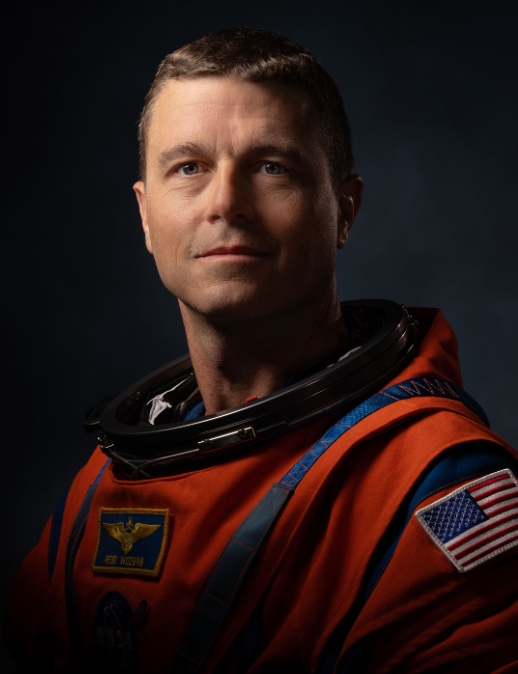
WSJ had a quote from Artemis II’s commander, a widower who admits to “worry about his daughters. ‘I could have a very comfortable life for them. But I’m also a human, and I see the spirit in their eyes that is burning in my soul too. And so we’ve just got to never stop going.’”