Jane Street pays $650,000 a year for quants. MIT wrote the exact bible to get there & released it for free.
51 pages. Zero to quant. Probability, stats, market making, real interview questions from Jane Street, Citadel, Two Sigma & more. Bookmark, before someone takes it down.
Every conversation I have with @dylan522p, I'm really just trying to understand the supply and demand of tokens.
This is a unique episode in that it's entirely dedicated to talking about both sides of that equation.
We discuss:
- The infinite demand for the newest models
- @SemiAnalysis_ going from $10K on AI spend to $7M
- Mythos and Anthropic's compute problem
- Why TSMC spending $100B on CapEx could cause a shortage
- Robotics as next demand wave
- Why memory prices will double again
This is my second conversation with Dylan and find myself needing to speak with him more and more often to make sense of it all.
Enjoy!
Timestamps:
0:00 Intro
1:00 Surging AI Spend
10:27 Token Demand
16:21 When Ideas Are Cheap and Execution is Easy
20:46 Model Hoarding
22:34 Robotics
27:03 The Compute Bottleneck
30:26 The AI Permanent Underclass
31:39 Supply Chain Reality
37:47 CPUs
42:54 Predictions: Public Backlash
Hedge funds have always hired for modeling skills. That might be about to change:
Brett Caughran (@FundamentEdge) explains:
"Hedge funds have classically hired former investment bankers, PE investors, and sell-side analysts — because cranking a model from scratch was table stakes."
"I think that could shift. The new value of a junior analyst could be outthinking the market — creativity, imagination in tools, tenacity in going after key drivers, fluency in using these tools."
"The quantitative bar to be an investor at a large asset manager has gone down."
"The question becomes: can you understand consensus, understand why consensus is wrong, and build conviction around that?"
"Hedge funds will hire 10 investors and they can all build the models — but maybe three or four can build that variant perception engine, that expectations gap muscle."
"That learning curve used to take 3, 4, 5 years. Now it may be one, two, or three."
The senior analyst at a Tiger Cub who trained me on financial modeling back in '08 (shoutout Chris Laporte) walked me through the importance of deeply detailed cash flow builds. So much of the world is focused on EPS (certainly the sell-side), that you can generate a lot of insights on business performance by focusing closely on the cash flow statement.
Everyone agrees that Free Cash Flow is the purest driver of net present value, but modeling FCF is a very messy exercise whereas EPS has the benefit of accounting treatment that will smooth out the FCF lumpiness. Thus, much of the world defaults to EPS.
Great analysts spend a lot of time to see through the FCF messiness to uncover true cash flow generation capabilities. How much is operating cash flow impacted by working capital changes? How much of OCF is "fake" SBC add-backs that show up in dilution? How much of net income is actually recurring cash charges that are added back to Adj Net Income to flatter headline numbers? How much of FCF is actually distributable via dividend or buybacks?
To build all of these analyses into your financial model, there is no shortcut to having 10+ years of historical, quarterly cash flow statements. And this is a super annoying exercise to build, since companies report "cumulative" cash flows in Q2 and Q3, so it requires layering in the 9m cumulative cash flow, then subtracting Q1 and Q2, copying formulas as values. Ugg. I've never found a shortcut to doing this.
And while I completely agree that there are elements of financial modeling that help me learn the business, updating 5 years of cash flow statements isn't one of them.
I tried this exercise in 5 AI Excel co-pilots. Most failed on this exercise, but I was able to get Scout by Daloopa (not sponsored though do have free access) to do this reliably, with click through visibility.
While AI Excel still cannot one-shot a complicated model like my DHR model (not even close), AI Excel can do simple things like update my 5-year outdated BS & CF that save immense time and brain damage. I'll call that a big win.
(Will walk through this step by step on my AI Excel seminar April 30th).
A few thoughts about PayPal, nearly 12 years after I left.
I woke up this morning to dozens of messages from former PayPal colleagues. It pushed me to finally speak up.
I never spoke publicly about the company after I left. Part of that was loyalty to John Donahoe, who gave me an unlikely opportunity, handing the reins of PayPal to a startup guy who, on paper, had no business running a then 15,000-person organization. But part of it was something else: I had left. I chose not to stay and fight for the changes I believed in. Speaking from the sidelines felt like armchair commentary. Easy opinions without the burden of execution. So I stayed quiet.
But twelve years of silence is long enough. And today's news makes it clear the pattern I've watched unfold isn't self-correcting.
I left PayPal in 2014 because I was deeply frustrated. We had executed a silent turnaround of a company that had lost its soul. We brought back engineering talent, shipped good products quickly, and acquired Braintree and Venmo. The company was on a tear. So much so that Carl Icahn felt compelled to accumulate a position in eBay and push for a PayPal spinoff. At the time, eBay decided to fight Icahn.
It was a difficult period for me, caught between what I felt was right for PayPal and my loyalty to the eBay team.
This is when Mark Zuckerberg approached me to join Facebook. The combination of his conviction that messaging would become foundational, the appeal of going back to building products at scale, and my growing exhaustion with the internal politics at PayPal and eBay eventually convinced me to leave and join one of the best teams in the world, one I had admired for a long time.
In the summer of 2014, I met John in a café in Portola Valley and told him I had decided to leave. During that conversation, he told me that Icahn had effectively won the fight, that PayPal was going to become an independent company, and he tried to convince me to stay on as CEO, but I had already said yes to Mark, and my word is my bond. There was no turning back.
After my departure, the board scrambled to find a replacement, and it took a few months for them to land on Dan Schulman. The leadership style shifted from product-led to financially-led. Over time, product conviction gave way to financial optimization.
Much of the momentum we had created still persisted and carried the company forward, mainly driven by Bill Ready, who came over in the Braintree acquisition and rose to COO. Under his leadership, Venmo grew exponentially, and total payment volume (TPV) accelerated quickly. But the shift under Schulman became more pronounced after Bill's departure at the end of 2019. With him went the product conviction that had defined the post-spinoff momentum. Then, for a period, COVID-fueled online shopping hid a lot of the company's new weaknesses.
During that period, the company made a fundamental miscalculation: it optimized for payment volume instead of margin and differentiation. It leaned into unbranded checkout, where PayPal had the least leverage, instead of branded checkout, where the margin, data, and customer relationship actually lived.
Visa masterfully structured a deal that effectively ended PayPal's ability to steer customers toward bank-funded transactions, which had been a core driver of PayPal's economics. Not long after, PayPal lost a significant portion of eBay's volume. Over time, it saw its share of checkout among its most profitable customers steadily erode as Apple Pay and others continued to execute well.
The same pattern repeated itself across lending, buy-now-pay-later (BNPL), and new rails.
On lending, PayPal missed the opportunity to turn it into a platform weapon. Products like Working Capital were conservative, short-duration, and optimized for loss minimization. Lending never became programmable, never became identity-driven, and never became a reason for merchants or consumers to choose PayPal over something else.
The missed opportunity in BNPL was even more striking. Klarna, Affirm, and Afterpay didn't just offer installment payments, they built consumer finance brands, persistent credit identities, and new shopping behaviors. PayPal saw the BNPL turn, entered the market, and had every advantage: distribution, trust, and merchant relationships. But BNPL was treated as a defensive checkout feature rather than an offensive category. There was no attempt to turn it into a core consumer relationship, no super-app behavior, and no meaningful differentiation for merchants. Others built platforms, PayPal added a feature.
The failure to lean into building and owning new rails followed the same logic. After the spinoff, PayPal had a once-in-a-generation opportunity to build a global, at scale payment network. Instead, the company focused on building on top of existing networks and third-party rails.
More recently, that mindset carried over to PYUSD. Technically, the product was sound. Strategically, it launched without a compelling transactional reason to exist. PYUSD had distribution, but no organic demand. It was not embedded deeply enough into flows to become a true settlement layer, a cross-border merchant rail, or a programmable money primitive. It sat adjacent to the product instead of inside the core of it.
Acquisitions during this period followed a similar pattern. Honey was not a strategic acquisition for PayPal. It added activity, but not leverage. It lived outside the transaction, monetized affiliate economics rather than payment economics, and never meaningfully strengthened PayPal's control of the customer or the checkout moment. Xoom solved a real problem in remittances, but it never compounded PayPal's advantage. It scaled volume without changing the underlying rails, identity graph, or settlement model, and as importantly, it didn’t cater to a high-value, high-margin customer archetype.
None of these were bad companies. They were just a wrong fit for PayPal and became unnecessary distractions.
The board eventually recognized the problem. In 2023, they brought in Alex Chriss, an Intuit veteran with a strong product background, explicitly to restore product conviction. It was the right instinct.
But Alex came from software, not payments. He understood SMB product development. He didn't have the muscle memory for transaction economics, network effects, or settlement infrastructure.
In hindsight, he also made an error: clearing out much of the leadership team that understood payments deeply. Executives with years of institutional knowledge departed within his first year.
This morning, Alex was removed as CEO. Branded checkout grew 1% last quarter. The board tapped another operator, Enrique Lores, the former HP CEO who's been on the PayPal board for five years.
I don’t know Enrique. And he might be a great leader, but on paper at least, he’s a hardware executive. For a payments company.
The common thread through all of this is incentive design. Once PayPal became independent, short/medium-term predictability beat long-term vision and ambition. Stock performance mattered more than platform risk and network opportunity. Financial optimization replaced product conviction.
I'm not claiming I would have made every call differently. Running a public company at scale involves tradeoffs I didn't have to make after I left. But the pattern, choosing predictability over platform risk, again and again, was a choice, not an inevitability.
Over time, the company that had every advantage and could’ve become the most consequential and relevant payments company of our time, lost its mojo, its product edge, and its ability to compete in a market that’s being rewired and reinvented in front of our eyes.
That's the part that's hardest to watch for a company I care so deeply about.
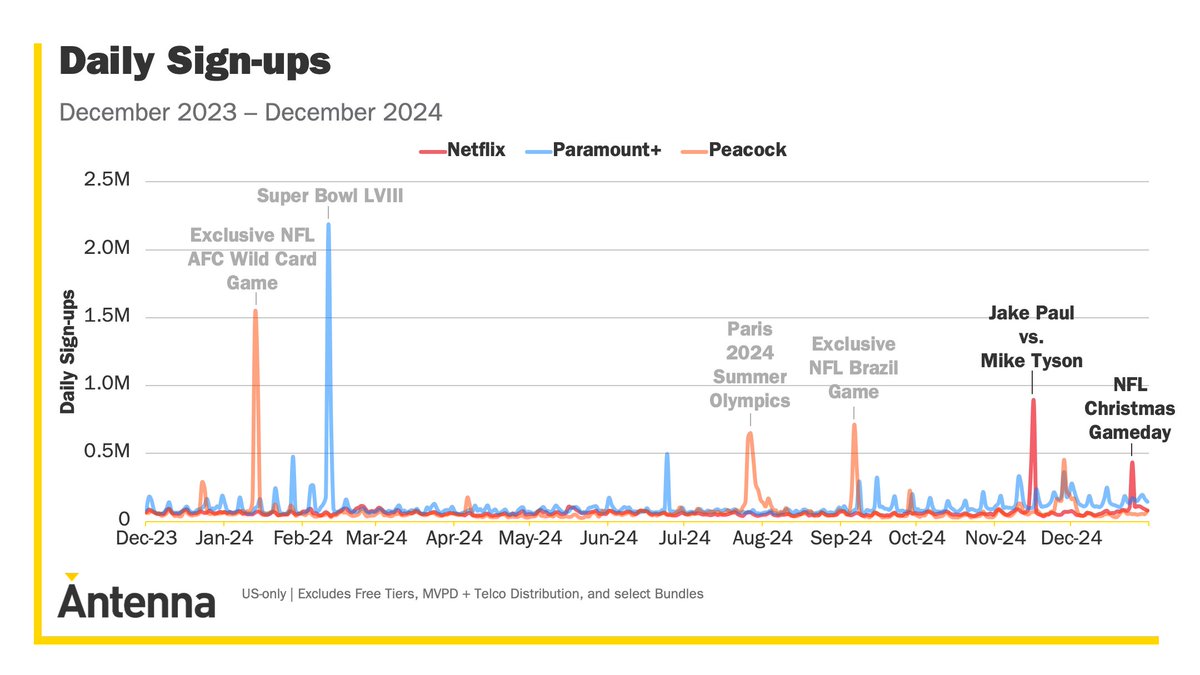
Antenna observed 656k signups to Netflix in the 3-day window (Dec 24-26) for NFL Christmas Gameday. While not as big as the Paul/Tyson fight, it's a notable spike. Netflix has consistently been w/in 50-70k signups per day for the entire 1.5 years since the password crackdown.
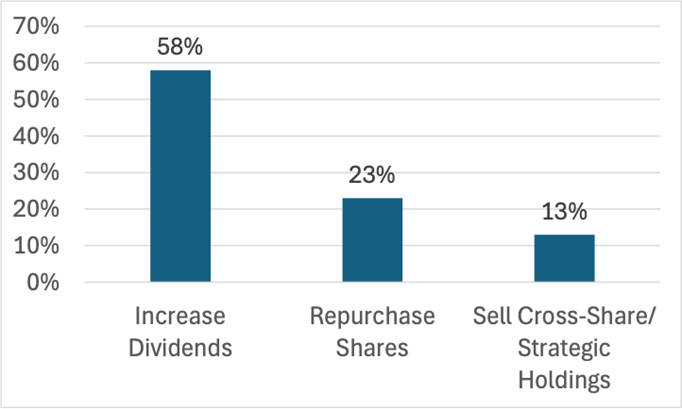
The Tokyo Stock Exchange issued a directive asking all companies with price-to-book ratios below 1x to issue a plan to get to 1x book. We did a systematic review of every plan issued by 3,247 firms to assess the impact of these reforms.
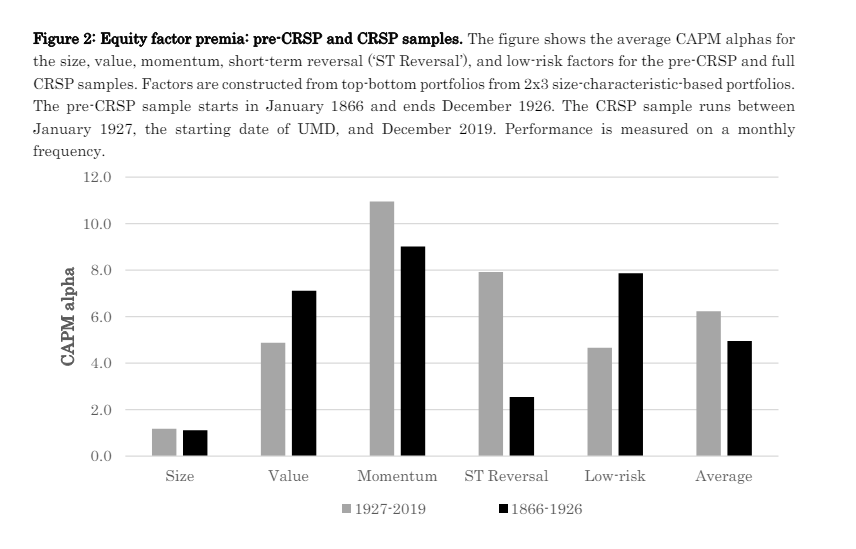
The ultimate "Out of sample factors" paper via our friends from @Robeco @paradoxinvestor is an excellent confidence builder (maybe even a "confirmation bias" builder🤣) .
The bottom line:
--focus on value
--focus on momentum
--focus on low-risk/quality
--size doesn't really matter (as @jvogs02, AQR, and Robeco have shown!)