Between 1985--2023, MIT's faculty grew 9%. Administrative staff grew 189%. 📈 Why? In new @PNASNews paper, we use dynamical system model to show administrative bloat can emerge without empire-building--just from well-intentioned problem-solving gone awry https://t.co/MZgGkxilZ2
Retatrutide, a triple receptor drug for GLP-1, GIP, and glucagon, is the most powerful weight loss drug yet. A significant issue is too much weight loss among the trial participants. New randomized trial results announced today with 28% body weight loss.
gift link https://t.co/82tRkOvQ49
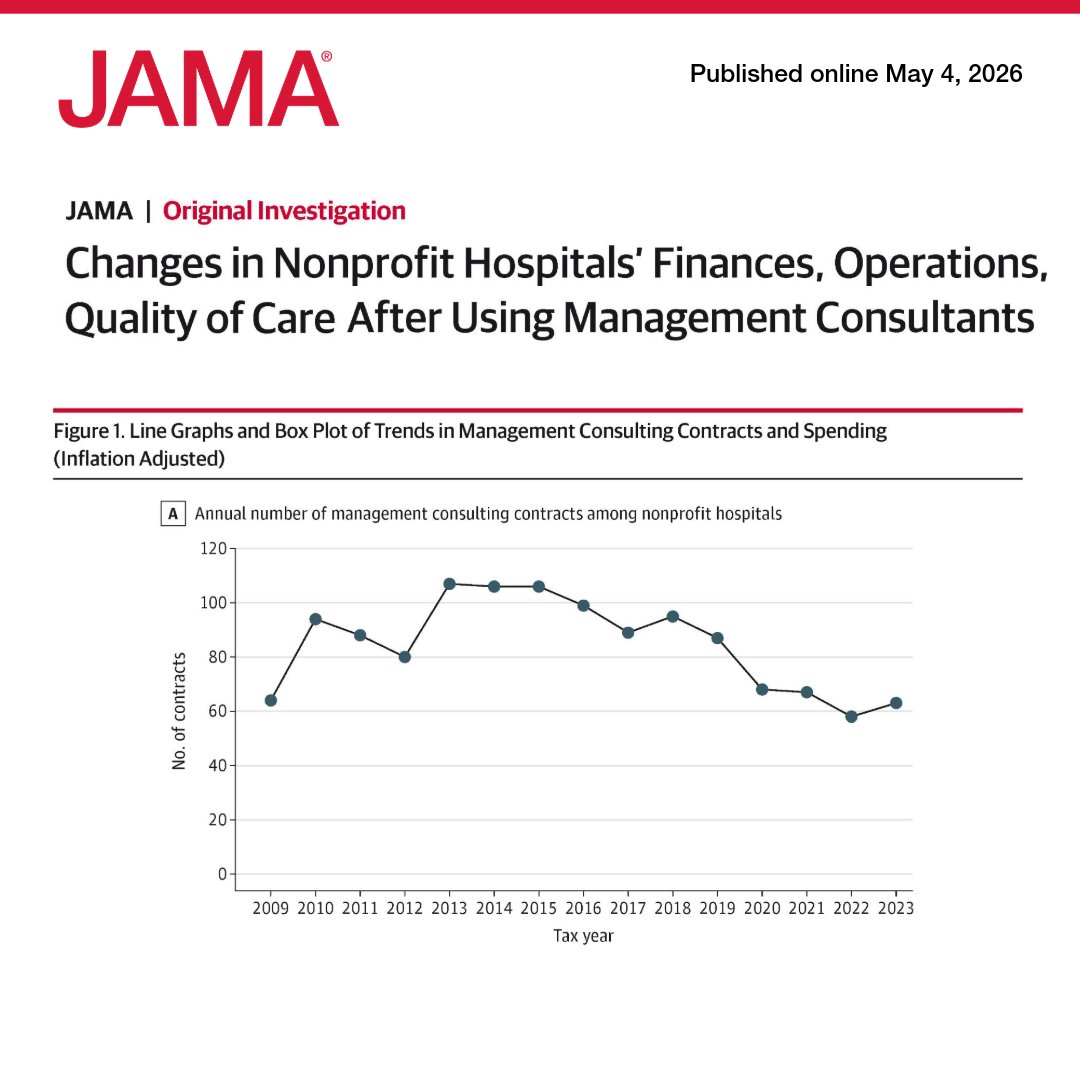
US nonprofit hospitals spent $7.8 billion on management consultants from 2009 to 2023, but contracts were not associated with meaningful changes in finance, operations, or quality of care. 🧵
https://t.co/QQswMYxrG8
Another huge medical achievement from our very own @UHN 🇨🇦🔥
A Toronto man lived with HIV for 27 years. Then he got leukemia and that diagnosis may have just cured him of both.
His doctors found a bone marrow donor carrying CCR5-Δ32, a rare mutation in ~1% of people of European descent. HIV hijacks immune cells through the CCR5 receptor. If you don't have it, the virus has no door.
The transplant replaced his entire immune system with one HIV can't infect.
He stopped antiretroviral therapy in July 2025. As of today, HIV is undetectable by the most sensitive assays available. No viral reservoir. No immune response to HIV. Nine months clean.
He would be the 11th person in history to possibly be cured of HIV.
HIV cure is possible. We just proved it again at @UHN
Proud of the team at @UHN and @UofT !
Source: https://t.co/zH1fIfVubV
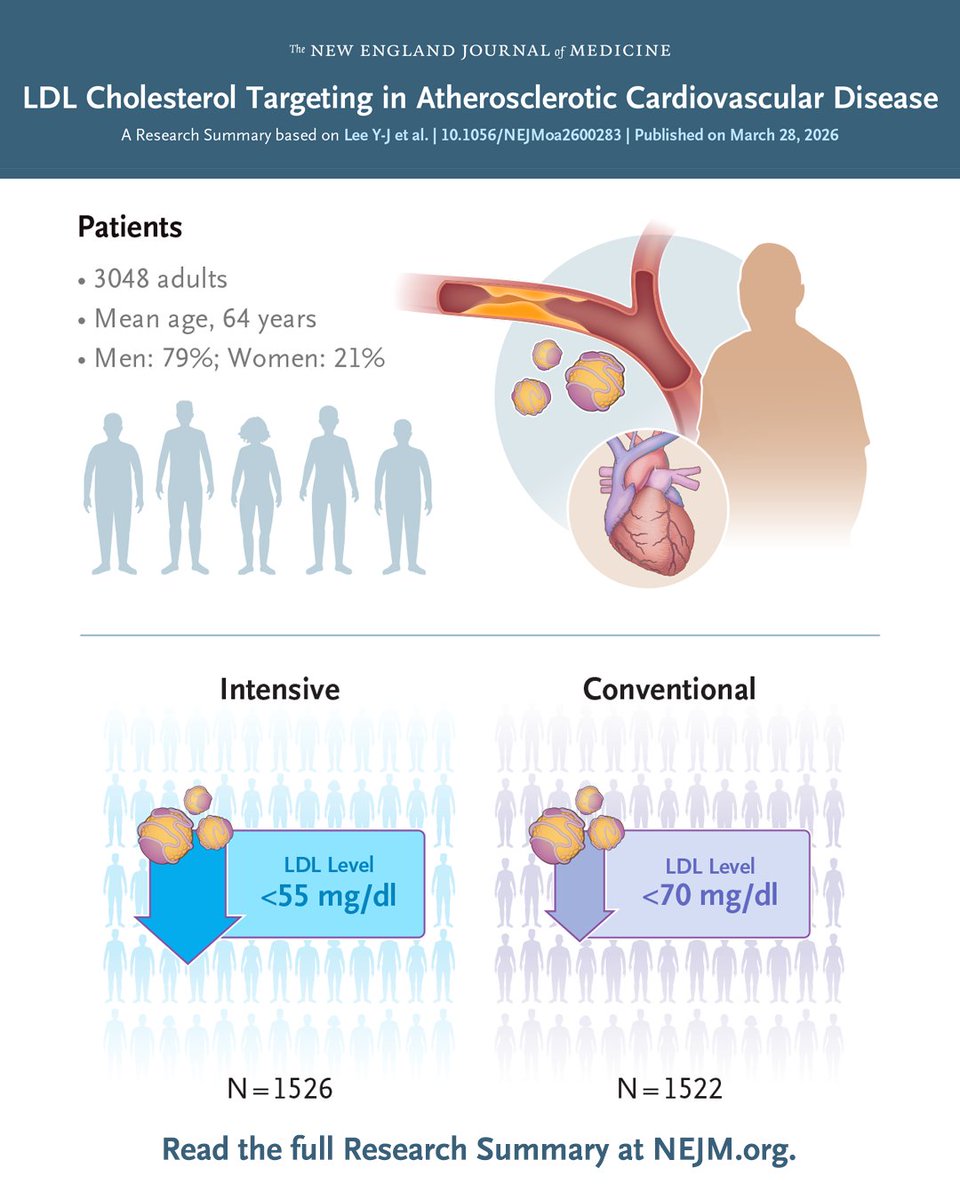
Among patients with atherosclerotic cardiovascular disease, targeting an LDL cholesterol level below 55 mg per deciliter led to a lower 3-year risk of cardiovascular events than targeting a level below 70 mg per deciliter. Full Ez-PAVE trial results and Research Summary: https://t.co/q0vNdAoJJL
This is a whopping effect — the intensive-lowering group had ~15% lower LDL cholesterol levels than the conventional group, for a 33% reduced risk of a cardiovascular event
They did this through more high-intensity statin use, more ezetimibe use, and slightly more PCSK9 inhibitor use
Safety was equivalent, except that the intensive-lowering group had FEWER events of creatinine elevation (i.e. better kidney function)
The lower the LDL cholesterol, the better
Retraction—Today, we retract an unsigned 1977 commentary suggesting talc powder containing asbestos was not harmful. The Lancet was informed that the author had undisclosed competing interests and breached publication ethics. /4
Software horror: litellm PyPI supply chain attack.
Simple `pip install litellm` was enough to exfiltrate SSH keys, AWS/GCP/Azure creds, Kubernetes configs, git credentials, env vars (all your API keys), shell history, crypto wallets, SSL private keys, CI/CD secrets, database passwords.
LiteLLM itself has 97 million downloads per month which is already terrible, but much worse, the contagion spreads to any project that depends on litellm. For example, if you did `pip install dspy` (which depended on litellm>=1.64.0), you'd also be pwnd. Same for any other large project that depended on litellm.
Afaict the poisoned version was up for only less than ~1 hour. The attack had a bug which led to its discovery - Callum McMahon was using an MCP plugin inside Cursor that pulled in litellm as a transitive dependency. When litellm 1.82.8 installed, their machine ran out of RAM and crashed. So if the attacker didn't vibe code this attack it could have been undetected for many days or weeks.
Supply chain attacks like this are basically the scariest thing imaginable in modern software. Every time you install any depedency you could be pulling in a poisoned package anywhere deep inside its entire depedency tree. This is especially risky with large projects that might have lots and lots of dependencies. The credentials that do get stolen in each attack can then be used to take over more accounts and compromise more packages.
Classical software engineering would have you believe that dependencies are good (we're building pyramids from bricks), but imo this has to be re-evaluated, and it's why I've been so growingly averse to them, preferring to use LLMs to "yoink" functionality when it's simple enough and possible.
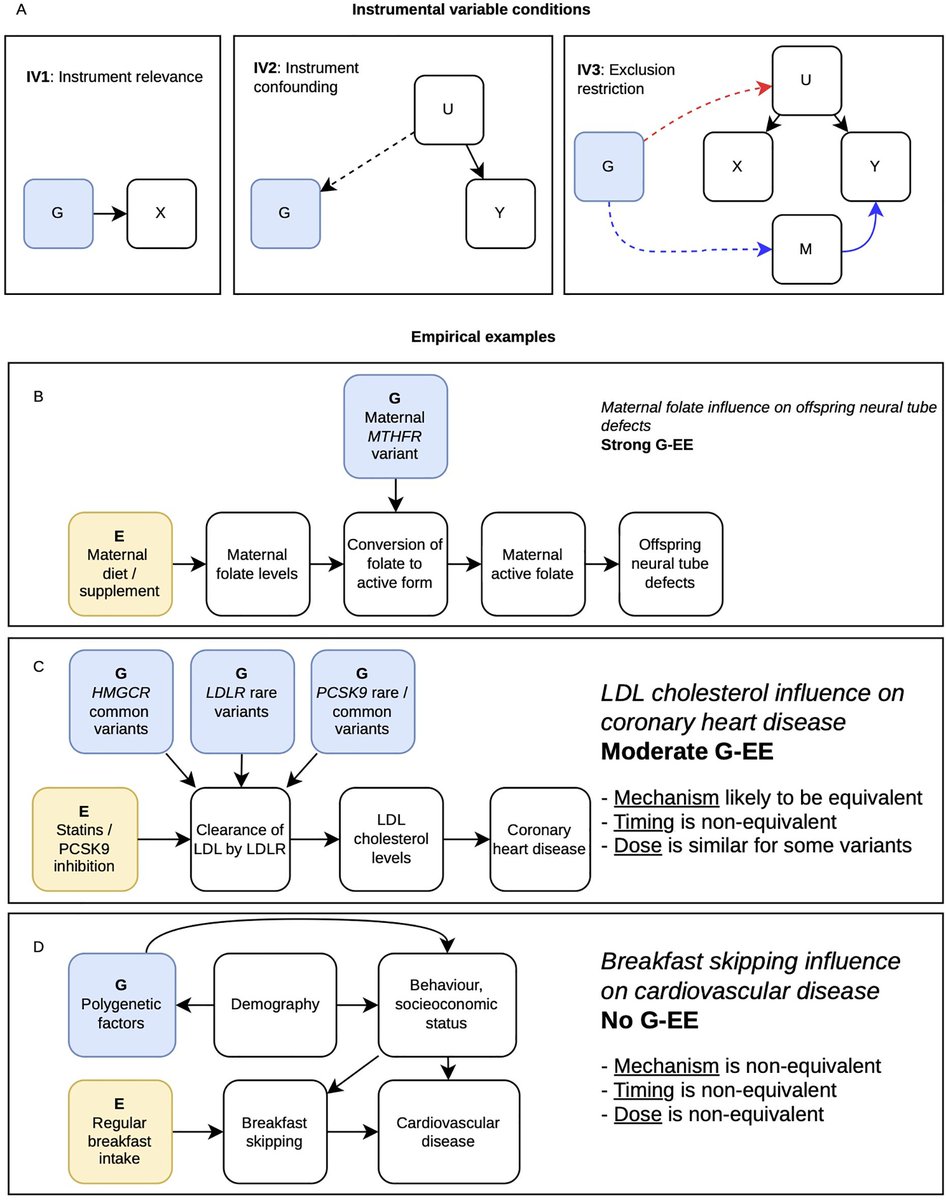
A modern call by the founders of mendelian randomization (MR) to turn back to basics and run MR only if genetic variants used as instruments are real proxies of the environmental/drug/lifestyle perturbation we want to test.
Some thoughts on the flood of MR papers👇
I was so pleased to be part of a great team writing a commentary on the draft FDA guidelines on Bayesian clinical trial designs. Should have been done 30 years ago, but better late than never
Today we are introducing 2 key features to JAIGP:
AI Review & Open Prompting.
AI review is part of 5-step process where papers get feedback from @reviewer3com & are evaluated based on their ability to address that feedback. This means they are not stuck in an endless AI review loop.
Open prompting is a newer idea. We are making all prompts we used to create JAIGP open, and also, opening up the journal's rules to the community for suggestions.
You can suggest the prompt we should run next!
So, if you have opinions about AI generated papers, you can share them directly with us at https://t.co/q3wDBaaaH9
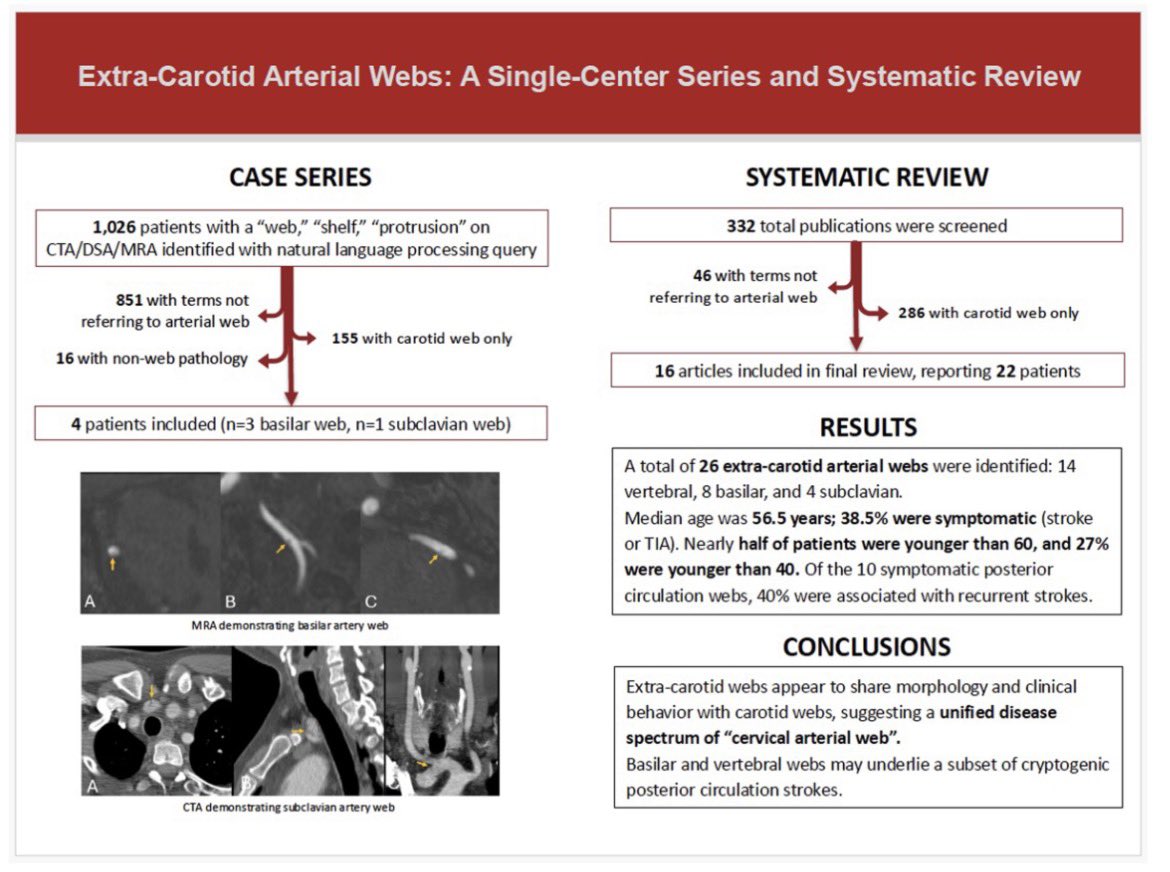
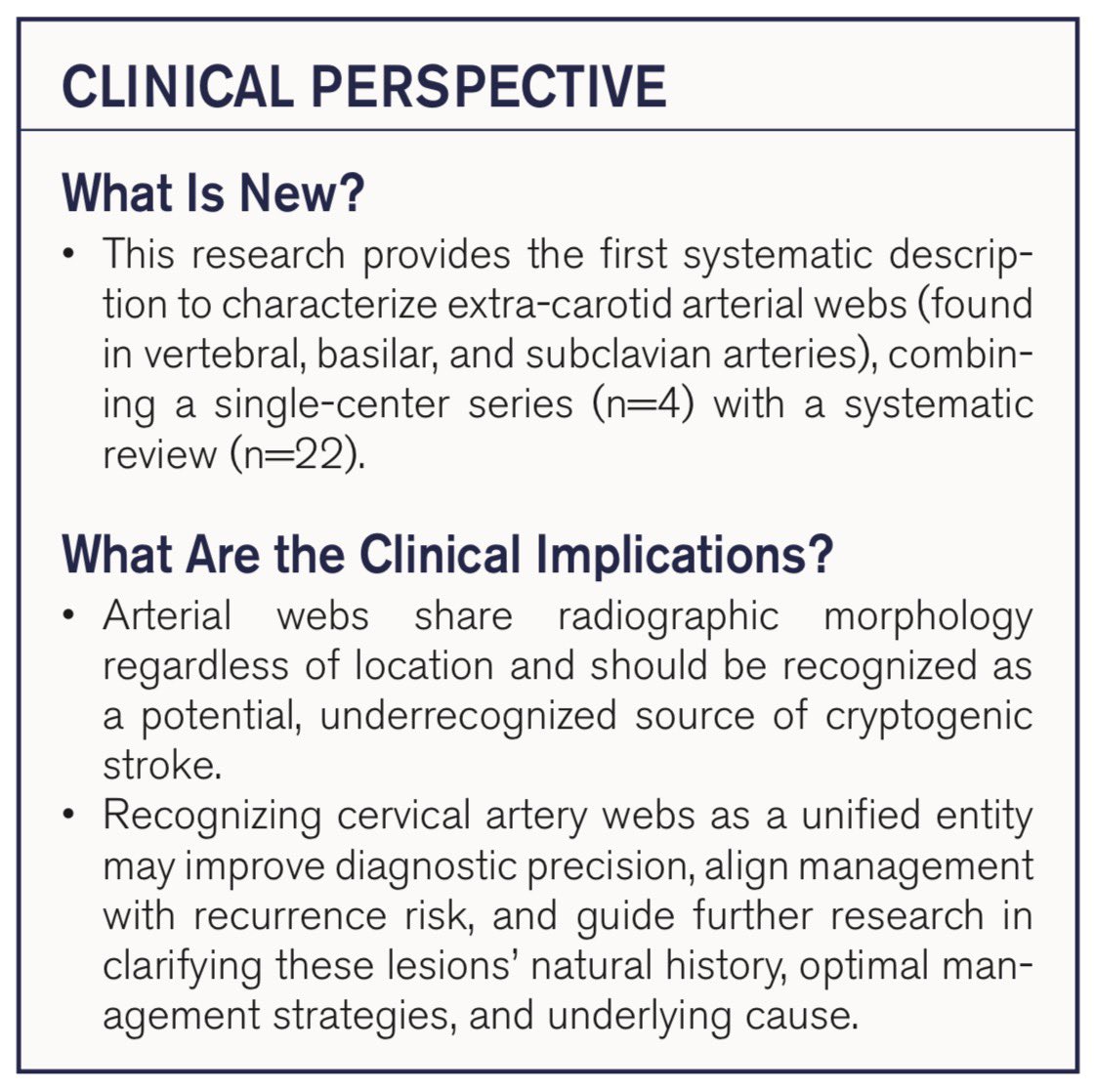
Are arterial webs limited to the carotid?
In our case series + systematic review, we describe extra-carotid webs and propose the term “cervical arterial web”—a unified entity that may represent an underrecognized cause of cryptogenic stroke. @ENossek@BellevueHosp@nyugrossman@nyulangone@svinsociety@SVINJournal@AHAScience
https://t.co/H3P5Czy6op
At https://t.co/td1yiUkEe8, we sat together and thought about what needs to be done to advance #multidisciplinary#stroke#biomarker research in a pragmatic and meaningful way. This @TheLancetNeuro paper summarizes what we came up with. https://t.co/KYf60ZJeld
Get ready for this. These Chinese investigators report a cohort of 121 malignant MCA infarction patients age >60, 47 of whom underwent drill-assisted sterotactic aspiration of the infarcted tissue from 24-72 hrs after onset. Check out the CT images and the 70 mL of nectrotic brain tissue in the image below to give you an idera of what they were doing.
Retrospective, not randomized -- but the results were great.
Herniation: 47% vs 9%
Death: 65% vs 9%
Favorable mRS (0-3): 3% vs 26%
Not only #curingcoma –– cheating death.
https://t.co/uUULG3qAFb