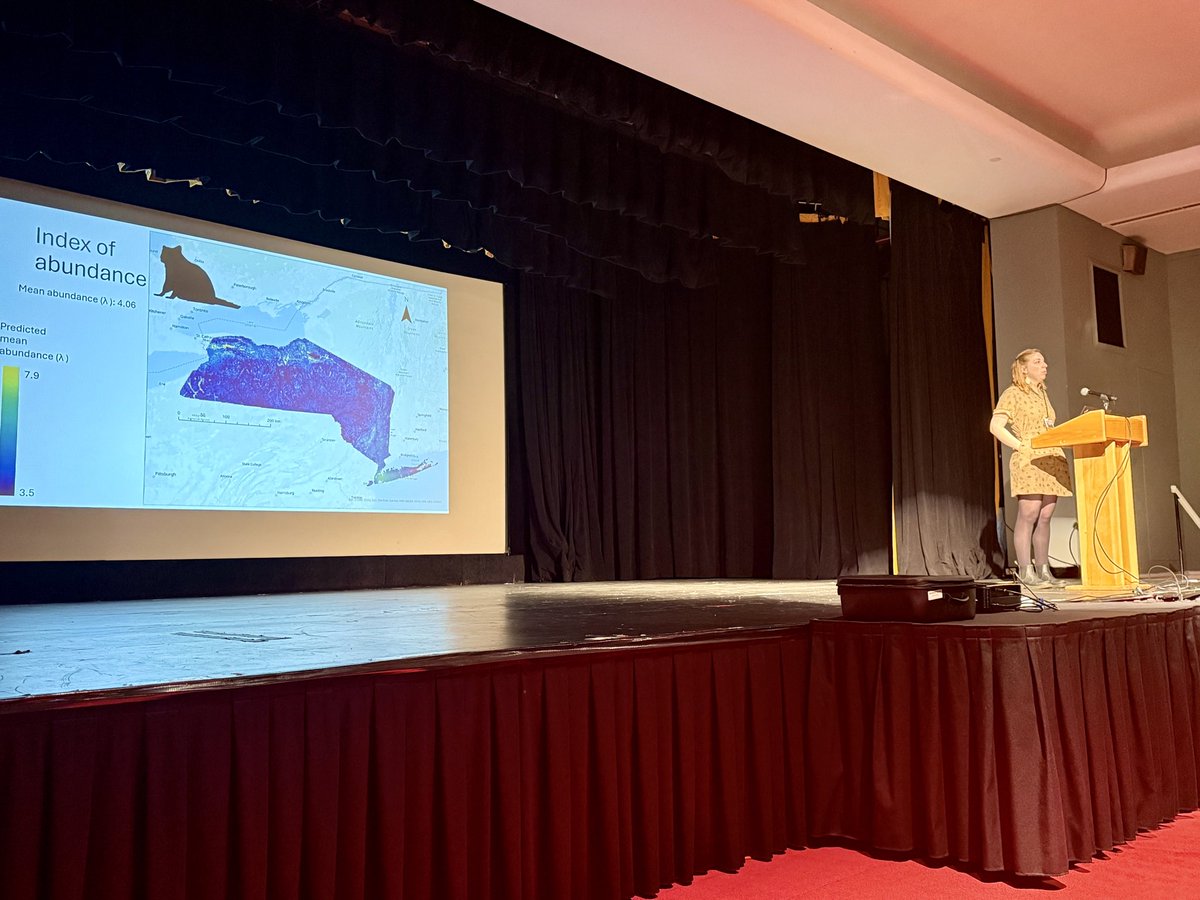
Maëlis @MaelisKervellec demonstrates the utility of multi-state occupancy models on breeding bird distributions and their drivers across large landscapes. Clear gains from incorporating breeding evidence for some species. Excellent talk! #NEAFWA@USGSCoopUnits
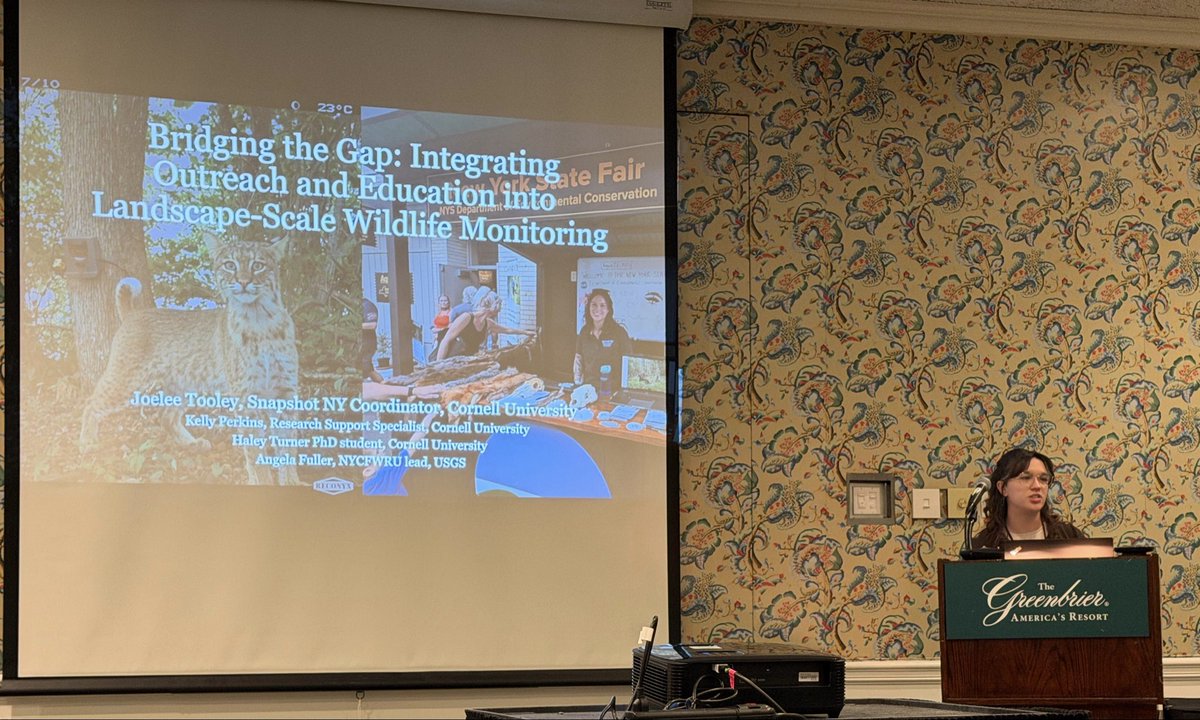
Joelee @joeleerebecca gave a great talk highlighting how outreach & education drive success in landscape-scale wildlife monitoring through the https://t.co/dId4jd2Vc0 community science project. #NEAFWA@USGSCoopUnits
Haley Turner gave a great talk on an occupancy-based, statewide multi-species wildlife monitoring program. Clear, rigorous, and a solid example of designing monitoring to answer real conservation and management questions at scale. #NEAFWA@USGSCoopUnits
Excellent talk by @dave_blount on designing mobile acoustic sampling to achieve sufficient statistical power to detect bat population declines, while accounting for false positives. Clear, applied guidance for managers! #NABat#NEAFWA@USGSCoopUnits
One of my many favorite things @CornellCALS is the partnership between @NYSDEC, @USGS and our incredibly talented faculty to keep our natural resources well-stewarded for future generations: 60 years of conservation, collaboration https://t.co/DgKS5wxBeM
Citizen science: Snapshot NY, a collaboration between @Cornell and @NYSDEC, aims to collect data about animal populations throughout New York — using thousands of trail cameras — and is engaging the public to aid the effort. @CornellCALS https://t.co/3OoN8HFEMy
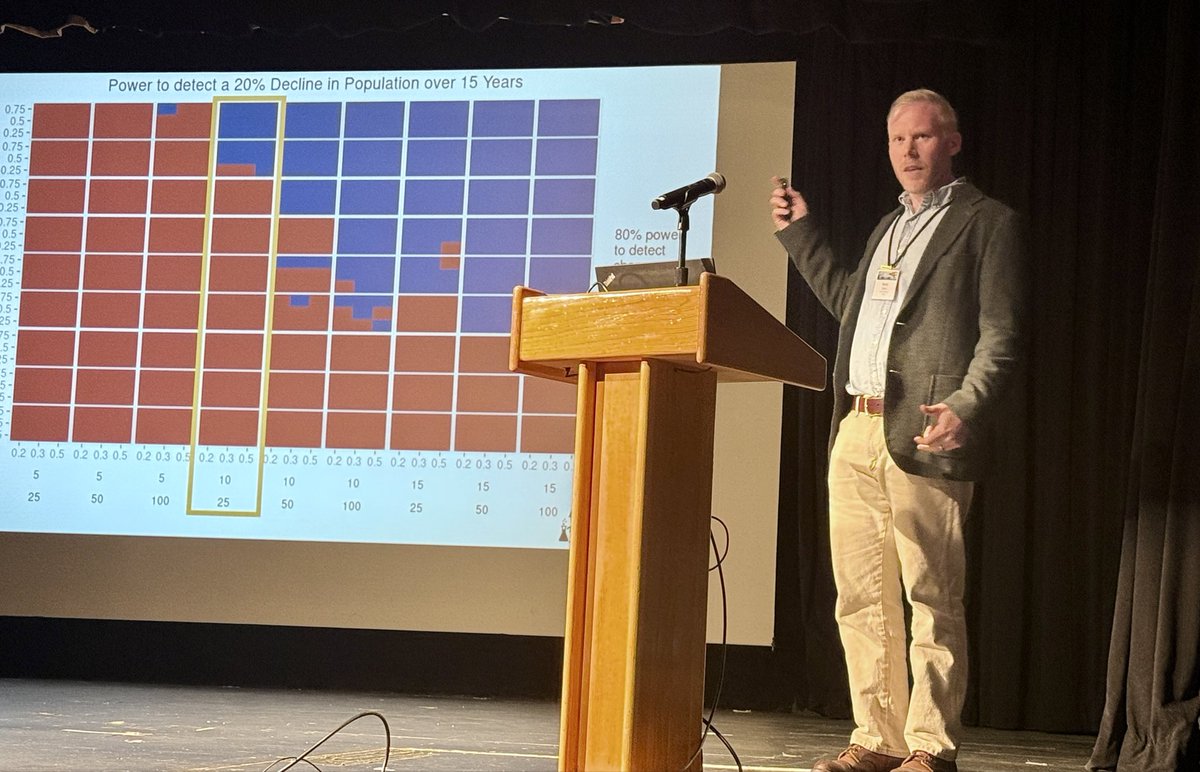
Ronen Shapiro, a high school junior, impressed the crowd at the 80th annual Northeast Fish & Wildlife Conference with his research on cost vs statistical power in wildlife monitoring. Rising 💫! He collaborated with a great team @CornellCALS@Fuller_Lab@OregonState@NYSDEC
I am recruiting two funded graduate students (1 MS, 1 PhD) to join the lab and the Fisheries, Wildlife, and Conservation Sciences program at Oregon State University!
If you are into small mammals and population ecology then check this out.
Please share/repost widely!
Dissertation: submitted!
Defense date: set!
Postdoc position: secured!
Big changes: happening!
Excited to announce I’ve accepted a postdoc in the @Fuller_Lab at @Cornell working to understand the abundances and trends of bats across the northeast! @sekercioglu@UofUBiology
Growers and conservationists have a new weapon to detect invasive spotted lanternflies early and limit their spread: #dogs trained to sniff out egg masses that overwinter in vineyards and forests. @Fuller_Lab@CornellCALS@ESAEcosphere@KrishnaWriter https://t.co/bRsNNvPMRY
Growers and conservationists have a new weapon to detect invasive spotted lanternflies early and limit their spread: #dogs trained to sniff out egg masses that overwinter in vineyards and forests. @Fuller_Lab@CornellCALS@ESAEcosphere@KrishnaWriter https://t.co/bRsNNvPMRY
Researchers in @CornellCALS’s Department of Natural Resources and the Environment have developed a model to understand wildlife interactions, and found that coyote populations in upstate New York may benefit fishers but not American martens. @Fuller_Lab https://t.co/9hz9VvNqhG
Are you interested in species interactions and how we model them?
Then this thread is for you!
Our new paper in @ESAEcology on the role of abundance in species interactions provides new statistical tools for modelling species interactions (https://t.co/5l2R4ei4CL).🧵(1/13)🧵
If you are interested and want to learn more, please check out our new open access paper in @ESAEcology:
https://t.co/5l2R4ei4CL
Huge thank you to the dream team on this @BenCAugustine@andyroyle_pwrc and @Fuller_Lab.
(12/13)
Consider joining me in supporting the @wildlifesociety today! This #GivingTuesday, you can help wildlife by investing in wildlife professionals. Help advance conservation efforts now and for future generations. No amount is too small - Donate 👉🏽 https://t.co/7GkC3bePT3