@nihatsirdar@kafaradyo Abi yine ben. Dolari 8’de birakip 5.5sene sonra ulkeye bu sabah giris yapan. #YeniAliskanligim bir telefon oyunu. Bir de klan kurduk orda international, tatile giden, klan savaslari sirasinda cocugunu kresten almaya giden birbirine haber veriyor ki kalkan acalim, koruyalim.
@nihatsirdar@kafaradyo 5.5 yildir amerikada yasiyoruz. Sabiha’dan ulkeye giris yaptik esimle. Arabamizi kiraladik. Hemen eski ise gitme gunlerimiz gibi actik #nihatlamuhabbet . Abi biz giderken dolar 8 imis.
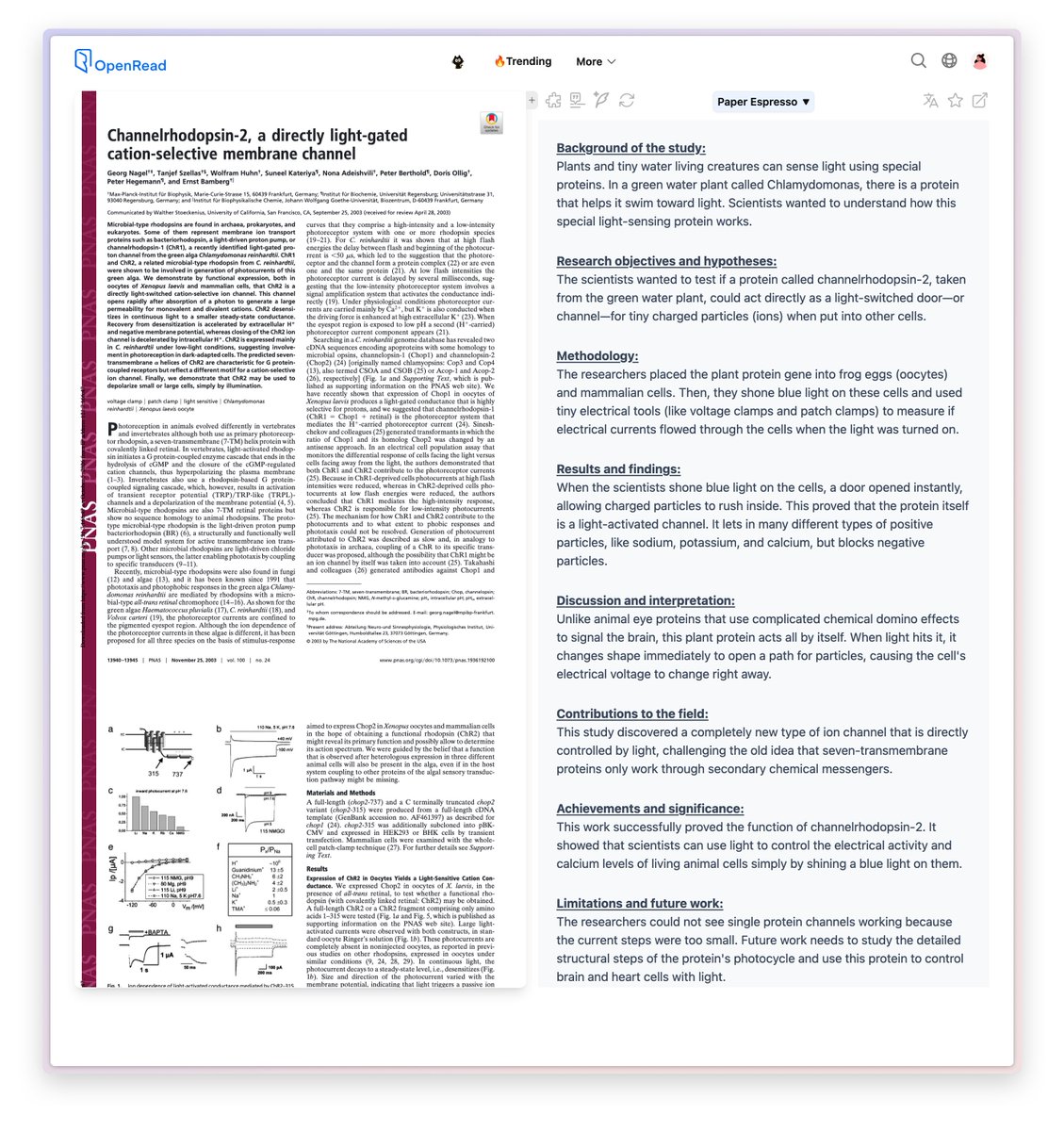
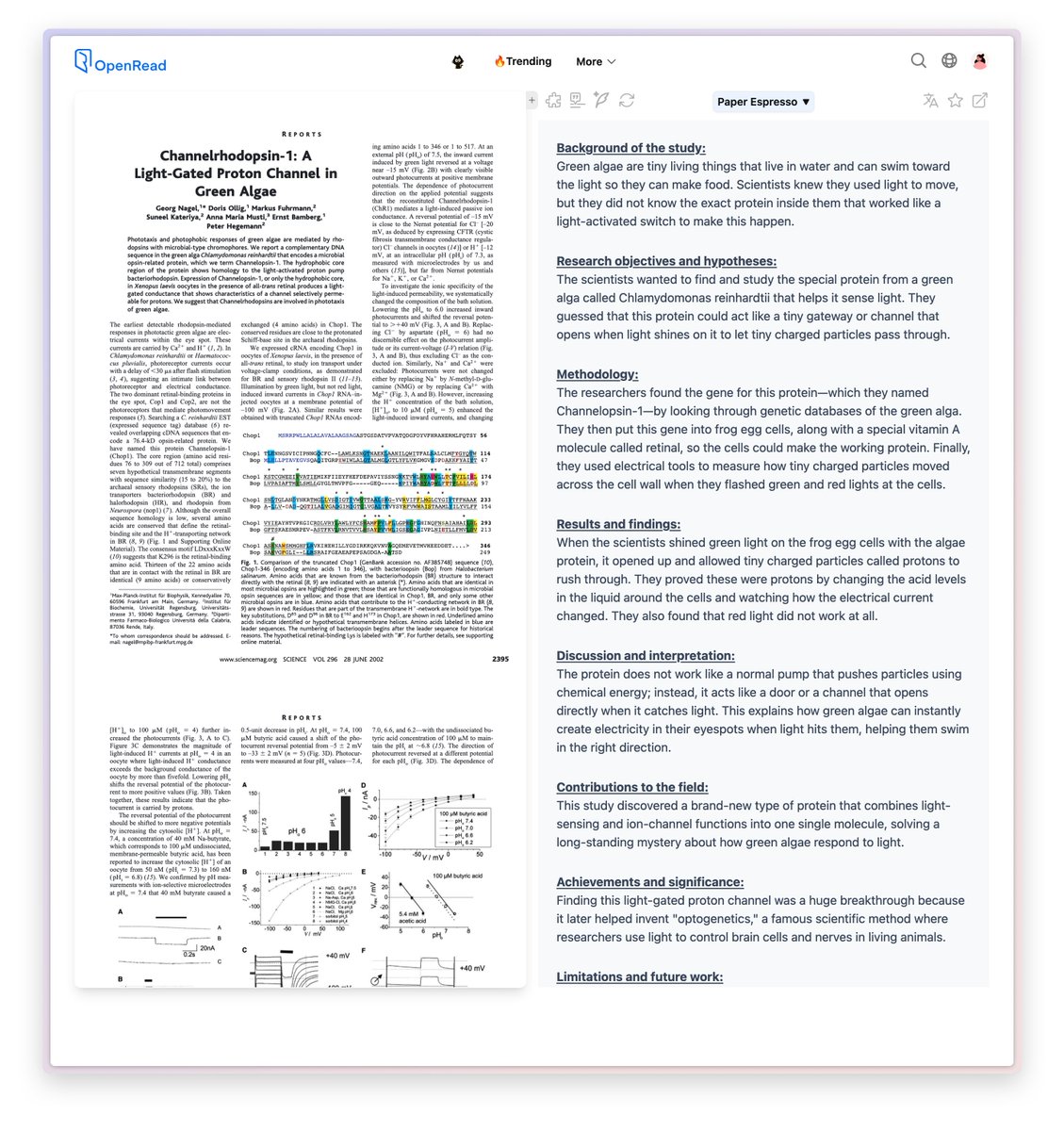
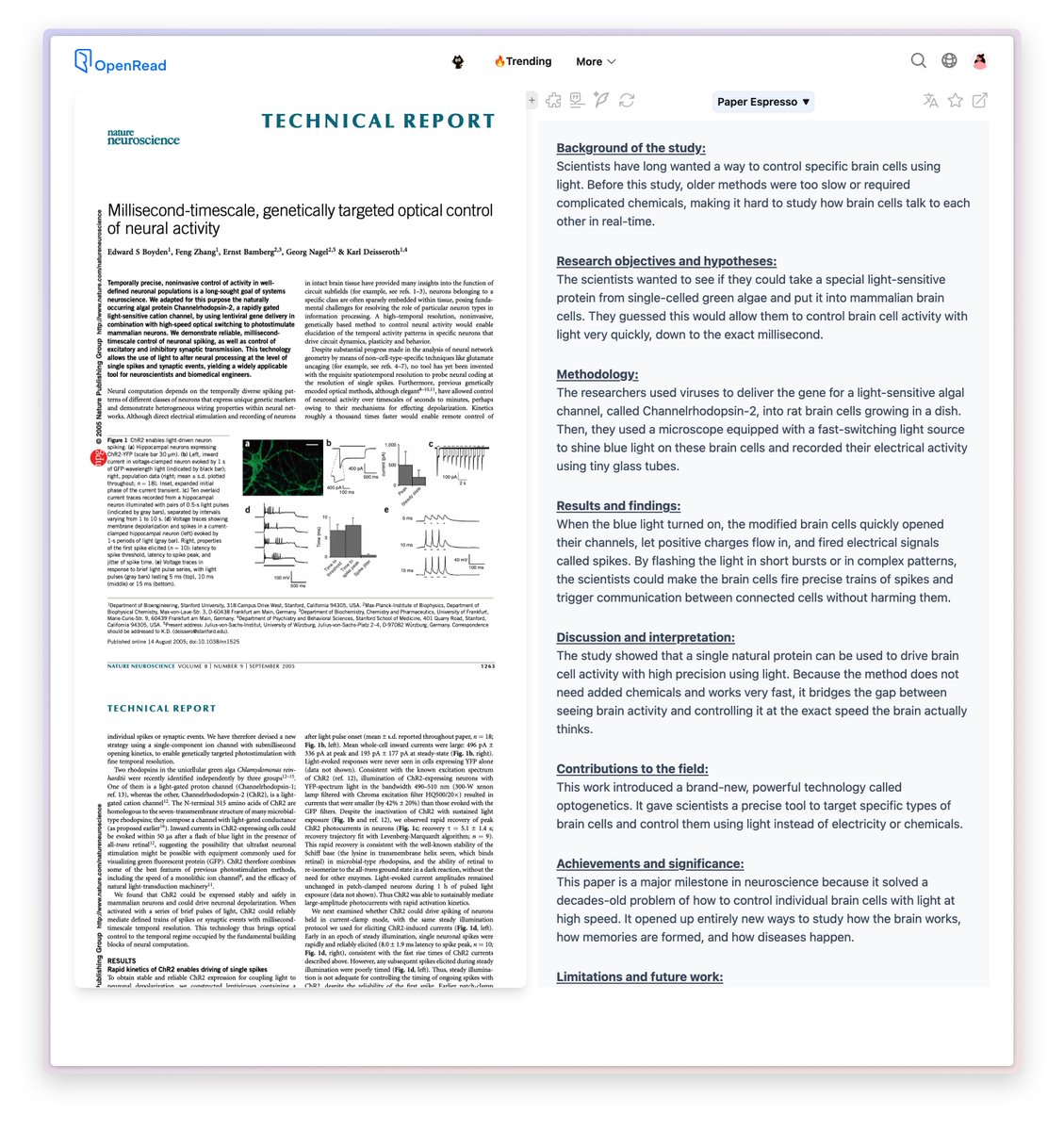
Congratulations! Their most renowned work:
1. Georg Nagel & Peter Hegemann's work:
Title: Channelrhodopsin-1: A Light-Gated Proton Channel in Green Algae
2. Georg Nagel & Karl Deisseroth's work:
Title: Millisecond-timescale, genetically targeted optical control of neural activity
3. Georg Nagel & Peter Hegemann's work:
Title: Channelrhodopsin-2, a directly light-gated
cation-selective membrane channel
Congratulations to @KarlDeisseroth, Peter Hegemann, and Georg Nagel on the Nobel Prize! I feel very lucky to have learned from all three, from their brilliant science and from their generosity to the scientific community.
As someone who did this kind of genome mining work during my PhD, some thoughts on this Anthropic announcement:
First, the very simplified version of what they did is that they noticed two genes (one known, one new) sitting next to a weird repeating piece of DNA. More specifically, they described an unusual reverse transcriptase (RT) associated with a repetitive DNA array and an unknown accessory protein. This kind of process was used to understand CRISPR back in 2002 and was key to the gene editing tools we use today.
To put this into context, though, people have been finding RTs associated with CRISPR arrays since 2008, and this general kind of genome-neighborhood mining has been used to discover new biological systems for decades. The basic genome-mining strategy is well established, and there are now mature tools and published pipelines for doing much of this. There are papers that discover and experimentally validate dozens of new systems using this approach in a single study. Doing it in bacteriophage genomes is also nothing new (eg CasPhi).
Finding a weird cluster of genes and repeats is often the easy part. The hard part, and where the real discoveries come from, is figuring out what the system actually does. Eg for the bridge-RNA discovery in 2024 from @arcinstitute or the discovery of CasPhi in 2020 from @DoudnaJennifer they figured out the pieces of the system and the rules for what makes it work so it can be used.
Anthropic does not yet know what this does. They’ve shown that the repeat array produces RNAs, but not what those RNAs do, what the RT does with them, or whether the system has any of the programmable properties that make the CRISPR comparison justified.
I’m genuinely rooting for all of the frontier labs to seriously get into biological discovery, and I’m excited about what comes out of it. But announcing these very early, incremental findings with the framing of a major discovery doesn’t help. I’d much rather they set the bar high now, so that when an AI actually discovers a fundamentally new biological mechanism, everyone appreciates how big a deal it is.
#lipidtime: It's a lipid universe. Today in Nature we publish the Lipid Brain Atlas, the first map of membrane lipid composition across the entire mouse brain, a layer of organisation that cell-type and transcript maps had left out. #lipidomics#neuroscience#BrainAtlas
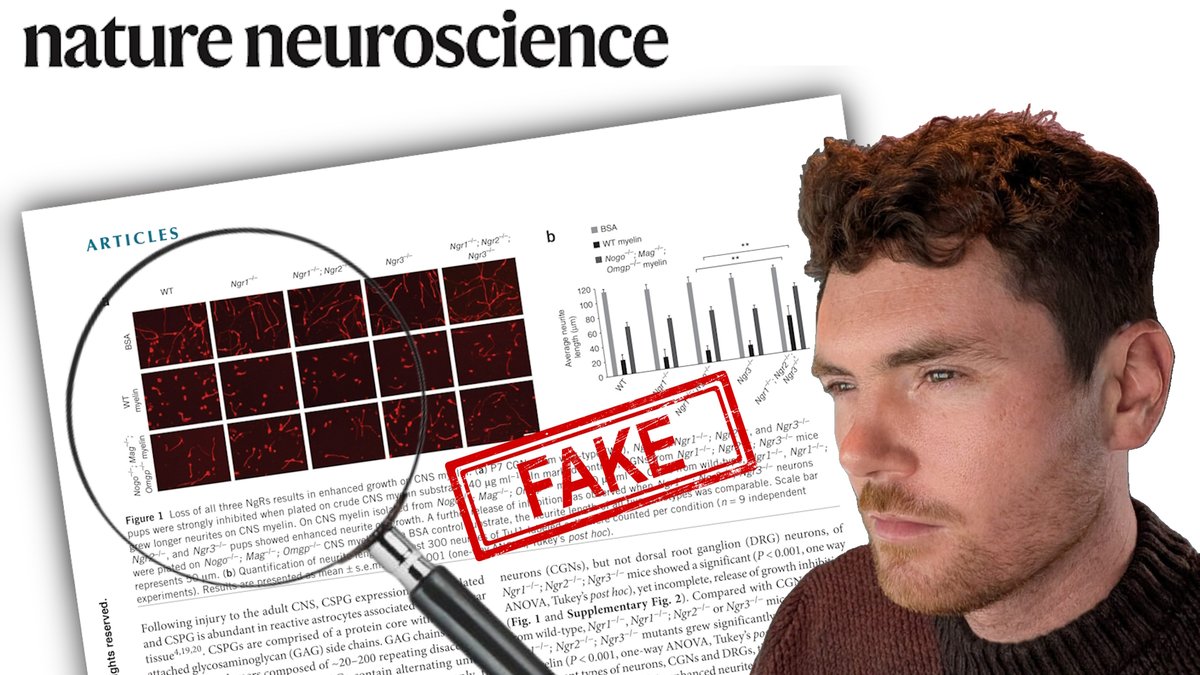
A new video for my YouTube channel, this one is about image manipulation in a Nature Neuroscience Paper by researchers at the University of Michigan.
https://t.co/h7y7ZlU7Rk
What if T cells could eliminate tumors without recognizing tumor-specific antigens at all?
Immunotherapy has traditionally relied on tumor-specific T cells—or engineering T cells to recognize a defined tumor antigen.
This study challenges that paradigm.
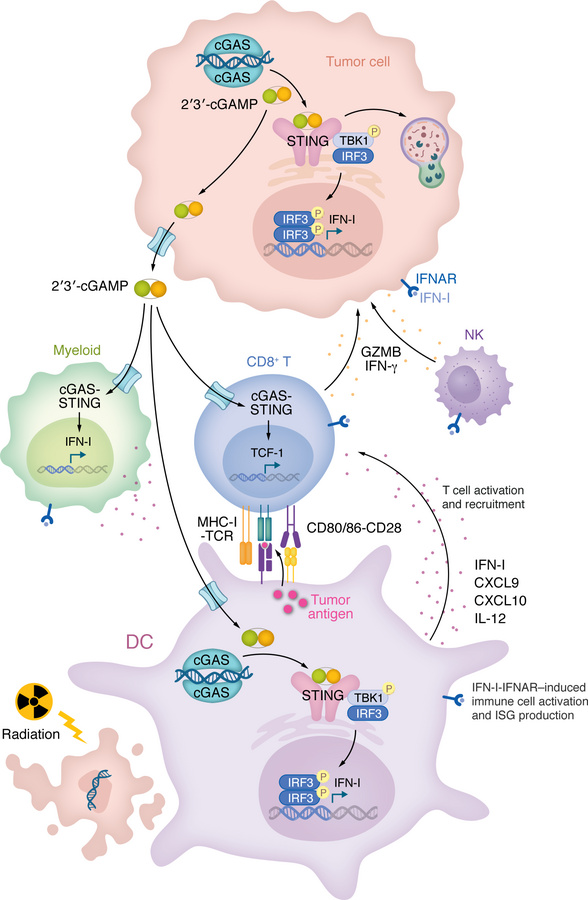
Researchers show that activating unexhausted, bystander T cells within tumors can drive tumor elimination even in the absence of tumor-specific TCRαβ⁺ T cells.
Rather than killing through conventional antigen recognition, robust T-cell activation triggered a broader immune cascade: recruitment of additional immune cells, activation of innate leukocytes, and production of a tumoricidal combination of IFN-γ, TNF, and nitric oxide, ultimately inducing caspase-dependent tumor cell death and panoptotic pathways.
Even more intriguing, the gene-expression signatures associated with this response in mice were predictive of survival in patients with melanoma.
The bigger story is a potential shift in how we think about cancer immunotherapy:
Perhaps the T cell does not always need to recognize the tumor—it may simply need to be productively activated within the tumor. 🎯
That opens a fundamentally different therapeutic strategy: instead of generating or rescuing cancer-specific T-cell responses, could we harness the tumor microenvironment itself to turn bystander immunity into a coordinated antitumor weapon?
A provocative concept—and one that could reshape how we think about “tumor specificity” in immunotherapy.
https://t.co/uSjxJmme1R
I'm thrilled to share that I'll join Columbia University in Jan 2027 as an Assistant Professor in @ColumbiaGenDev & @CSCIColumbia ! A long-held dream; I'm grateful for my mentors and colleagues.
We'll study microbiota-ENS interactions & we’re hiring!
https://t.co/gxC887WdVY
The whole “20x” in Claude’s pricing is so misleading.
The $100 plan says 5x Pro limits, while the $200 plan says 20x Pro limits. That makes it sound like you’re getting 4x the usage.
But the 20x applies only to the 5-hour usage window. The weekly limit is basically just 2x the $100 plan.
I spent way too much time digging through the internet and Reddit to figure this out. They could’ve just stated the limits directly instead of marketing it as “20x.”
That alone would’ve saved me hours of confusion.
The tidyplots package is an excellent tool for creating data visualizations in R. But the package itself is not the only highlight. It also comes with exceptionally well-written documentation.
Jan Broder Engler, the developer of tidyplots, has not only created the package but also written a full paper that explains how to use it in practice. The tidyplots paper is a great example of how package documentation can be done well. It clearly introduces the main ideas behind the package and shows how complex visualizations can be created with concise and readable code.
Throughout the paper, the tidyplots workflow is explained step by step. It shows how the package builds on ggplot2 while adding convenient helper functions and a tidyverse-style syntax. This approach makes it easier to create clean and consistent plots without writing long and complicated ggplot2 code.
Another strong aspect of the paper is the combination of explanations and practical examples. This makes it easy to follow along and understand how different types of visualizations are created while keeping the syntax consistent across tasks.
If you want to improve your data visualization workflow in R, the tidyplots paper is definitely worth reading. You can find it here: https://t.co/FhqkEY0N6b
If you would like to explore topics like this further, you can join my newsletter where I regularly share tips on statistical methods, data science, AI, and programming in R and Python.
Check out this link for more details: https://t.co/ktUcWo9XpO
#datasciencetraining #Rpackage #RStats #tidyverse
Incredible work! I cannot believe it is happening this fast! This will lead us to just dealing with biological questions behind the problem under AI -driven wet-lab work in near future?
Today, we're kicking off the first phase of the research preview for Model Hardware Standard (MHS): a new standard for AI agents to safely operate physical equipment in scientific research and advanced manufacturing.
Read more: https://t.co/XQ2y9EW7Af
I am a strong supporter of human-relevant cancer models. New research, funded in part by @NIH, adds ~150 3D organoids across 10 cancer types to DepMap—preserving tumor biology that 2D lines miss and revealing drug targets that might never have been found. https://t.co/elACsmag1x
Another week feeling how unfair academia is for female… your ideas will be more trustworthy heard from a male colleague. If you are not sacrificing your 100% , you are not ambitious.
Maybe this is why women scientists get eliminated from academia. I wish good luck to all my female faculty friends who are racing within their tenure clock. The system prefers and love male faculty. You have to be at least 10x better, just to survive, let alone winning.