🚨🔥 Hot take: ONE failing Nissan engine part can silently kill your car.
🚗 My 2019 Nissan Qashqai 1.3 has been ❌off the road since Dec 2025 after a sudden death of thermostat coolant part — ⚠️ NO warning.
⏳ 12 week parts, service delay
🔧 Returned undrivable
💥 Collected again. Now: engine + gearbox damage
😤 Car stuck at Nissan service awaiting £2.3K investigation approval.
💸 NO fix guarantee. Repair risk with engine & gearbox replacement: £12K+ !!!
📂 Open Nissan cases: 02805689 / 02897661
❓What next???
@NissanUK@WhichUK@NissanUKPR
Excited to share that our GAP-DC consortium paper is now published @MicrobioSoc!🎉
An integrated One Health initiative for pathogen genomic surveillance in the UK
👏Huge thanks to all co-authors, collaborators, and to Defra and UKRI for their support https://t.co/swK6c5vSpQ
We are delighted to announce that applications for the Defra R&D Fellowship Programme for 2026/2027 are now open. Full details about the programme and how to apply can be found at:
https://t.co/et8siN7I4X
Excited to see our work now published in @MPPjournal!
Insights into ASR’s global diversity & movement → better disease surveillance & management 🌱
#SoybeanRust#PlantPathology#Genomics
Population genomics reveals distinct lineage of the Asian soybean rust fungus Phakopsora pachyrhizi in the United States 🇺🇸unrelated to Brazilian 🇧🇷populations: https://t.co/hC29KA00Q6
How do arboviruses persist in temperate countries? To our knowledge we provide the 1st record of USUV transovarial transmission in wild culex pipiens. Great collaboration @VB_RADAR, @APHAgovuk, @ZSLScience, @UKHSA. https://t.co/CR939bO2IH
New paper @NatureGenet
https://t.co/loAvk4risg
Our most recent thinking on HYP effectors involves programmed shuffling of the parasite genome. This prompted us to review how and when organisms edit their own genomes
In so doing, Vincent made two important discoveries...
(1/3)
Just out in @ScienceMagazine: we demonstrate a micro-evolutionary shift in a single generation, involving thousands of genomic loci, giving younger ash trees more resistance to ash dieback, on average, than their parents https://t.co/Fe0l9BeJ3E
1/ How do insects go green?
Not with chlorophyll, but with a protein that mimics it.
Meet dibilinoxanthinin (DBXN), a molecular LED built from yolk protein.🧵
The only rule in biology is that there are exceptions to every rule. This is what makes biology infinitely exciting; even when you think you’ve got the complete view, the floor can drop out from underneath you at any given moment.
Case-in-point: The nucleus is the thing that makes eukaryotes...well, eukaryotes. It's the part of the cell that stores the genome, separating DNA from the cytoplasm and other organelles. (Bacteria do not have nuclei.) For decades, scientists thought that each nucleus contains one or more haploid sets of chromosomes.
But there are exceptions. Red blood cells, for example, don’t have nuclei at all. (They expel their nuclei during maturation to maximize hemoglobin concentrations.) Cells in the eye lens, too, lose their nuclei and organelles during differentiation, thus becoming transparent. And so on.
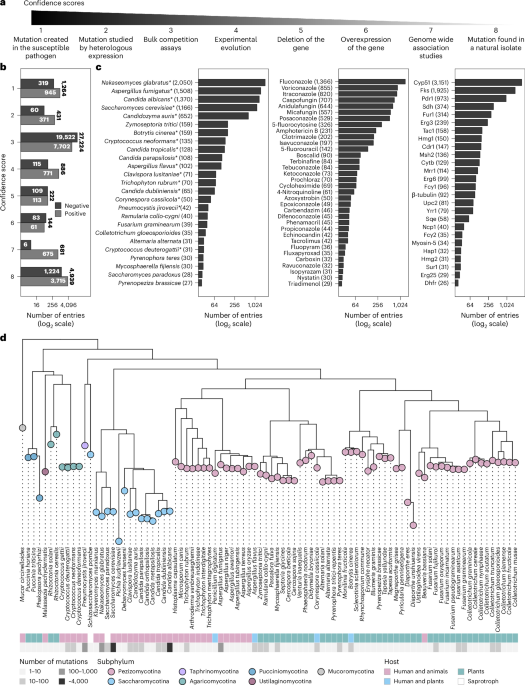
But now there is yet ANOTHER exception to this rule, and it’s one I hadn’t seen before. For a study in Science, researchers discovered that two types of pathogenic fungi that infect plants, called Sclerotinia sclerotiorum and Botrytis cinerea, have two different nuclei. And instead of storing a full set of chromosomes in each nuclei, they instead “distribute their chromosomes such that each of their nuclei contains only a subset of the haploid chromosomes.” The authors confirmed this by throwing a kitchen sink of methods at these cells; chromosome counting, DNA measurements using flow cytometry, single-nucleus PCR, and more.
Nobody knows why the fungi do this, but the scientists claim (in their discussion) that it could enable them "to respond and adapt more effectively to local environmental stresses within their extensive mycelial networks. Nuclear shuffling may facilitate the rapid generation of new genotypes, enhancing adaptability to changing environments.” There is also evidence that the chromosomes within each nucleus may briefly collide during cell division, before going back into their separate nuclei.
This is a great paper. It is simple, to the point, and challenges the status quo. It has serious potential to become a “classic” of the genre.
Link: https://t.co/AtsN5Kufpl
We're leading an innovative new surveillance project with partners to protect crops, livestock, forests and fisheries from infectious diseases.
Find out more about the Genomics for Animal and Plant Disease Consortium (GAP-DC): https://t.co/A8QZNvoqaI
#APHAscience
We're leading an innovative new surveillance project with partners to protect crops, livestock, forests and fisheries from infectious diseases.
Find out more about the Genomics for Animal and Plant Disease Consortium (GAP-DC): https://t.co/A8QZNvoqaI
#APHAscience
On Wednesday, dazzling jewels linked to the Buddha’s mortal remains- hailed as an all-time archaeological marvel- will be auctioned at Sotheby’s Hong Kong. But experts ask: is selling ‘corporeal’ relics entwined with India’s sacred past ethical? My piece. https://t.co/f5FwbiyylS
The Buddha's relics are not for Sale
The Piprahwa gems, relics of immense religious, archaeological, and historical significance, are set to be auctioned in Hong Kong next week. It is a continuation of the centuries-long plunder of India’s Buddhist heritage.
🧵
I’m on the market! 🎉
What do I do?
-I develop research questions and applied biotechnology to understand and disrupt insect symbioses.
-I coordinate international teams to tackle interdisciplinary global challenges.
-I train mycologists, entomologists and insect pathologists.
Joint scientific opinion from EFSA & ECDC: on risk posed by AIVs + quantify risk of mutations increasing zoonotic potential and outline of comprehensive measures for preparedness, surveillance, prevention, biosecurity and control
👉https://t.co/WXHKV0WEOL