Happy to share our preprint on the structural and functional analysis of the plant MRS2 Mg2+ channel, revealing plant-specific cytoplasmic Mg2+ sensing and stepwise gating. Great collaboration with Profs. Yu at CPU, Wang at Fudan, and Tanoi at UT!
https://t.co/0cWiHIny2e
Excited to share our structural insights into how microtubules differentially guide phosphorylation of kinetochore-microtubule regulators, Ndc80 and MCAK, for chromosome segregation. Heroic efforts by Yiming Niu with a fun collaboration with DeLuca lab!
https://t.co/bdQftOqQ1B
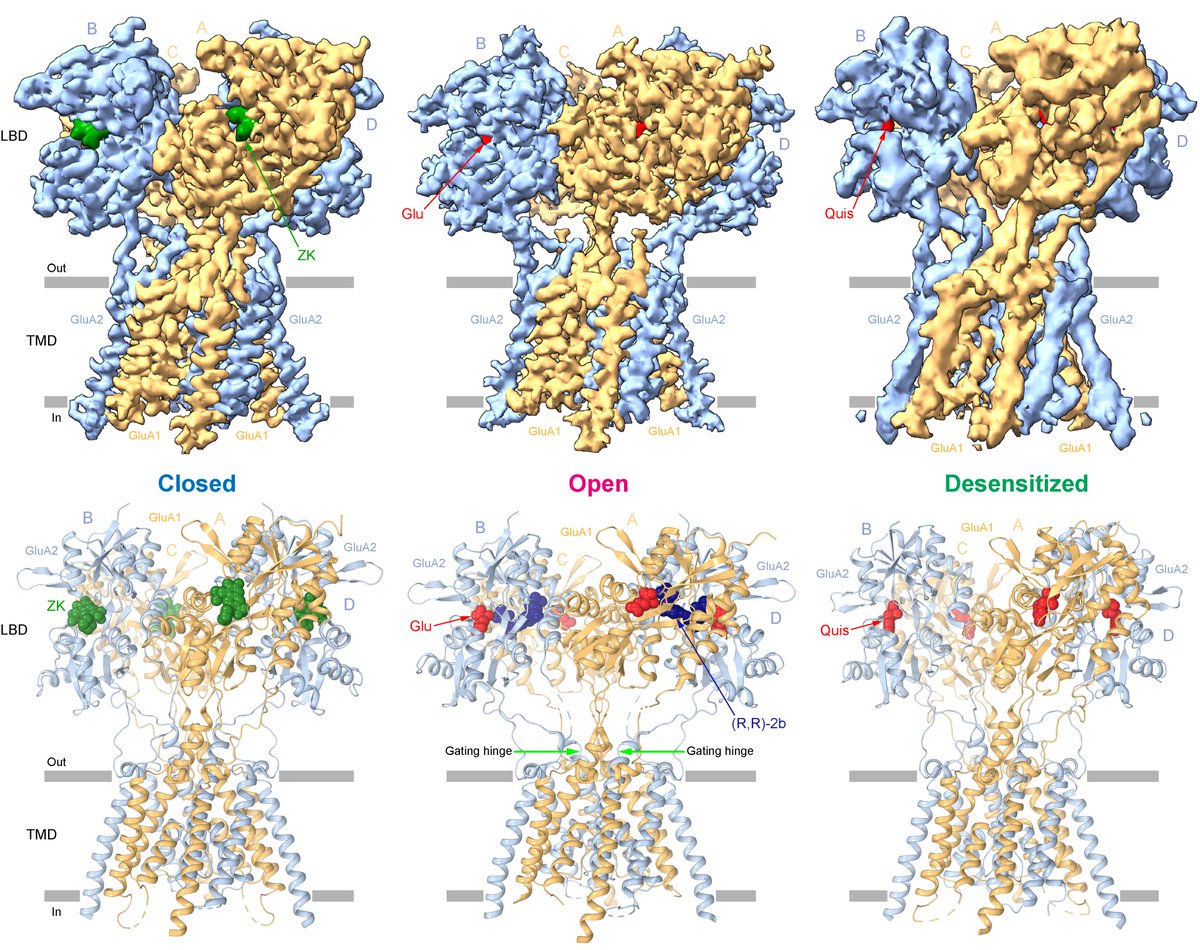
Auxiliary subunits reshape structural asymmetry and functional plasticity in heterotetrameric GluA1/A2 AMPA receptor core! Structures of the most abundant AMPA receptor di-heteromer in the brain GluA1/A2 in the closed, open, and desensitized states!
https://t.co/rBpyYpiu7g
Delighted to share that my PhD research studying the connection between anti-cancer immunity and autoimmunity, supervised by @JanowitzTobias and @Lab_FURUKAWA@CSHL has been published in @Nature today.
Research by @furuttini, et al. reveals how NMDA receptors control learning, memory & neuron survival. Discovery could lead to therapies that precisely modulate brain signaling to protect against #Alzheimers & other #NeurodegenerativeDisorders. @Nature 👉https://t.co/EQuqEam4Z7
Very excited to share our latest work published today:
https://t.co/oVKodDuYYy
Congratulations to Tommy Shi, Ismayn Ditter and Adam Oken.
Thank you to @CryoEM_PNCC@ClaudiaLopez_EM for the outstanding microscopy/Cryo-EM support.
@NIH_CommonFund@the_asci
I'm hiring:
1. PhD-level Research associate to generate perturbation data
2. ML postdoc to build multimodal generative AI for DNA (eg diffusion and LLM)
3. Bioinformatician (any level) to harmonize functional genomics data for training foundation models
DM me if interested!
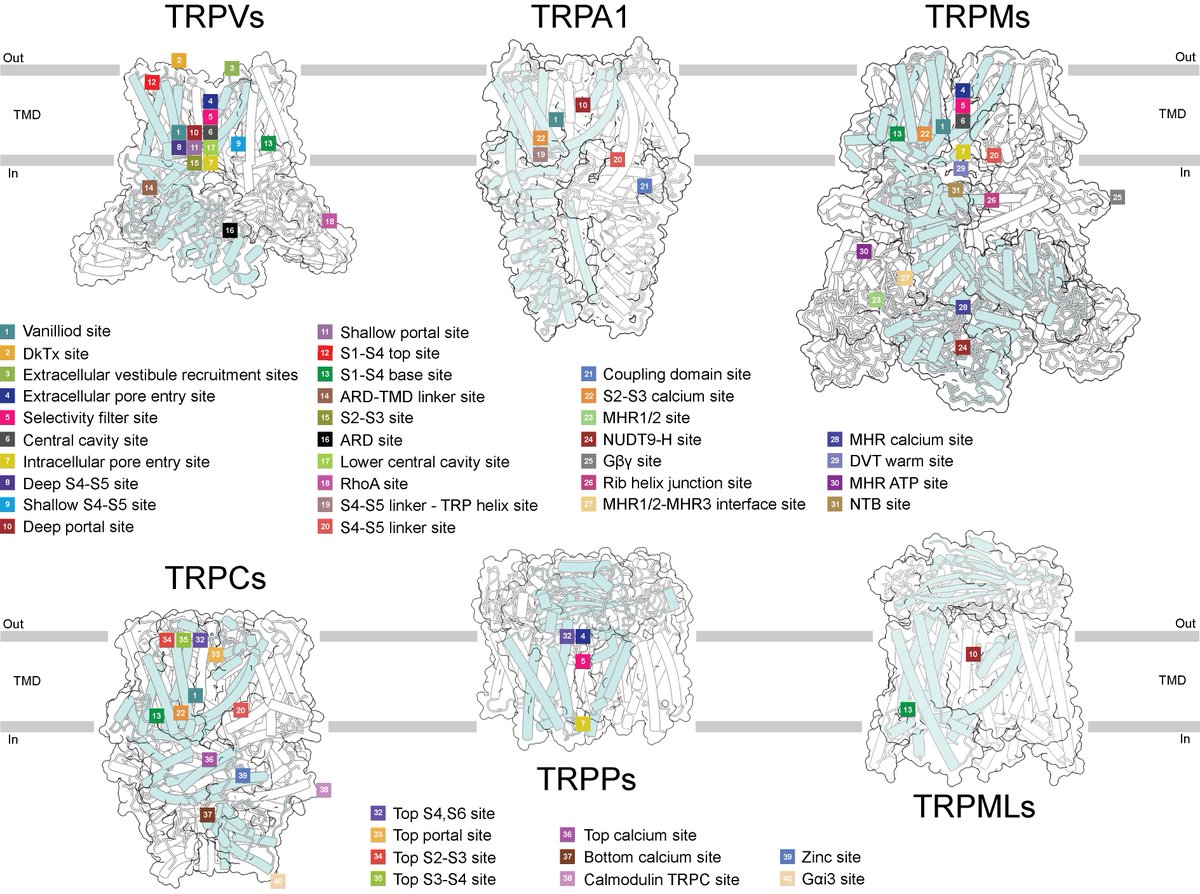
Happy to share our new review of TRP channel structural pharmacology that describes 40 sites of TRP channel regulation discovered by now!
@IrinaTalyzina@knadezhdinPhD
https://t.co/1OiARkqDoZ
Happy to share the structural and functional analyses of ancestral and derived haplotypes of human oncochannel TRPV6 that were proposed to serve as genomic factors causing different outcomes for cancer patients. @arthurCantab @knadezhdinPhD
https://t.co/bKLT5FazNG
https://t.co/CcxzpzwYuj We're pleased to announce the publication of a review paper on CALHM channels. In this work, our student, Rachel Polfer, comprehensively reviews the advances, ongoing controversies, and future perspectives in this fascinating field.
CSHL’s Hiro Furukawa & colleagues found that antibodies in patients with anti-NMDAR encephalitis, a rare autoimmune disorder, bind to brain receptors in different ways. Could personalized treatment be the extinguisher for the brain on fire? @Lab_FURUKAWA https://t.co/38HTAyqXdJ