Something I have been thinking about: in the past, the best engineers I knew spent a lot of time automating their work in various ways. Better vim/emacs automations, writing lint rules to catch repeat code issues, building up a suite of e2e tests so they don't need to smoke test the app manually. These kinds of things were the highest leverage activities an engineer could do, because it multiplied their own output, which in turn meant they could build more things.
I think many of these automations have become even more important now. This is true for a number of reasons.
First, infra and DevX automation speeds you up. And if you are running an army of agents, each of those agents will be sped up also. More automation == more output per unit of time.
Second, moving things to code improves efficiency. Your agent could fix an issue every time it sees that issue happen, but that uses tokens and might miss cases. If Claude instead writes a lint rule, CI step, or routine, that class of issue can be fully automated forever. This is really what people are talking about when they talk about loops -- it's about automating entire types of busywork rather than solving them one off. This isn't a new idea at all. Engineers have been doing this for a long time!
Third and most importantly, automation makes it possible for others to contribute to the codebase more easily. Increasingly what I am seeing is engineers are contributing to codebases on day one because Claude can navigate the codebase for them, and that non-engineers are able to contribute to a codebase as effectively as engineers can. What gets in the way of both of these is domain knowledge that lives in peoples' heads rather than in automation -- the stuff you used to have to learn when ramping up. What has changed thanks to agents is the domain knowledge that can be encoded as infrastructure is no longer limited to what is expressible in lint rules and types and tests; it can now capture nearly all domain knowledge, encoded as code comments and skills and CLAUDE.md rules and memories. If I put up a PR for an iOS codebase I don't know and a code reviewer rejects it because it doesn't use the right framework, or if a designer builds a new feature and it gets rejected because it doesn't follow the right architectural patterns, these are failures of automation.
Every team should be writing the CLAUDE.md's, REVIEW.md's, skills, and docs that enable agents to productively work in their codebase with zero additional context from the prompter. This sounds crazy, and at the same time is a natural extension of the stuff engineers have always done: automate, and encode domain knowledge as infrastructure. As the model gets smarter and as the harness matures, this task becomes easier. In the meantime, it is on every team to look for ways to convert their domain knowledge to infra so that Claude can write code better, so that code review catches issues automatically, and so the next person working on your codebase can contribute more easily.
Just coming off of meetings with a couple dozen enterprise IT leaders discussing AI agents. Here are a few of the common themes that stand out:
* Lots of conversation that you have to solve an operating model challenge to get the full benefits of AI. Most companies have orgs that have always operated in siloes; but agents are most effectively when they are tied to a process, which often cuts across these siloes. So the big question is how do you start to deploy centrally managed agents that can work across organizational boundaries. Who manages these agents? How do they get deployed and adopted?
* Data fragmentation remains a major issue for most organizations. As long as data remains highly fragmented and not in standard formats, or data is not available to the right people and agents, enterprises are dealing with issues around being able to get answers from agents that are accurate or that conform to their business practices. This cuts across both systems with structured data (product metrics or revenue figures) and unstructured data (product roadmap or customer contracts).
* Clear sense that companies need to figure out what their core data moats are going to be in the future. If everyone has access to roughly the same superintelligence from the various models, then the context that you feed the models becomes proprietary value in the future. Capturing this data and getting it into a format that agents can use becomes very important.
* Everyone is trying to figure out the right metrics to manage to for AI adoption. General consensus that tokens are not the right metric per se, and people leaning more toward business outcomes (in an ideal world). For business outcomes (like more revenue or more shipped product), though, you have to get close to each individual workflow to figure out if it was successfully transformed with AI so it’s harder to manage top down.
* Growing view that enterprises are going to live in a multi-model world. Lots of interest (though early in actual adoption) in layers that can route workloads to different models (frontside or open weights) for cost or performance reasons. Also enterprises are trying to figure out what things do you give to the models directly vs. what do you separate as horizontal systems and context so you can swap any system in and out.
* Talent for driving AI adoption and implementation still remains a major issue and topic. Many view it as something you necessarily have to train for internally due to a shortage of talent being trained on this in the outside. As an aside, this feels like it remains a huge opportunity for those that get very good at deploying and management agents in an enterprise since most companies are looking for these skills.
* The best use-cases for AI tend to be those that fundamentally change the work being done instead of just replacing an existing process and doing it more efficiently. Companies are working through their versions of this individually because it’s different per industry, but this often remains both the most exciting and higher upside uses of AI.
Many more topics discussed recently, but overall it’s clear that there’s a ton of change going on with much more to come.
Just finished north of 200 meetings in Europe with customers and technologists. The conversations were primarily around AI, common questions include:
1. Are there examples of organizations who have been able to demonstrate production level systems and do those developments show a return in lower cost, efficiency or better top line?
2. What do you think about agents? How will we discover, govern and stop agents if need be. Perhaps the biggest security concern ATM.
3. The frontier AI models are expensive, what's the business case at these token prices to embed AI in our customer facing products? Where will token prices be in the future.
4. What are the longer term implications of Mythos like models? Do we need to update cyber infrastructure or all IT infrastructure?
5. What do you think of Chinese opensource models? Are they secure and what is the downside of using them if they can be secured and they are cheaper?
The parts that surprised me were:
1. The pausing of Mythos and Fable 5 caused more consternation and concern in Europe both short term and raised longer term concerns on single model reliance or reliance or models not in ones control. I hadn't seen it from their POV.
2. Sovereignity which was always a topic and still is, is getting more nuanced - they want data residency, data localization and local resources, but there seems to be more willingness to accept global services on clouds. Classified systems continue to be an issue.
Net net - we need to ensure we continue to build trust both on our Frontier models and their consistent availability, we need to get the right economics in place and spend more time in Europe communicating and building presence if we want AI adoption to keep pace with the US.
As engineering, product, design, DS, etc. melt into a new kind of role, I was reflecting on what roles might look like in the future. For example, when I look at the Claude Code team I see what I think is five archetypes:
1. Prototyper: comes up with brand new ideas; churns out many ideas, most of which don't ship
2. Builder: quickly turns a prototype/idea into production-grade product/infra
3. Sweeper: cleans up the UI, simplifies the code and system, unships, optimizes performance
4. Grower: takes a product that has been built and iterates on it to improve Product-Market Fit
5. Maintainer: owns a mature system to make it secure, reliable, fast, and efficient as it scales
Many people span across 2 roles, and sometimes 3 roles. I also notice that these roles are not really tied to job function -- eg. across Anthropic, some designers match category 1, some 2, some 3; same for engineers, PM, DS.
A healthy team needs a mix of these, depending on the product:
- A product that is new and pre-PMF needs people that are strong at 1+2+3
- A product that is growing and has found PMF needs 2+3+4 and some 5
- A product that has strong PMF needs 3+4+5 and some 2
Maybe product roles of the future will look more like this, and less like the domain-specific roles of today?
Google CEO, Sundar Pichai:
"If you don't learn to how to orchestrate agents now, you'll spend 2027 catching up to people who started today"
In 30 minutes he explains why the best engineers stopped writing code and started running agents.
Watch the interview, then save the exact setup below 👇
> Planning
Now you give the model as much detail as you can on your idea, and you explain that you want to create a .md for Claude Code or Codex to build the plan.
It will go through your plan and then ask you a series of questions until it completely understand what you want, once you’ve gone through these with a model like 5.5 on thinking or Opus 4.6 or 4.8 on thinking then you’ll have a solid plan to give a model like Fable (whilst you can) to try and build what you want.
Keep using the plan prompt and keep getting exactly what you’re wanting from your model instead of slop.
‼️: this is post 3 of 3 - I hope this helps you to stay the human in the loop, we’re not rich enough to be spending millions on tokens using agentic loops so this is the way cousin.
don’t lose it, bookmark it.
Everyone Operating At The Frontier
Satya Nadella, Chairman & CEO, Microsoft, interviewed by @saranormous & @eladgil (No Priors) and @swyx (Latent Space)
Crossover special at Microsoft Build 2026.
Summary: Satya reframes Microsoft's AI strategy as an ecosystem play rather than a single model or platform, where the win is any company being able to point to AI it created and operate at the frontier with its own intelligence. Scaling laws held and intelligence still tracks the log of compute, but the value lives in deployment, where private evals become a company's biggest IP and accumulated agent traces start to look like assets on the balance sheet. Take it seriously and SaaS gets unbundled and rebundled, engineering collapses toward generalists who manage agents, and the industry has to earn community permission for the buildout by delivering benefits people can actually see.
1. Ecosystem Over Model. A platform earns its place by how much value other companies build on top of it. Satya wants any company, AI-native or traditional enterprise, to participate as a first-class participant that can point to AI it created, still using other people's models but owning a recipe of its own. He calls this the only tagline that matters for the conference: can everybody operate at the frontier with their own frontier intelligence. Without that, he says, there is no reason to hold a developer conference; you would just "worship at the altar of one model."
2. The Broken IDE. Coding agents worked so well that Microsoft now has to rebuild the IDE around them. When a developer runs a hundred agent sessions at once, the cognitive load lands back on the human and chat as the only artifact stops working, which is why the new interface needs a canvas. Even a fully agentic world still needs UI, because someone has to inspect what the agents did and decide. The lesson generalizes: every workflow handed to long-running agents will need a new surface for the human to supervise it.
3. The Harness Is The Product. The unit that matters is the harness that loops across models, data, and tools. Microsoft runs the same open GitHub harness across GitHub Copilot, security copilot, and science discovery, with progressive disclosure of tools to stay token-efficient and heavy context prep where "the magic is." The harness stays open: bring your own models, tools, and context, or swap in a Llama harness. Nadella points to M-dash finding vulnerabilities the incumbent scanner missed as proof that a multimodal harness can win in the real world.
4. Private Evals As IP. The single most valuable thing a company can own is a private eval. His acid test for control: take your private eval, run it on model A, then switch to model B; if you can still climb, you are in control, and if you cannot, you are not. Because frontier models learn from a few samples rather than mountains of data, the defensible asset is the eval you never leak. This is why Nadella reframes Microsoft's third act from operating systems to cloud to an evals-and-harness company.
5. Agents On The Balance Sheet. The traces between a company's humans and its agents become a trainable asset that belongs on the balance sheet. Human capital never made it onto the balance sheet because tacit knowledge could not be captured, but agent traces collected over time can train a "company veteran" agent that encodes how that specific enterprise creates value. As token capital and human capital both rise, the question becomes how to compound the two. Elad Gil's quip lands the point: the SEC will need accounting standards for token expertise.
6. Unbundle And Rebundle. SaaS gets taken apart and put back together, with the data model and business logic surviving the teardown. A general ledger should stay a general ledger, and a Power BI semantic model is hard-won business logic worth feeding to agents, so the work is repackaging these into new bundles and business models. Work IQ exposes what Nadella calls the most important database in a company, the M365 data that was only ever captive to email and Office apps. Now an agent can read a week of design-meeting transcripts tied to a GitHub repo and come back with a plan to change the code base, something M365 was never built to do.
7. Outcome Pricing's Catch. Per-user pricing is an artifact of buyers needing budget certainty, and it survives even as consumption pricing arrives underneath it. Subscriptions bundle some usage into per-user stacks, then consumption metering sits below, which is exactly the adjustment GitHub made after agent intensity blew past what per-seat assumed. Outcome-based pricing sounds appealing until a customer actually has an outcome and realizes they are giving away a royalty. As Nadella puts it, most people love outcomes until they have one, then they ask to go back to per-user and consumption pricing.
8. The Buy-Or-Build Test. Whether to build software or buy it reduces to a quantifiable rule: acquire it when the marginal cost of building and maintaining it yourself is higher. Maintenance is the part teams forget, because security holes that AI now finds faster also have to be fixed faster, and every fix burns tokens that someone has to own. Satya expects the current agent euphoria, where teams rebuild everything internally, to cool after one full budget cycle. The vendors that last will be the flexible ones; he sees very little tolerance ahead for any vendor that stays rigid.
9. Generalists Win. The biggest returns go to generalists whose scope just grew. LinkedIn restructured into a "full stack builder" discipline that combines design, product, and front-end while keeping each person's original edge, giving people bigger scope instead of one narrow role. Building an app now sits in the same sentence as writing a Word doc or a spreadsheet, so generalist skills suddenly carry, in Satya's words, "a higher leverage." Specialists still exist, and infrastructure science, like building the RL environment where a reward can be learned, becomes one of the hardest and most valuable roles.
10. Meta-Work. The biggest move is to make your work meta: build the agentic system that does the work instead of doing the work. Satya's example is the team running Azure's physical fiber network, who decided their job was not Azure networking but building the agentic system that does Azure networking, complete with a named agent called Miles. That team started asking for tokens instead of headcount to scale their operation. Kevin Scott's line frames why it matters: making hard things easier is one kind of progress, but true ambition is making the impossible possible, and that needs a new conceptual model of what work even is.
11. Earned Permission. The industry only gets to keep building data centers if communities feel the benefits in real ways. Satya argues the buildout has to lower energy prices through a better long-term grid, replenish water through closed-loop systems, and show up as jobs and tax base, with the burden on the industry to earn that through hard work. His read on the politics is blunt: the world will be skeptical of any tech company that says "trust us, the future will be glorious," so you have to deliver tangible benefits people can see in the next 12 to 18 months. Using a lot of energy while creating a lot of value for society has historically been a good story, and he is betting a token economy that drives productivity and broad participation lands on the right side of it.
12. A New University. The next great startup may be a new university. Satya thinks the way we educate, credential, and value those credentials has to change completely now that the means of learning and staying current have shifted so fast. Learning concepts still matters, and he points approvingly to a Stanford AI class drilling students on when to apply softmax rather than just asking a model to fix a training run. The opening he sees is for someone to build a new way of teaching that takes a person through a curriculum and out the other side into real economic opportunity, something that felt impossible for a long time.
Coding is just one part of engineering. There’s also debugging, operating services, scaling up infrastructure, deciding what to optimize, setting up hardware and capacity, talking to users, product planning, etc. Coding is the easy part, everything else is not yet solved (but is also becoming increasingly automated).
what is agent looping
for the last two years we prompted agents one task at a time. that is starting to change
instead of asking an agent to build the landing page and then driving every step yourself, you set up a loop that handles discovery, planning, the work, checking, and iterating until the goal is met
looping is a setup you build. almost any agent harness can run it, it just depends on how you wire it up
at its simplest, looping is one agent working on itself:
> researches
> drafts
> checks the draft against a goal
> fixes what is weak
> runs that cycle again until the work clears the requirements
you are not prompting each step anymore. the agent repeats the cycle for you
the bigger version is a fleet looping. you give an orchestrator agent a goal, it breaks the goal into pieces, hands each piece to a specialist agent, and those specialists hand smaller jobs to their own subagents
the whole tree keeps looping through discovery, planning, execution, and verification until the goal is met
one agent looping is like a person redoing their own draft. a fleet looping is a whole team running a project end-to-end
you create a goal, and the system runs the loop until it finishes within the reqs you set
open and closed looping:
OPEN LOOPING is exploratory. it still has conditions and a goal, but you give the agent or the fleet a wide space to move in. it can try different paths, discover things, build something you did not fully spec out
this is the exciting end, it is what Peter and others are doing, and tbh it is where I want to spend more time
the catch is cost, an open loop with real room to explore burns an insane amount of tokens. for the 90 percent of people without an unlimited budget it is not runnable yet, and pointed at projects with a loose standard it turns into a slop machine
CLOSED LOOPING is bounded. a human designs the end-to-end path first:
> clear goal
> defined steps
> an eval at each step
> a point where it stops or hands back to you (and feeds back performance data)
the agents still loop, but inside framework you built. it gets better every run because each pass feeds the next, and it runs on a normal budget because the path is tight.
for most marketing work, closed is the one that pays off today.
> the orchestrator owns the goal
> the specialists own the steps
> the subagents do the narrow work
> an eval gate make sure its not slop
Why does critic-free RL work for LLMs?
This question has been in the air for a long time. To answer it, we propose the “Value-Gradient Hypothesis.”
GRPO and PPO-style methods often improve reasoning without relying on a learned value model. Our paper’s central claim is that critic-free does not mean value-free: the actor’s backward pass can still carry a useful credit-assignment signal.
🤩🤯🤩 Claude Code (still not AGI but biggest advance since GPT-4) is the most neurosymbolic thing I have ever seen in my life. 53 symbolic tools, 500,000 lines of symbolic code, combined with a state-of-the-art LLM.
It is categorically *not* a victory for pure LLMs; it’s a victory for borrowing from classical AI and CS to move *beyond* pure LLMs.
Its success is complete vindication for everything I have said since 2001.
Amazing dissection of how it works at https://t.co/Q8jBUz35Ju
Jay Alammar is the best teacher in AI. Period.
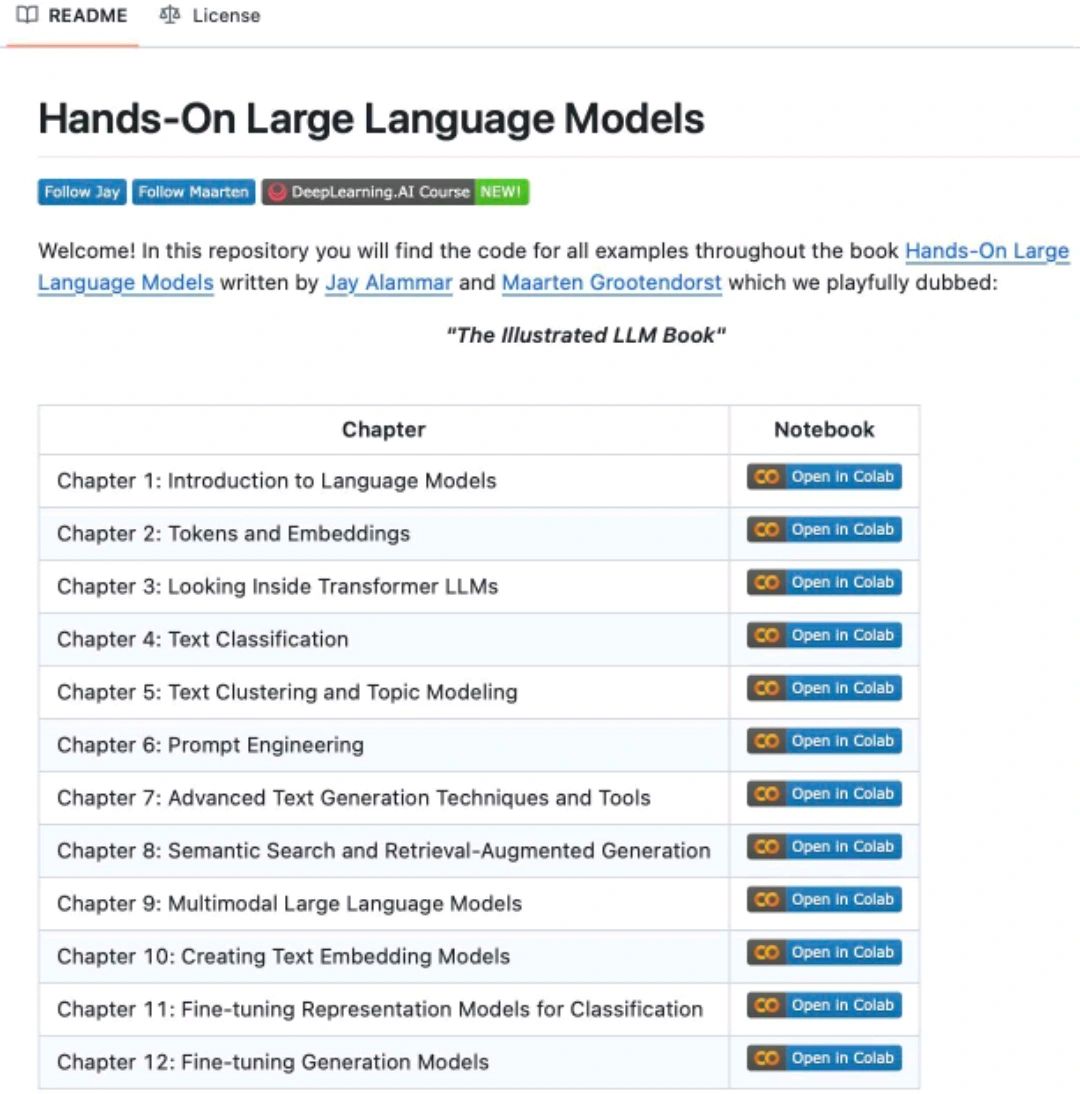
If you have ever seen "The Illustrated Transformer," you know his diagrams are legendary. He also open-sourced the entire codebase for his O'Reilly book: Hands-On Large Language Models.
It’s effectively a visual masterclass in LLMs for free.
Chapter 1: Introduction to Language Models
Chapter 2: Tokens and Embeddings
Chapter 3: Looking Inside Transformer LLMs
Chapter 4: Text Classification
Chapter 5: Text Clustering and Topic Modeling
Chapter 6: Prompt Engineering
Chapter 7: Advanced Text Generation Techniques and Tools
Chapter 8: Semantic Search and Retrieval-Augmented Generation
Chapter 9: Multimodal Large Language Models
Chapter 10: Creating Text Embedding Models
Chapter 11: Fine-tuning Representation Models for Classification
Chapter 12: Fine-tuning Generation Models
I will put the repo link in the comments.
🚨 OpenAI's head of engineering just revealed how they actually code in 2026.
80 minutes. free. on Lenny's Podcast.
watch it. bookmark it.
95% of their engineers use Codex daily. you still type prompts one at a time.
then read the article below.