In 5065 multi-ethnic mother–infant pairs, fetal genetic risks for insulin resistance secondary to lipodystrophy and impaired fasting glucose (IFG) led to reduced fetal growth, while maternal genetic risks for IFG and obesity led to increased growth https://t.co/Vwi7jBddbx 🔓
In >5000 multi-ethnic mother-infant pairs, we found that maternal and fetal T2D genetic risks affect offspring fetal growth along distinct pathways. Thanks all the co-authors! @DrRonaldMa1 @DiabetologiaJnl @CUHKMedicine https://t.co/ggje42aXZw
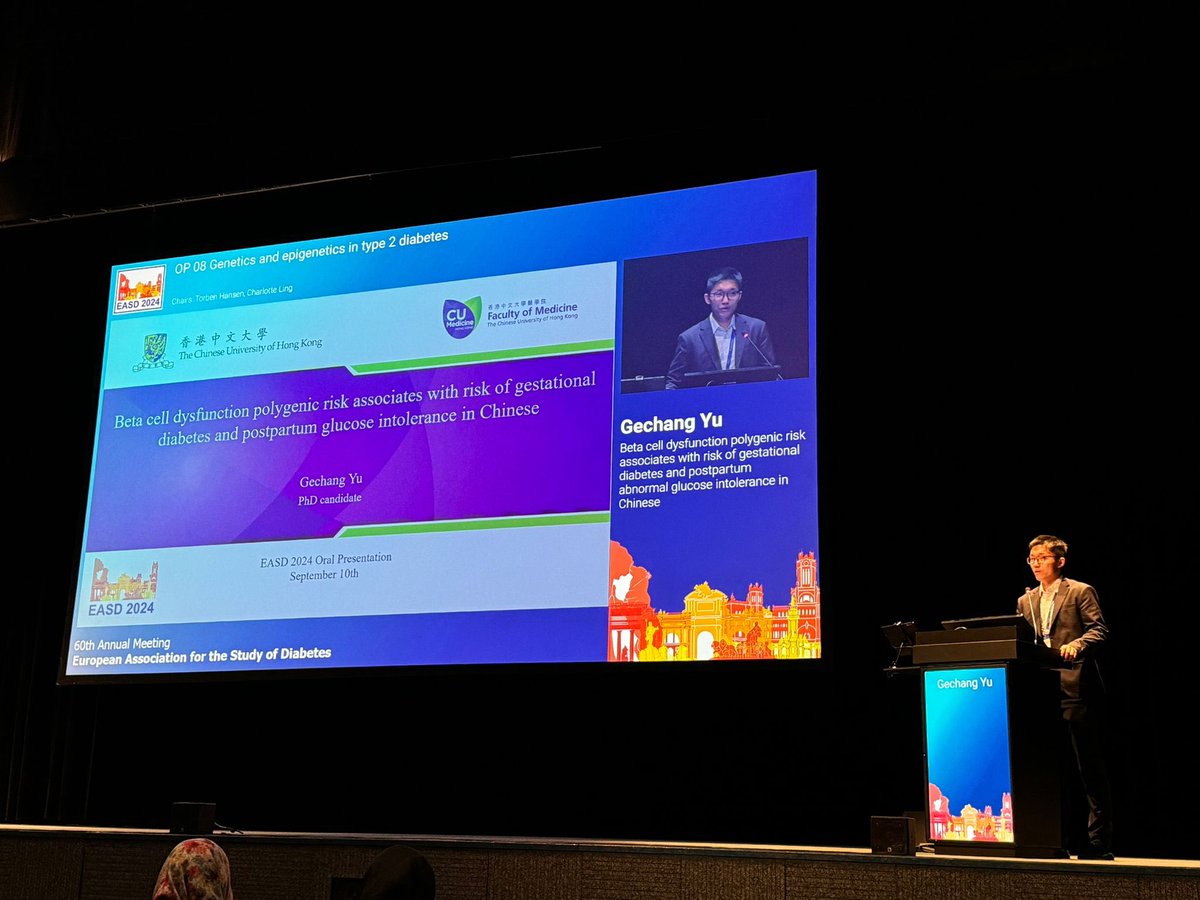
A PhD journey ends with lots of good memories!
Thanks Prof. Ewan Pearson @ezpearson for your insightful questions! Thanks my supervisors, Prof. Ronald Ma @DrRonaldMa1, Prof. Richard Oram @RAOram & Prof. Michael Weedon for your kindly instruction and support!
Researchers analyzed wearable device data, brain scans, and genetic profiles to explore links between physical activity and mental health in adolescents. Moderate levels of activity were associated with lower symptom scores, while excessive activity… https://t.co/z3F8AU7tri
Polygenic risk scores (PRS) for anxiety disorder, ASD and schizophrenia are associated with reduced daily light physical activity and step counts in adolescents, while PRS for physical activity is also associated with lower mental problems.
In >7000 adolescents from ABCD study, we found the effects of wearable-measured physical activity on mental health act more through brain function integration than structure. https://t.co/hayF0AeBki
Thanks the help from Jie Zhang @bn_becker@CssssWu@zhaowenliu_kaka@BJSahakian !
NT-proBNP shows good potential in the Hong Kong Diabetes Biobank as a prognostic biomarker to identify individuals with #diabetes at risk of #cardiorenal complications, facilitating more intensive therapies. @drronaldma1@CUHKMedicine#DiabetesResearch https://t.co/OrDpAEnHFh 🔓
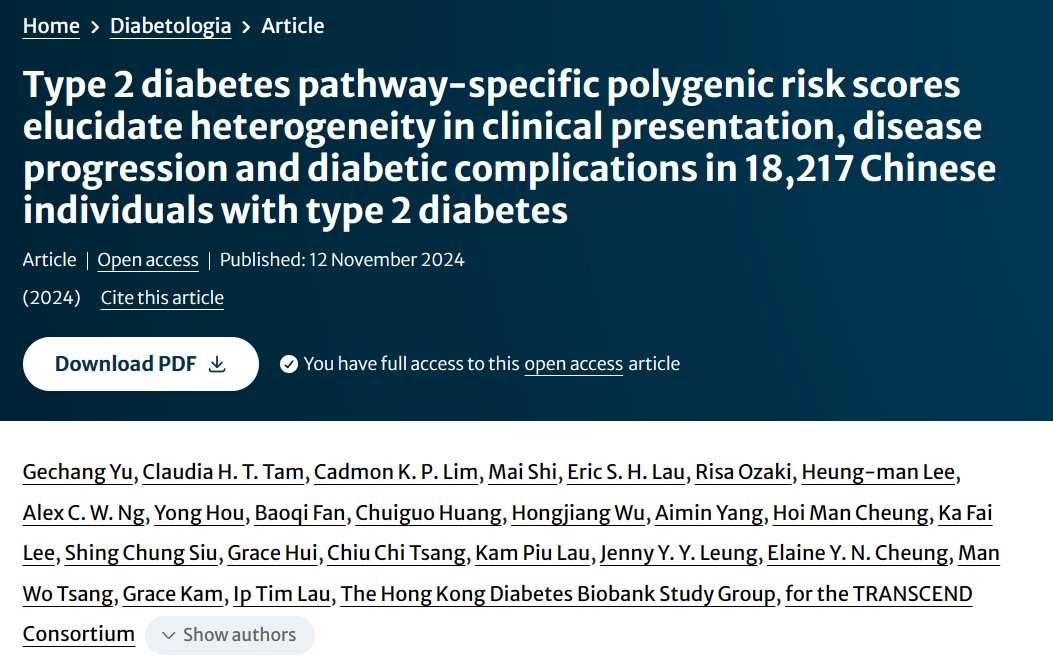
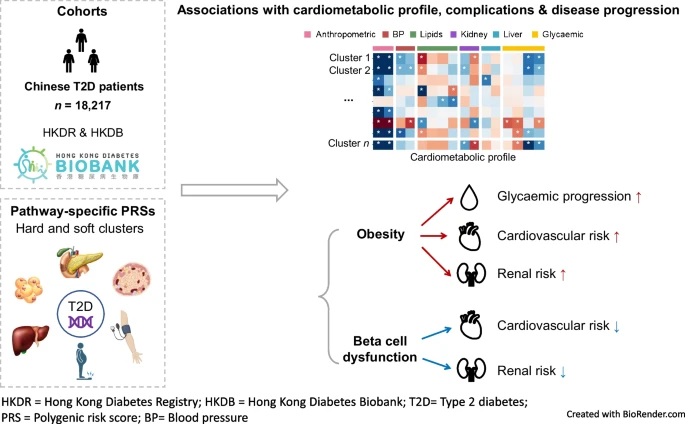
In > 18,000 Chinese #T2D individuals from Hong Kong, we utilized the latest pathway-specific polygenic risk scores (psPRS) to dissect the heterogeneity in disease progression and diabetic complications (P1). https://t.co/4ucZwogEVk @DrRonaldMa1@RAOram @mnweedon @CUHKMedicine
@DrRonaldMa1@RAOram @mnweedon @CUHKMedicine Beta-cell-dysfunction and lipodystrophy could be the driving pathological pathways in T2D individuals with normal weight. Genetic risks of beta-cell-dysfunction and obesity are two major genetic drivers of T2D heterogeneity in disease progression and diabetic complications (P2).
@kirksmith628 Could you please provide the risk/effect allele for each allele so that we could further apply your partitioned PRS in our Chinese population data? Many thanks!
@kirksmith628 In the Supplemental tables S5-8 (ancestry-specific clusters), you did not specify the risk/effect allele for each SNP, which made it seem unable to calculate ancestry-specific PRS in our own genotype data.
@kirksmith628 Hi, Kirk, great work! I am Gechang Yu from Chinese University of Hong Kong, who listened to your presentation in ADA 2023 and talked with you about the soft clustering. I came across a problem when I used your partitioned PRS in our genotype data.