Movie, manga, neuroscience, and bad tastes. Post-Doc in the Institute of Science and Technology for Brain-inspired Intelligence (ISTBI), Fudan university.
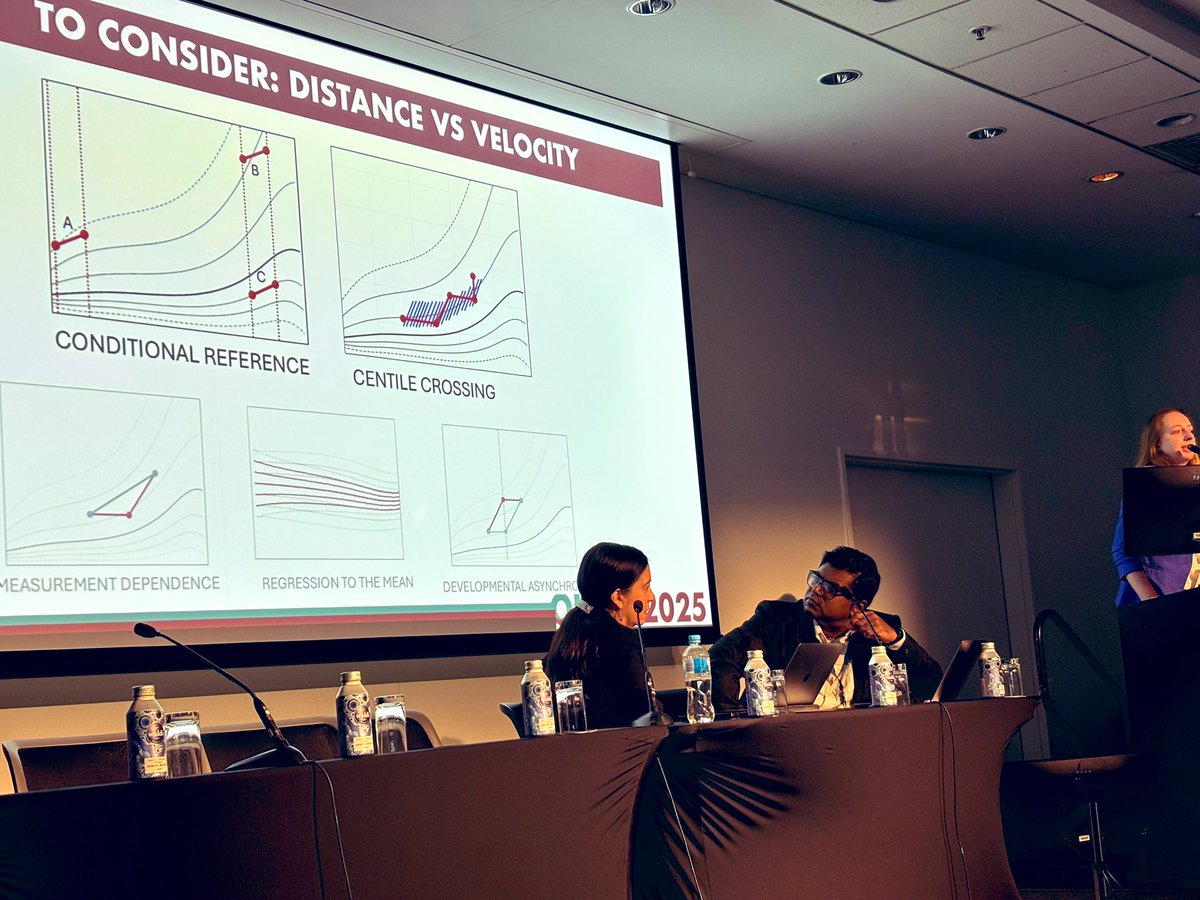
Johanna Bayer @likeajumprope plenary @OHBM in longitudinal normative models of brain changes throughout the human lifespan -
🔥If you use “velocity centiles “ in longitudinal normative model, a “thrive line” defines a change rate that is in the outer 5% of change statistically
🇨🇭The absolute amount of change is not a going to be normed helpfully by cross sectional normative model but the thrive line fans off it as a calibrated distribution
🔥for 2 measures the Z gain score in normals is Gaussian but you can plot it as a function of disease status or change in idisease status - in MCI converters to AD they have a similar z gain to people with AD
💡A cool Brain-AI mind decoding algorithm:
🔥Among several mind-blowing experiences today @OHBM , Dr Tianye Jia* (Fudan Univ., Shanghai) explained Brain-DiT, which uses #AI to identify and understand brain activity shifts that occur in task-based functional MRI*. Some notes:
🔥This paper is nothing to do with me, other than I like it, but it uses Diffusion Transformer (DiT), my favourite AI algorithm, which is quite ingenious [2], it will cheer you up to read how creative it is, even if you have lost all faith in humanity...
🔥If you don't know about DiT, it's worth locking yourself in a room until you understand it, I will make a Youtube video on this if there is interest. ChatGPT uses it to generate images (Studio Ghibli, etc.)
Idea:
1⃣This study introduces Brain-DiT, a deep generative model based on diffusion transformers, to model individual-level brain dynamics from task-based fMRI data, esp transitions between neurocognitive states.
2⃣Beyond SPM -
Traditional task-fMRI methods contrast brain activation during different stimuli (eg face v. shape), assuming (reasonably) consistent responses.
-> Brain-DiT models dynamic processing - incl how brain states evolve over time during tasks
3⃣Transformer + Diffusion AI model -
The model uses a diffusion generative model, combined with transformers (just for the image encoder), to simulate how brain network activity transitions over time as a generative, data-driven approach to brain activity modelling
4⃣No Prior Assumptions -
Brain-DiT identifies key cognitive circuits (like those for language, emotion regulation or inhibition) without being told where to look (actually it does help empirically to add the individual rsFC mx as a conditional guidance term in the DiT backward SDE).
5⃣Subtyping people -
It finds replicable subgroups w distinct brain activity patterns:
🧨 Negative Emotion Bias Group: Linked to language-related circuits (eg left inferior frontal gyrus) these individuals had a 12x increased risk of major depression!
🍷 Maladaptive Inhibition Group: Characterized by hyperactive medial frontal cortex, assoc w a ~9x increased risk of alcohol abuse...
* this is new + exciting- the other main channel of AI methods for fMRI-AI modeling use autoregression and masked token modeling to train the encoder like ChatGPT [3] 🔥👇👇**Ok I am finally convinced to do a YouTube video on AI4FMRI
Finally live! Wondering how some intervention could shape brain function? Wonder no more! 🧠You can consult our computational model with ~100 perturbations (lesions, rewiring, disorders, pharmacology) mapped onto >6000 local and global functional readouts https://t.co/4VdoKszUuy
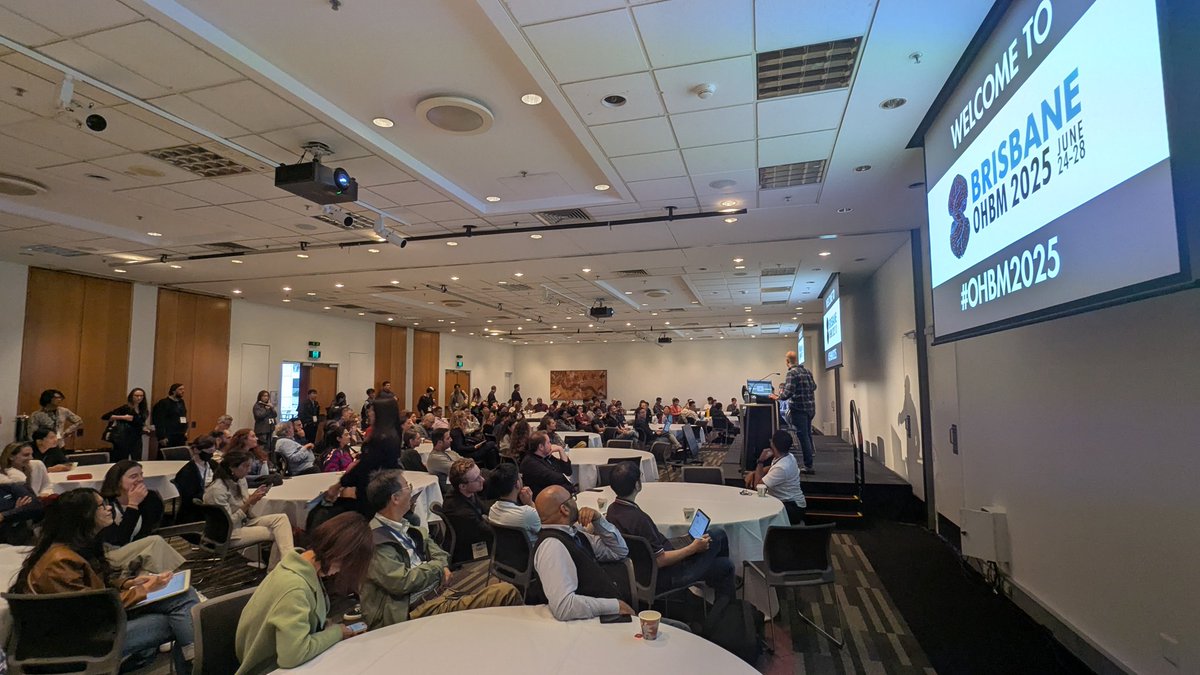
Made it to the “Network controllability” symposium, found a seat (not the best view 😅), but grateful I wasn’t standing like many others! 😁 Stellar talks from @GaticaMarilyn, @LindenParkes, L. Schilling & C. Seguin. Big thanks to Linden & Rick for the great lineup! #OHBM2025
Our poster on aging of redundancy & synergy (Poster NO. 876) at #OHBM2025 received lots of attention from both new and old friends—thank you all! We're grateful for the insightful feedback and will refine our work accordingly. 🙏🧠✨
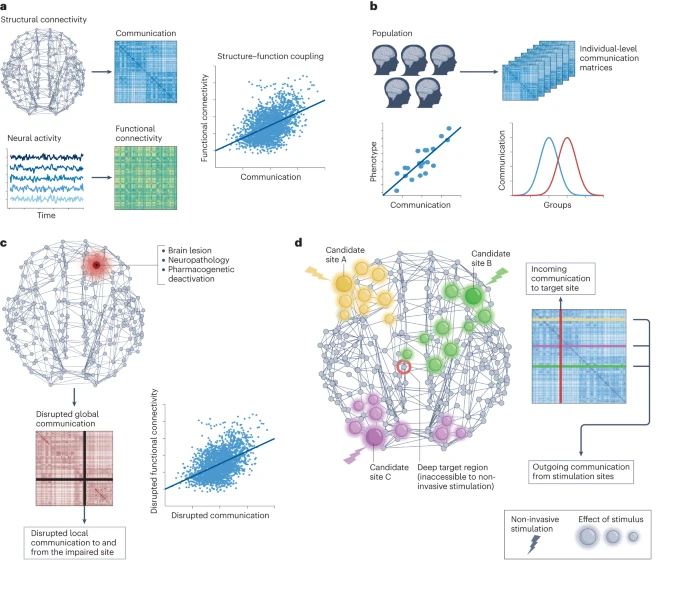
Brain network communication: concepts, models and applications — a Review by Caio Seguin, Olaf Sporns & Andrew Zalesky
https://t.co/6lFkn7zVGa
@caioseguin @spornslab @AndrewZalesky
🎨🧑🎨 Looking for a tool to visualize subcortical/thalamic data in 2D? Check out this python-based package I put together (subcortex-visualization on PyPI) + a guide to create your own custom atlas meshes and vector graphics! All feedback/tips welcome 😊
https://t.co/eUPfQj1U7a
I wish people would stop sharing this article without evaluating it. One might not like AI but that doesn't make a paper critical of it of value because of that. That's not how science works.
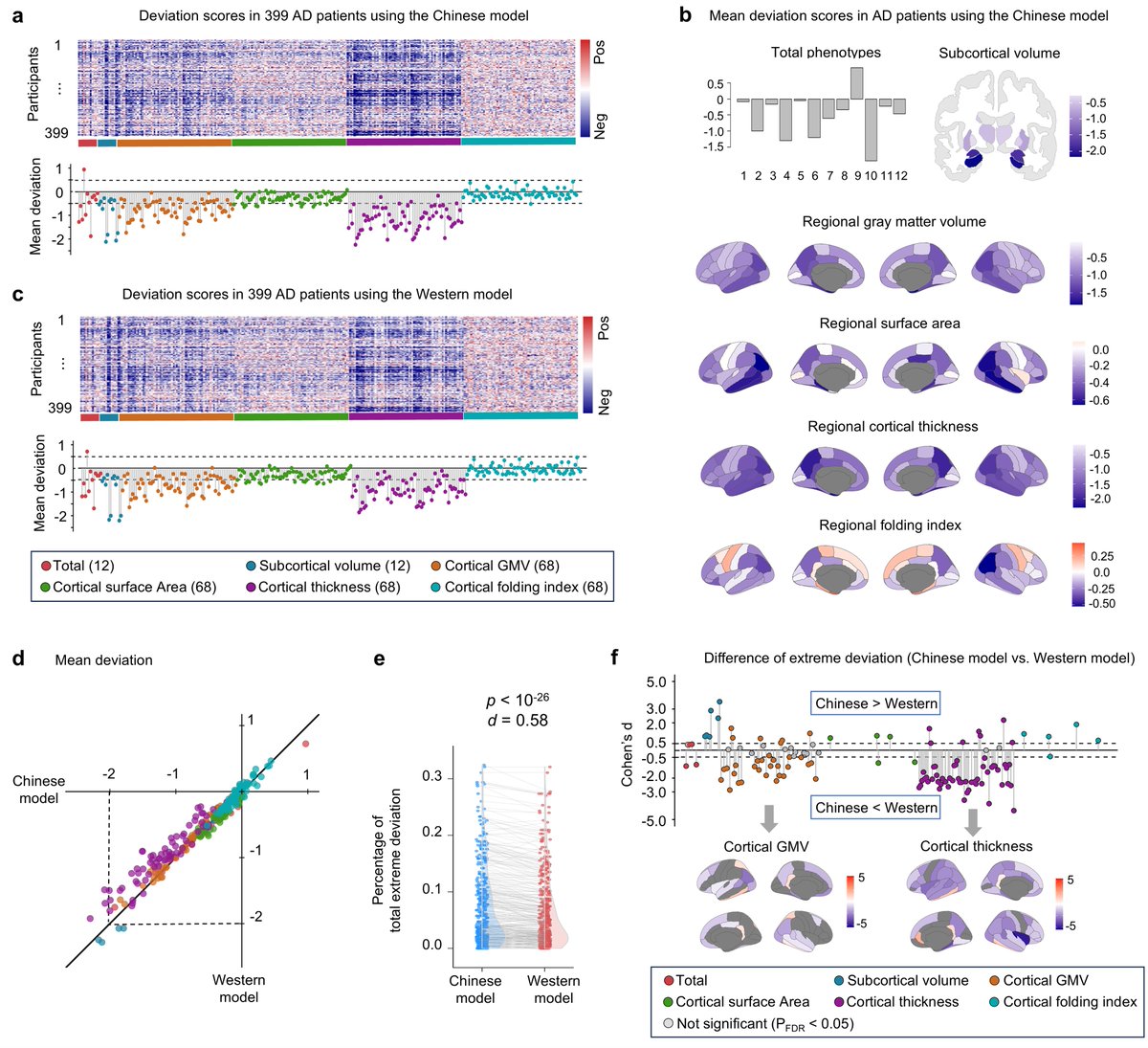
These Chinese-specific brain charts outperform Western-derived models in predicting Chinese healthy brain phenotypes and detecting pathological deviations in Chinese clinical cohorts(Alzheimer’s, schizophrenia, and depression). (5/6)
Happy to share that our article “Human lifespan changes in the brain’s functional connectome” is now published online at Nature Neuroscience @NatureNeuro.
led by @longong4
Many thanks to all collaborators and data contributors!!
https://t.co/ew6jz0z468
In >7000 adolescents from ABCD study, we found the effects of wearable-measured physical activity on mental health act more through brain function integration than structure. https://t.co/hayF0AeBki
Thanks the help from Jie Zhang @bn_becker@CssssWu@zhaowenliu_kaka@BJSahakian !
Closing the chapter on #OHBM2024 with a heart full of joy and science! Reconnecting with long-time colleagues, making new connections, and witnessing the dynamism of my lab team was truly the highlight 🧠 Looking forward seeing everyone again in Brisbane!
Suicidal behaviours in youth are complex & defy singular explanatory models. We see distinct types in them, one associated with higher social status but transient. 2 others with externalizing/depressive features are the most persistent over 2 years in #ABCD. Work led by @CssssWu








![PTenigma's tweet photo. 💡A cool Brain-AI mind decoding algorithm:
🔥Among several mind-blowing experiences today @OHBM , Dr Tianye Jia* (Fudan Univ., Shanghai) explained Brain-DiT, which uses #AI to identify and understand brain activity shifts that occur in task-based functional MRI*. Some notes:
🔥This paper is nothing to do with me, other than I like it, but it uses Diffusion Transformer (DiT), my favourite AI algorithm, which is quite ingenious [2], it will cheer you up to read how creative it is, even if you have lost all faith in humanity...
🔥If you don't know about DiT, it's worth locking yourself in a room until you understand it, I will make a Youtube video on this if there is interest. ChatGPT uses it to generate images (Studio Ghibli, etc.)
Idea:
1⃣This study introduces Brain-DiT, a deep generative model based on diffusion transformers, to model individual-level brain dynamics from task-based fMRI data, esp transitions between neurocognitive states.
2⃣Beyond SPM -
Traditional task-fMRI methods contrast brain activation during different stimuli (eg face v. shape), assuming (reasonably) consistent responses.
-> Brain-DiT models dynamic processing - incl how brain states evolve over time during tasks
3⃣Transformer + Diffusion AI model -
The model uses a diffusion generative model, combined with transformers (just for the image encoder), to simulate how brain network activity transitions over time as a generative, data-driven approach to brain activity modelling
4⃣No Prior Assumptions -
Brain-DiT identifies key cognitive circuits (like those for language, emotion regulation or inhibition) without being told where to look (actually it does help empirically to add the individual rsFC mx as a conditional guidance term in the DiT backward SDE).
5⃣Subtyping people -
It finds replicable subgroups w distinct brain activity patterns:
🧨 Negative Emotion Bias Group: Linked to language-related circuits (eg left inferior frontal gyrus) these individuals had a 12x increased risk of major depression!
🍷 Maladaptive Inhibition Group: Characterized by hyperactive medial frontal cortex, assoc w a ~9x increased risk of alcohol abuse...
* this is new + exciting- the other main channel of AI methods for fMRI-AI modeling use autoregression and masked token modeling to train the encoder like ChatGPT [3] 🔥👇👇**Ok I am finally convinced to do a YouTube video on AI4FMRI](https://pbs.twimg.com/media/GuXtbzUbEAAj0ET.jpg)