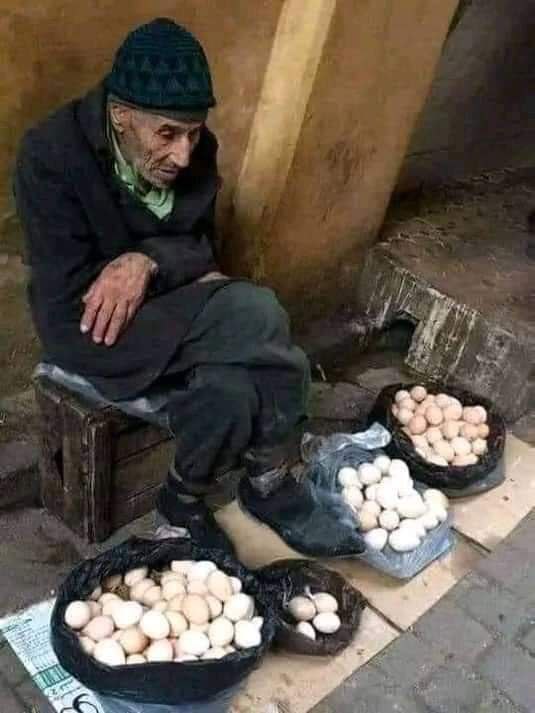
A lady asked an old street vendor, "How much do you charge for your eggs?" The old man replied, "0.50 cents per egg, ma'am." The lady replied, "I'll take 6 eggs for 2.00 dollars or I'll leave." The old vendor replied, "Buy them at the price you want, miss. This is a good start for me, because I haven't sold a single egg today and I need this to make a living."
She bought her eggs at a bargain and left feeling like she'd won. She got into her fancy car and went to a fancy restaurant with her friend. She and her friend ordered whatever they wanted. They ate some of what they ordered and left much of it behind. So they paid the bill of 150 dollars. The ladies gave 200 dollars and told the owner of the fancy restaurant to keep the change as a tip.
This story might seem very normal to the owner of the fancy restaurant, but very unfair to the egg seller. The question it raises is:
Why do we always have to show that we have power when we buy from people in need?
And why are we generous to those who don't even need our generosity?
We once read somewhere that a father bought goods from poor people at a high price, even though he didn't need these things. Sometimes he paid more. His children were amazed. One day they asked him, "Why do you do that, Dad?" The father replied, "It's charity, wrapped in dignity."
I know that most of you won't share this post, but if you're one of the people who took the time to read this far...
Then this message of an attempt at "humanity" has taken a step in the right direction.
Thanks for reading.
🫶
How can you not be romantic about baseball? Better yet, what other sport is NOT dominated or characterized by one “race” and is still classy? White guys, black guys, Latinos, Asians form cohesive teams without prejudice and with sportsmanship. Soccer is a very close second!
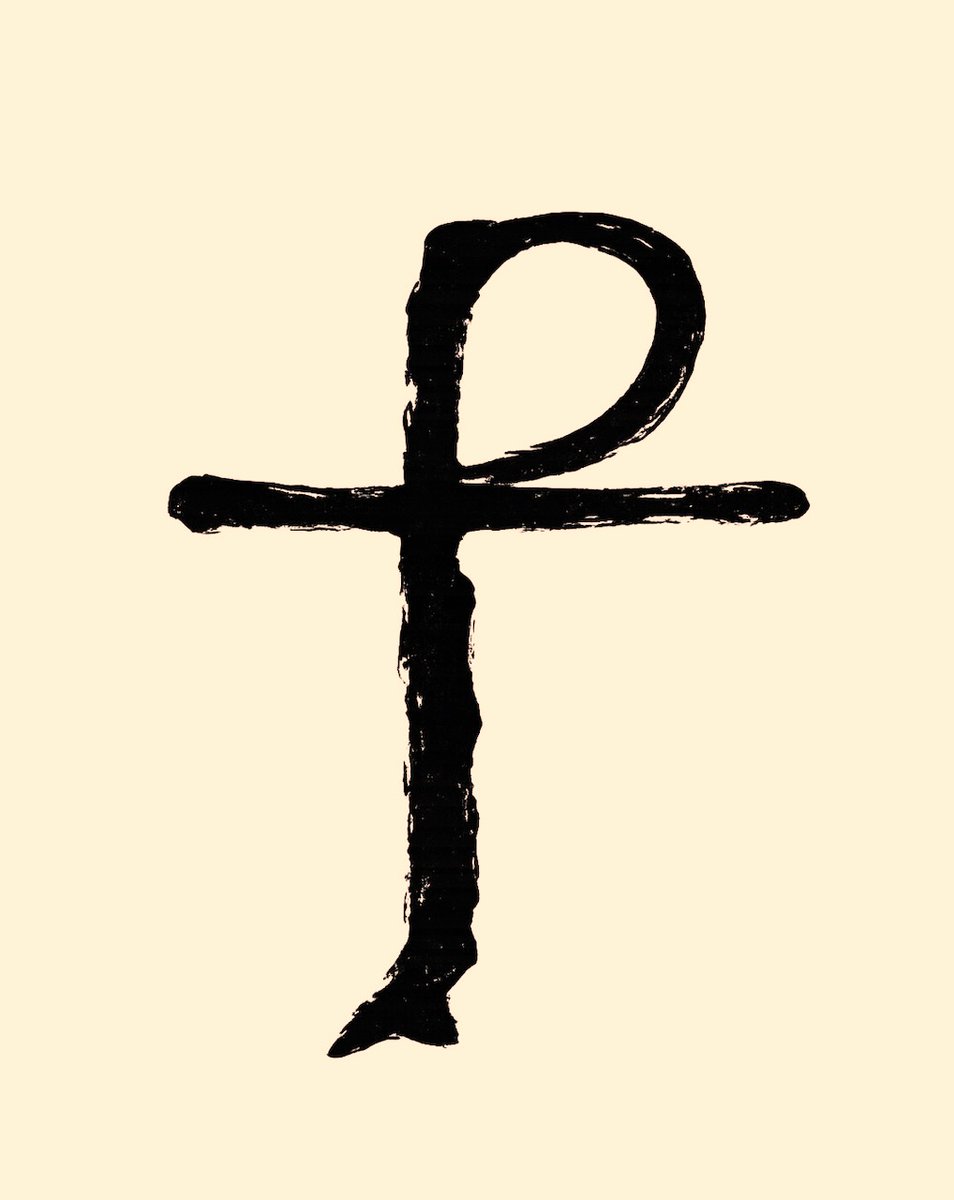
This looks a lot like the cross with an offset loop at the top which the Knights Templar inscribed often. Does anyone know if this is the source or reason for that?
This is likely the earliest Christian symbol, exactly as it appears in the oldest manuscript of the Gospel of Luke (c. AD 200). It is a clever ligature — superimposing the Greek letters tau (Τ) and rho (Ρ) to depict a man hanging on a cross. Even better, the scribe formed this image within the Greek word for "cross" (ΣΤΑΥΡΟΣ, stauros) in the words of Jesus: "Whoever does not carry their cross and follow me cannot be my disciple" (Luke 14:27). And, yes, this is my next T-shirt.
@GeniusGTX The least complicated time travel (and most feasible based on our level of technology and understanding) is into the future. If humanity makes it, then the first experimental trials will be moving forward. We aren’t there yet - for people anyways.
In 2006, Will Ferrell surprised the SNL audience when he joined musical guest Queens of the Stone Age as his "Cowbell" character from six years earlier. When the band kept laughing during rehearsal, they were told to try to think of Will as a serious musician so they wouldn't break 😂
In 1972, a Stanford psychologist gave 4-year-olds a choice.
"One marshmallow now or wait 15 minutes and get two."
Rich kid waits. Poor kid eats it immediately.
For 50 years, psychologists said this proved poor kids lack self-control.
Wrong.
Poor kids learned that promises get broken. The second marshmallow isn't coming.
Professor Jiang Xueqin spent 50 minutes explaining why the poor kids are the rational ones:
The psychologist was named Walter Mischel. He put a marshmallow in front of 4-year-olds and said: "You can have it now, or wait and get two."
He tracked them for decades. The kids who waited did better at everything.
His conclusion: success means delayed gratification. Long-term planning. Self-control.
So educators built curricula around it. Teach kids self-control, resilience, self-assessment. They'll succeed.
It didn't work.
"If you take a bad student and teach him self-control, resilience, and self-assessment, the student doesn't actually get better."
The reason is simple: correlation does not equal causation.
Successful people wake up at 4am. But waking up at 4am won't make you successful.
If you're successful, you wake up early because you're motivated. If you're successful, you have self-control because your environment rewards it.
The traits don't cause success. Success causes the traits.
Here's what actually determines success:
"We know for a fact that rich people are much more likely to succeed than poor people. School doesn't really matter. If your parents are rich, you'll be successful. If your parents are poor, you will not."
The difference starts with parenting.
A rich kid touches a hot stove. The parent says: "You made a mistake. Don't worry about it. Let me explain why fire is dangerous. You could burn yourself. We'd have to go to the doctor."
A poor kid touches a hot stove. The parent says: "Don't you ever do that again or I'll beat the crap out of you."
Same lesson. Completely different worldview.
The rich kid learns: the world is safe. I am respected. Adults explain things to me.
The poor kid learns: the world is scary. I must fear authority. Don't ask questions.
There's another difference. Rich parents keep promises. Poor parents can't.
"Next week we'll go to Thailand." Next week, you go to Thailand.
"Next week we'll go to McDonald's." But the paycheck isn't enough. "Sorry, we can't go anymore."
Rich parents offer stability. Poor parents can only offer volatility.
Now go back to the marshmallow test.
"If you believe the teacher will keep his promise, you won't eat that marshmallow. If you think the teacher is lying, you will eat it."
If you're a poor kid, you've learned that promises get broken. Adults lie. The second marshmallow probably isn't coming.
So you eat the first one. That's not lack of self-control. That's rational decision-making.
"Poor kids are not stupid. Poor kids are rational. They're responding to the circumstances they live in."
The same logic applies to resilience.
"The idea of resilience is that you believe the world will help you. If you're rich and you fail, someone will help you get up. If you're poor and you fail, that probably tells you that you shouldn't be doing this."
Why try again when trying again has never worked?
And self-assessment? "If you're a poor child who lives under a lot of stress, it's hard to be self-reflective. Because if you look back at yourself, all you think about is your pain and your stress."
Here's the deeper structure.
"As a poor person, if you want to survive, you have to obey authority. As a rich person, you maximize your outcome by negotiating with others."
Poor parents command their children because that's what the world will demand. Obey the police. Obey the boss. Don't talk back.
Rich parents teach their children to debate, argue, negotiate. Because that's their game.
"From day one, rich kids know they're playing a different game."
Here's something stranger.
500 students took an IQ test. Then they guessed their ranking.
The top 5% thought they were top 20%. The test was easy for them, so they assumed it was easy for everyone.
The bottom 5% thought they were average.
"People who are stupid lack the capacity to know they're stupid."
This is the Dunning-Kruger effect. And it explains why the most confident people are often the least competent.
"This helps explain why the world is why it is. Often the people in power are stupid. They don't know they're stupid. They were confident."
Can poor kids escape?
"Yes. But it means leaving your community. You have to be extremely individualistic. Very ambitious. High risk tolerance. Most people don't have that."
The professor is one of them.
"I'm a poor kid who succeeded. My father was a dishwasher. But I left Canada for the United States. I got lucky."
"You can work as hard as you want, but the chances are against you. It takes luck. And that's often the exception to the rule, not the rule itself."
Here's what he wants you to understand:
When we see differences in success, our default explanation is differences in ability or effort.
We forget that a poor kid eating the marshmallow isn't weak. He's learned that waiting doesn't pay.
We forget that a poor kid giving up isn't lazy. He's learned that no one's coming to help.
We refuse to admit that the traits we associate with success are products of environment, not causes of it.
The marshmallow test is about measuring childhood, not measuring character.
True, but even more dangerously now is that your impression of what you think you understand does more damage than what you actually know. Thank you social media. 👍
��The more you understand this world, the more you destroy yourself. That's why fools are happy, and intelligent people live in loneliness.”
- Fyodor Dostoevsky