Hurricane Polo has intensified into a powerful Category 5 storm with record-breaking winds and low pressure off Mexico's coast.
https://t.co/1jBjRIQNI9
A large Saharan dust plume has stretched across the Atlantic from the west coast of Africa towards the Americas. CAMS data shows that large parts of the Caribbean are most impacted.
🇺🇸 U.S. Oil & Gas:
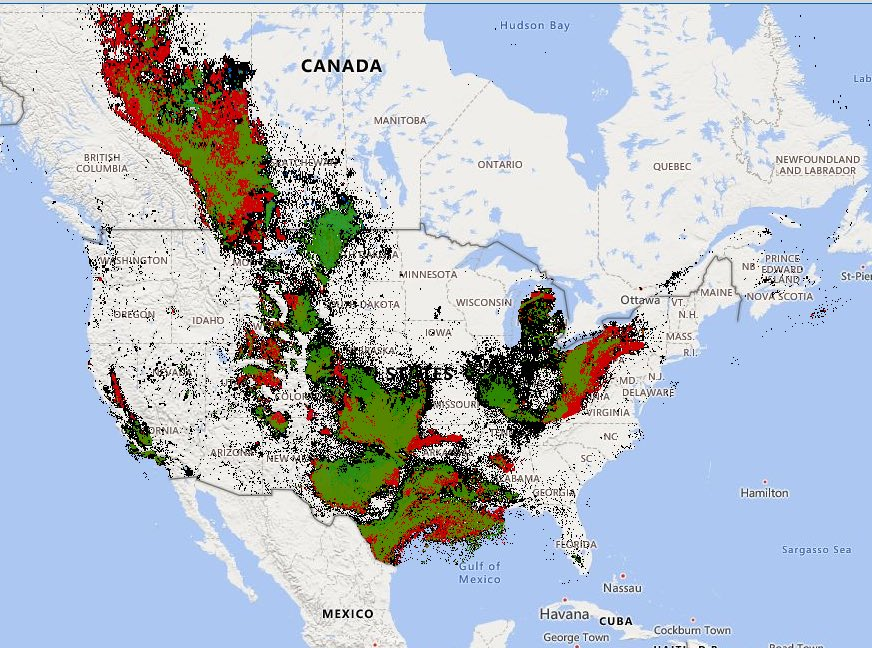
The U.S. sits on 46 billion barrels of proved crude oil reserves, with 60% of that locked in dense underground rock.
The Permian Basin, which stretches across West Texas and southeastern New Mexico, pumps out 6.6 million barrels a day on its own, more than every OPEC country except Saudi Arabia.
The U.S. is the single largest oil producer on the planet at 13.6 million barrels a day, out-producing both Russia (9.1M) and Saudi Arabia (9.3M).
On natural gas, it isn't close:
America produced a record 43.2 trillion cubic feet in 2025, roughly a quarter of the world's supply and more than Russia and Iran combined.
The U.S. sits on world-class reserves and out-produces every petrostate.
A newly discovered fossil ape from northern Egypt is reshaping the understanding of early hominoid evolution, researchers report in Science.
The fossil finding suggests that the closest ancestors to modern apes may have emerged in northern Africa, outside the traditionally studied regions of East Africa. https://t.co/n3wo0iBuLb
Since the US and Israel began their air campaign against Iran, the Islamic Republic has launched wide-ranging drone and missile attacks against all six GCC states.
While only a few of the more than 4,000 Iranian projectiles launched against GCC states have hit their intended targets as of 19 March 2026, they have sent shockwaves across global energy, industrial and financial markets.
Ellen Clarke, Noor Hammad and Asna Wajid discuss how Iran’s decision to strike its neighbours will reshape how GCC states define their security and defence priorities.
Find out more: https://t.co/FvfE5bCchb
A restorer cleaning the gilded bronze statue of Hercules, also known as the Hercules Mastai Righetti, within the Vatican Museums' Round Hall....
The colossal gilded bronze statue of Hercules, famously housed in the Vatican Museums, stands as a testament to Roman artistry and religious belief. This imposing 13-foot statue was indeed unearthed in Rome in 1864, in the area near Pompey's Theatre.
This statue is notable for being the largest known gilded bronze statue from antiquity and one of the few to survive largely intact. It was discovered in the Forum Boarium in Rome during the pontificate of Sixtus IV and later moved to the Palazzo dei Conservatori. The statue was considered a sacred object after being struck by lightning, which contributed to its preservation. The ongoing restoration aims to remove centuries of grime and reveal the original gilding, which is exceptionally well-preserved.
What makes its discovery particularly intriguing is that it was found beneath a slab inscribed with the letters 'FCS', which stands for 'Fulgor Conditum Summanium'. This Latin phrase translates to "Here lies a Summanian thunderbolt" or "Here is buried a thunderbolt from Summanus."
This inscription indicates that the statue had been ritually buried after being struck by lightning. In ancient Roman religion, lightning strikes were considered a direct manifestation of divine will, particularly from gods like Jupiter (for daylight thunder) or Summanus (for nocturnal thunder). Any object or spot struck by lightning was deemed sacred and was often ritually interred on the spot, as a way to contain and honor the divine energy. This act of burial ultimately contributed to the statue's remarkable preservation, including much of its original gilding, making it one of the largest and best-preserved gilded bronzes from antiquity.
The statue depicts Hercules leaning on his club, with the skin of the Nemean lion draped over it, and holding the apples of the Hesperides. It is believed to be a Roman artwork dating from late 1st to early 3rd Century AD, possibly a copy inspired by an earlier Greek model. In recent years, the statue has undergone extensive restoration, further revealing its original golden splendor.
#archaeohistories
Central Park has broken the record for earliest 80 degree day. Previously, March 13, 1990 was the earliest recorded day above 80 degrees.
The average temperature this time of year in Central Park is 48 degrees. https://t.co/9qhe0kI0s3
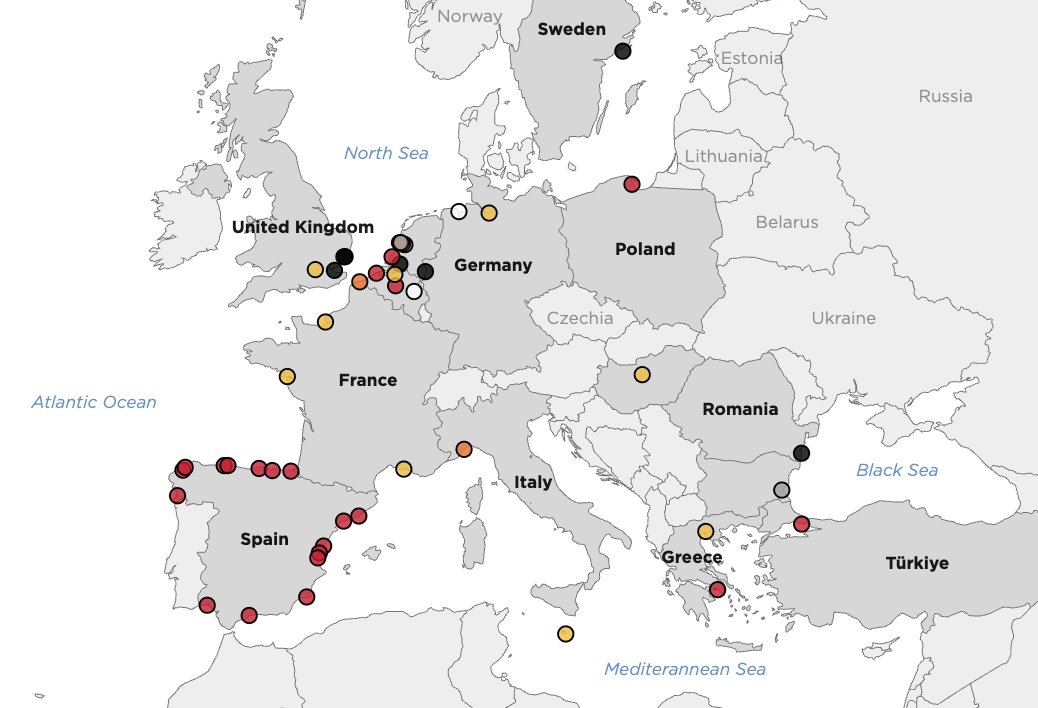
NEW: China holds stakes in dozens of ports around Europe, ranging from minority investments to full ownership. See our interactive graphic. https://t.co/jDvqEVF5hT
On Monday, I met with South Korean Deputy Prime Minister @KooYunCheol to discuss the critical minerals ministerial meeting and ongoing market developments in Korea, including the recent depreciation of the Korean won which is not in line with Korea’s strong economic fundamentals.
Korea’s impressive economic performance, especially in key industries that support America’s economy, make it a critical partner for us in Asia.
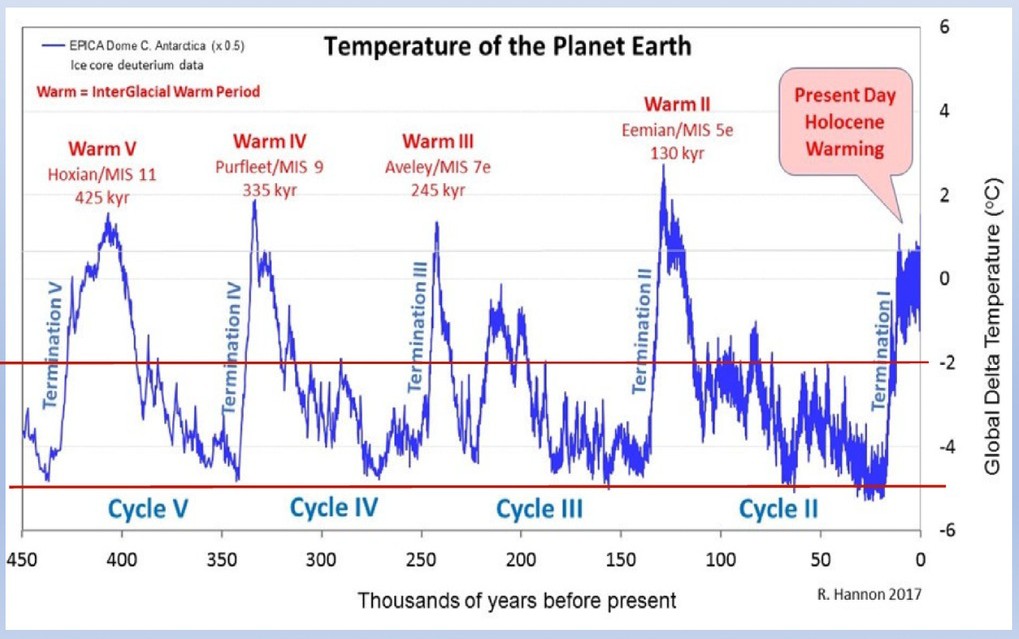
Earth has been in the Quaternary Ice Age for 2.58 million years. The climate swings back and forth from frigid icehouse to warm interglacial, like the one we live in today. During the last glacial period glaciers up to two miles deep covered much of north America and Eurasia. Glacier movements deeply eroded the landscape, creating most of today's great lakes system. All geological records show that climate is never static.
Ice ages comprise glacial and warm cycles that mirror the orbital anomalies of earth's orbital journey around the sun, known as Milankovitch cycles. Throughout these cycles temperatures fluctuated by 5–6°C warming every 100,000 or so years. Most scientists agree, these cycles are driven by orbital variations. However, the way CO₂ amplifies this effect remains an open question. This opens up deeper questions about the actual role of CO₂ future of climate. Is it beyond us to forecast possible future climates? Much of the climate narrative is based around the role of so-called fossil fuels, the pace of modern changes in temperatures and CO₂ levels, and the analogy of a greenhouse effect.
Contributions of water vapour and cloud cover account for 50-70% of warming in many parts of the world. Yet this seems to have been obscured in public statements from the UN. Milankovitch orbital cycles drive the pattern of glaciations, followed by ice-sheet retreat, falling albedo, and changes in ocean circulation. Only after the oceans—especially the Southern Ocean—have warmed for centuries does dissolved CO₂ outgas from the deep waters, slowly raising atmospheric CO₂ from 180 ppm to 280 ppm over 5,000–10,000 years.
However, the Earth has warmed only by around 1.5 degrees in the 170 years since the end of the little ice age in Europe. That is not a lot of warming, attributed by the climate campaign to increased CO₂ levels, caused by the industrial revolution. Yet by any analysis a rise of 1.5 degrees is not large. Global temperatures are estimated to be around 15 degrees, which is more than 6 degrees cooler than a global average of 18-25 degrees throughout much of the Phanerozoic Eon, beginning 541 million years ago. A 1.5 degree rise should not have substantial consequences for world climate or human society that can't be mitigated and nuanced. Numerous crisis tipping points have been announced yet none occurred. Humans are amazingly flexible and live in widely diverse climate conditions and landforms.
This issue is divisive but has mostly been left obscure and unexplained. The UN labels any doubts as disinformation from science deniers. The UN has even said it owns the science. How can such mild warming create such a global crisis when temperatures already vary daily or seasonally throughout the year by as much as 10 to 12 degrees? Humans can and do live in any climate on earth. Trillions of dollars have now been poured into alternative energy systems based on wind and solar, building several hundred thousand turbines and billions of solar panels. But as I write today, coal, oil and gas still provide around 81% of the world's energy and power.
Mining the minerals and metals and producing turbines and panels created a new massive demand for many of the electrical components, like lithium, copper, graphite. These are all facing supply logjams as demand escalates. Yet almost the entire world of electrical devices relies on these exact minerals and metals, but in vastly smaller amounts.
The potential consequences for such a huge miscalculation are impossible to imagine.
##Electrons in Kagome crystals exhibit geometry-driven #QuantumCoherence, forming collective states that depend on the crystal’s shape—suggesting new ways to control quantum behavior through material design. @nature https://t.co/aGLciG9xaO https://t.co/eYZoxvBOuY
##SevereDrought and declining freshwater resources coincided with the disappearance of #HomoFloresiensis 61,000 years ago, highlighting the impact of climate change on early human survival. @uow@NaturePortfolio https://t.co/YsXtbeiaHQ https://t.co/luG4gpZDW7