Claude is really helpful for quickly building investing algorithm baselines for strategies I want to explore.
For example, search for a good open implementation and implement it locally. Then modify it, pulling data on the fly. So efficient!
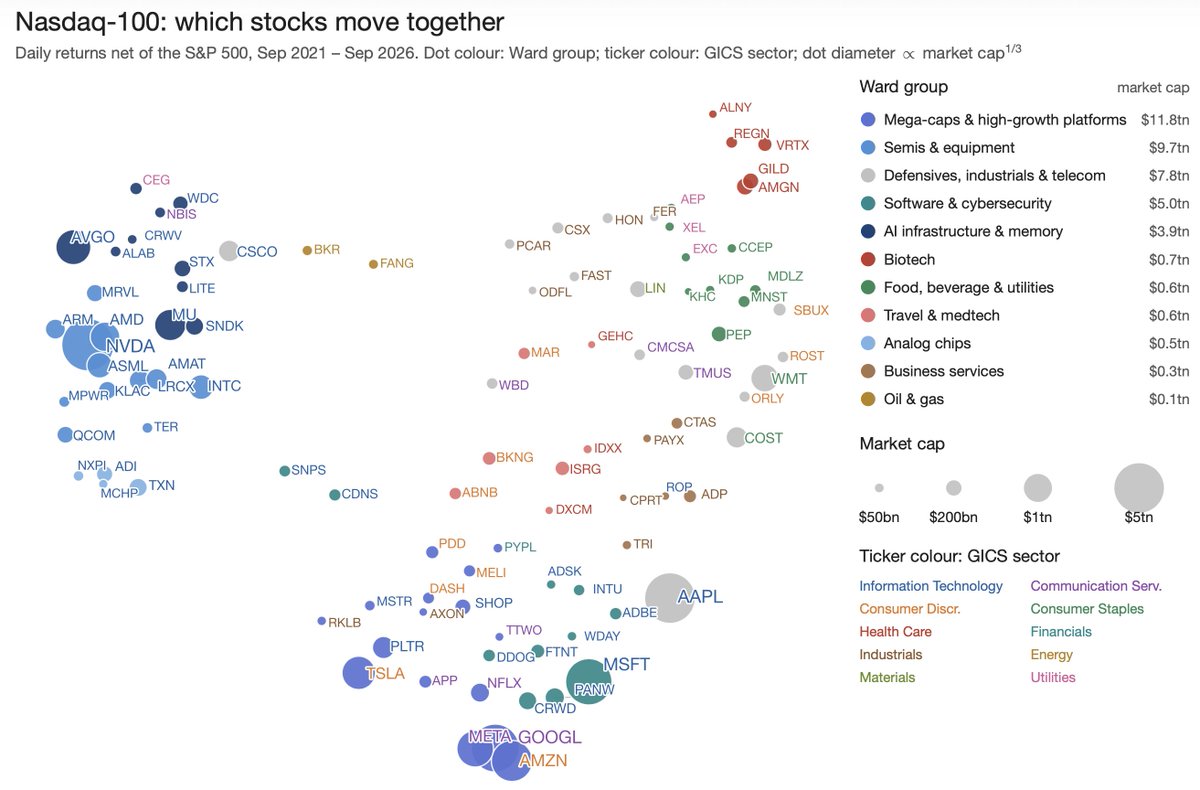
A map of the Nasdaq
AI on the left, Big Tech at the bottom, defensives and biotech on top right.
Within the MAG7, Meta, Google, Amazon bunch together.
Microsoft is with software, Apple is independent.
Tesla is next to Palantir.
Nvidia sits in the center of AI with AMD, ASML, ARM attached.
A second megacap AI cluster with memory (Micron) and infrastructure (Broadcom) has come up next to it.
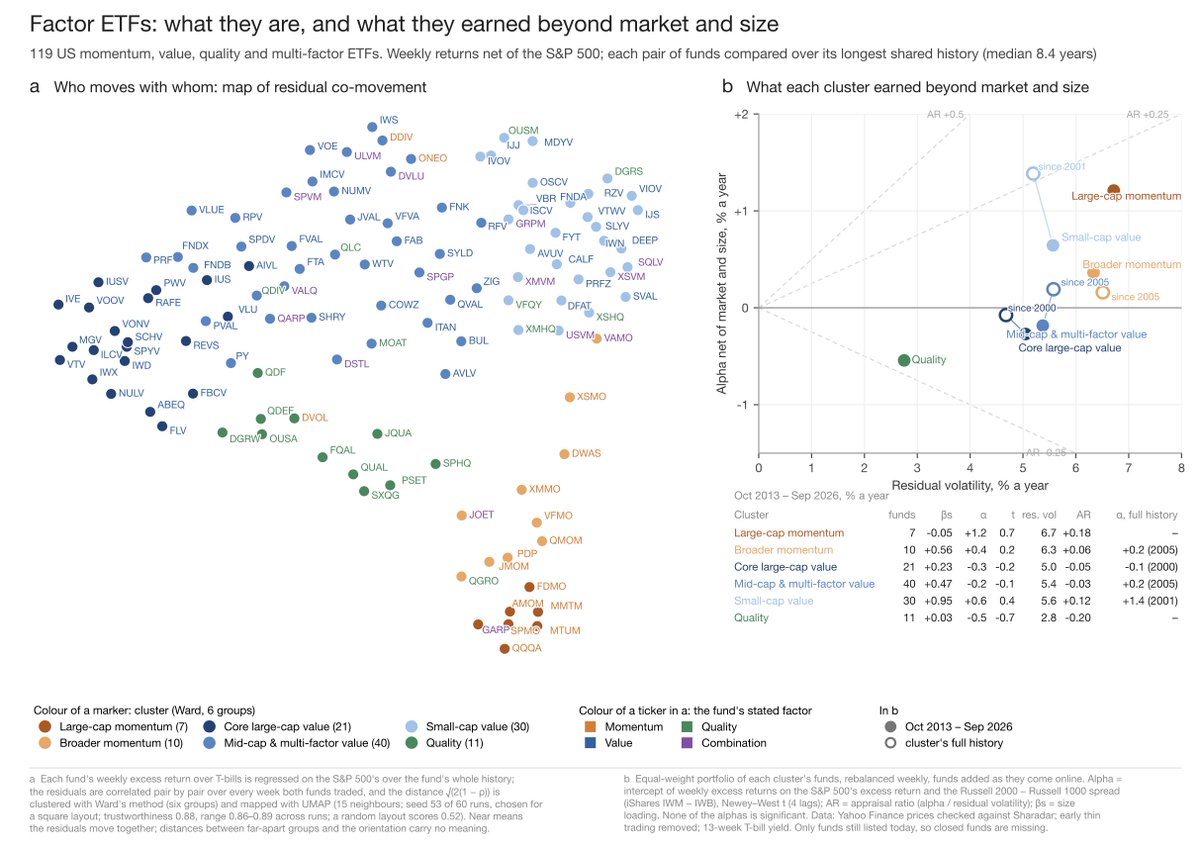
119 factor funds vs their respective benchmark (determined by size) evaluated on 5-year performance
Best Momentum: SPMO
Best Quality: GARP
Best Value: AVUV and DFAT
1/2
Factor ETFs naturally cluster into 6 groups:
A big value cloud from small to large cap, two momentum groups and a quality cluster.
Some funds are in between clusters, for example VAMO has value+momentum+a defensive trend overlay, which worked well in 2022.
Overall, the value style seems really overrepresented.
There is room for more quality and momentum ETFs.
@SystematicIRE For momentum I suspect it's a lack of story one can tell about it? Quality is really odd, and I also don't understand why the US-traded ETFs here don't perform better.
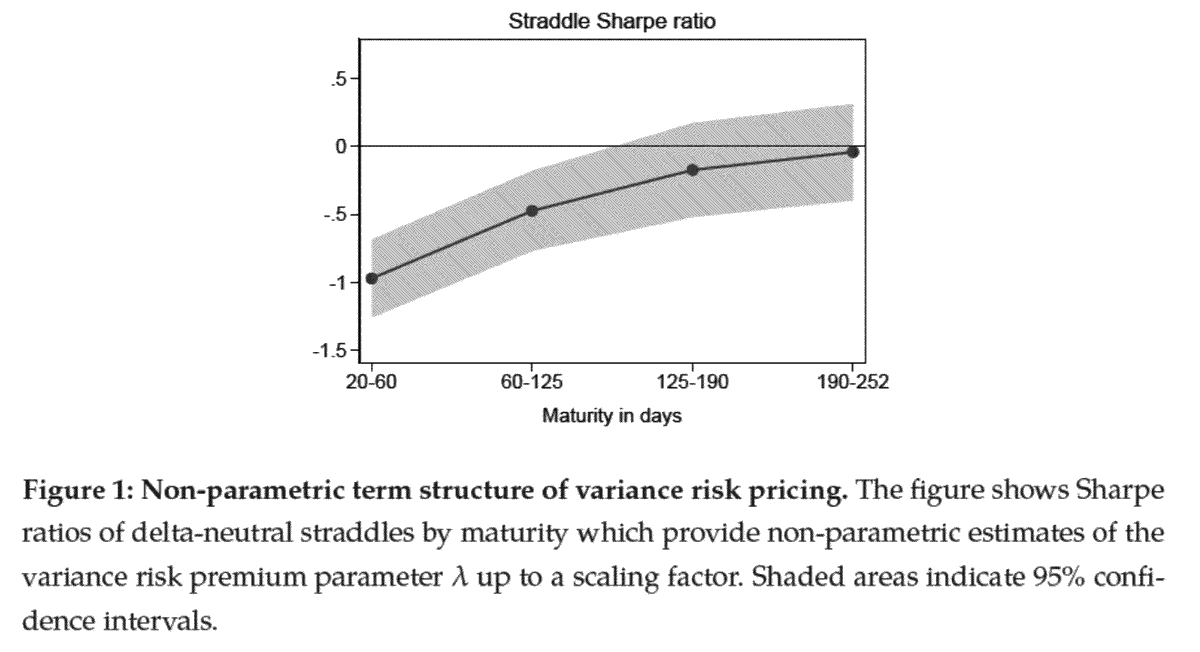
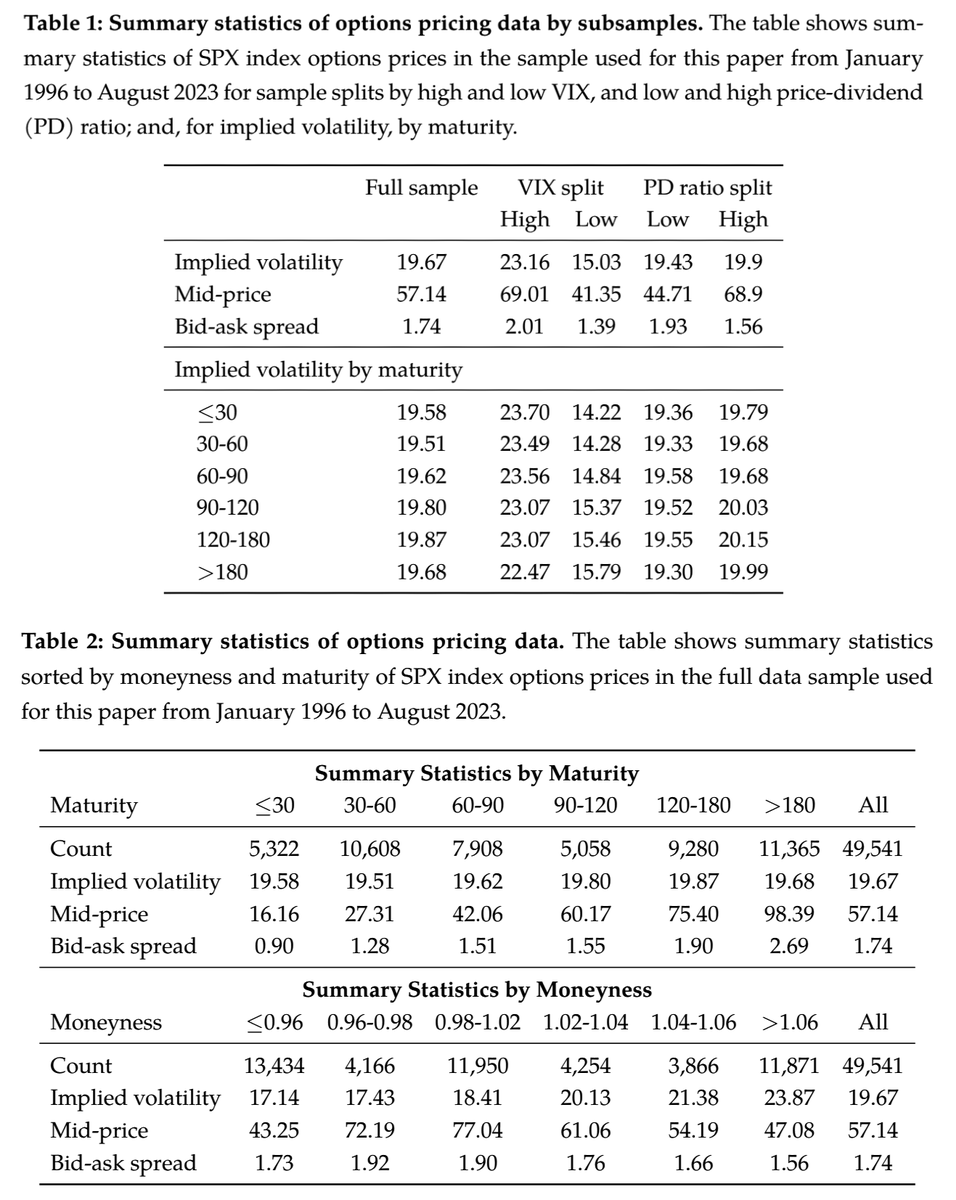
Owning short-dated index straddles has a negative Sharpe, but the Sharpe approaches zero and becomes insignificant as maturity increases.
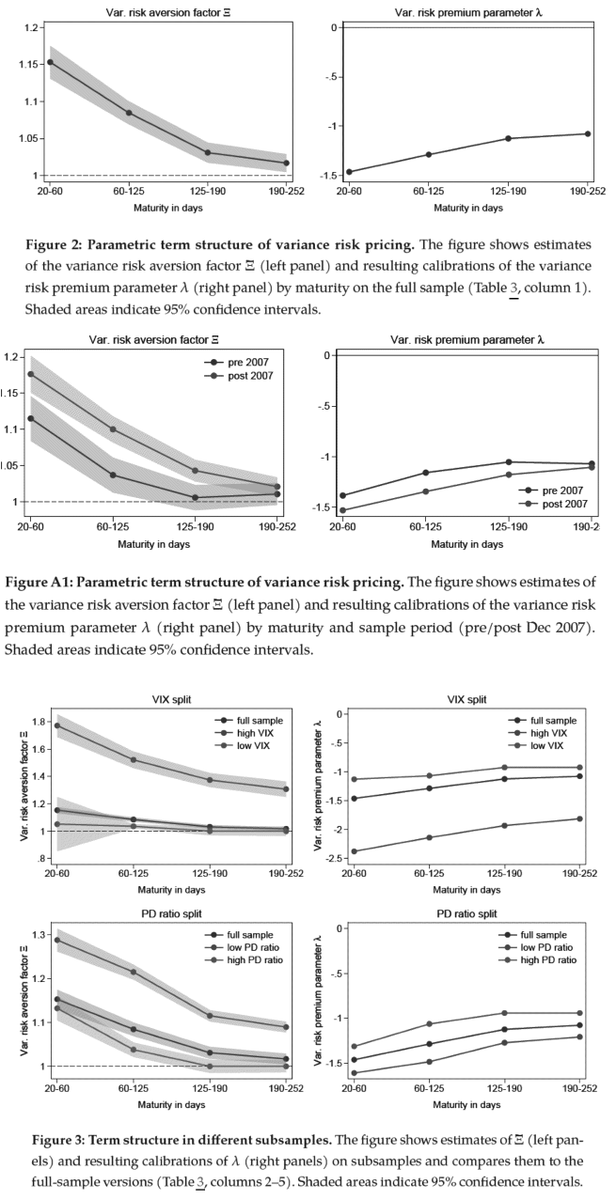
This is consistent with risk aversion declining as maturity increases.
(The straddles are reconstructed as delta-neutral each week.)
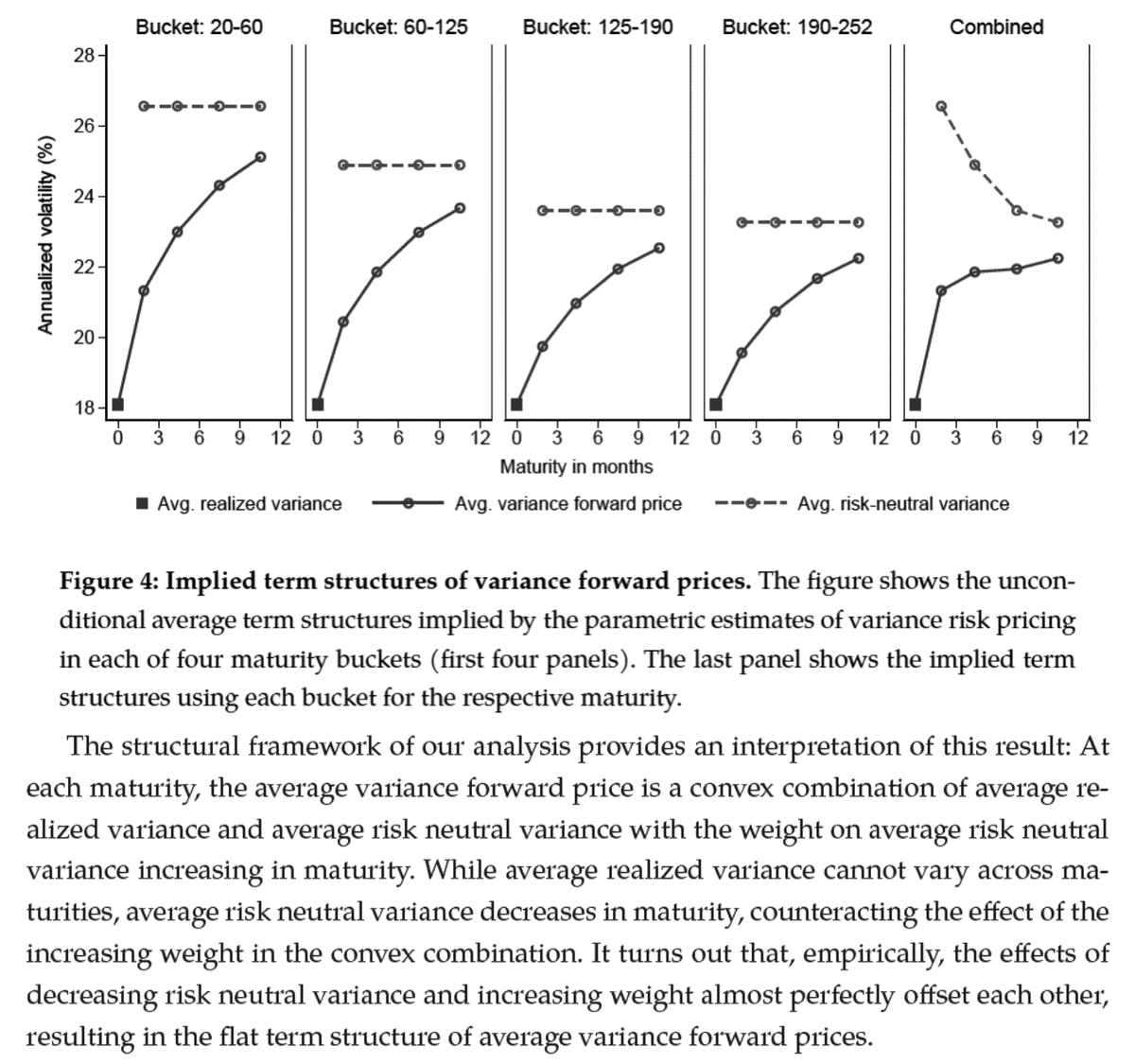
Term Structure of the Price of Variance Risk (Andries et al., 2025)