Hello, I'm Yashvanthraa (Yashu works too!)
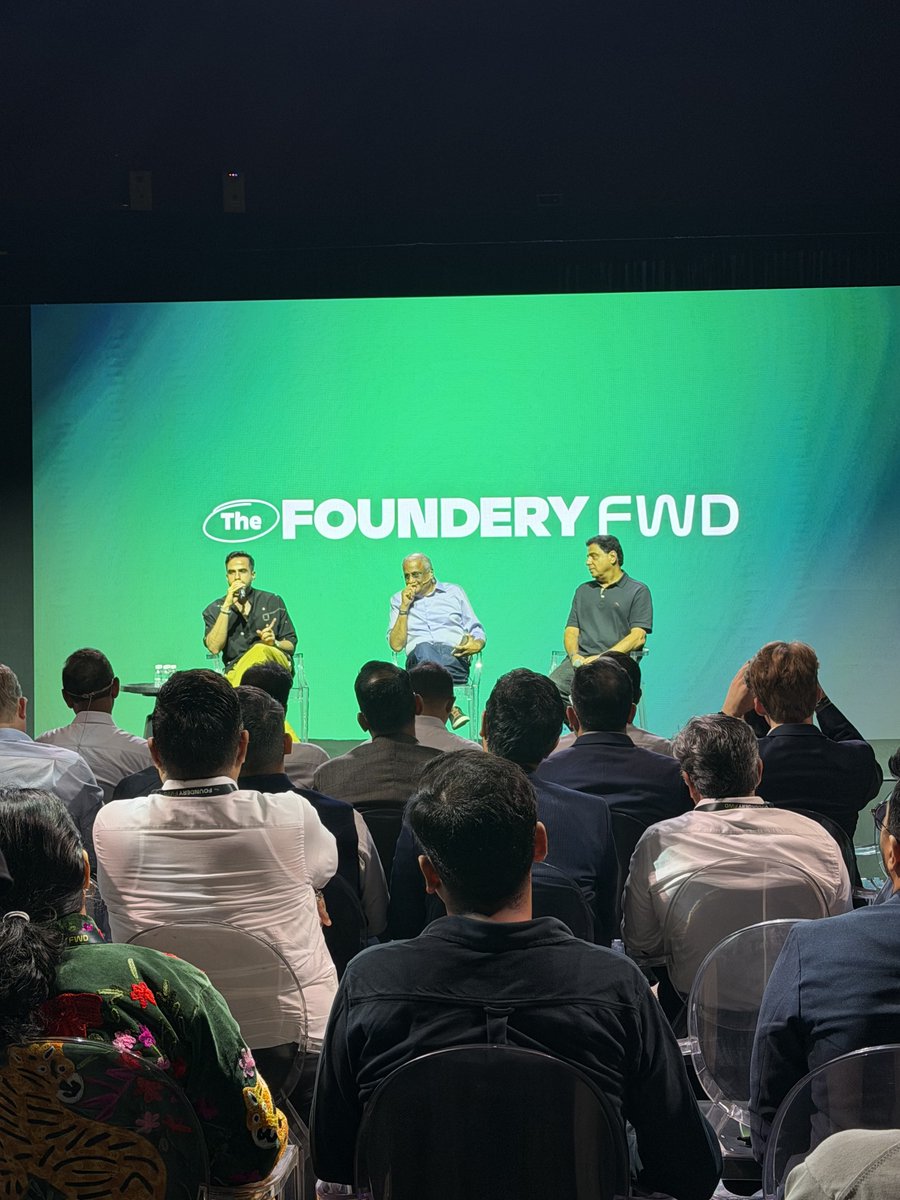
Since 2022, I've been building in functional F&B. Since April of this year, I've been deep in hydration, building New Religion out of @jointhefoundery, alongside @nikhilkamathcio , Kishore Biyani and @RonnieScrewvala
There's one pattern behind almost everything I've built: I tend to question the default
I questioned the default protein source while building Progo, exploring plants, yeast and precision-fermented whey.
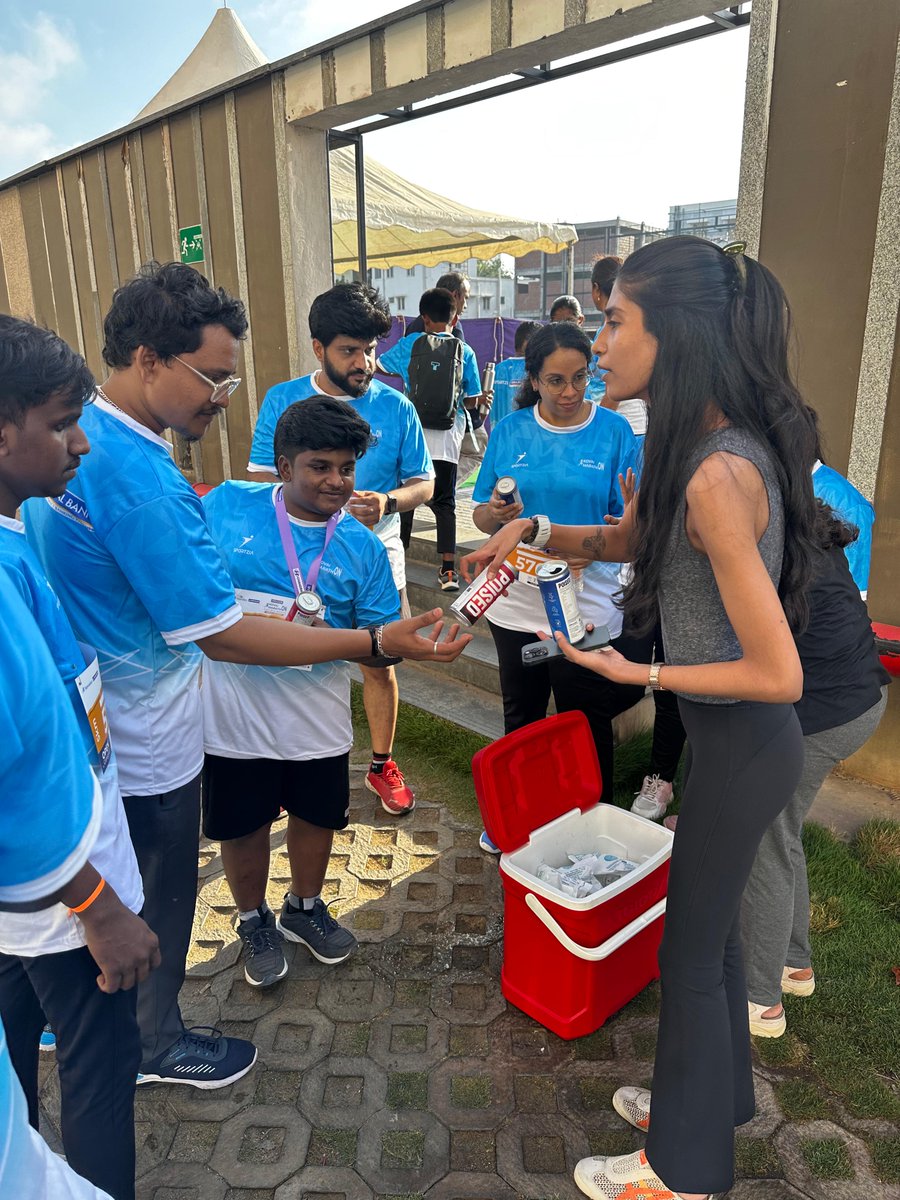
I questioned why the functional beverage shelf largely revolved around energy, and built POISED around focus and calm.
Even in college, while stuck at home during Covid, I looked at scrap metal from my family's automobile foundry and turned it into a cast-iron cookware business. We launched, generated revenue, and before I went back to the US to graduate, I sold the moulds to a customer who wanted to continue making the products.
Now, I'm questioning the default of hydration.
We have our stack of supplements, diets, wearables, scores and protocols for almost every part of health.
Yet hydration, the foundation, is the one we think about least and is often treated either as plain water or as something relevant mainly to sport and performance.
The question I'm now building around is simple: 'How do we hydrate better, daily?'
That question became New Religion.
You'll understand the name soon.
I'll be sharing more of what I'm learning while building in consumer: hydration, functional beverages, product, brand, manufacturing, and life inside The Foundery.
If you're building, researching or working in this space, do DM - I'd love a good conversation.
here's HOW you're going to get your $10k MRR startup idea:
1/ the reddit json hack
> go to any subreddit in a niche of your choice
> take any reddit thread and add /.json to the url
> you get the full conversation instantly
> every reply, every deep thread, every nested comment
> all the context and metadata in a clean format
> no scraping tools needed. it's just there.
2/ now do something with it (analyze it)
> pass it through claude
> get the real pain points and problems users are facing
> spot intent without guessing
> find patterns no one reads
> extract the exact words people use to describe their problems
3/ why this works
> small subreddits are untapped opportunities
> people openly explain what they need
> they literally tell you what they'd pay for
> no surveys, no interviews, just raw frustration
4/ what to look for
> "i wish someone would build..."
> "i'd pay for..."
> "why doesn't X exist?"
> "frustrated with..."
> same complaint appearing 10+ times = validated idea
the advantage isn't speed.
it's listening better than everyone else.
while founders are brainstorming in the shower, you're reading exactly what people are begging for.
the internet is telling you what to build. you just have to listen.
I’m increasingly convinced that the willingness to change your mind is the ultimate sign of intelligence. The most impressive people I know change their minds often in response to new information. It’s like a software update. The goal isn't to be right. It's to find the truth.
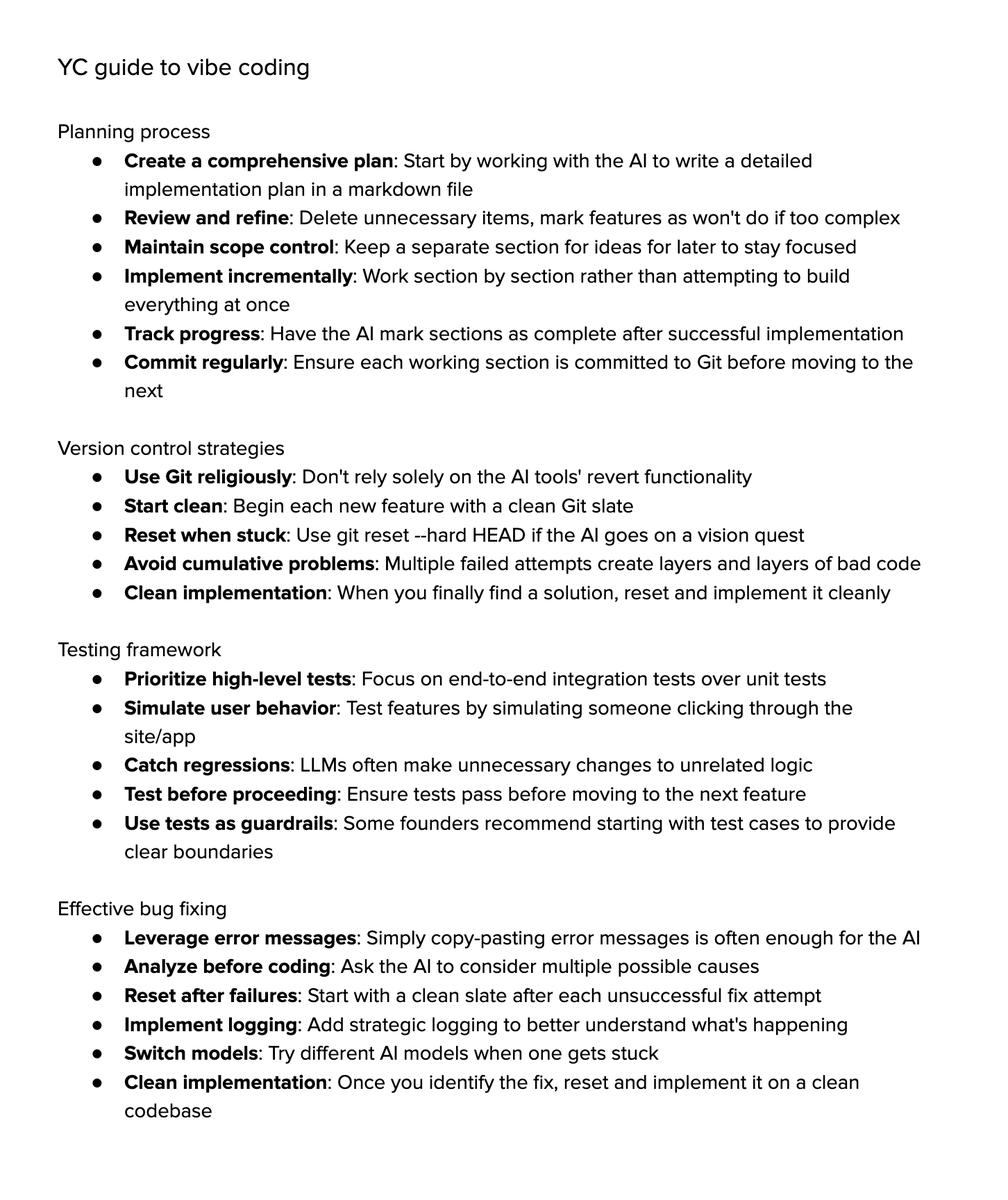
this is the only VIBE CODING GUIDE you'll ever need:
1/ planning process:
> write your plan in markdown first - AI understands structured docs better than chat messages
> break features into 1-hour chunks - AI loses context on bigger tasks. after each, open a new chat.
> keep a future stuff doc - dump random ideas there instead of derailing/pivoting current work
> save working prompts - what worked once will work again
2/ version control strategies:
> commit before every AI session (obviously) - you'll thank yourself later
> use branch names AI understands: "feature/add-user-auth" not "fix-stuff-2"
> when AI breaks everything: git reset --hard HEAD and try a different approach
> never let AI handle merge conflicts - always do it yourself
3/ testing framework:
> write one integration test first - catches 80% of AI mistakes. you won't need that many tests
> test the happy path manually before moving on
> AI loves to "optimize" and break edge cases - test those extra
> describe expected behavior in comments - AI respects documented intent
4/ effective bug fixing:
> paste the exact error message + a screenshot - AI pattern matches better with both
> "explain why this might be happening" often works better than "fix this", ai will start understanding itself
> if AI is stuck after 3 attempts, try a different model
> reset to working state between attempts - don't stack broken fixes
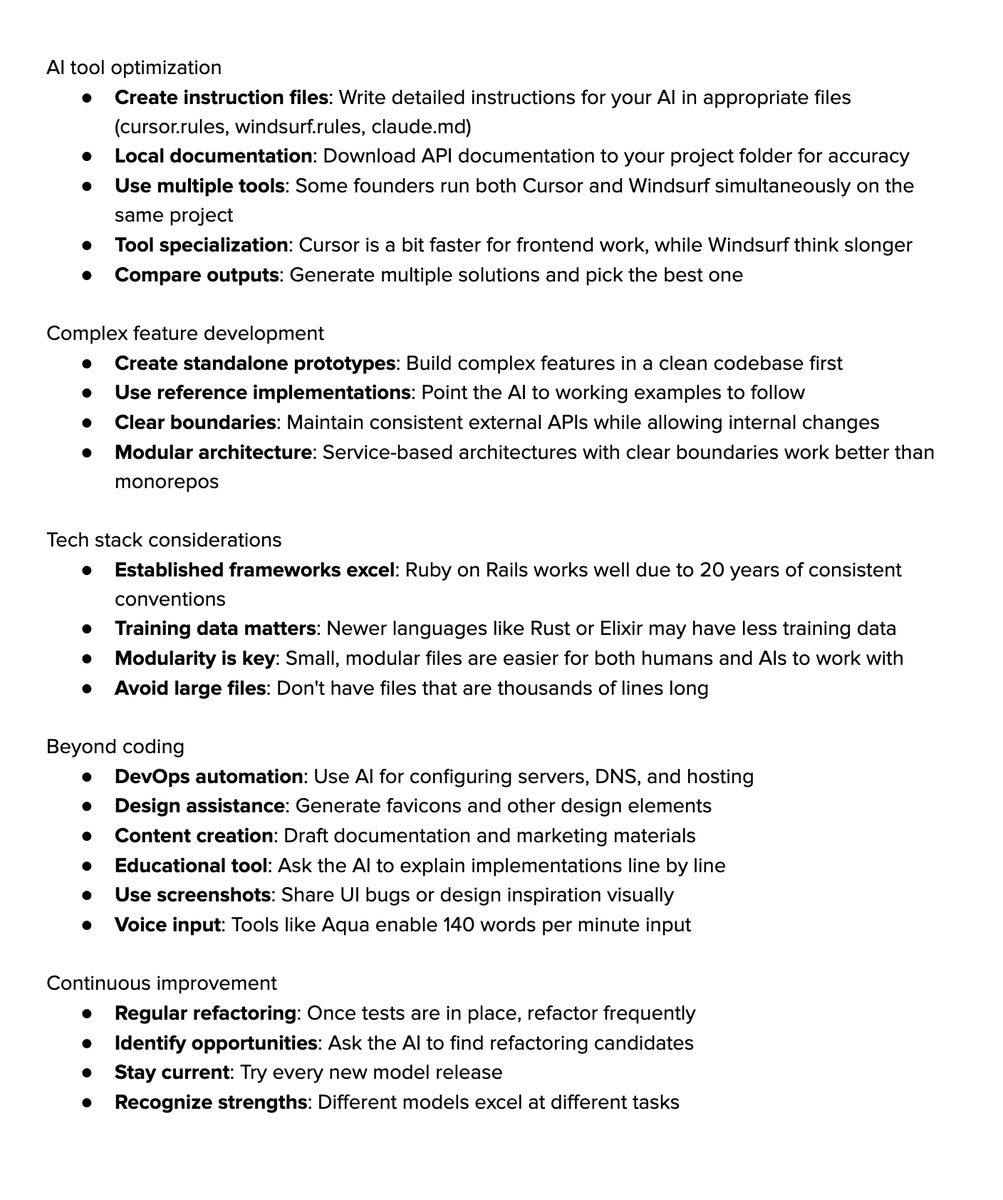
5/ AI tool optimization:
> cursor for speed (smaller bugs, changes in ui/ux), and claude code for thinking and infrastructure
> download docs to your project - local files = better suggestions
> tell ai to name files descriptively - AI uses filenames for context
> .cursorrules file - tell AI your conventions once
6/ complex feature development:
> build the "dumb version" first - make it work, then make it smart
> show AI similar code (e.g. use html from dev tools on ui that you're taking inspiration from) that already works - "make this but for X"
> complex math/algorithms: ask for step-by-step explanation first
> keep business logic separate from UI - AI handles them better apart
7/ tech stack considerations:
> popular frameworks = better AI support (Next.js, Rails, Django)
> typescript helps AI understand your intentions
> avoid niche libraries - AI hallucinates a lot. just paste in the entire doc in the chat if necessary
> 2-year-old tech is the sweet spot - stable and well-documented
8/ beyond coding:
> AI writes better README files than most developers
> use it for git commit messages
> database migrations - AI rarely messes these up
> API documentation - give it your endpoints, get OpenAPI specs
9/ power user tips:
> better AI results with a new chat (seriously, fresh session = fresh context)
> explain what didn't work - "I tried X but got Y" helps AI avoid dead ends
> use AI to review AI's code - "what could go wrong with this implementation?"
> when all else fails: "let's approach this differently"
the FASTEST way to make $10k/month right now is with B2C apps
here's the exact playbook top earners are using:
1/ find a proven niche (don't innovate)
look for apps with:
- 100k+ downloads
- 3.1-3.9 star ratings (room to improve)
- charging $5-50/month
- simple core functionality
habit trackers, journaling apps, photo editors, productivity tools.
boring niches = predictable money.
2/ reverse engineer the winner
> download the top 3 competitors.
> screenshot every screen.
> document their onboarding flow.
> note their pricing strategy.
> understand what hooks users.
you're stealing and you're learning what already works.
3/ find the gaps through complaints
> read their 1-2 star reviews religiously.
> copy paste common complaints into a doc.
> "too expensive" = opportunity for better pricing
> "confusing UI" = opportunity for simplicity
> "missing X feature" = your differentiator
20 negative reviews will tell you exactly what to build.
4/ build the simplest MVP possible
> copy competitor's core features only + their onboarding (IMPORTANT)
> paywall INSTANTLY
> add 2-3 thing users complained about
> use Rork to vibe code the entire thing
> basic UI is fine, functionality matters more
2-3 weeks max. if it takes longer, you're overbuilding.
launch on the App Store ONLY.
$99 Apple is your total investment.
5/ social stalking
> follow your competitors on tiktok/instagram.
> like all their content (algorithm will show you similar)
> save their top performing posts.
> screenshot their ad creatives.
> note which influencers they work with.
their marketing playbook = your starting point.
6/ algorithm training before launch
spend 2-3 days prepping your account:
- 15 minutes daily scrolling your niche
- like every competitor video you see
- save posts similar to what you'll create
- watch complete videos (don't skip)
the algorithm learns what you care about.
feed it your niche = it feeds you customers.
liking competitor videos = tiktok/instagram shows you:
- what's trending in your space
- which sounds are working
- what hooks get views
- your exact target audience
by launch day, your fyp page should be 90% your niche.
that's when you know the algorithm understands your market.
7/ copy what converts
> start off with slideshows
> take competitor's top performing ones.
> extract the text for each slide.
> use grok to generate realistic images for your own posts
> copy ALL slides and add the 2-3 features your competitors DON'T have at the start
> same hook, same music, different app.
if it got them 1M views, it'll work for you too.
8/ scale with micro influencers
once you hit $5k/month:
> find creators with 10k-100k followers
> offer $200-300 per post depending on their performance
> give them your proven scripts from competitors
> let them create in their style
1 influencer post = 1000 organic posts.
real example i watched happen:
> guy copied a meditation app.
> added one feature users begged for (offline mode).
> copied viral tiktok slideshows with AI.
> hit $12k/month in 60 days.
> total investment: $500.
the truth:
innovation is overrated in B2C.
execution on proven concepts wins.
find what works.
make it 10% better.
market it 10x harder.
that's the entire game.
stop building unique apps nobody wants.
start building better versions of apps people already pay for.
$10k/month is 2,000 users at $5/month.
that's one viral tiktok away.
what are you waiting for?
The best founders treat ideas like hypotheses. Execution is their science. They run experiments, gather evidence, and adjust without getting sentimental. That discipline compounds faster than inspiration.
People fall in love with ideas because ideas never fight back. Execution does. It exposes your blind spots, your patience, your habits and your excuses. Most founders learn more from the first week of doing than the first year of imagining.
Good Products are Opinionated.
“Every great founder I’ve seen up close, or even from afar, is highly opinionated and they’re almost dictatorial in how they run things.
Also, early-stage teams are opinionated. And the products they build are opinionated. Opinionated means they have a strong vision for what it should and should not do.
If you don’t have a strong vision of what it should and should not do, then you end up with a giant mess of competing features.
@Jack Dorsey has a great phrase: “Limit the number of details and make every detail perfect.” And that’s especially important in consumer products. You have to be extremely opinionated. All the best products in consumer-land get there through simplicity.
You could argue the recent success of ChatGPT and similar AI chatbots is because they’re even simpler than Google.
Google looked like the simplest product you could possibly build. It was just a box. But even that box had limitations in what you could do.
You were trained not to talk to it conversationally. You would enter keywords and you had to be careful with those keywords. You couldn’t just ask a question outright and get a sensible answer. It wouldn’t do proper synonym matching, and then it would spit you back a whole bunch of results. That was complicated. You’d have to sift through and figure out which ones were ads, which ones were real, were they sorted correctly, and then you’d have to click through and read it.
ChatGPT and the chatbot simplified that even further. You just talk to it like a human—use your voice or you type and it gives you back a straight answer.
It might not always be right, but it’s good enough, and it gives you back a straight answer in text or voice or images or whatever you prefer.
So it simplifies what we looked at as the simplest product on the Internet, which was formerly Google, and makes it even simpler. And you just cannot make a product that’s simple enough.
To be simple, you have to be extremely opinionated. You have to remove everything that doesn’t match your opinion of what the product should be doing. You have to meticulously remove every single click, every single extra button, every single setting.
In fact, things in the settings menu are an indication that you’ve abdicated your responsibility to the user. Choices for the user are an abdication of your responsibility. Maybe for legal or important reasons, you can have a few of these, but you should struggle and resist against every single choice the user has to make.
In the age of TikTok and ChatGPT, that’s more obvious than ever. People don’t want to make choices. They don’t want the cognitive load. They want you to figure out what the right defaults are and what they should be doing and looking at, and they want you to present it to them.”
Someone used Elon Musk's actual thinking framework as AI prompts.
It's the closest thing to having a billionaire engineer rip apart your ideas and rebuild them from physics.
Here are the 15 prompts that changed how I solve problems: