В середине октября 2021 года состоялся запуск миссии #Lucy к троянским астероидам Юпитера.
Разбираемся с тем, как запускают автоматические межпланетные станции, где начинается глубокий космос и сколько искусственных объектов смогло в него проникнуть https://t.co/Nlx5pgqAWO
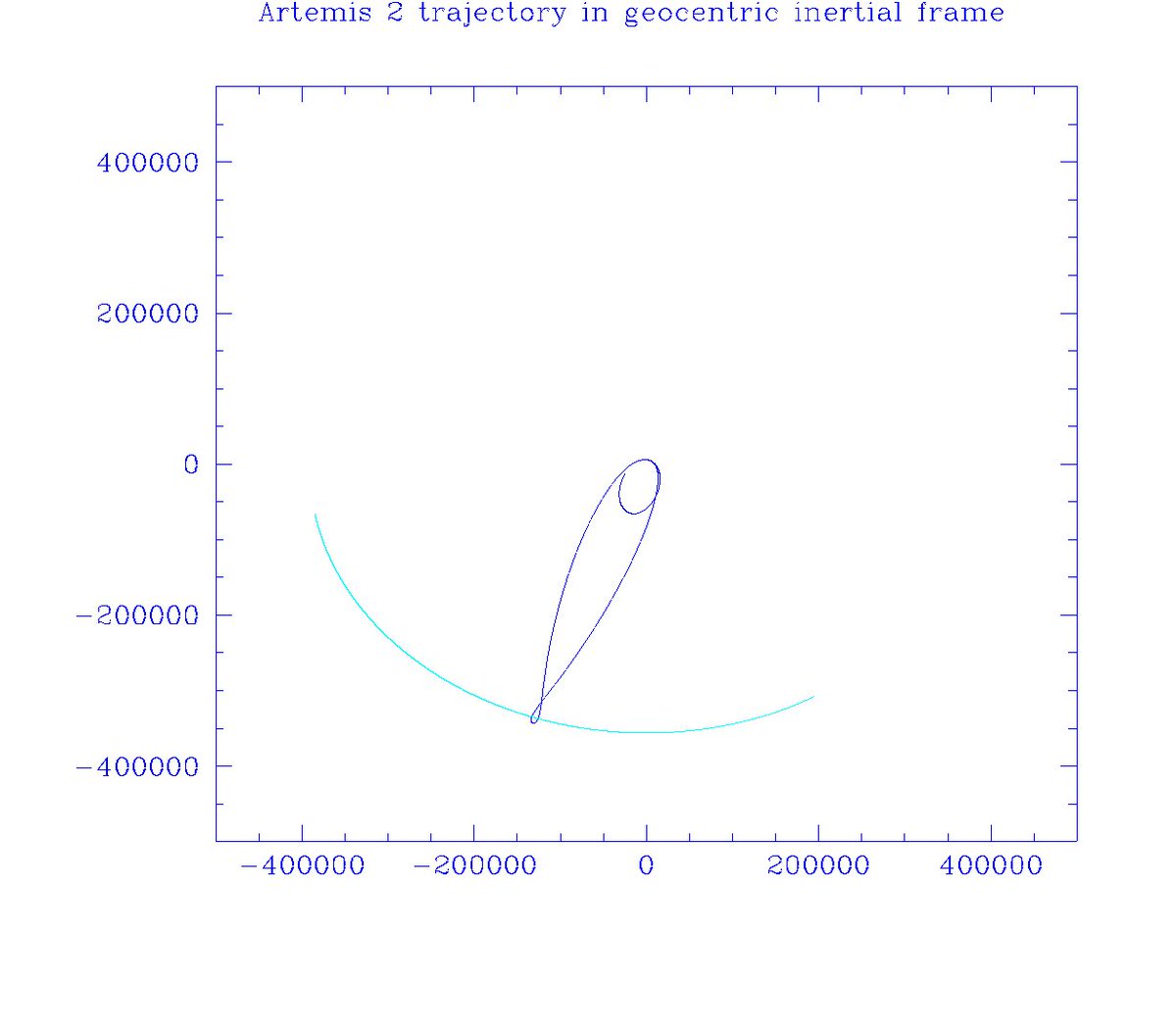
Here's the Artemis 2 trajectory in a geocentric inertial frame projected onto the equatorial plane. The cyan track shows the motion of the moon during the mission.
Map of all active & planned Solar System missions and their destinations as of April 1st 2026. Artemis 2 launch now/soon, more Moon missions in the not to distant future. Cancelled: Gateway; new: Moonbase, Nuclear Carrier to Mars. #keepExploring
Map of all active & planned Solar System missions and their destinations as of April 1st 2025. @LucyMission flyby of (52246) Donaldjohanson, @NASAJuno perijove #71. A lot of Moon missions have ended, successfully or not, a lot will follow. #KeepExploring
Lucy’s journey continues!
Our #LucyMission is preparing for its next asteroid encounter. The spacecraft will fly by the small main belt asteroid Donaldjohanson this Sunday, April 20.
Lucy's next stop will be the Jupiter Trojan asteroids.
https://t.co/9MmbgRceCz
LAUNCH at 1330:07 UTC Apr 14 of New Shepard NS-31 on a suborbital flight to 106.8 km altitude, carrying passengers Lauren Sanchez, Katheryn Hudson, Amanda Nguyen, Aisha Bowe, Gayle King and Kerianne Flynn. Flight time 10m14s. They became space travellers 728 to 733 in my list
An ISS orbit correction was performed today, and before I tell you the usual numbers, I want to share this video by Ivan Vagner. He showed how a Progress' engine boost feels like inside the station using a plastic bag and candies.
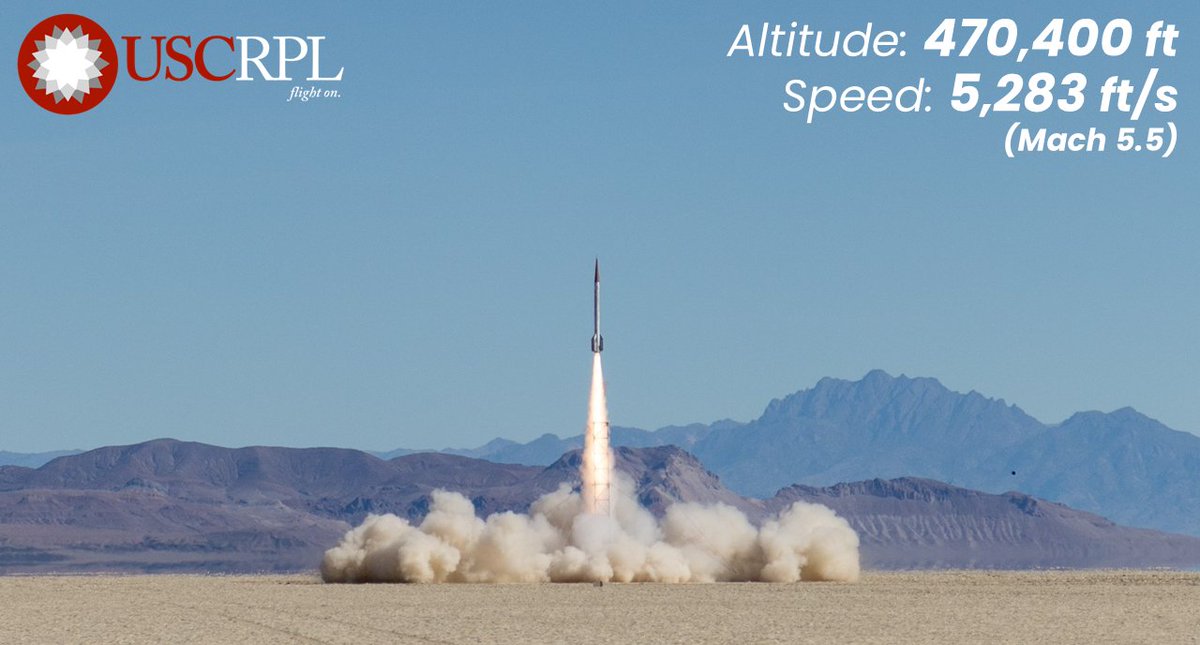
Aftershock II has officially become the highest and fastest amateur rocket of all time! Following its successful launch to space on Oct. 20, 2024, an internal data review concluded a world-record altitude of 470,400 ft and a top speed of 5,283 ft/s (Mach 5.5).
#Asteroid 2024 BX1 was first discovered by @sarneczky at Piszkéstető Station in Hungary about 3 hours before it burned up over Germany. Shortly after, multiple observatories in Europe contributed over 180 observations of this asteroid.
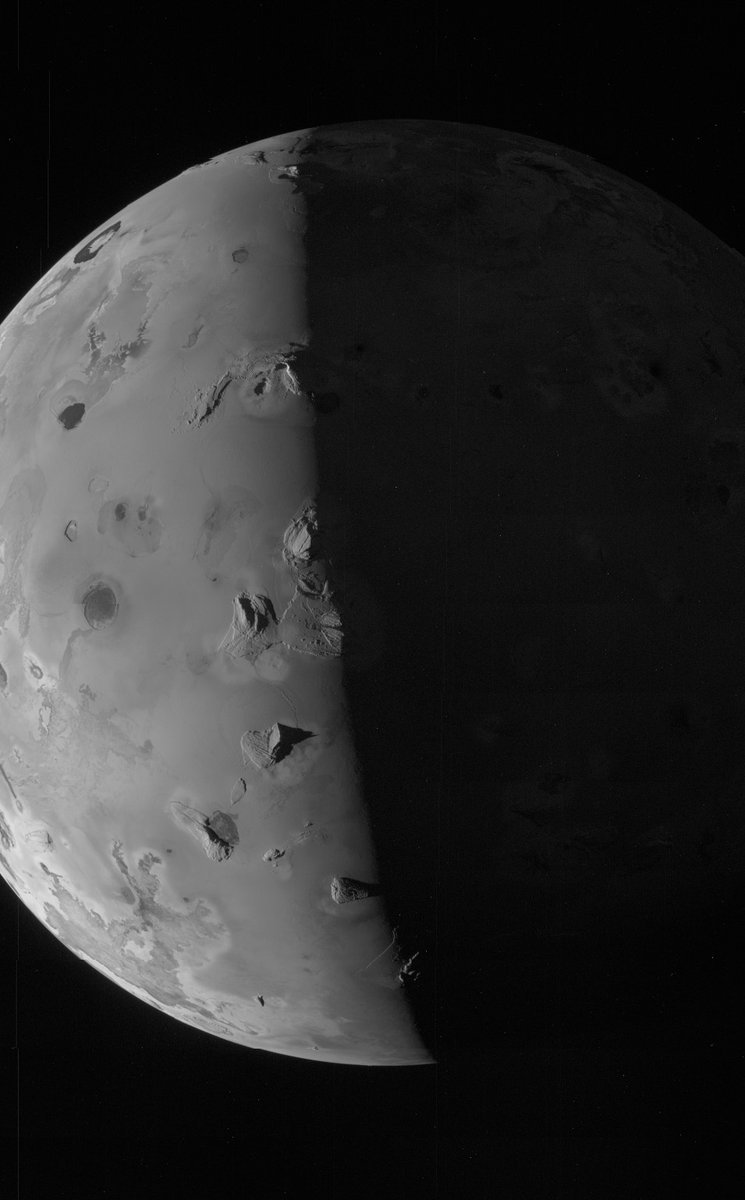
The JunoCam instrument aboard our #JunoMission acquired six images of Jupiter's moon Io during its close encounter today. This black-and-white view was taken at an altitude of about 1,500 miles (2,500 kilometers). More images will be available soon at https://t.co/mGfITRe57Y
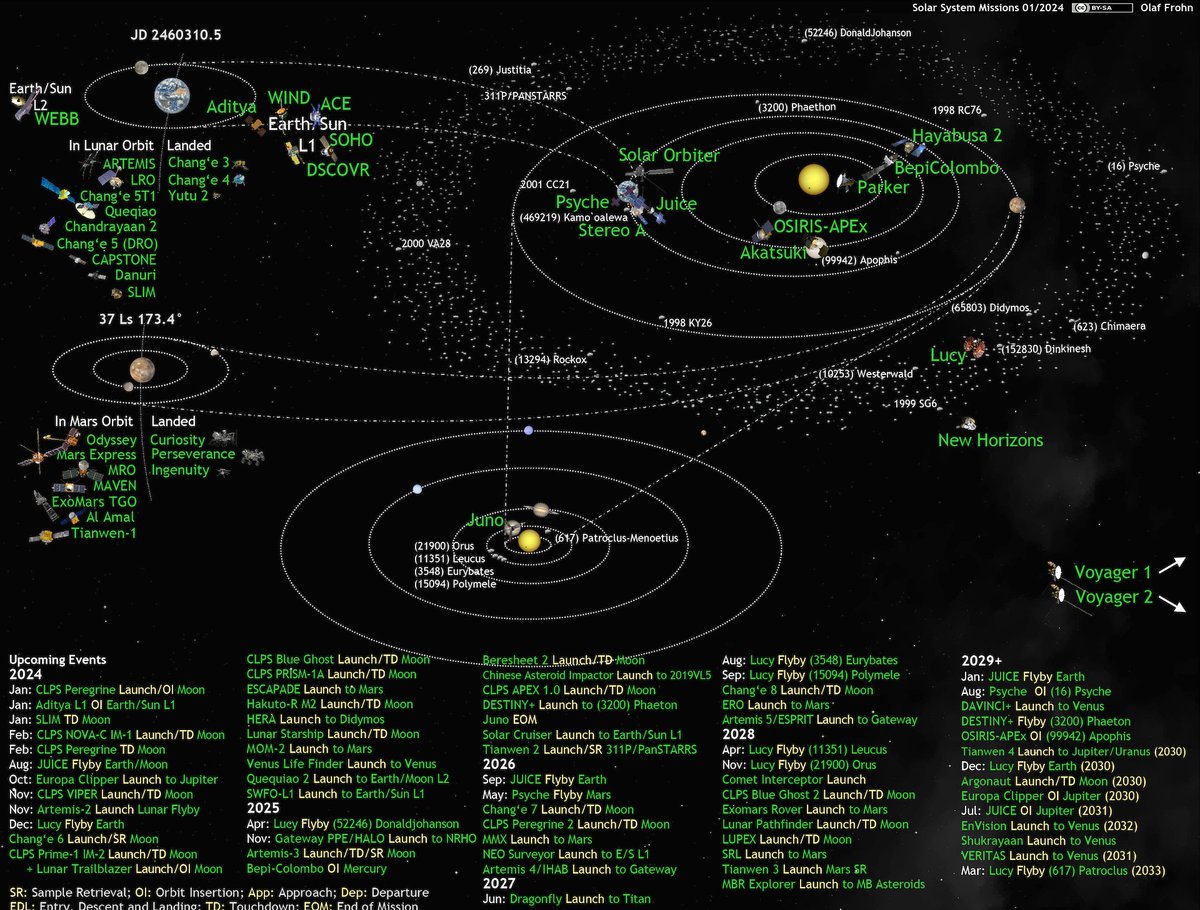
Map of all active & planned Solar System missions & their destinations as of January 1st 2024. The first CLPS missions @Astrobotic Peregrine & @int_machines IM-1 launch this month, or next , @SLIM_JAXA lands on the Moon, and another @NASA_Juno Io flyby. https://t.co/Qtj3UvsJCN
I've redone the space debris statistics pages a bit. Up to now I pulled out the two big debris events (2007 PRC ASAT and 2009 Iridium-Cosmos collision) in separate columns; I've replaced this with 'all ASAT debris' and 'all collision debris'. e.g. https://t.co/ngCN5HlQJe
With the insertion of the F9 second stage into parking orbit, the launch becomes international designation 2023-200, the first time the count of orbital launches for a year has reached the 200 mark.