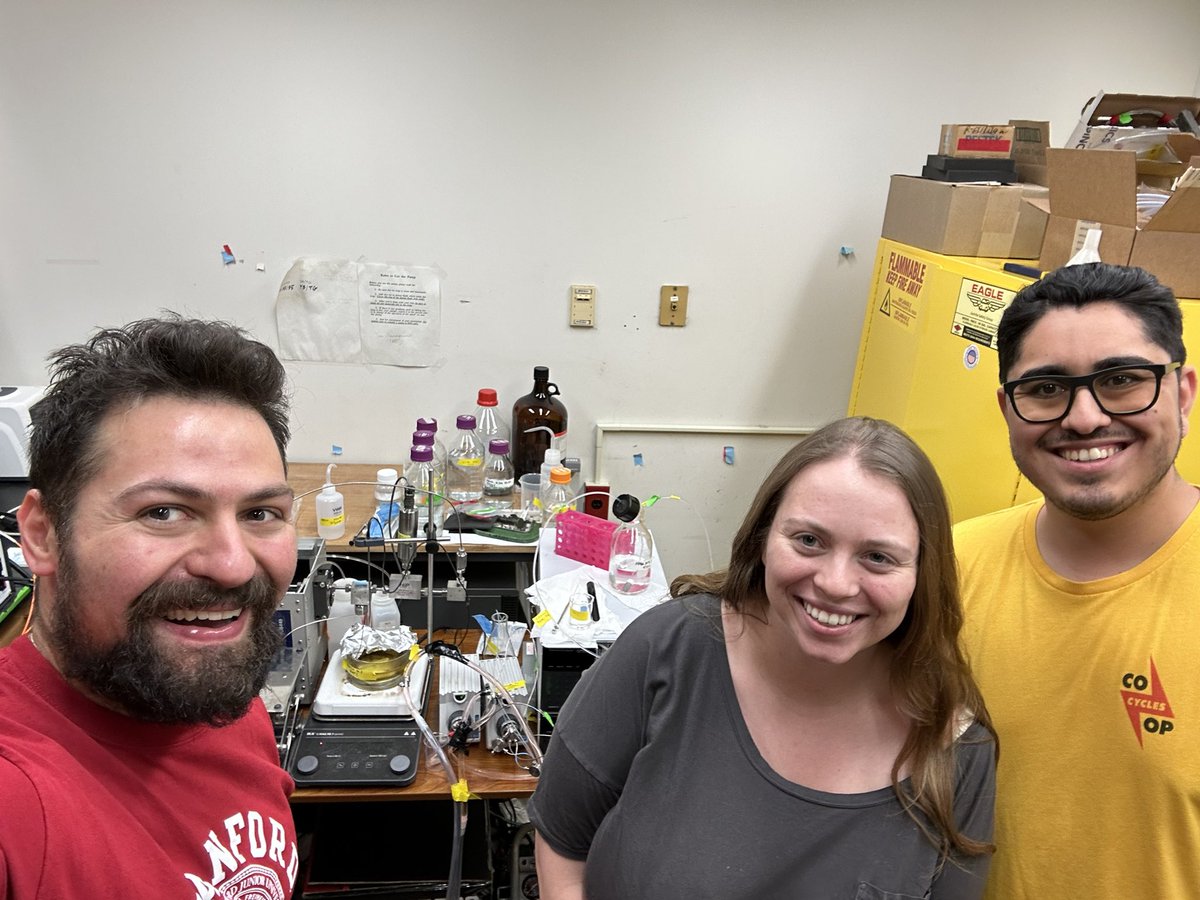
I’m so proud of all 4 of you. At such a challenging time for biomedical science your success and hard work is a reminder to us PIs why we do what we do, and why it’s worth it! @fried_lab will miss you but can’t wait to hear what you discover next ❤️!
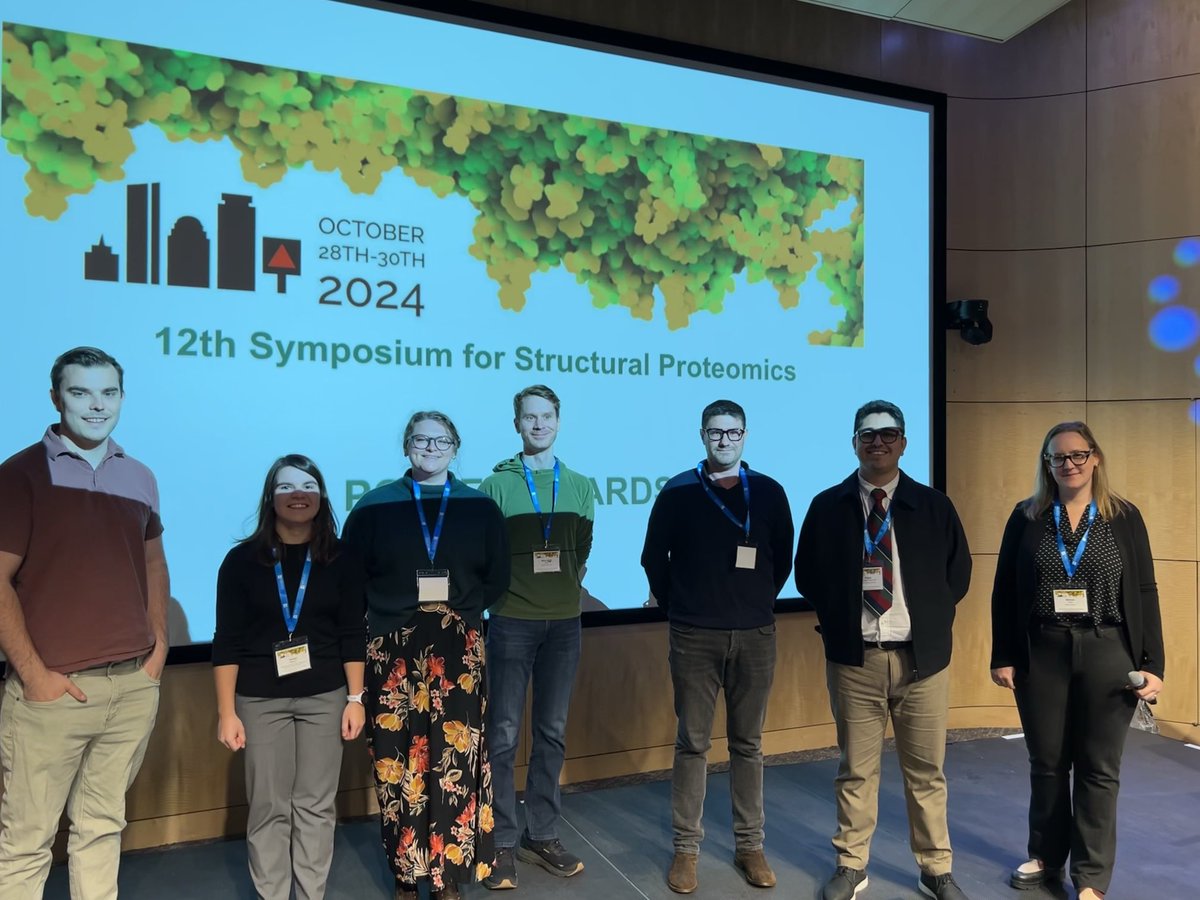
Congratulations to the six #SSP2024 poster award winners on your top-notch pioneering work! And thank you to @naturemethods and @JProteomeRes for supporting these awards and these promising scientists!
This study is funded by @NSF , with help from @WALIIAnhydro and the NSF's IntBIO program. Molecular graphics and animations by
@janetiwasa. Read the full paper here: https://t.co/vjc5v3ho92
We propose that proteins have an adaptable, chemically-encoded ability to survive desiccation, and that this feature is distributed in the proteome such that upon rehydration the cell’s proteome is remodeled to favor basic survival over growth.
We also find that tolerant proteins play very specific roles in the cell, namely the production of small molecule building blocks. Conversely, intolerant proteins are heavy energy consumers - namely ribosomes and ribosome-biogenesis proteins.
We find that tolerant proteins - those that resolubilize and retain their structure following rehydration - are loaded with negative (but NOT positive) charges and small amino acids (Ala/Gly/Pro) at their surface.
We subjected yeast lysates to a round of desiccation and rehydration. We use a pelleting assay to assess which proteins aggregate irreversibly, and limited proteolysis to assess which proteins can retain their structure following rehydration.
Desiccation occurs in an increasing number of ecosystems. Some cells routinely survive it; for others, like mammalian cells, it is lethal. To survive, at least some of the cell’s proteome must be active. We look at the proteome of budding yeast to understand how this works.
Check out this fascinating blend of cutting-edge structural proteomics and proteome-scale adaptation to the extreme. I am honored to have contributed to this fantastic collaboration, which provides insight into intrinsic desiccation tolerance in yeast proteins!
📢New paper alert!! With @boothbylab@alexholehouse@fried_lab we take a look at how an entire proteome survives desiccation. TLDR: Desiccation tolerance is encoded in specific residues on the protein surface, and occurs primarily in biosynthetic enzymes. https://t.co/v8OVBs1aFP
Rethink the analysis of DDA data! Blurring the boundary between DDA, WWA, and DIA, #MSFragger-DDA+ Enhances Peptide Identification Sensitivity with Full Isolation Window Search. Fully integrated in #FragPipe, simply annotate your DDA files as DDA+ and RUN. https://t.co/ThsqgTeqKw
Research led by @fried_lab used AI to unlock how proteins adapt to extreme pressures, like in the Mariana Trench. https://t.co/XBWzmp56u9 @rx_piyoosh@haleymoran23
Love this new article on our homeocurvature paper by @yasemin_sap in @QuantaMagazine Besides really getting into the weeds, it explains some of the (often serendipitous) moments and interactions that drove the wor - one of the great joys about science! https://t.co/UDoYot9Mpg
Thanks @JohnsHopkins for this write-up on our recent paper, highlighting the many uses of #AI#protein structure prediction across diverse scientific domains.
https://t.co/YN5wBfs5Zf
How do proteins perform under pressure? To find out we did high-pressure limited proteolysis. Haley and Edgar are excited their paper was just accepted and so soon all yall will be able to find out! Watch this space… #FriedLabNews@CHESS_user@CbiJhu@JHU_Mol_Biophys
Yet another awesome @JHU_Mol_Biophys department retreat… an insightful day full of nucleosomes, GPCRs, reconstituted signaling systems,.. and of course thermodynamics. Thanks @fried_lab members for sharing our science with our colleagues & friends. #FriedLabNews
Rather than give y'all a tweetorial, let me link you to Julien Roche's @IowaStateU lovely perspective published in @PhysicsMagazine which sums it up really well. https://t.co/LgA1GNFzFY. 2/3
How do Proteins Perform under Pressure? Haley Moran @CbiJhu@fried_lab teamed up with Richard Gillilan @Cornell@CHESS_user and combined high pressure biophysics & structural proteomics to give us some answers! Out now in @PRX_Life. 1/3
https://t.co/Z69QjOXTIw