Principal Scientist, Norwegian Defence Research Establishment (FFI), specializing in nuclear disarmament and non-proliferation. Views are my own. PDGA#8929
“Israeli intelligence believes Iran moved thousands of uranium-enrichment centrifuges into tunnels deep inside a mountain last fall, Israeli and U.S. officials say” https://t.co/5lSoYg8uTd
And we finally have footage of Iran’s experimental ship-launch of a Scud missile.
IRGC sources insist that this launch was what triggered the Scuds-on-ships scare among US officials in the late 1990s and early 2000s.
Reality, Not Wishful Thinking, Has Finally Returned to U.S. Policy on Iran
It may have taken a long, costly, and complicated conflict, but the United States appears to have arrived at a conclusion that should have been evident from the start: Iran's missile program is not negotiable because it sits at the very core of the regime's security doctrine.
For years, some "experts" entertained the possibility that sufficient military pressure could compel Tehran to abandon the capabilities it views as essential to its deterrence strategy. The war demonstrated the limits of that assumption. Iran was never going to dismantle the missile arsenal that it regards as its primary defense against militarily superior adversaries.
The same reality applies to the Strait of Hormuz. Calls to permanently secure freedom of navigation through military force underestimated a basic geopolitical fact: geography cannot be defeated. As long as Iran occupies the northern shore of the Gulf and controls access to one of the world's most important maritime chokepoints, it will retain the ability to threaten regional shipping during times of crisis. Military power can mitigate that threat, but it cannot eliminate it.
Ultimately, the conflict reinforced a more fundamental point. While Iran presents a range of regional challenges, there is only one threat that can truly alter the strategic balance of the Middle East and directly challenge the global nonproliferation regime: a nuclear weapon.
Reasonable people can ask whether such a prolonged conflict was necessary to reach this conclusion. Yet it is better to recognize strategic realities late than never at all. Before events spiraled completely out of control, the US administration stepped back from maximalist objectives and returned to a more measured and realistic approach.
The emerging policy reflects an important shift, from attempting to solve every aspect of the Iran problem through force to focusing on the challenge that matters most. Effective strategy requires distinguishing between threats that can be managed and threats that cannot be tolerated. Iran's regional influence and missile capabilities belong to the first category; a nuclear-armed Iran belongs to the second.
This is precisely why any future negotiations on Iran's nuclear program must be led by technical experts rather than political slogans. The objective should not be a symbolic agreement or a temporary pause, but a comprehensive framework that closes every credible pathway to a nuclear weapon. The lesson of the past two decades is clear: durable nonproliferation agreements are built on rigorous verification, intrusive inspections, and realistic assessments of technical capabilities, not on assumptions about political intentions. If diplomacy is to succeed where conflict has failed, it must focus relentlessly on preventing Iran from acquiring a nuclear weapon while recognizing the limits of what can realistically be achieved in other areas.
#IranWar
My Analysis @ACMideast regarding the agreement between US and Iran:
The end not just of war, but also of a strategic assumption about regime change in Iran
A US-Iran agreement will likely bring to an end, at least for the foreseeable future, the long-standing expectation in parts of Jerusalem and Washington that sustained pressure could lead to regime change in Tehran.
From Israel’s perspective, the conditions appeared unusually favorable for such change. Iran was confronting significant internal and external pressures, while Israel operated with unprecedented military freedom and the support of the world’s most powerful military ally.
But the announced agreement suggests a fundamental reality: The campaign that many hoped would weaken or even destabilize the Islamic Republic will instead conclude with the regime intact, strengthened, and formally engaged by the United States.
This would not represent a tactical setback. It would amount to the collapse of a broader strategic assumption: that coordinated American and Israeli pressure could generate conditions conducive to fundamental political change inside Iran.
Instead, the likely outcome is the opposite. The Iranian leadership could emerge from its most significant test in decades having demonstrated resilience, retained control, and shown a willingness to absorb substantial costs while preserving core regime interests. Such an outcome is likely to reinforce the confidence of the ruling elite rather than weaken it.
Moreover, Tehran stands to gain several important advantages: economic relief, renewed diplomatic legitimacy through engagement with Washington, and a perception that American leverage over Iran has diminished relative to what it was at the outset of the cris
Assuming maritime routes remain open and regional escalation is contained, negotiations will inevitably return to the nuclear file. It is already apparent that neither Iran’s missile program nor its network of regional partners is likely to be central to any near-term agreement. Nonetheless, unresolved issues, particularly those related to Lebanon and regional security arrangements, could still complicate implementation
The broader strategic consequence is that today’s decision reduces the likelihood of renewed large-scale conflict in the immediate future while simultaneously strengthening the Iranian regime’s regional and international position. It also risks increasing Israel’s diplomatic isolation on the Iran issue, particularly as Gulf Arab states increasingly prioritize de-escalation, economic stability, and a durable ceasefire over continued confrontation.
From Tehran’s perspective, such a result would constitute a significant strategic achievement. Iran would preserve critical strategic capabilities, maintain its influence across multiple theaters—including the increasingly interconnected Lebanese and Iranian fronts—and secure meaningful economic breathing space. Just as importantly, it would retain its ability to threaten vital maritime chokepoints and global energy flows, a source of leverage that remains central to its regional strategy.
The broader lesson is that operational success does not automatically translate into strategic success. Military pressure imposed significant costs on Iran, but it did not produce the political transformation that some anticipated. Ultimately, Iran’s ability to impose risks on global markets, combined with the practical limitations of eliminating or removing its nuclear infrastructure through force alone, pushed all sides toward negotiation.
The result is an agreement that underscores a growing divergence between Washington and Jerusalem. While Israel may continue to view such an arrangement with deep skepticism, its ability to prevent the outcome appears increasingly limited. For the United States, the agreement may represent a pathway to regional stabilization. For Israel, it may be seen as confirmation that military achievements alone were insufficient to achieve the broader strategic objectives that guided the campaign from the outset.
#IranWar
NEW: After listening to senior administration officials brief press on Iran today, the clearest takeaway is that this is NOT a final nuclear deal.
What has been signed is a memorandum of understanding that creates a 60-day negotiation framework. The hardest technical issues remain unresolved.
Details 👇🧵
#Syria's gov't & the @OPCW have discovered 70+ #Assad regime chemical weapons rockets & aerial bombs, as well as Sarin nerve agent ingredients in #Syria's Coast & central areas of #Hama/#Homs. 18 suspects were arrested.
A huge step forward.
So this did indicate a larger nuclear exercise.
Had it been October, I wouldn't have hesitated saying that the annual strategic exercise was coming based on such a NOTAM picture, but since we are in May, I have been reluctant to place all under one scenario.
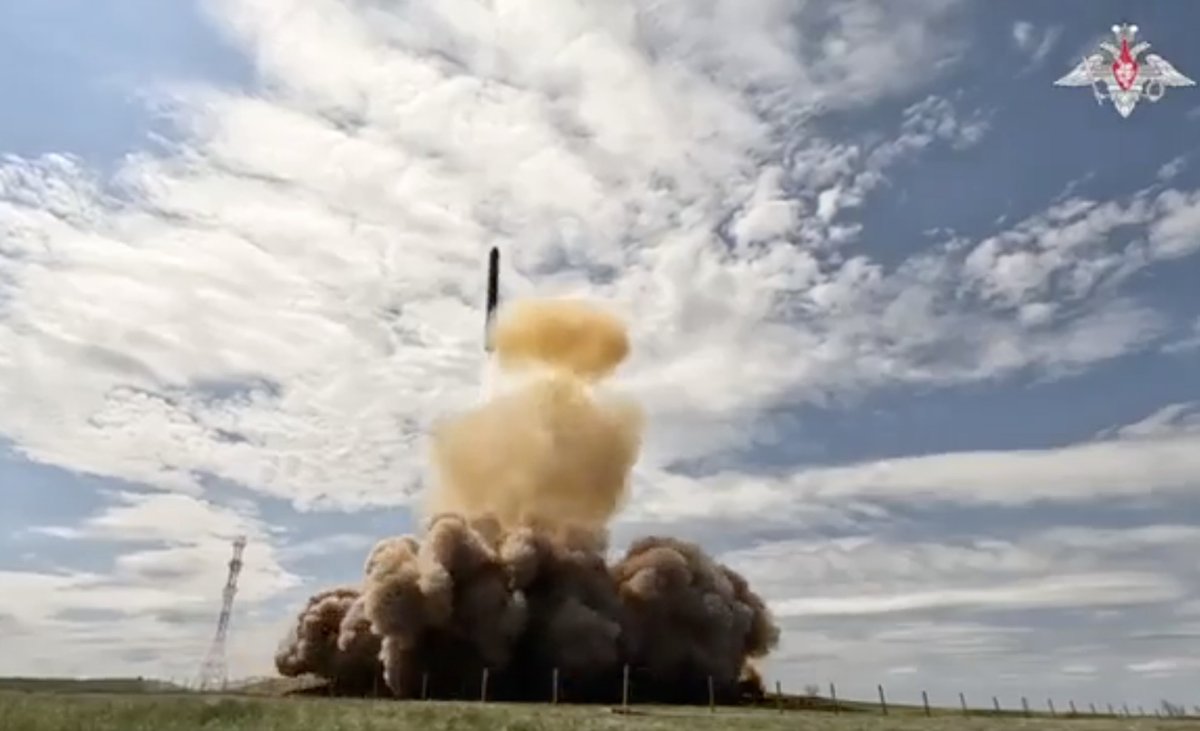
Second successful test launch of Sarmat ICBM. The first one was in April 2022. Deployment to begin this year. Website: https://t.co/nQhodFRO2Z Substack: https://t.co/pDXQdekZUb
IRGC-linked channels are circulating a new account by Iranian MP Mojtaba Nabavian about the Islamabad talks.
- According to this version, JD Vance demanded two core issues: the full reopening of the Strait of Hormuz and the removal of all 60% enriched uranium from Iran, while Ghalibaf insisted on sanctions relief and recognition of Iran’s enrichment rights.
- Nabavian claims Ghalibaf warned that while the US could damage Iranian infrastructure, Iran could also “flatten all regional infrastructure in less than half a day.” He also describes repeated tensions between Vance and Ghalibaf over frozen Iranian assets and says the talks collapsed after Vance suddenly claimed Trump would not accept the very framework proposed by the US side itself.
- What is particularly interesting is that IRGC-linked channels are clearly choosing to elevate and legitimize Ghalibaf’s role in the negotiations. The narrative portrays him neither as a rigid ideologue nor as a conciliatory figure, but as a pragmatic and “strong” negotiator capable of standing up to Washington without rejecting diplomacy altogether. That is probably the real political message embedded in the leak.
#Iran #IraWar
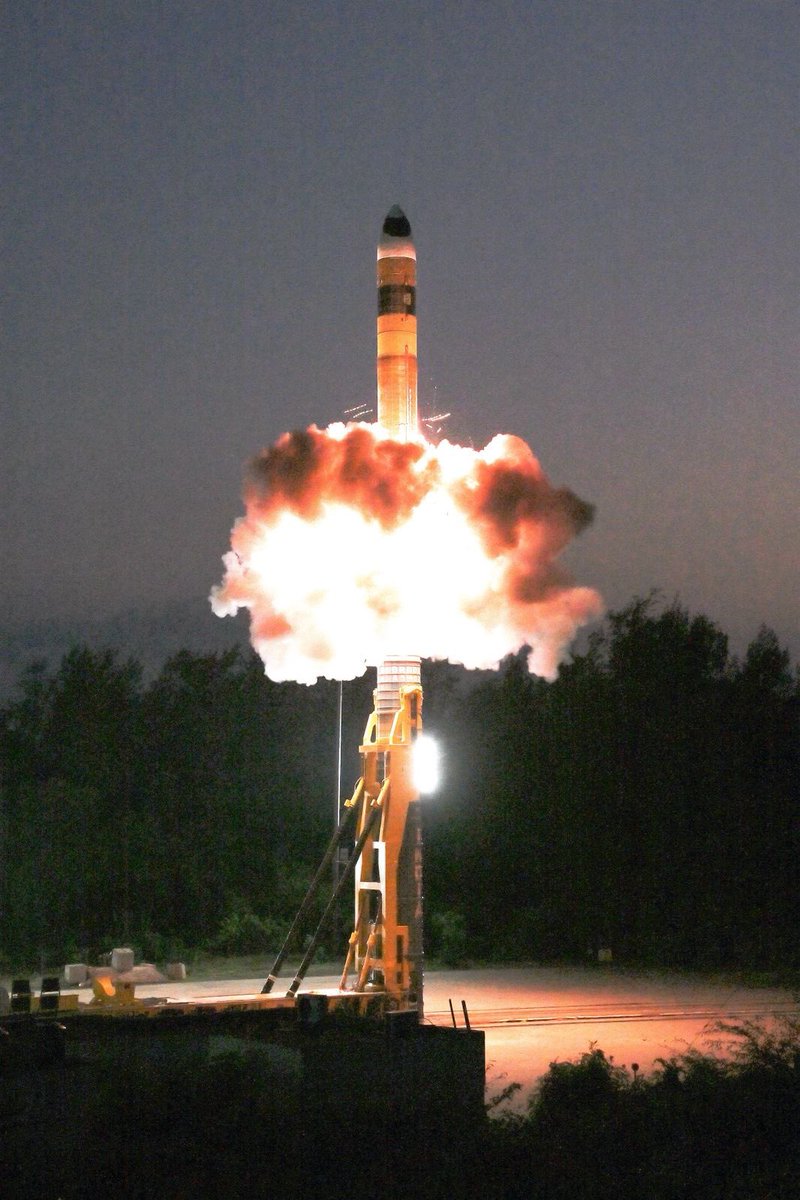
India successfully flight-tested an Advanced #Agnimissile equipped with Multiple Independently Targeted Re-Entry Vehicle (MIRV) capability from Dr APJ Abdul Kalam Island, Odisha. The missile accurately delivered multiple payloads to different targets across the Indian Ocean Region, reaffirming India’s credible strategic deterrence and indigenous technological prowess. Raksha Mantri Shri @rajnathsingh congratulated @DRDO_India, Indian Army & Industry for strengthening the nation’s defence preparedness. 🇮🇳
Read here: https://t.co/afoWgq0xQx
NOTAM published this morning indicates SS-N-23 from the Barents Sea to Kura between the 9th and the 11th.
There are several NOTAMs at Kura, matching this one and also expected SARMAT test from Dombarovskiy, with partly overlapping time-frames.
@james_acton32 Let's give the benefit of doubt and assume that they mean some kind of challenge inspection complementary to ordinary CSA verification. A neighbouring country has some experience in that regard...
There has been this worry in China that US could escalate the war after Trump went to Beijing, insinuating that China has supported it, to muddy Iran’s relations with China (much like claims that Riyadh has asked US to finish the job). Araghchi’s visit to Beijing may be intended to get Tehran and Beijing aligned before Trump’s visit.
Just read an interesting analysis published by Nour News on Iran naval doctrine.
Report here the main points:
- a coherent Iranian naval doctrine is built entirely around asymmetry: Tehran does not seek parity with the U.S. Navy, but aims to neutralize its technological superiority by reshaping the battlespace itself, geographically, tactically, and operationally.
- The emphasis is on cost imposition rather than decisive victory, using swarm tactics (fast, low-cost attack craft operating in coordinated multi-axis assaults) to saturate even advanced defensive systems with finite interception capacity.
- Crucially, the sea is treated as an extension of land: coastal, island-based, and inland missile systems create a layered fire umbrella over the Strait of Hormuz, embedding naval confrontation within a broader Anti-access /Area-denial architecture.
- The strategic objective is indirect but clear: not to destroy U.S. naval power outright, but to constrain it.
In other words forcing standoff distance, slowing operational tempo, increasing risk, and ultimately denying sustained freedom of action in a confined and highly contested maritime environment.
#Iran #Iranwar
@citrinowicz Reminds me of similar assessments of Saddam Hussein's strengthened resolve in his nuclear pursuit after Operation Opera. However, an important difference is of course Iran's much better organized and more mature nuclear program (compared to Iraq in the early 80s).
At a broad level, it’s important to acknowledge a hard truth: this war is a textbook case of the old saying - "Strategy must precede action"
The underlying assumption in the US and Israel was that weakening Iran kineticly would eventually lead to the collapse of the regime and that a sustained U.S.-Israeli campaign, targeting Supreme Leader Ali Khamenei, could trigger systemic change thay will change the Middle East.
But this war overlooked a critical variable: the Islamic Republic of Iran is a different kind of actor. Traditional cost-benefit calculations don’t apply in the conventional sense.
Moreover, the war has generated second-order effects that have made the strategic landscape more complex — not less. From Iran’s growing assertiveness around the Strait of Hormuz, to the hardening of its internal decision-making processes, to the rising influence of Mojtaba Khamenei and the expanding dominance of the IRGC, the Iranian system has, in many ways, become more rigid and more ideological.
These dynamics are pushing the administration into a narrowing set of options, none of them good. The choice increasingly looks like this: accept a deal that is, in essence, a strengthened version of the previous nuclear agreement, or return to military escalation that carries significant regional risks without guaranteeing meaningful change in Iran’s behavior.
In effect, this war has helped shape what could be called “Islamic Republic 3.0” — a system forged not only through pressure, but also through strategic miscalculation. While the regime may have been weakened militarily and economically, it has, paradoxically, been strengthened internally, particularly among its core base.
This may well be the campaign’s most significant strategic miscalculation.
The protests inside Iran had left the regime increasingly exposed, struggling to respond to public demands, led by an aging and ailing supreme leader. There was a moment of internal vulnerability.
Yet the campaign, despite its tactical achievements, has given the regime a renewed sense of purpose at a time when it was fighting for its political future. Instead of weakening it from within, it has helped consolidate its base and rally its supporters.
It remains unclear how this will end. But at this stage, one conclusion is difficult to avoid: alongside tactical gains, the war has produced a more challenging strategic environment for Iran’s neighbors, for Israel, and for the United States.
And most importantly, Iran’s leadership has no intention of capitulating. Neither pressure nor escalation is likely to force a deeply ideological regime to abandon its foundational principles.
There is no decisive blow. No silver bullet.
Only two realistic paths remain:
a deal that looks remarkably similar to what Iran was willing to consider before the war — or an expanded conflict with no clear endgame.
This is the reality.
#IranWar
There's a power struggle underway in Iran—and even within the delegation that went to Islamabad for the first round of talks, which offered a sense of the country's internal tensions.
"Their arguments were so ferocious that Pakistani mediators are reported to have spent as much time refereeing among the Iranians as engaging the Americans. When tempers frayed, the hosts called a pause."
"Inside Iran, signs of swelling military assertiveness are plentiful. Pro-regime crowds—mobilised nightly by networks tied to the IRGC—have taken to denouncing Araghchi and Ghalibaf by name. Military communiqués delivered by men in fatigues appear to have replaced clerical sermons." https://t.co/HEBCwj3lRf
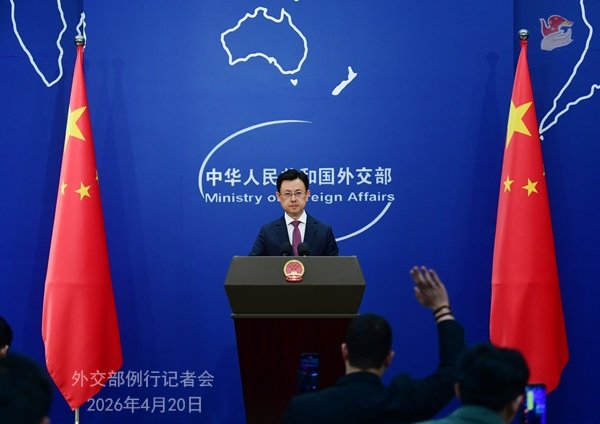
🇨🇳 China has submitted its national report to the 11th NPT Review Conference.
🔹 Reaffirms defensive nuclear strategy & NFU policy.
🔹 Maintains nuclear forces at minimum level for national security.
🔹 Calls for step by step nuclear disarmament & conclusion of a treaty on mutual NFU of nuclear weapon states.
🔹 Opposes nuclear alliances, nuclear sharing, and proliferation risks.
🔹 Regional nuclear issues should be addressed peacefully by political & diplomatic means.
🔹 Rights of developing countries to peacefully use nuclear energy should be pretected.
🤝 China will engage constructively to uphold the NPT and promote global strategic stability.
https://t.co/c0MkHPexta