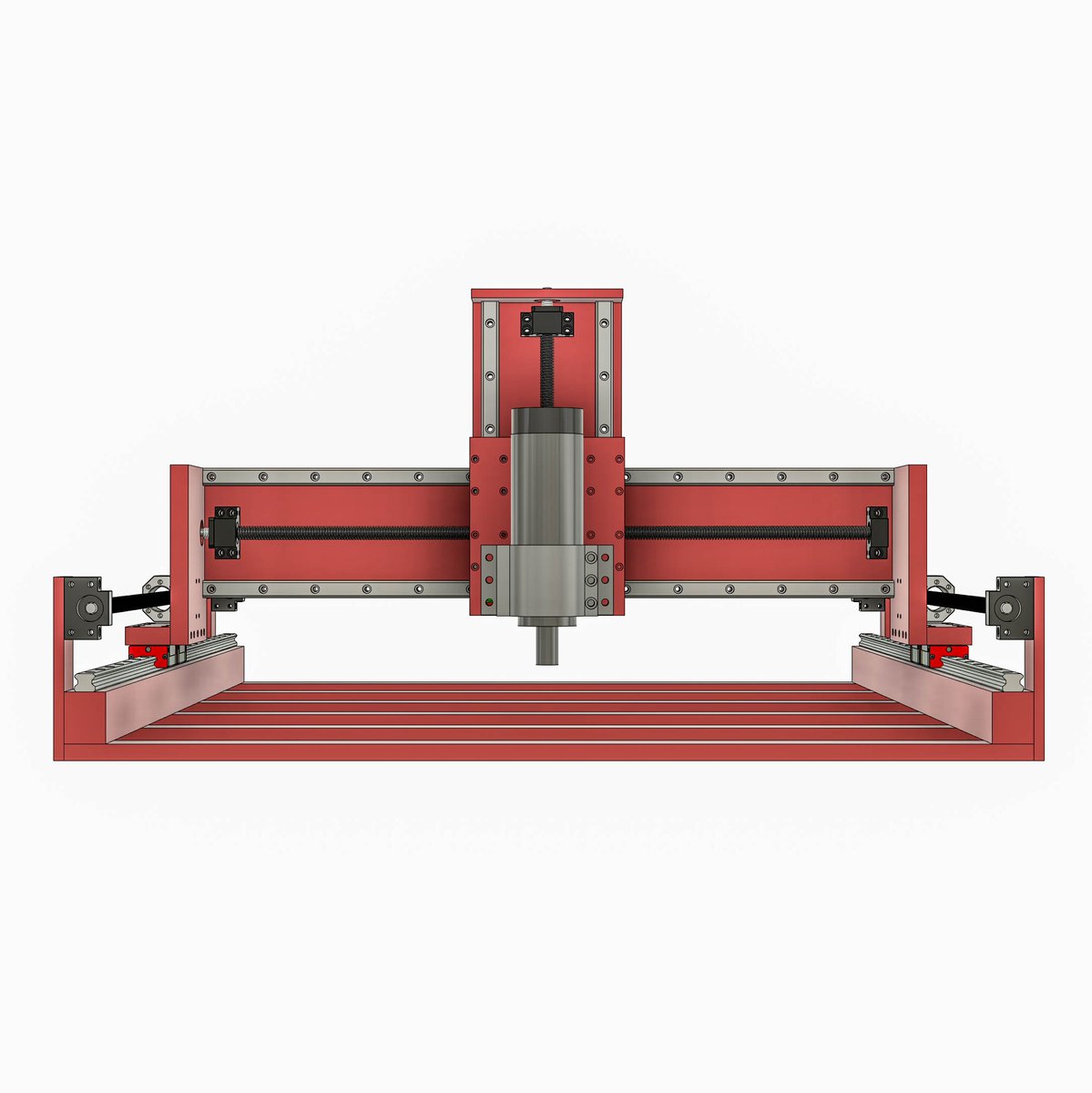
Two years ago I open sourced my DIY CNC machine, which cost me £2,655.80 and 9 months of my spare time. The Fusion 360 project, the drawings, the bill of materials, the STLs, the wiring diagrams and the Mach3 profile, all for free.
People ask why I didn't sell the plans... the answer is simple. Selling the plans would have defeated the whole point of the project, shutting out the very people I built it for.
My goal was to build a capable, sturdy machine for as little money as possible. Industrial-grade larger footprint machines are well out of reach for most hobbyists and small woodworking businesses. With a few minor trade-offs, you can build my machine for a fraction of the price, with nothing more than basic workshop tools.
10,000+ downloads later, people all over the world send me photos of the machine I designed, now fully built and operational in their own workshops.
That's what I love about open source. It's for people. Nobody needs permission or a subscription to build their own tools. You can repair them, upgrade them, and write your own software, because you know them inside and out.
This fills me with joy like nothing else.
CAD is the best skill I ever learned. That's why I teach it for free. Every part of my CNC was modelled in Fusion 360 before I reached for any workshop tools.
Frame plates, rails, ball screws, bearings, motors, the spindle and every bolt, simulated with joints so I could move each axis on screen and check nothing collided.
Sadly, you cannot always rely on datasheets for accurate dimensions. I've lost count of the times one has been wrong. So I measure the real part with callipers and update the model before I trust it. This makes building things easy.
I've never regretted modelling something first. Finding an error on screen costs an hour at most. Finding it during or after assembly costs you time and money.
Do you model everything first, or are you a measure-and-cut person?
@bhupendrawarade The ball-screw system, particularly the the bearing blocks. It came as a kit, but they didn't match the Chinese datasheet. I took the approach of measuring everything myself when I had the parts arrived. Crosschecked everything.
@Lionfire001 Completely agree. I have a Windows 11 partition just for Fusion 360, which is frustrating. I've tried it through Wine & VM but it's just hassle. I won't hold my breathe for Linux support after what they did to the maker community years ago. I'm keen to move away from it tbh.
@pijusdotdev Sounds all too familiar! 3D printing is often a good example of needing a few iterations due to the tolerances between different filaments etc. My Raptor II RC project went through a tonne of back and fourth tweaking for all those printed parts. What are modelling at the moment?
@jessmartin Agreed, get yourself a good calibrated one, well worth the extra money!
Yeah I use CAD for anything I possibly can, although sometimes I'll use it and it's way overkill for the task, I just get too excited!
What kind of furniture are you making?
The full gantry build, including drilling and tapping the bracket holes and what I call the most difficult hole of the project: https://t.co/AzUeDoTTuu
Absolutely blown away by the support! I love this community. Let's turn this into a build thread. Drop a photo of your CNC below, home-built or not, and tell me what you cut with it!
Two years ago I open sourced my DIY CNC machine, which cost me £2,655.80 and 9 months of my spare time. The Fusion 360 project, the drawings, the bill of materials, the STLs, the wiring diagrams and the Mach3 profile, all for free.
People ask why I didn't sell the plans... the answer is simple. Selling the plans would have defeated the whole point of the project, shutting out the very people I built it for.
My goal was to build a capable, sturdy machine for as little money as possible. Industrial-grade larger footprint machines are well out of reach for most hobbyists and small woodworking businesses. With a few minor trade-offs, you can build my machine for a fraction of the price, with nothing more than basic workshop tools.
10,000+ downloads later, people all over the world send me photos of the machine I designed, now fully built and operational in their own workshops.
That's what I love about open source. It's for people. Nobody needs permission or a subscription to build their own tools. You can repair them, upgrade them, and write your own software, because you know them inside and out.
This fills me with joy like nothing else.