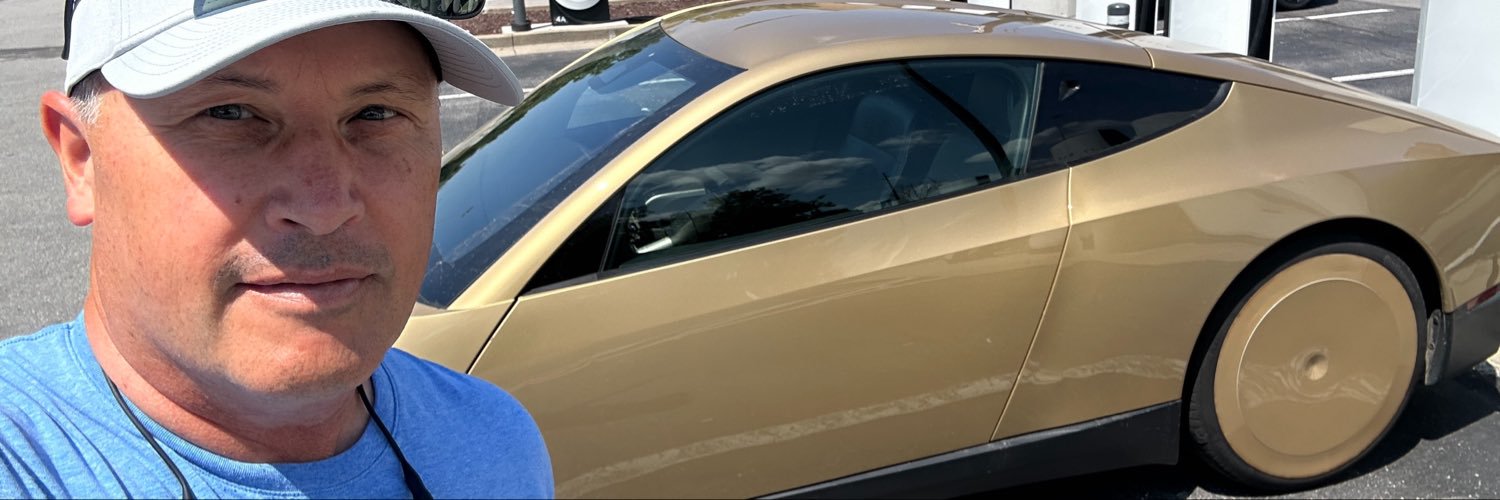
Probably nothing:
1,000 Cybercabs are now registered with Texas for immediate deployment. That's 50% growth in a week, and 30% growth in 24h.
590 Tesla Cybercabs already spotted on the road.
Live tracker: https://t.co/FRNnvaGasZ
This map shows every country Biden's USAID sent our tax dollars to from 2021 to 2024.
Each little dollar sign you see flying out of the U.S. stands for $25 million.
By the time it was done, they had sent $149 billion overseas.
If this doesn't anger you, I don't know what will.
🚨 JUST IN: LaGuardia International Airport in NYC has issued a MANPADS ALERT, warning aircraft of a possible SHOULDER-FIRED SURFACE TO AIR MISSILE east of the airfield
"Exercise extreme caution," ATC is telling aircraft around LGA
Crews do NOT seem particularly concerned, and a ground stop has NOT been implemented. So the threat may not be credible. But FAA is taking no chances.
MANPADS stands for "man-portable air-defense system"
This is a VERY rare alert, but this is the SECOND time it's occurred at LaGuardia this year alone.
The last alert was issued at LAX in 2013.
"they literally deplatformed me from the largest video sharing platform in the world because some shitty pencil pushing blue-haired person in san francisco doesn't like my politics"
@PalmerLuckey on google nuking @anduriltech's youtube channel
Now on https://t.co/6gJOBD71q1, you can read internal memos and communications showing how the agency actually operated behind the scenes
https://t.co/00IvZvG4dD
Tesla's next leg up comes from scaling driverless rides, not from FSD v15 itself.
@thejefflutz says v15 puts Tesla further ahead, but it only pays off once the safety gains convince regulators to open more of the market to rides with no one behind the wheel.
Selling 10% or even 50% more FSD won't move earnings enough.
Car supply is the part nobody talks about. Jeff found one new Model Y in inventory within 200 miles of Chicago, and new orders show February to April delivery.
Production has to jump this quarter. If it doesn't, either demand isn't as strong as it looks or Tesla isn't executing.
Add a few more cities running hundreds or thousands of robotaxis, and sentiment could move well before earnings do.
$TSLA
BOOOM 🚨 If you're one of the hundreds of millions of people dealing with neck or back pain, @elonmusk just dropped some great news 🔥
He says Neuralink will one day end neck and back pain, and that promise comes from someone who's lived with that pain since 2013 🐰
It sounds challenging, but Neuralink has already built a big chunk of the hardware it needs 💪
🧠 Why Neuralink would go after the pain signal instead of the spine
Elon blew out the C5-C6 disc in his neck when he threw a 350-pound sumo champion at his 42nd birthday party, and years of surgeries followed. In April 2024, he said a disc replacement brought his pain down from a 7 to 9 out of 10 to a 1 to 4.
Surgery can repair a disc, but the feeling of pain is created in the brain. Nerves send warning signals up the spinal cord, and the brain decides how much it hurts. People with phantom limb pain feel pain in an arm or leg that's no longer there, because the brain keeps generating it.
That turns pain into a signal problem, and signals are Neuralink's specialty. A Neuralink pain implant could work as a closed loop: it reads the activity, recognizes the pain pattern, and sends gentle pulses back to dial it down.
If you drive a Tesla, you already know the idea. Traffic-Aware Cruise Control keeps adjusting to the car ahead instead of locking in one speed. Spine implants that adjust like this have already outperformed fixed-setting ones over three years in a clinical trial.
👂 How Neuralink's chips could read a person's pain pattern around the clock
Reading comes first, and a pain implant would have to do it nonstop for years inside a skull, where extra heat can harm tissue. Neuralink has designed a custom chip for exactly that job.
It samples each electrode up to 20,000 times a second and checks every sample in about one microsecond, a millionth of a second.
Instead of beaming all that raw data out, it spots neural spikes and sorts them by shape right on the chip, shrinking the stream to a few hundred kilobits per second. Less data to send means less heat and longer battery life.
The body is electrically noisy, so the chip runs a noise tracker that keeps recalibrating each channel as conditions change. Another Neuralink design uses quantum tunneling to build a tiny filter that blocks the body's slow electrical drift while taking up almost no chip space.
Neuralink's chip network can also send local field potential readings, the broad rhythm of whole groups of neurons. UCSF researchers used this kind of signal to predict when someone's chronic pain was running high.
Everyone's pain pattern looks a little different, so the implant would also need to learn its owner. That's something Neuralink already does every day in its Telepathy trials, where decoders are tuned to each participant's brain so people with paralysis can control computers with their thoughts.
By January 2026, 21 participants had enrolled, and the company reported zero serious device-related adverse events.
⚡ Two places Neuralink could turn the pain down
Neuralink says everything it has built since day one can both read and write, meaning it can stimulate neurons as well as record them.
One of its electrode designs packs 3,072 electrodes that do both, all inserted through a single small opening. Its designs put tiny pulses to work, too, like a faint tingle that confirms a device has securely paired with the implant.
The first place to turn pain down is the brain itself, where the implant could quiet the activity that creates the feeling of pain.
The second is closer to where the pain starts. Neuralink's sealed-electronics design names the spinal cord and peripheral nerves as target sites alongside the brain.
Back in 2022, the company showed electrodes in a pig's spinal cord controlling different leg movements. Elon has also described Neuralink bridging signals from the brain to damaged areas of the neck and spine.
A crushed disc will still need a surgeon. Neuralink would take on the pain that sticks around afterward, like the 1 to 4 Elon was left with.
🛡️ Hardware sealed to survive years inside the body
Chronic pain can last for years, so the implant has to be built to last as well. The inside of the body is basically warm salt water that eats away at electronics, and Neuralink has engineered its hardware to handle it.
Its seals are made from melted glass instead of drilled holes. A tough plastic shell called PCTFE stays airtight around thousands of tiny wires, and bare chips sit right inside a sealed crystal base instead of a bulky titanium can. Before surgery, the implant can soak in a fake liquid brain that tests its wires.
The threads are thinner than a human hair and flexible, which helps them avoid the scar tissue that slowly muffles signals from stiff implants.
Neuralink's newest granted design takes it even further: a living layer of lab-grown neurons that sits on the brain's surface and wires itself in without a single probe.
🚀 Three milestones Neuralink is racing toward next
The big one is writing into the human brain, and Blindsight, Neuralink's vision implant, is lined up to show it. Elon said on October 30 that it's ready from an engineering standpoint and just waiting on regulatory approval.
Next up is reach. The brain regions tied to chronic pain sit deeper than the patch of motor cortex Neuralink reads today. Neuralink's 2028 roadmap is built around that goal, aiming for more than 25,000 channels per implant and access to any part of the brain, with pain named as a target.
Then comes scale. Neuralink's surgical robot is designed to pull threads from a cartridge, dodge blood vessels with computer vision, and clean its needle between insertions.
Elon said Neuralink would move to high-volume production and an almost fully automated procedure in 2026.
Together, those steps could take a pain implant from a small group of trial volunteers to everyday patients.
🌅 What everyday life could look like with a Neuralink pain implant
Once Neuralink clears those milestones, a pain implant wouldn't have to wait for the pain to hit or for someone to reach for a pill.
A chip that checks every sample in about a microsecond and knows its owner's pain pattern could spot a flare-up while it's still building and calm it down before it ever peaks.
Elon has spent 13 years chasing relief from one bad throw in a sumo ring. If Neuralink pulls this off, people living with chronic pain could finally get relief that shows up before the pain does.
@davidmarcus Hopefully available towards the end of next year.
This will be important for unsupervised FSD, so passengers have high bandwidth everywhere for work and entertainment.