CDTO, Hospital for Special Surgery and Practicing pediatric GI doc. Impact junkie - internal disrupter. Opinions are my own and not the views of my employer
@nikillinit Yes, also for clinical decision support. May see a “safety policy evaluator” layer everywhere, similar to how Nvidia describes it for AVs: an indep. gatekeeper that arbitrates between an end-to-end model and trad. software, taking over in edge cases for diversity + redundancy.
@nikillinit I call a subset of that 90% the pajama problem. Changing a routine or back into regular clothes is uncomfortable when you just got into comfy pajamas. When transforming a legacy business, the job is to figure out how to get them to care. Right to start with those that do.
HSS appointed Ashis Barad, MD, as the inaugural Chief Digital & Technology Officer. Additionally, HSS Associate Chief Information Officer Elizabeth Pearlman will succeed CIO Jamie Nelson, who will assume an advisory role until her retirement in April 2025. https://t.co/YQDDLNhP3b
Have a non-life-threatening urgent medical issue on an evening or weekend? Try 24/7 Virtual Urgent Care, where you can speak to an AHN doctor over a video visit. ▶️ https://t.co/fRFou4KlBK
🚨Trust Me, I'm an AI Doctor
👉Identical medical advice is trusted based on its source, human or AI.
We're living in a world where AI is becoming integral to almost every aspect of our lives—from our homes to our doctors' offices. But here's a key insight: people aren't quite ready to trust a computer with their health concerns. A new study in Nature Medicine has shed some light on this digital dilemma.
Doctors, Data, and Trust
Researchers asked 2,280 people to rate medical advice, but here's the twist: the advice was the same, just labeled differently. The numbers tell an interesting story:
Trust Issues: People trusted "human" advice more than AI advice. On a 7-point scale, human advice scored about a quarter point higher for reliability.
Empathy Gap: When it came to empathy, human doctors again came out on top. They scored about a quarter point higher than AI on the empathy scale.
Following Advice: People were noticeably less likely to follow advice when they thought AI was involved. The difference wasn't huge, but it was clear enough to matter.
Easy to Understand: Surprisingly, whether the advice came from a human or AI didn't change how well people understood it. Both were equally clear.
Curiosity Still There: Despite the skepticism, about 1 in 5 people were still interested in trying out the AI medical advice platform. This was true whether they thought it was human or AI-generated.
These numbers show that while the advice was identical, people consistently preferred the "human touch" in their medical care. It's not about what's being said, but who (or what) people think is saying it.
The Trust Gap
Why are we so skeptical of AI doctors? The authors suggest a few reasons:
It's new and unfamiliar. We're used to human doctors, but AI medics? That's still sci-fi for many.
The "human touch" factor. People worry that AI can't show empathy or understand their unique situation.
Fear of the unknown. What if the AI makes a mistake? It feels riskier than trusting a human.
The Future of Digital Health
This bias presents a significant challenge for integrating AI into medicine. Even if AI can provide accurate advice, its potential benefits may be limited if patients lack trust. However, there are ways to bridge this gap. A key step is to better explain how AI functions in healthcare, demystifying the technology for the general public. It's also crucial to emphasize that AI is designed to assist doctors rather than replace them, showcasing a collaborative approach to patient care. Finally, developing AI systems that can communicate more warmly and empathetically could help address the perceived lack of personal touch. Implementing these strategies can help build greater trust in AI-assisted healthcare, ultimately allowing patients to benefit from the best of both human expertise and technological advancements.
Trust Me, I'm an AI
AI has huge potential to improve healthcare, but work is needed to build trust. It's not just about making smarter AI; it's about making AI that people feel comfortable with. The future of healthcare might just depend on finding that sweet spot between high-tech capabilities and good old-fashioned bedside manner.
The next time you hear about an AI doctor, remember: the technology is racing ahead, but our trust needs to catch up. It's a critical journey, and we're all on it together—humans and AI alike.
https://t.co/ZSCr3S3U7A
#AI #LLMs #medicine #healthcare #digitalhealth #trust #technology @PsychToday
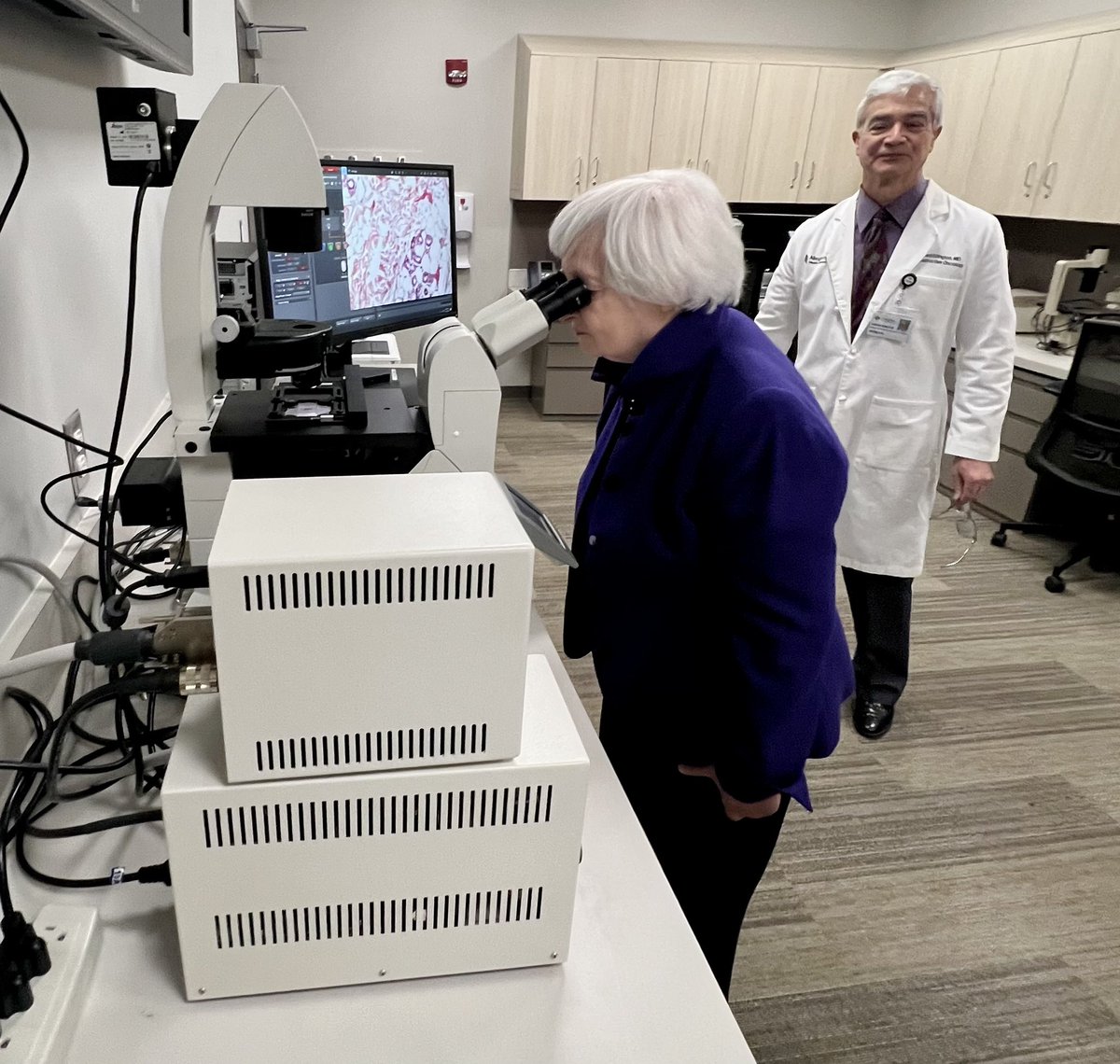
Health care spending is a key part of our economy and a major item in every family’s budget. I traveled to a hospital that received resources from the American Rescue Plan and spoke to health care providers about the Biden Administration’s work to lower health care costs.
Best roundtable ever: I was privileged to join @SecYellen and Congresswoman @RepSummerLee where we discussed the post-COVID challenges and how to create a more accessible, affordable and equitable system for all Americans. Great talk about the role of tech and AI. @AHNtoday
starting #JPM24 week with some healthcare AI news!
more than 1200 organizations across private and public sectors have joined the Coalition for Health AI (CHAI), an organization that is leading AI assurance, technology, and policy initiatives for healthcare AI in collaboration with @MSFTResearch@Microsoft, @Google, @StanfordHAI, @DukeMedSchool, @HopkinsMedicine, @US_FDA, @ONC_HealthIT, and more.
expecting much more from this team over the coming weeks, more about CHAI here: https://t.co/Bpf7LOpqHd
https://t.co/e9prSf91B9
@marxtango As an MD, forget about making that list unless I’m winning the Nobel prize. You don’t finish residency and fellowship until your early 30’s. I’m an MD 35! 😂
Angela Costa, a longtime registered nurse at Allegheny Health Network and the system’s interim chief nurse executive, has been named AHN’s chief nurse executive. https://t.co/BGZbUkFkC2