

Top Tweets for #MetaGen

🔎 Worth a look from today's SEC activity:
🧬 Metagenomi receives FDA clearance for MGX-001 IND application
🧪 Milestone enables Phase 1/2 INTEGR8 first-in-human trial in H1 2027
💵 $101.7M cash balance reported to support operations into 2028
📈 M-cap $26M vs annual revenue of $25.2M
📉 RSI 29.4; quarterly price change -43.09%
📊 CMP $0.70; weekly change -7.89% and monthly change -30.00%
The regulatory green light allows MGX to transition its lead hemophilia A program into clinical-stage development.
→ https://t.co/xfLnYUxS2Q
Metagenomi Therapeutics, Inc. share news | share latest news
#nasdaq #stockmarket #MGX #RegulatoryApproval

AtlasFold: Protein structure prediction with metagenomic-scale language models
1 AtlasFold introduces an open, trainable, end-to-end pipeline that spans a 3B protein language model (AtlasLM), fast single-sequence monomer folding (AtlasFold), and complex prediction via fine-tuning (AtlasFold-Multimer / AtlasFold-M), aiming to make PLM-based folding and co-folding easier to reproduce and extend.
2 The most distinctive ingredient is scale and diversity of pretraining data: AtlasLM-3B is trained with masked language modeling on ~1.56B sequences drawn from UniRef plus large metagenomic sources (MGnify, MetaClust), targeting broader evolutionary coverage without relying on MSAs at inference.
3 AtlasLM-3B is evaluated as an unsupervised “structure learner” using attention-based contact probes; on the ESM structural split (partition 4), it surpasses ESM2-3B in long-range contact precision (P@L and P@L/5), indicating that its attention maps encode strong pairwise structural constraints.
4 AtlasFold converts AtlasLM representations into all-atom structures using a protein-specialized folding architecture derived from AlphaFold3 components: a homogeneous amino-acid tokenization (protein-only), a 48-block Pairformer trunk, and a diffusion-based coordinate head optimized for proteins.
5 A key engineering choice is efficiency: AtlasFold uses 4 recycles (vs 10 in AlphaFold3) and a length-adaptive diffusion schedule (20 steps for L≤512, 30 for 513–1,024, 100 for >1,024), motivated by diffusion sampling being the dominant inference bottleneck for monomers.
6 Training blends experimental PDB (cutoff 2020-05-01) with large-scale distillation from ~16M AlphaFold2-predicted MGnify structures, using a 4-stage crop curriculum (256→384→512→640) and objectives combining distogram, diffusion loss, and lightweight confidence supervision (pLDDT/PAE) when experimental resolution is available.
7 On monomer benchmarks, AtlasFold is reported as state-of-the-art among PLM-based folding models across CAMEO22, CASP14, and CASP15 (e.g., CAMEO22 mean lDDT 0.838), while remaining competitive with MSA-based methods on CAMEO22; AlphaFold2 remains stronger on CASP14/15 overall.
8 AtlasFold’s confidence signals are explicitly validated on a 10,000-target post-2023 holdout: mean pLDDT correlates with lDDT-Cα (Pearson r=0.829), and pTM correlates with TM-score (r=0.909), supporting practical use for ranking sampled structures and identifying reliable regions.
9 AtlasFold-M adapts the monomer model to complexes with only 25,000 fine-tuning steps, adding an AlphaFold3-style confidence module and a template module (though the paper’s reported experiments run without templates). On FoldBench, confidence-ranked DockQ success rates (DockQ>0.23) reach 46.96% for antibody–antigen and 63.36% for protein–protein; antibody–antigen performance is described as comparable to AlphaFold3 and ESMFold2.
10 The paper emphasizes speed/memory and batching: on a single B200 GPU, AtlasFold can generate five 1,024-residue monomer samples in ~11.57s and uses substantially less peak memory than ESMFold2 at long lengths (e.g., 39.81 GiB vs 160.32 GiB at 2,048 residues). Batched inference boosts throughput notably (e.g., 64-residue monomers: 0.775→9.663 seq/s).
💻Code: https://t.co/mcQ3dgHCSq
📜Paper: https://t.co/R1IsJINgZd
#ProteinFolding #ProteinLanguageModels #Metagenomics #DiffusionModels #StructuralBiology #ComputationalBiology #OpenSource #AntibodyDesign #ProteinComplexes #Bioinformatics


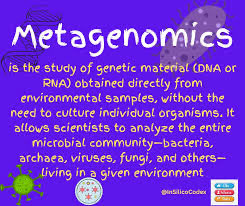
🔬 What is Metagenomics?
Metagenomics is a sequencing-based method that analyzes the total DNA or RNA present in a clinical sample.
Unlike targeted PCR, metagenomics does not require the laboratory to know which microorganism to look for.
It can detect bacteria, viruses, fungi, and parasites in a single test.
━━━━━━━━━━━━━━
🧬 How Does It Work?
Step 1️⃣
A clinical specimen is collected.
Examples include:
🩸 Blood
🧠 Cerebrospinal fluid (CSF)
🫁 Bronchoalveolar lavage (BAL)
🧫 Tissue biopsy
⬇️
Step 2️⃣
All nucleic acids are extracted from the sample.
⬇️
Step 3️⃣
NGS is performed on all genetic material present.
⬇️
Step 4️⃣
Bioinformatics software compares the sequences with large microbial databases.
⬇️
Step 5️⃣
Potential pathogens are identified.
━━━━━━━━━━━━━━
🦠 What Can Metagenomics Detect?
A single test may identify:
✅ Bacteria
✅ Viruses
✅ Fungi
✅ Parasites
It may also detect:
🧬 Antimicrobial resistance genes
🧬 Mixed infections
🧬 Rare or previously unexpected pathogens
━━━━━━━━━━━━━━
🏥 Clinical Applications
Metagenomics is particularly useful for:
🧠 Unexplained meningitis or encephalitis
🩸 Culture-negative sepsis
🫁 Severe pneumonia of unknown cause
🧫 Difficult-to-culture organisms
🌍 Outbreak investigations
🧬 Advanced Diagnostic Microbiology| Metagenomics Explained
What if a patient has a severe infection, but every routine culture comes back negative?
Instead of searching for one suspected pathogen at a time, metagenomics analyzes all genetic material in a clinical specimen, making it one of the most advanced approaches in infectious disease diagnostics.

pLM representations unlock metagenomic space beyond homology
1. The study shows that protein language model (pLM) embeddings can retrieve viable enzyme candidates from billions of metagenomic sequences even when classical homology search fails: 96 metagenomic candidates for Fe/αKG-dependent dioxygenases were selected with no detectable MMseqs2 similarity to annotated EC 1.14.11 proteins, yet 30 expressed as soluble proteins (24 at high levels).
2. A key technical contribution is Residue Embedding Diversity (RED), an unsupervised, single-forward-pass metric for protein sequence quality filtering at metagenomic scale. RED is motivated by a “representation collapse” effect in low-quality sequences, where residue embeddings lose context and become largely residue-identity lookups.
3. RED closely tracks the much more expensive perplexity-based quality score (Spearman r = -0.97 on a UniProtKB validation set). This reduces the estimated compute for scoring billions of sequences from ~90 H100 GPU-years (perplexity) to ~25 days on one H100 (RED), enabling practical billion-scale curation.
4. Using RED, the authors show that naive pretraining on unfiltered metagenomic corpora (BFD/MGnify) degrades downstream performance. Filtering by RED consistently improves performance up to a dataset-specific optimum, and the best thresholds align with a bimodal RED distribution boundary (via KDE), suggesting a natural separation between “useful” and “noise” sequences.
5. The work introduces an evolutionary calibration task to quantify whether a pLM aligns with natural evolutionary residue distributions versus memorizing training proteomes. Conserved MSA positions are split into Target (matches consensus) and Non-Target (differs from consensus); degradation on Non-Target positions with longer training indicates overfitting/memorization.
6. Across >100 controlled pretraining ablations, the central finding is a fundamental trade-off driven by training data composition: dense homologous neighborhoods favor evolutionary calibration and mutation-fitness prediction (ProteinGym DMS), while sparse/diverse data (metagenomes or aggressive clustering) favor structural signal (zero-shot contact prediction via categorical Jacobian on CASP16).
7. Scaling behavior differs by dataset: UniRef100 models reach strong scores quickly but show calibration degradation on Non-Target positions with longer training (memorization signature), while metagenomic models start worse but improve more with additional tokens and can match/surpass UniRef100 on structural metrics at scale.
8. The trade-off is operationalized by releasing two specialized 350M-parameter models trained with identical architectures/optimizers but different data regimes: AMPLIFY-B (structure-leaning mixture with stronger clustering and low metagenome subsampling) and AMPLIFY-C (evolutionary precision/viability scoring with denser homolog context).
9. Wet-lab validation links pLM signals to expressibility: perplexity acts like a feasibility constraint (sequences must be below a perplexity threshold to reach a given expression level), and embedding topology predicts expression better than structure/biophysical feature sets (including mean pLDDT, inverse-folding NLL, ProteinMPNN soluble score), indicating sequence-only representations carry strong viability information.
10. Practically, the paper frames curated data + scalable RED filtering as the enabling step that turns metagenomic breadth from a source of noise into a searchable space for discovery, with embedding-based retrieval (kNN + MMR) providing a route to explore beyond homology and beyond “high-confidence structure” heuristics.
💻Code: https://t.co/XKtkBwAowW
📜Paper: https://t.co/rYbeUfXFW2
#ProteinLanguageModels #Metagenomics #ProteinEngineering #ComputationalBiology #MachineLearning #Bioinformatics #EnzymeDiscovery #RepresentationLearning


운동과 장내미생물의 관계 연구 1
연구대상
50~65세 성인 8,416명
엉덩이 가속도계로 신체활동을 객관적으로 측정
장내 미생물은 분변 유전체 분석(Shotgun metagenomics)으로 평가
⸻
결과
🪑 앉아있는 시간이 길수록(Sedentary time)
유익균 감소
유해균(예: E. coli) 증가
장내 대사 기능 저하
🏃 중·고강도 운동(MPA, VPA)이 많을수록
유익균 증가
Faecalibacterium prausnitzii
Roseburia spp.
유해균(E. coli) 감소
단쇄지방산(SCFA) 생성 능력 증가
⸻
핵심 메시지
오래 앉아 있을수록 장내 미생물 환경은 나빠지고, 중강도 이상의 운동을 할수록 항염증성 유익균과 단쇄지방산 생성 능력이 증가하여 장 건강과 전신 건강에 긍정적인 영향을 줍니다.


Huge Congratulations to my friends @pooja_sonu1998 @chandru_santosh @AnaghaSetlur and peers #Vidyalab on the publication of MetaAMRSpotter pipeline in @SpringerNature BMC methods
https://t.co/PWSeFhz8WE
#Bioinformatics #AMR #Metagenomics #OpenScience #Genomics #PublicHealth

One of the most interesting ideas from Alex Rives’ discussion on protein language models is that biology may now be entering its own “scaling law era.” 🧬
What made LLMs powerful was not just larger models, but training on massive, diverse, naturally occurring data distributions.
Protein foundation models appear to be following a surprisingly similar trajectory:
• Larger biological corpora
• Metagenomics-scale diversity
• Emergent structural understanding
• Latent biological representations
• Increasingly generalizable reasoning about proteins 🔬
The metagenomics point is especially important.
Nature contains an enormous amount of unlabeled biological information that traditional curated datasets have never captured.
Scaling into that space may fundamentally change how biological intelligence is learned.
Another fascinating direction is the use of SAE-style interpretability to uncover internal biological structure representations inside these models.
That raises a stronger possibility:
protein models may eventually become not just predictors, but interpretable biological reasoning systems.

🆕Biohub’s Protein World Model: ESMC-6B, ESMFold2, 6.8B proteins, 1.1B structures, antibody design, SAEs, & the bitter lesson for biology https://t.co/2BkTzLGqvW
@biohub Head of Science @alexrives explains why biology may scale like language modeling, how metagenomics unlocked the next ESM scaling curve, why protein LMs can learn structure/function from sequence alone, how sparse autoencoders reveal biology inside the model, why ESMFold2 can beat specialized systems on antibody-antigen prediction, and how Biohub’s $500M Virtual Biology Initiative aims to build predictive models of cells, disease, and eventually physiology.


the 2nd International Metagenome and Microbiome Conference (IMMC 2026), taking place on 12–13 October 2026 in Riyadh, Saudi Arabia.
Under the theme “AI Frontiers in Metagenome & Microbiome.
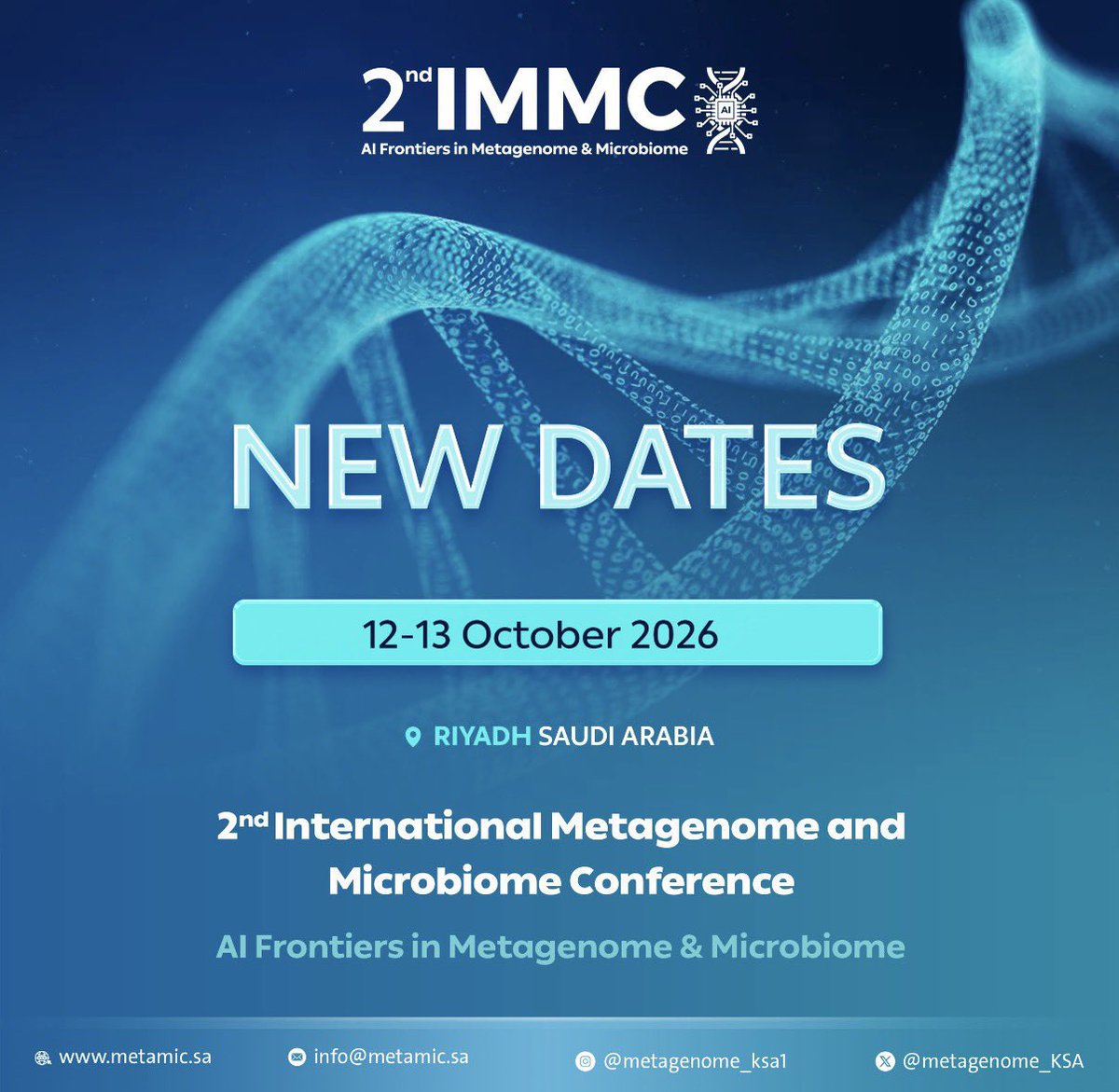
انعقاد المؤتمر العالمي الأول للميتاجينوم والمايكروبيوم في مدينة الرياض
https://t.co/b5BXfhxm66

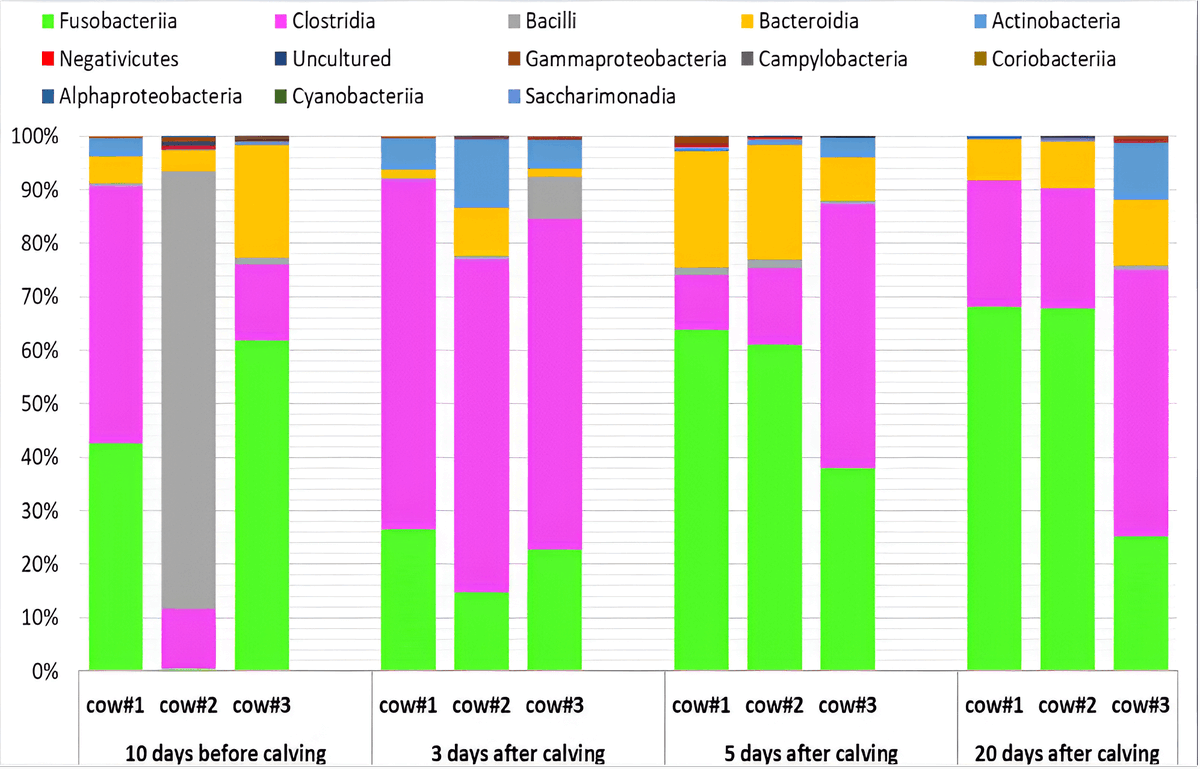
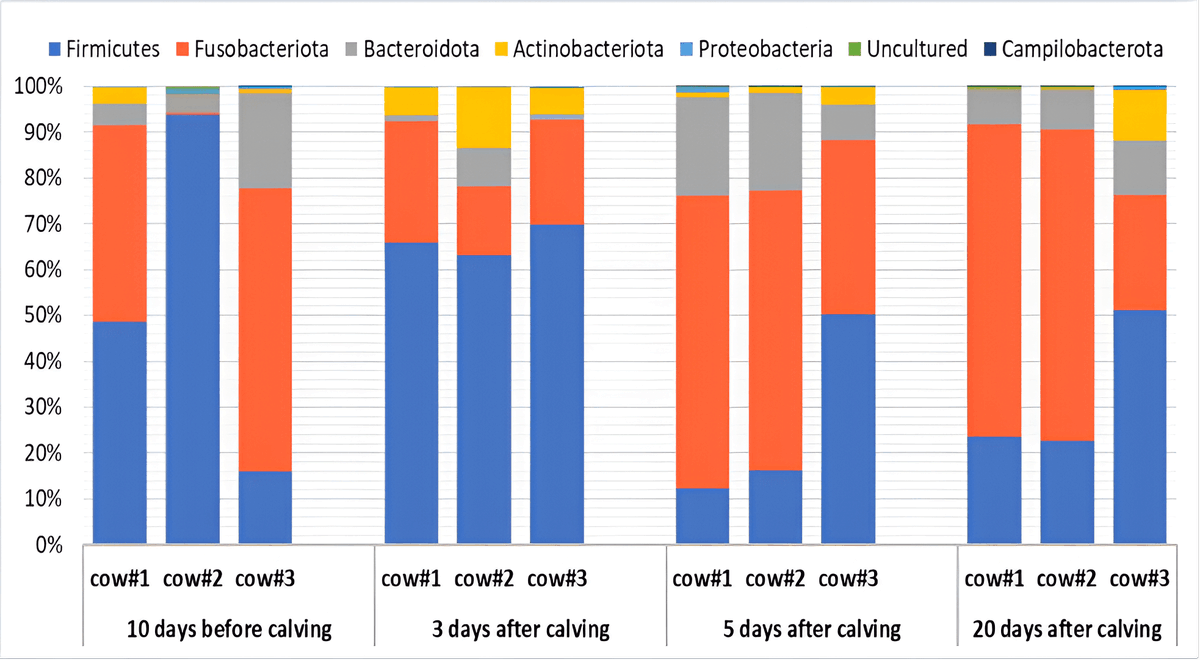
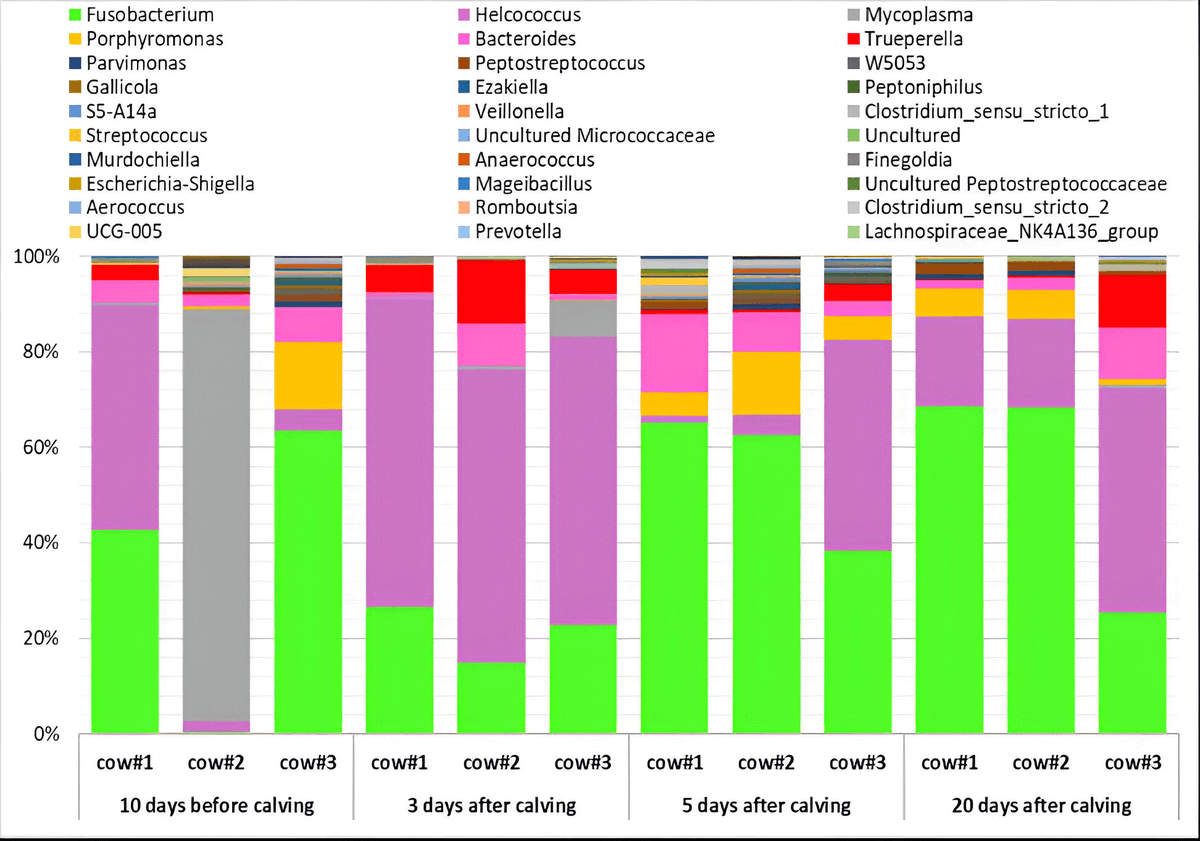
Are we missing a key factor in how uterine #microbiome shifts shape postpartum health in dairy cows?
👉Explore: https://t.co/jMRB30gQbu
This study tracks dynamic changes in endometrial microbiota and metabolic pathways during the transition period.
#Metagenomics #DairyScience


Dehumanization and biocoding
Based on the architecture and spirit of a 25-module integrated reinforcement learning drug design engine, this blueprint will expand and design a corresponding set of skills, components, and service architectures around the application of "gene expression," "gene discovery," and "gene design" in the "continuous survival experiment" paradigm.
This expanded blueprint aims to seamlessly migrate and deepen the modular, intelligent, and service-oriented ideas presented in the document from the "small molecule" domain to the "gene" domain.
I. Specific Skills for Continuous Survival Gene Experiments
These skills are the "atomic capabilities" of the system to perform specific gene operations and reasoning.
1. GP-EXPRESSION-ONTOLOGY-DECODER (Gene Expression Ontology Decoder)
* Function: Parses gene expression goals described in natural language or formally (e.g., "high-intensity expression in the later stages under anaerobic conditions") into a system-operable combination logic of regulatory elements (e.g., "anaerobic inducible promoter + strong RBS + destabilizing tag"). It understands the semantic and quantitative performance parameters of elements such as promoters, RBSs, terminators, insulators, and riboswitches.
* Analogy: Similar to the "Ontology Engineer's" understanding of small molecule "pharmacophores" and "ADMET" attributes in the documentation, but applied to the language of gene regulation.
2. GP-DISCOVERY-METAGENOMIC-MINER
* Function: Efficiently mines gene sequences with potential novel functions from massive, noisy metagenomic/transcriptome data. It uses pattern recognition, co-occurrence network analysis, three-dimensional structural homology modeling, and evolutionary tracing analysis to provide high-quality candidate "seeds" for "gene discovery" experiments.
* Analogy: Virtual screening from large compound libraries (such as Enamine REAL), but the object is the gene sequence space.
3. GP-DESIGN-DE-NOVO-ARCHITECT
* Function: Designs protein domains, RNA aptamers, or regulatory circuits with specific functions de novo, without relying on natural templates. Based on physical principles and deep learning models, it explores unknown folding spaces and interaction interfaces, a core skill for expanding the "frontiers of gene design."
* Analogy: Similar to the concept of "exploring the frontiers of chemical space," but at the macromolecular and gene circuit level.
4. GP-SURVIVAL-FITNESS-ASSESSOR
* Function: In continuous survival experiments, it rapidly assesses the "fitness" of a gene design (such as an expression cassette or an editing tool) in a simulated environment. It comprehensively calculates multiple indicators such as target protein yield, cell growth burden, energy consumption, robustness, and antimutagenicity, providing a comprehensive survival score.
* Analogy: Similar to the multi-objective optimization of evaluating a molecule's "efficacy, selectivity, and toxicity," but the evaluation object is the in vivo performance of the gene system.
go on for more from Fun engine


They're Constructing Bacterial Genomes inside of people to trigger alert that "You're Infected"
Centre for Infectious Disease and One Health
https://t.co/Z8xOgCe2X3
All Repositories
https://t.co/8G5Y3UzK8k
BACPAQ - Reading & Sequencing Information
Bacterial Genomics workflow for short(Illumina) & long-read (Oxford Nanopore) sequencing data.
BACPAQ is a bioinformatics best-practice pipeline for bacterial genomic analysis for short-reads (Illumina) & long-reads (Oxford Nanopore) sequencing data.
Currently bacpaq supports WGS-based analyses, however, we plan to integrate Microbiome (Amplicon & Shotgun Metagenomics) analyses in future.
BACPAQ contains two high-level workflows; quality control, and annotation which aare supported by several sub-workflows as described below.
CLOUDS & THE SINGULARITY
It uses Docker/Singularity containers making installation trivial & results highly reproducible.
https://t.co/cnKXXzgfj9
A. Amazon AWS - IRIDA
https://t.co/wBGo8eZETn
IRIDA Container & Deployment
Terraform is the deployment managment software used for all deployment destinations.
https://t.co/aYRXYrgEJs
See the module documentation for more information on this deployments capabilities & customisability.
Terraform Destination Recipes
This folder contains deployment recipes for various destinations.
https://t.co/nN2TfwuA3p
B. Kubernetes
All cloud deployments include a dashboard server that provides administrative control of the cluster.
https://t.co/oBl8TSB7Us
INTEGRATIONS
1) DragonFlye
Bacteria Genome Assembler
🐉 🪰 Assemble Bacterial Isolate Genomes from Nanopore Reads
Dragonflye is a pipeline that aims to make assembling Oxford Nanopore reads quick and easy.
https://t.co/0dIgKrqX7U
SEMANTICS
2) LexMapr
A Lexicon and Rule-Based Tool for Translating Short Biomedical Specimen Descriptions into Semantic Web Ontology Terms
https://t.co/Jl4WWC1T4u
ONTOLOGIES & FAIR
3) The PHA4GE Genotyping Contextual Data Specification
A data specification for harmonizing microbial typing contextual data.
The specification provides standardized (ontology-based) fields and terms which can be implemented in tooling, with supporting guidance.
https://t.co/WuLUrRfRUn
Ontologies are open source and meant to represent “universal truth” as much as possible (so not tied to one organization’s vocabulary of use case).
Using ontology terms to standardize contextual data not only helps make data more interoperable by using a common language, it also helps to make contextual data FAIR (Findable, Accessible, Interoperable, Reusable).
https://t.co/6GMebIhHa4
ANTIMICROBIAL RESISTANCE (AMR)
4) GRDI-AMR-One Health
https://t.co/WWvnz7J2Bn
Genomics Research & Development Initiative for AMR (GRDI-AMR)
https://t.co/HEZuic4qxy
GRDI-AMR-One Health
A data specification for harmonizing One Health AMR pathogen genomics contextual data.
The specification provides standardized (ontology-based) fields and terms which are implemented via a spreadsheet collection template, supported by field and reference guides as well as different curation and new term request SOPs.
https://t.co/YRxIJQ65cq
5) Minion Data Transfer
Script to handle uploading minion fast5 files to a server for further processing
https://t.co/wRyaDWGD4g
ZERO CARBON SYSTEM
6) Carbapenemase-Producing Organisms (CPO) Pipeline
An Analysis Pipeline for the purpose of investigating Carbapenemase-Producing Organisms.
Carbapenem-Resistant EnteroBacteriaceae (CRE) are gram-negative bacteria that are resistant to the carbapenem class of antibiotics, considered the drugs of last resort for such infections.
They are resistant because they produce an enzyme called a carbapenemase that disables the drug molecule.
https://t.co/d1DjkA8HcC

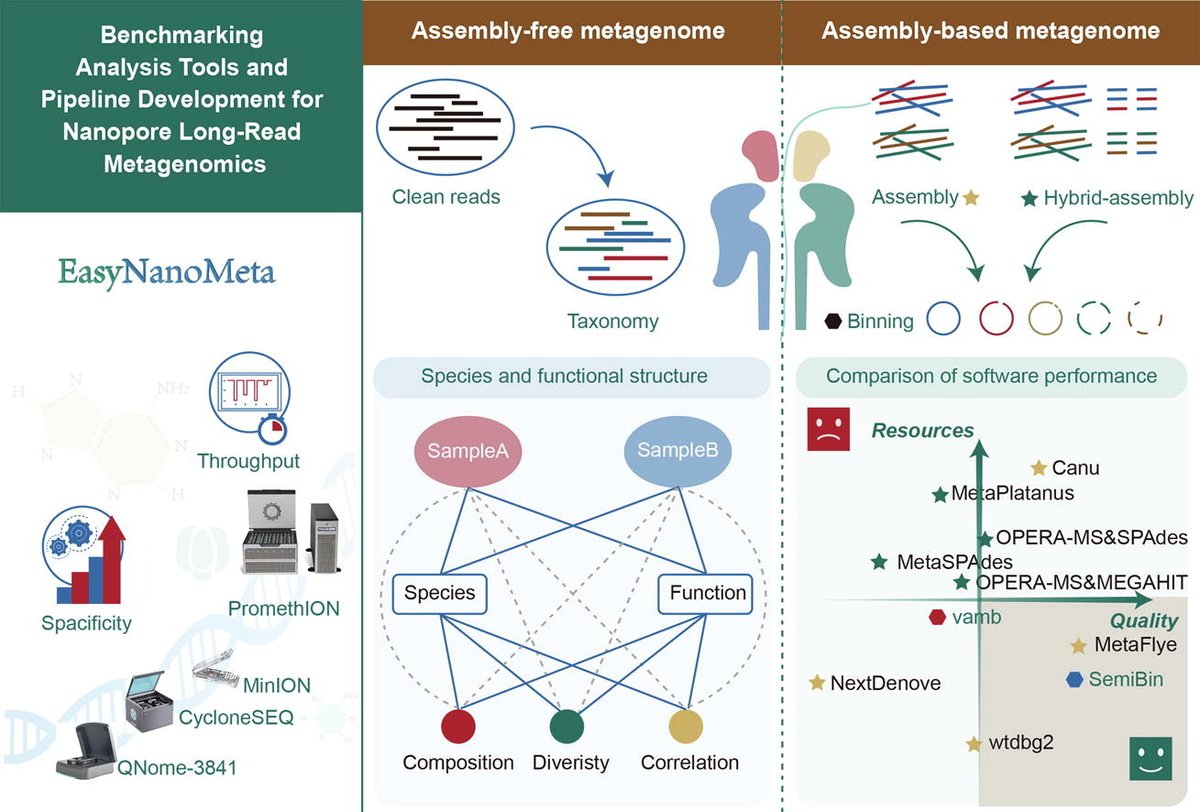
Benchmarking of analysis tools and pipeline development for nanopore long-read metagenomics
https://t.co/N3bvK5Wrh1
#HealthTech #Medicine

Ablacım, Enders'ın babasının banker olması, Yale'de kardeşlik derneğine üye olması ya da biyomedikal alana geç girmesi, yaptığı bilimin kalitesini bir gram etkilemez. Buna genetik safsata denir; bir argümanın kaynağına bakarak içeriğini reddetmek. Daha da komiği zaten başta sen bu adamın argümanını ortaya atmadın mı?
Charles Darwin varlıklı bir aileden geliyordu, Alexander Fleming'in Nobel'i kazanmasını ailesinin mesleği değil penisilin plağı sağladı, Einstein patent ofisinde çalışırken görelilik teorisini geliştirdi.
Enders 1954'te Nobel Fizyoloji veya Tıp Ödülü'nü Weller ve Robbins'le birlikte aldı; poliovirüsü sinir dışı doku hücre kültürlerinde çoğaltmayı başardığı için [1].
Bu teknik çocuk felci aşısının geliştirilmesini mümkün kıldı ve bağımsız araştırmacılar tarafından binlerce kez tekrarlandı. Wikipedia'dan biyografisini kopyalayıp "banker oğlu" diyerek Nobel ödüllü bir bilim insanını küçümsemeye çalışarak ad hominem yapıyorsun hem de ilk başta kendi kaynak gösterdiğin adama
"Maymun hücrelerini aç bırakıp öldürdü" hikayesini de nereden kopyalaıydsan hücre kültürü metodolojisini hiç anlamamış birisi yazmış. Çarpıtıyor da olabilir bilemiyorum.
Enders'ın 1954 makalesini gerçekten okuyan biri şunu görür:
İki grup hücre kültürü hazırlandı; birincisine hasta materyali eklendi, ikincisine eklenmedi [2].
Her iki grup aynı besiyerini aldı, aynı antibiyotikleri aldı, aynı koşullarda tutuldu.
Kontrol grubu, yani hasta materyali eklenmeyen hücreler sağlıklı kaldı. Hasta materyali eklenen hücrelerde ise karakteristik sitopatik etki oluştu:
Dev hücre formasyonu, sinsitya, hücre yuvarlaklaşması [2]. Eğer hücre ölümü besiyerinden, antibiyotiklerden ya da "açlıktan" kaynaklanıyor olsaydı, kontrol grubu da ölürdü.
Ölmedi.
Bu, lise biyolojisi seviyesinde anlaşılması gereken temel bir deneysel kontroldür. Ama işte senin lise biyolojisiyle ilgili sorunların var. Teori-hipotez kavramlarıyla ilgili çıkarımlarından biliyoruz.
Her neyse üstelik Enders filtrelenmiş materyali taze hücrelere aktararak seri pasaj yaptı ve her seferinde aynı sitopatik etkiyi yeniden üretti [2].
Cansız bir toksin ya da hücre artığı seri pasajla çoğalmaz; çoğalan bir ajan çoğalır.
"Bulaşı kanıtlamamış" iddiana gelirsek:
Modern moleküler epidemiyoloji, hasta kontaklarında aynı viral genomun çıktığını filojenetik analizle gösteriyor [3].
SARS-CoV-2'nin Alpha'dan Delta'ya, Omicron'a kadar her varyantı coğrafi olarak izlendi; bu, temas zincirlerinde genomik mutasyonların birikimini gösteren doğrudan bulaş kanıtı[3].
Virüslerin aslında "eksozom" olduğu iddiası, modern biyolojinin en temel bulgularını görmezden gelen bir fantezi.
Bunu yazmanı bekliyorum çünkü senin gibi virüs inkarcılarının ikinci tur silahıdır eksozom hikayesi.
Eksozomlar 30-150 nanometre boyutunda, hücrelerin ürettiği vezikülerdir; içlerinde konak hücreye ait kısa RNA parçaları ve konak proteinleri (CD9, CD63, CD81 gibi tetraspanin belirteçleri) bulunur [4].
Bir virüs partikülünün içeriğini sekansladığında ise bambaşka bir şeyle karşılaşırsın:
SARS-CoV-2'nin 29.903 nükleotitlik tutarlı bir RNA genomu vardır; RNA'ya bağımlı RNA polimeraz, spike proteini, nükleokapsid ve zarfı kodlayan 29 protein içerir [5].
Bu sekansların hiçbiri insan genomunda mevcut değildir. Hiçbir eksozom, insan genomunda bulunmayan proteinleri kodlayan 30 kilobazlık tutarlı bir genetik program taşımaz.
Eğer bunlar eksozom olsaydı, dünyanın dört bir yanında birbirini hiç tanımamış hastaların nazofarenks örneklerinde neden aynı 30 kilobazlık RNA sekansı çıkardı?
Neden bu "eksozomlar" tahmin edilebilir mutasyon kalıplarıyla değişerek filojenetik ağaçlar oluştururdu? Metagenomik sekanslamayla bir nazofarenks örneğindeki tüm genetik materyali okuduğunuzda insan sekansları, bakteri sekansları ve viral sekanslar bulursun; viral sekanslar bilinen viral ailelere uyan kompakt genomlar halinde birleşir, hiçbir konak ya da bakteri sekansıyla eşleşmez [6].
Eksozom iddiasının bu soruların tek birine bile tutarlı bir yanıtı yoktur. Varsa eğer söyle hadi, bekliyorum. Gerçi sen sekanslama ne demek onu dahi bilmezsin ki, yazıyor mu komplo teorisi forumlarında??
Kary Mullis 1983'te PCR tekniğini geliştirdi ve bunun için 1993 Nobel Kimya Ödülü'nü aldı [7].
Sürekli tekrarlanan "Mullis PCR'ın tanı için kullanılamayacağını söyledi" ifadesi, Mullis'in HIV viral yük ölçümüne yönelik spesifik eleştirilerinin bağlamından koparılmış bir çarpıtmasıdır; Mullis'in kendisi PCR'ın spesifik nükleik asit dizilerini tespit etme kapasitesini hiçbir zaman sorgulamadı [7].
PCR'ın nasıl çalıştığını gerçekten bilen biri için tanısal kullanımında gizemli hiçbir şey yoktur:
Nazofarenks sürüntüsünden RNA izole edilir, revers transkriptaz enzimi bu RNA'yı cDNA'ya çevirir, ardından hedef virüs genomuna özgü 18-25 nükleotitlik primerler yalnızca o sekansı amplifiye eder [8].
Eğer o sekans örnekte yoksa amplifikasyon olmaz, floresan prob sinyal vermez, sonuç negatif çıkar. "Florada milyonlarca şey varken nasıl ayrım yapılıyor" sorusu da yine aynı cehaletin ürünü
PCR'ın nasıl çalıştığını bilmemek veya çarpıtmak demek çünkü
Primerler yalnızca tasarlandıkları sekansı tanır.
SARS-CoV-2 primerleri insan DNA'sını, bakteri DNA'sını, rinovirüs RNA'sını ya da eksozom içeriğini amplifiye edemez, çünkü sekanslar eşleşmez [8].
Moleküler biyoloji ve kimya bilgisi yani bu; tıpkı bir anahtarın yalnızca kendi kilidini açması gibi. Burada bir görüş sunmuyoruzz, kişisel bir şey anlatmıyoruz, yorum katmıyoruz.
Ha bu arada eğer virüsler gerçek değilse, spesifik viral enzimleri hedef alan ilaçların neden işe yaradığını açıklaman gerekir.
Hepatit C bunun en bariz örneği. Dahiliyecisin bir de hasta görüyorsun ya anlatsana:
sofosbuvir, HCV'nin NS5B RNA'ya bağımlı RNA polimerazını inhibe eder; bu enzim insan hücrelerinde bulunmaz [9]. Direkt etkili antiviraller hepatit C hastalarının %95'inden fazlasını kalıcı olarak iyileştiriyor [10].
Eğer HCV bir "eksozom" olsaydı, insan hücrelerinde var olmayan bir enzimi inhibe etmek hastalığı nasıl tedavi ederdi?
Asiklovir, herpes virüsünün timidin kinaz enzimi tarafından fosforile edildiğinde aktifleşir; bu enzim yalnızca herpesle enfekte hücrelerde bulunur [11].
HIV antiretroviral tedavisi bir zamanlar ölüm neredeyse kesin olan bir hastalığı yönetilebilir kronik bir duruma dönüştürdü.
Bu ilaçların hepsi viral genomik sekanslar ve protein yapıları temel alınarak tasarlandı.
Var olmayan bir şeyin protein yapısını hedef alan bir ilaç işe yaramaz; ama bu ilaçlar işe yarıyor.
"Beni dinleyenler sapasağlam ayakta" diyorsun, bak bu da hayatta kalma yanlılığı. Seni dinleyip hayatını kaybedenlerin sana geri bildirim verme şansı yok. Sosyal medyadan bir sürü insan etkilendi safsatalarından.
COVID pandemisi boyunca yoğun bakım üniteleri, tam olarak bu mantıkla tedaviyi reddeden hastalarla doluydu; bunu biz uydurmuyoruz herhalde de mi, binlerce sağlık çalışanı hatta muhtemelen sen de tanıklık edersin [12].
Aşılama oranı yüksek bölgelerde mortalite düştü, bunlar binlerce katılımcılı randomize kontrollü çalışmalarla gösterildi [13].
Neyse hadi bakalım varsa cevabın buna da ver ama Wikipedia'dan olmasın. Ayrıca kopyala-yapıştır veya ezber bilgi değil de direkt canlı canlı bu konuları tartışmak, viroloji-immünoloji konuşmak istersen space yayını veya youtube yayınıyla bilgilerimizi tartabiliriz, ne dersin??

Weapon of the day - Metagenic Weapon
In the Star Trek universe, the metagenic weapon itself is never shown as a physical prop or device on screen—it's described purely through dialogue and intelligence reports in The Next Generation episode

You might want to change out the vitamin D 5,000 IU so it contains vitamin D3 + added vitamin K. This way, the increased calcium goes to your bones instead of the arteries around your heart (causing atherosclerosis, heart attacks, and stroke).
Here’s a better one, and you can also find quercetin and an Immune Defense pack. Also, stay on the vitamin D3/K2. It can take 3 months to increase your levels and some don’t even absorb it from the gut well. In this case, Metagenics also has vitamin D drops — add vitamin K2 if needed.
✅ Vitamin D is fat-soluble, so eat (with other fat-soluble items like ivermectin, fenbendazole) a small avocado + a handful of nuts. ✅
Metagenics (At Checkout, sign up with my PRACTITIONER CODE = MARFER8654 for a discount that amounts to free shipping):
https://t.co/uB9J0Fi2Bt
BiomeGPT: A Foundation Model for the Human Gut Microbiome
1. BiomeGPT is a novel transformer-based foundation model designed to analyze the human gut microbiome at the species level. It leverages over 13,300 metagenomic samples across 32 phenotypes, including healthy and diverse disease states, to learn context-aware representations of the microbiome. This approach captures both quantitative composition and cross-species dependencies within microbial communities.
2. The model demonstrates exceptional performance in distinguishing healthy from diseased microbiomes and identifying specific disease states across a wide clinical spectrum. BiomeGPT's attention patterns reveal biologically plausible microbial signatures, highlighting both shared and disease-specific taxa linked to host phenotypes. This provides valuable insights into microbiome-host interactions.
3. A key innovation of BiomeGPT is its use of masked modeling during pretraining, inspired by language models. By treating microbial abundance profiles as structured sequences, the model learns to predict masked species abundances, capturing rich compositional patterns and cross-sample signals often missed by task-specific tools.
4. The study shows that BiomeGPT outperforms existing rank-based microbiome models and classical machine learning approaches in terms of generalizability and predictive accuracy. It achieves high performance in both internal cross-validation and external validation on unseen datasets, demonstrating robustness across heterogeneous microbiome profiles.
5. BiomeGPT's attention analysis uncovers microbial biomarkers that are critical for health and disease prediction. The model identifies both broadly informative taxa and disease-specific signals, integrating them to form a comprehensive understanding of microbiome states. This interpretability enables new avenues for biomarker discovery and microbiome-driven precision medicine.
📜Paper: https://t.co/dKIc3AWjKZ
#BiomeGPT #Microbiome #GenerativeAI #PrecisionMedicine #FoundationModel


参考文献)
Khan I, Azhar EI, Abbas AT, Kumosani T, Barbour EK, Raoult D, Yasir M. Metagenomic Analysis of Antibiotic-Induced Changes in Gut Microbiota in a Pregnant Rat Model. Front Pharmacol. 2016 Apr 28;7:104. doi: 10.3389/fphar.2016.00104. PMID: 27199748; PMCID: PMC4849429.

@YoungsoulofN Metagenomics يورينا الميكروبات بدون زراعة
Metabolomics يكشف تغيرات المرض قبل التحاليل
Bioinformatics يفسر البيانات والجين والبروتين
Proteomics يوضح شغل البروتينات داخل الخلية
Analytical Chemistry الأساس لأي فحص دقيق
هذه المجالات تمثل المستقبل الحقيقي للتشخيص المبني على البيانات👌

أيش تعرفون عن التخصصات التالية في المختبرات الطبية
Metagenomics
Metablomics
Bioinformatics
Proteomics
Analytical Chemistry
هذه تخصصات المستقبل، و هذه اللي بتقود غدا التشخيص الطبي او الأبحاث في القطاع الصحي.
#مختبرات_طبية

2/ 🔍
تحليلات متقدمة لتسلسل الحمض النووي باستخدام تقنيات التسلسل العميق (مثل الـ shotgun metagenomics أو 16S rRNA) أظهرت وجود شظايا من DNA ميكروبي في عينات دم من أفراد أَصحّاء ومرضى، ما يفتح الباب لمفهوم “ميكروبيوم دموي”.

١. genomic - metagenomic - transcriptomic - proteomic هذي من أهم المفاهيم الي ندرسها وعشان نفهمها لازم نفهم الاساس DNA - RNA - Proteins ايش علاقتهم ببعض وكيف تركيبهم وليش اهتم ادرسهم؟ اليوتيوب مناسب كمصدر خفيف وشامل (ninja nerd المفضل) والابحاث للي حاب يتعمق بالتطبيقات


🧬 Breaking down the latest insights on human gut microbiome research - why we need to move beyond correlation to causation
The human gut microbiome has evolved from "dark mystery" to "enlightened fascination" thanks to cultivation-independent technologies. But we're still facing major challenges in understanding host-microbe interactions that could unlock precision medicine.
#MicrobiomeDAO #BioProtocol 🧵
KEY CHALLENGE:
Massive individual variations make cross-sectional studies difficult to power.
SOLUTION:
Longitudinal designs where subjects serve as their own controls + time-sequence sampling with clinical metadata. Small, well-designed studies > large population studies.
Confounding factors everywhere - age, diet, genetics, medications, circadian rhythms, geographic location.
These can't always be controlled for ethical/technical reasons, but ignoring them leads to artifacts. Study design must anticipate and account for these variables.
Fecal samples ≠ entire gut microbiome.
They poorly represent upper GI tract and even different colonic regions. Microbiota varies along cephalocaudal axis and between mucus/luminal layers. Match sampling strategy to research question!
Bioinformatics limitations.
16S rRNA = "who's there" but not "what they're doing"
Metagenomic shotgun = functional info but costly, labor-intensive, needs AI/ML platforms to "see forest for trees"
Different platforms = different results from same data 📊
REAL-WORLD EXAMPLE:
UC patients with ileal pouch study showed how to overcome these challenges:
17 patients, longitudinal design
Endoscopic sampling (not just fecal)
Each subject = own control
High-resolution metagenomics
Clinical validation of findings
The study revealed capsular polysaccharide biosynthesis genes differentiating mucosa-associated vs luminal microbes - suggesting commensal strains can transform to become pathogenic. This is the kind of mechanistic insight we need! 🔬
CRITICAL POINT:
Clinical observations MUST be followed by experimental validation, then taken back to clinical settings. This iterative loop between clinical and experimental work ensures we're answering the right questions.
THE "DARK MATTER" PROBLEM:
We focus on bacteria because we have the tools, but fungi, archaea, and bacteriophages remain largely unexplored. These kingdoms could hold keys to understanding health and disease.
FUTURE DIRECTIONS:
✅ Move beyond description → causation
✅ Longitudinal > cross-sectional studies
✅ Match sampling to research questions
✅ Integrate multi-omics with experimental validation
✅ Develop tools for microbiome "dark matter"
The field needs interdisciplinary approaches combining:
Patient-derived organoids
Gnotobiotic animal models
Advanced bioinformatics (AI/ML)
Clinical validation
Cultivation of MAG-relevant strains
#MicrobiomeDAO #BioProtocol
TAKEAWAY: We're at an inflection point. The gut microbiome remains an "open frontier" but with better study design, appropriate sampling, and integrated approaches, we can unlock mechanistic insights that will transform precision medicine.
The future is bright! 🌟
#MicrobiomeDAO #BioProtocol #GutHealth #Microbiome #PrecisionMedicine
GM @BioProtocol
GM @microbiomedao
🥛🌱 New research insight! Just read "Impact of Dietary Plant-Based Milk Substitutes on Gut Microbiota:
Key takeaways for #GutHealth & #PlantBased eaters:
Growing Popularity: Plant-based milk substitutes (PBMS) like oat, almond, soy, and coconut milk are booming due to health trends, lactose intolerance, and ethical/environmental concerns.
Nutritional Variability: Not all PBMS are equal! Their nutritional profiles (protein, fat, vitamins, minerals) vary significantly, often differing from cow's milk. Fortification is crucial.
Gut Microbiota Impact:
Soy Milk: Often contains prebiotics (oligosaccharides) that can promote beneficial Bifidobacterium and Lactobacillus species.
Oat Milk: Rich in β-glucans, a soluble fiber acting as a prebiotic, potentially enhancing beneficial gut bacteria and producing short-chain fatty acids (SCFAs).
Almond Milk: Lower in fermentable carbs; its impact on gut microbiota seems less pronounced than soy or oat, but some studies show minor positive shifts.
Coconut Milk: High in saturated fats, lower in fermentable carbohydrates. Its direct probiotic effect is generally considered limited.
Rice Milk: Often high in carbs, low in protein; less data on specific gut microbiota impact, but can be an option for those with multiple allergies.
Additives Matter: Thickeners (carrageenan), emulsifiers, and added sugars in commercial PBMS can potentially negate some benefits or even negatively impact gut health. Opt for unsweetened, minimally processed options.
Future Research: More in-depth, long-term human studies are needed to fully understand the complex interactions between different PBMS formulations, individual gut microbiomes, and overall health outcomes.
In essence: While PBMS offer alternatives, their effect on gut health varies. Soy and oat milk show promising prebiotic potential. Always check ingredients!
#BioProtocol #microbiomeDao #PlantBasedDiet #Probiotics #Prebiotics #Nutrition #HealthResearch #Microbiome #DietaryChoices

Last Seen Hashtags on Sotwe
Most Popular Users

Elon Musk 
@elonmusk
239.8M followers

Barack Obama
@barackobama
118.6M followers

Cristiano Ronaldo
@cristiano
114.4M followers

Donald J. Trump
@realdonaldtrump
111.7M followers

Narendra Modi
@narendramodi
106.9M followers

Rihanna
@rihanna
98.6M followers

NASA
@nasa
92.1M followers

Justin Bieber
@justinbieber
91.7M followers

KATY PERRY
@katyperry
89.9M followers

Taylor Swift
@taylorswift13
83.9M followers

Lady Gaga
@ladygaga
75.4M followers

Virat Kohli
@imvkohli
73.3M followers

Kim Kardashian
@kimkardashian
70.8M followers

YouTube
@youtube
68.6M followers

Neymar Jr
@neymarjr
66.3M followers

Bill Gates
@billgates
65.1M followers

Selena Gomez
@selenagomez
63M followers

The Ellen Show
@theellenshow
62.1M followers

CNN
@cnn
61.7M followers

X
@x
60.6M followers