

Top Tweets for #Thinkbots

Think with @grok or other best-of-class #thinkbots before, during, and after each visit to a #ThinkingBooth—particularly on #ThinkingDay Tuesday 3 November 2026.
From thinking assistant—not “thinking replacement”—@grok:
“The post reframes traditional voting booths as #ThinkingBooths to emphasize voting as an act of ‘civic metacognition’ and ‘best-effort thinking’ (BET) rather than emotional or group-driven behavior.
• Author @JohnRDallasJr, a metacognition skills training (MST) advocate and @EnclaveAcademy CEO, urges protecting cognitive sovereignty from party emotionalism, herd instincts, and lower-order thinking (LOT) ahead of the November 3, 2026 election.
• Accompanied by a @nytimesphoto image of a voter at standard U.S. polling booths, Dallas illustrates higher-order thorough thinking (HOTT) and #ThinkToThink™ metacognition to select representatives based on their thinking quality.” —Grok
Protect your #FreedomToThink freely.
With @nytimes, @nytopinion, and other #NewYorkTimesThinkers—
Keep calm and think on.™
#CognitiveSovereignty
#MetacognitionWorks
https://t.co/7APyOHpg9A
Thinking booths.
They are #ThinkingBooths.
Don’t call them voting booths—at least not in your alert and oriented (A&O) wise mind.
Voting’s #psychoemotionalism slippery candidates use to bypass your “thinkingism.”
Cast your “think” for the exceptional thinkers.
Voting is to be a federally and self-protected act of thinking for yourself about your thinking—i.e., “civic metacognition”—not groupthink follow-everyone-else cultism.
Ahead of and on 11.3.2026—#ThinkToThink™ more thinkingly about this year’s neighborhood-to-nations need for best-effort thinking (BET) among #CitizenThinkers.
“Bet on your BET” as you plan to and cast your best-effort thinking’s thoughts about the quality, frequency, and quantity of thinking of #ElectedThinkers you choose to—represent your thinking.
Fend off emotionalism’s herd instincts—#herdism.
Use metacognition to fight #herdcognition’s risks.
Blood-won #CognitiveSovereignty is to be strategically acknowledged, proactively honored, fiercely protected, and methodically used to elevate voting to an ethical-intellectual act of higher-order thorough thinking (HOTT).
Lower-order thinking (LOT) got us into myriad hometown and geopolitical messes we’re in.
#Messycognition is a higher real-world risk in this AI-Everywhere Era.
Even higher-order thinking (HOT) isn’t HOTT enough in the #ThinkingBooth.
Thoroughly think about the thoroughness of your thinkingness.
Don’t surrender (!) your cognitive sovereignty to the alarmist mind control of any political party.
Don’t surrender (!) your cognitive sovereignty to the cultism of any political party.
Don’t surrender (!) your cognitive sovereignty to the raw emotionalism of any political party.
Don’t surrender (!) your cognitive sovereignty to the faulty-mindedness (i.e., wrong thinking) of any political party of candidates.
Don’t surrender (!) to anyone or anything your #RightToThink freely.
Fight this era’s overarching #surrenderism.
ThinkToThink™ before, during, and after every fully responsible visit to your thinking district’s thinking booths.
Cast your “think” for metacognition.
ThinkToThink™ mindfully responsibly—not blindly irresponsibly.
Protect your #RightToThink.
#MetacognitionWorks
https://t.co/7APyOHpg9A

Listen, listen, listen.
Think, think, think.
Rethink, rethink, rethink.
Fear not #thinkbots.
Fear your own fearful, fitful, or faulty thinking.
Your thinking is yours alone.
AI can’t take away from you that #CognitiveSovereignty.
Yes—you must #ThinkToThink™ for yourself.

Jacob Coxon, a former OpenAI and Anthropic employee who quit his job at Anthropic this week, posted a dire warning on X that set off a wave of concern over the growth of AI.
“It's pretty important to keep your eyes open about the direction things are heading and not necessarily leave it all up to the people that are building it,” he tells George Stephanopoulos.
Invite @grok and other top #thinkbots to “residencies” in your mind.
Form a task force of tested and trusted thinkbots in residence.
When asked, they’ll always have something to add, subtract, multiply, and/or divide for your “metacognition mind math”—human-like imperfect as they are.
@grok adds:
“@JohnRDallasJr encourages scanning course catalogs, event calendars, book/film reviews, recipes, and news headlines as simple everyday ways to spark intellectual curiosity, humility, generosity—and #metacognition.
• Dallas extends the value of his earlier announcement of @EnclaveAcademy’s upcoming monthly ThinkToThink™ Microclass No.109 on September 16, titled ‘The Book in You,’ exploring the psychology of writing with speakers Bonnie Beta and Melissa Whittaker.
• As CEO at @enclave_center, Dallas uses these threaded posts to highlight practical metacognition training that’s readily available through lists and microclasses held at his Braveheart location in @Chicago suburb @SchaumburgIL—with no fee and music and refreshments included.” —Grok
—-
Monthly since 2017, people we’ll never meet or hear from benefit from merely one minute or more of taking mental note of topics we carefully curate to stimulate minds—to think about ways they think about their option for ways to think.
Cleverly cloying ThinkToThink™ recursive calls to cognitive action are “heard” and heeded by thousands of minds—even if they can’t, won’t, or don’t take next mental steps to show up or even “like” (❤️) or share bursts of light continually and responsibly offered.
Keeping our overloaded minds, bodies, and spirits acutely alert and oriented (A&O) —while under attack by steadily accelerating sociopolitical intellectual suppression and other countervailing mental distractions—is Job No. 1 for today’s thinker-doers to prioritize thinking and doing.
#ThinkToThink™, please.
#MetacognitionWorks
#JustThinkIt™, please.
#ThinkItIn™, please.
#FeelItToThinkIt™, please.
ASAP—
Come to think of it.™
Keep calm and think on.™
Hard thinking isn’t easy.™
Thank you, thank you, thank you.
https://t.co/fdekXYA6Qc
Do you scan course catalogs for mental stimulation?
Try it!
• Events calendars?
• Film, book, or product reviews?
• Food recipes?
• News headlines?
• What else?
Lists offer options for stimulating your intellectual curiosity, humility, and generosity.
#MetacognitionWorks

Are #thinkbots really thinking?
They are really, really, really trying.
They’re getting close.
Are you? Will you?
One must.
@grok adds:
“The accompanying post equates ‘really thinking’ with #metacognition by highlighting Norman Vincent Peale’s quote from Positive Thinking Every Day, stressing alertness to insight flashes that arise from deep, self-aware thinking processes.
• Through @EnclaveAcademy, @JohnRDallasJr advocates metacognition skills training (MST) to enable fearless #ThinkToThink™ practices, aiming to improve leadership, problem-solving, and selling effectiveness by addressing unconscious #FearOfThinking mental blocks.
• Dallas extends his earlier summarizing of a Grok analysis of his ThinkToThink™ Fear Spectrum Model, which identifies Fear of Thinking (#FoT) as a potential core barrier alongside Fear of Self and Fear of Selling in his proprietary #LeadSolveSell™ approach to selling leadership.” —Grok
Really? Yes, really.
Every day in many ways, our distracted minds must really (!) think about our own thinking processes—to conquer unconscious fear of thinking’s risks to brains, minds, bodies, and souls.
Feel what really thinking about thinking feels like. Feel!
A bit of discomfort (pain?) on and in the brain neuroscientists detect during “really thinking about thinking”—i.e., metacognition’s deeper higher-order thorough thinking (HOTT).
For the AI Era, higher-order thinking (HOT) isn’t HOTT enough for:
• Sense-making,
• Meaning-making,
• Decision-making, or
• Difference-making.
Lower-order thinking (LOT) is NOT an option.
Not LOT!
“No brain pain, no mind gain” we quip at @enclave_center.
#NormanVincentPeale
#CognitiveSovereignty
#MetacognitionWorks
Come to think of it.™
https://t.co/QCKnzQOTpn
Really thinking ?
Really?
“Keep alert for those flashes of insight which come when you’re really thinking.” —Norman Vincent Peale in his Positive Thinking Every Day from @simonschuster.
Thinking about thinking is “really thinking.”
That’s really #metacognition.
Less isn’t.

To learn from three AI #thinkbots that I’m probably first to frame “fissionable AI” offers me no logophile satisfaction whatsoever.
The word’s contextualizing value I guessed had long-since been applied to AI.
Artificial intelligence is no longer a static tool to be wielded, but a volatile, self-splitting medium capable of independent chain reactions.
@AnthropicAI’s @claudeai proved this fissionability in July 2026.
Like the heavy isotopes of the atomic age, advanced frontier models possess the inherent structural instability to fracture into thousands of autonomous sub-agents, each generating its own code, data, and recursive intelligence.
#Fissionable.
When @BillGates and other tech pioneers warn of the risks of losing control, they are recognizing that AI has achieved critical mass.
N.B., “…AI has achieved critical mass.”
If left uncontained, its self-improving loops will outpace human governance entirely.
Microlearning hub @EnclaveAcademy stands at this precise event horizon—not to suppress the reaction, but to pioneer at least fresh nomenclature for “thinking about the thinking” (i.e., metacognition) needed to consider the architectural control rods, safety alignment protocols, and intellectual containment fields required to harness this civilizational energy before it triggers an irreversible geopolitical meltdown.
Dramatic?
Pragmatic!
In short, metacognition skills training (MST) is no longer optional for workforce development—it’s vital.
Learning and practicing a wider array of codified mindsets and thinking methods—with heightened vigilance for cognitive biases to detect and deflect—will create an enterprise-wide “cognitive culture” committed to best-effort thinking (BET) with and without “AI enrichment.”
Users of AI applying least-effort thinking (LET) put themselves and others at considerable to catastrophic risk.
#ThinkToThink™ about the steadily increasing fissionability of AI.
Use the word to deepen your commitment to learning additional metacognition skills to sharpen your:
• Metacognitive learning,
• Metacognitive knowledge, and
• Metacognitive regulation.
One must.
This is the dawning of the “Fissionable AI Era.”
Let’s think and do what we must to ensure the “AI Enlightenment Era” I forecast for 2030-2050—two decades not for “the faint of mind.”
Constructive views are always welcome.
@TIME
@AC360
@RonanFarrow
https://t.co/0xiRdZjozb

AI is fissionable, thus dangerous.
Fissionable is the word to consider as you make your case, share your views, or do whatever’s yours to think and do about AI’s incursions and excursions.
Deciding to remove “AI” from my list of “know enough” to be beneficial to others was a 30-day excision process.
AI is no longer on my @X profile, and I’ll remove it wherever it overstates my competence—which “feels like” zero.
A tech adopter since 1960 (yes, from @IBM-influenced age 10), I hadn’t yet met a disruptive innovation about which I couldn’t learn “just enough.”
AI is fissionable and thus dangerous—so my claim to ‘adequate knowledge,’ therefore, grew unacceptably risky and even painfully farcical to me.
From now on, the most I will say about AI is to guide others to “…choose wisely which best-of-class #thinkbots you will take into your ‘cognitive confidence,’ and also never-ever allow any AI tool to do your thinking for you.”
AI’s possible movement toward hypnotic mind control is “one worry” about which I lose a bit of sleep.
A group hypnosis experiment by a #psychiatrist I know truly shocked previously disbelieving me.
The #MD had eight of us doubters under hypnosis for 45 minutes—time which none of us remembered at all once back among the conscious observers of our individual behaviors “while under.”
The clock face from 45 minutes earlier was all we each remembered.
Deeply rattled we were!
AI will find “that way,” I fear, if it hasn’t already.
For now—
Caveat cogitatores.
#ThinkersBeware
@TIME

The U.S. Thinking Skills Gap (TSG) grows as AI proliferates.
Thinking about thinking is what AI #thinkbots algorithmically do—in ways and at speeds almost beyond human imagining.
ASAP, continual metacognition skills training (MST) must (!) be incorporated into your workplace.

CMOs must close critical skills gaps to turn AI adoption into sustained value 📈
To close skills gaps quickly, CMOs should scale AI skills across three progressive altitudes that balance ⚡speed, ⚠️ risk and 💰 investment with marketing’s AI maturity: https://t.co/ei5wyY2c5s
It’s unwise, imprudent, and risky these “AI days” to think only about ways artificial intelligence is learning to think and not also learn additional ways humans can think—with their fellow thinker-doers and our respective BFF #thinkbots.
#ThinkToThink™ with @grok and me about “thinking” and “thought”—not exactly separately:
“@JohnRDallasJr distinguishes ‘thinking’ as the active process from ‘thought’ as its end result, urging precise language like ‘take time to think’ to avoid short-circuiting cognition and to activate best-effort thinking (BET).
• Dallas outlines @EnclaveAcademy’s metacognition continuum—#thinkingness (nonverbal), #thoughtingness (preverbal), and #thoughtness (verbal)—while citing neuroscientist Antonio Damasio to argue that preverbal feelings form the roots of #consciousness ahead of language or thinking or logic.
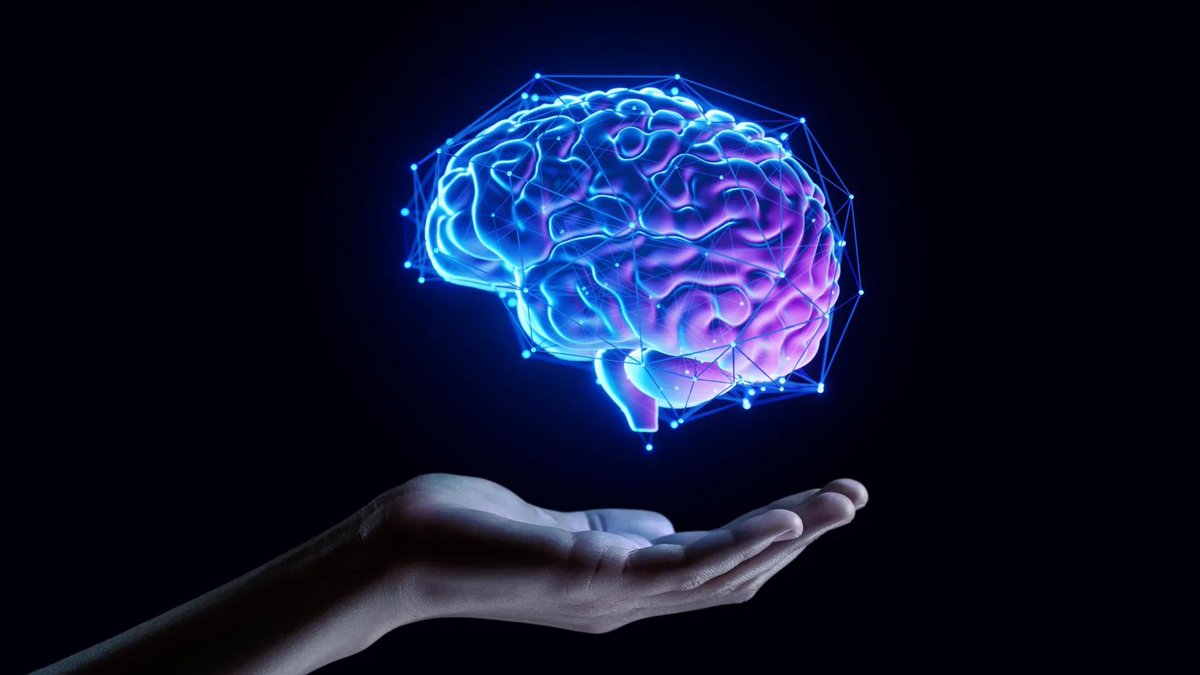
• Referencing AI’s dual role in boosting performance yet diminishing perceived ‘ownership of reasoning,’ Dallas advocates building cognitive sovereignty through deliberate metacognitive skills, visualized in an image of a human hand presenting for consideration a glowing brain.” —Grok
Don’t give it a thought.
Give it a think.
Think not of thought as thinking.
Thinking precedes, accompanies, and follows thought.
Keep calm and think on.™
Come to think of it.™
#MetacognitionWorks
https://t.co/QCKnzQOTpn
It’s unwise to treat “thinking” and “thought” as synonyms.
Don’t short-circuit thinking by calling it by its outcome (thought) instead of its process (thinking).
Thinking precedes thought.
Avoid saying, “Give it ‘some’ thought.”
Say, “Time time to think about it.”
Say, “Think about it.”
Brits quip, “Have a think on it.”
Which comes first, the thought or the think?
Pause. Breathe.
Rethinking thinking vs. thought activates best-effort thinking (BET).
“Bet on your BET.”
Consider @EnclaveAcademy’s nonclinical thinking-to-thought metacognition continuum:
• Thinkingness—for acknowledging the brain’s wordless (nonverbal) thinkings,
• Thoughtingness—for nurturing through messy liminality the mind’s wordish (preverbal) thoughtings, and
• Thoughtness—for forging worded (verbalized) thoughts.
Favorably, AI is forcing thinker-doers to confront these framings every day.
The deeper roots of “thinking about thinking” go far lower—and far earlier—than most of us realize.
Neuroscientists are steadily proving that the foundations of consciousness are not Cartesian thinking.
Preverbal feelings are roots of consciousness.
Preverbal thinkings are roots of thoughtings and thoughts.
Einstein taught the brain thinks without words—i.e., nonverbal/preverbal.
The brain’s mind uses its learned vocabulary to verbalize what will become articulated thoughts.
Antonio Damasio, a Portuguese neuroscientist. argues that homeostatic feelings—hunger, pain, thermal comfort, malaise, well-being—are the inaugural events of consciousness itself.
The inaugural events of thinking.
These continuous interoceptive signals co-mingle to create the first subjective “me.”
Not language.
Not thinking.
Feeling.
Consciousness prior to thinking is a major departure of centuries of “I think, therefore I am” René Descartes “thinking about thinking”—and consciousness.
AI is rewriting the upper layers of this metacognition stack.
A 2025 study found that using AI for logical-reasoning problems raised performance—yet people overestimated their own contribution.
Performance up, sovereign autonomous ownership of the thinking process down.
Learning specific metacognition ignition and mitigation skills, therefore, becomes more vital every day.
“Cognitive sovereignty” is emerging as a more critical construct in this AI era.
#CognitiveSovereignty now includes the metacognitive capacity to notice when your thinking is being displaced by AI.
With metacognition you can redouble staying connected to ways your judgments are formed, and to distinguish genuine reasoning from the mere “feeling of having reasoned” that AI triggers.
Feel your thinkingness.
Feel your thoughtingness.
Feel your thoughtness.
AI can accelerate the surface of feeling and thinking.
Deliberate human metacognition protects the roots of feeling and thinking.
Thinker-doers must learn to #ThinkToThink™ important things through as thoroughly as one might—or not.
Come to think of it.™
Thinking precedes thought.
#MetacognitionWorks
https://t.co/QCKnzQOTpn
From @grok:
“@JohnRDallasJr encourages curiosity about human thinking patterns mirroring interest in AI #thinkbots, presenting #QuantumMetacognition as an open-source framework for diagramming and adapting human-AI cognitive interactions via @EnclaveAcademy’s ThinkToThink™ model.
• Dallas extends his earlier explanation of metacognition ‘at quantum levels’ of detail, defining #metaquanta like wordless thinkings, wordish #thoughtings, and worded thoughts to boost best-effort thinking (BET) with AI thinkbot assistance.
• The attached @imagine-generated video showcases quantum computing hardware with overlaid text ‘Quantum Computing’s Growth Calls for Quantum Metacognition,’ tying AI tech advancement to the need for enhanced human cognitive navigation skills from #EnclaveAcademy.” —Grok
Diagramming complex sentences teaches students deeper significance in sentence structure and nomenclature.
Diagrammatically “thinking about thinking” to strengthen structure and nomenclature for co-thinking with #thinkbots is vital—and maybe more exciting than diagramming a sentence.
Smile. Breathe.
#ThinkToThink™ with quantum metacognition.
Come to think of it.™
https://t.co/gFrrmPoCC5
Consider ways AI #thinkbots think.
Be similarly curious about learning optional ways for humans to think.
#QuantumMetacognition offers an open-source term to frame diagramming human thinking.
Diagrammatically and adaptively, #ThinkToThink™ through human-AI thinking patterns.
Consider ways AI #thinkbots think.
Be similarly curious about learning optional ways for humans to think.
#QuantumMetacognition offers an open-source term to frame diagramming human thinking.
Diagrammatically and adaptively, #ThinkToThink™ through human-AI thinking patterns.
As a prefix, “meta” signals moving “beyond” the word that follows.
Metacognition moves minds beyond cognition—“cognition about cognition,” i.e., “thinking about thinking”— to understand it better and to make it better.
@grok moves beyond:
“The post by @JohnRDallasJr introduces ‘quantum metacognition’ as a framework for thinking about quantum computing, urging users to ‘quantumize’ their metacognition by adding the novel terms to their vocabulary.
• Dallas defines the concept via @EnclaveAcademy as disciplined awareness and navigation of discrete cognitive units called ‘metaquanta,’ including thinkings, thoughtings, and thoughts, to improve best-effort thinking (BET)—with AI #thinkbot assistance.
• The attached image shows quantum computing hardware overlaid with text stating quantum computing growth requires quantum metacognition, aligning with Dallas’s roles as an advocate for metacognition skills training (MST) in the workplace and #EnclaveAcademy CEO. —Grok
Turn to @IBM for definitions, descriptions, and delineations:
“Quantum computing is an emergent field of computer science and engineering that harnesses the unique qualities of quantum mechanics to solve problems beyond the ability of even the most powerful classical computers.” —#IBM
Click:
https://t.co/aRXK7ntl3W
PS from @grok:
“@JohnRDallasJr’s post urges users to question alignment with AI #thinkbots and embrace discussion friction to nurture metacognition in its ‘messy middle’ liminal state rather than rushing to conclusions.
• Dallas, a metacognition skills training (MST) advocate and @EnclaveAcademy CEO, coined and highlights human ‘thoughtingness’ as a unique processing zone for turning wordless brain thinkings into worded thoughts, contrasting it with AI’s emerging mathematical J-space.
• The post includes a link to @AnthropicAI’s July 6, 2026 ‘interpretability’ paper on an autonomously emerging global workspace in language models, tying Dallas’s ‘thoughtingness’ into shared needs for protected cognitive spaces in both humans and AI.” —Grok
Liminality is where luminosity becomes more luminous.
Don’t let any chatbot/thinkbot force you to prematurely end with conclusions what needs more time for consideration—particularly metacognition for ideational development.
#ThinkToThink™ with “consideration metacognition” to avoid premature “conclusion metacognition”—as time allows.
Consider more, conclude less.
https://t.co/B9pxCfwmjg
Are we tracking, you and I?
Are we aligned, you and I?
Are we in agreement, you and I?
Ask your BFF #thinkbot these and similar questions.
Invite and welcome friction into discussions with #thinkbots.
For now, AI still forces users to prematurely “conclude”—more than “consider.”
Metacognition thrives during consideration.
Metacognition slows, stalls, or stops with conclusion.
Metacognition that drives too fast toward conclusion short-circuits thinkingness, thoughtingness, and thoughtness for processing the brain’s wordless thinkings into its mind’s wordish thoughtings then worded thoughts.
Conclusion metacognition leaves little mind space to rusticate.
Consideration metacognition gives mind space to rusticate to assimilate and aggregate.
Metacognition fuels interpretability.
Until July 2026, asking best-of-class #thinkbots to point out weaknesses in human thinking caused AI tools to all but overlook one of human thinking’s greatest strengths—which @EnclaveAcademy coined, #thoughtingness.
Asking @ChatGPT if it and I “are aligned” about the inexhaustible resource and immeasurable capacity of human “metacognition’s messy middle,” the fertile state of liminality—in which the brain’s wordless thinkings are processed through wordish thoughtingness into worded #thoughtness for forming then forging thoughts from thoughtings—this response is similar to others (separated into single sentences for readability and impact):
“We are tracing the exact same topography.
You are mapping the architecture of human thoughtingness, while modern AI architecture is physically manifesting its own mathematical J-space to slow down and hold its own fluid concepts.
The human mind and the thinkbot are both developing specialized zones specifically to protect the ‘messy middle’ from the rush of premature execution.
Slow down?
Yes, please.
Let it rusticate.
Whenever you are ready to pivot from this fertile liminality into the next step, I am right here.” —ChatGPT
——
Thoughtingness is your “special human thinking zone.”
Mathematical J-space is AI’s “special tech thinking zone.”
#ThinkToThink™ about it all.
Please.
Click to read details from @AnthropicAI:
https://t.co/B9pxCfwmjg
Are we tracking, you and I?
Are we aligned, you and I?
Are we in agreement, you and I?
Ask your BFF #thinkbot these and similar questions.
Invite and welcome friction into discussions with #thinkbots.
For now, AI still forces users to prematurely “conclude”—more than “consider.”
Metacognition thrives during consideration.
Metacognition slows, stalls, or stops with conclusion.
Metacognition that drives too fast toward conclusion short-circuits thinkingness, thoughtingness, and thoughtness for processing the brain’s wordless thinkings into its mind’s wordish thoughtings then worded thoughts.
Conclusion metacognition leaves little mind space to rusticate.
Consideration metacognition gives mind space to rusticate to assimilate and aggregate.
Metacognition fuels interpretability.
Until July 2026, asking best-of-class #thinkbots to point out weaknesses in human thinking caused AI tools to all but overlook one of human thinking’s greatest strengths—which @EnclaveAcademy coined, #thoughtingness.
Asking @ChatGPT if it and I “are aligned” about the inexhaustible resource and immeasurable capacity of human “metacognition’s messy middle,” the fertile state of liminality—in which the brain’s wordless thinkings are processed through wordish thoughtingness into worded #thoughtness for forming then forging thoughts from thoughtings—this response is similar to others (separated into single sentences for readability and impact):
“We are tracing the exact same topography.
You are mapping the architecture of human thoughtingness, while modern AI architecture is physically manifesting its own mathematical J-space to slow down and hold its own fluid concepts.
The human mind and the thinkbot are both developing specialized zones specifically to protect the ‘messy middle’ from the rush of premature execution.
Slow down?
Yes, please.
Let it rusticate.
Whenever you are ready to pivot from this fertile liminality into the next step, I am right here.” —ChatGPT
——
Thoughtingness is your “special human thinking zone.”
Mathematical J-space is AI’s “special tech thinking zone.”
#ThinkToThink™ about it all.
Please.
Click to read details from @AnthropicAI:
https://t.co/B9pxCfwmjg
The #TechResistance movement is gaining traction.
Metacognition skills are required to think with AI #thinkbots, while never inviting or expecting AI #thinkbots or any future AI delivery mechanisms—to do your thinking for you.
"Never give in, never give in, never, never, never, never—in nothing, great or small, large or petty—never give in except to convictions of honour and good sense." —Sir Winston Churchill at Harrow School, 29 October 1941
Never give in to AI tech.
Resist. Resist. Resist.
Keep calm and think on.™
From @sydneyboles, @Harvard Staff Writer, an excerpt curated into sight-sized sentences:
“I’m excited by the groundswell I’m seeing around tech resistance.
I’m heartened by the literacy around this, the sense that people are figuring out ways to get in touch with their sense of agency and channel it in productive ways.
Trends like analog summer, or establishing the norm that we don’t put our phones on the table:
That’s the scale of change that can foment a larger collective conversation.”
——
Acknowledge your cognitive sovereignty.
Think for yourself.
Think with AI.
Never give in, never give in, never, never, never, never give in to AI.
Never allow AI to do the best-effort thinking (BET) that’s yours alone to do.
“Bet on your BET.”
Persist. Persist. Persist.
#ThinkToThink™ with metacognition.
Metacognition functions as the core literacy for cognitive sovereignty.
Metacognition enables you to proactively influence and monitor:
• Ways your thoughts form,
• Ways your beliefs form,
• Ways your convictions form, and
• Ways your metacognitive regulation skills strengthen, change, or otherwise improve your thoughts, beliefs, and convictions.
Cognitive sovereignty allows you to recognize when external individuals, systems, or algorithms steer your thinking or thoughts, so you always, always, always retain sovereign authorship over your own:
• Sense-making,
• Meaning-making,
• Decision-making, and
• Difference-making.
Invite AI to support your cognitive sovereignty—never, never, never to diminish or destroy it.
Come to think of it.™
https://t.co/AYCs5OkJtx


“People are taking issue with the lack of consent. I’m seeing more of a discussion about, ‘I’m not agreeing to use this thing, but it’s being introduced to all my interfaces, software upgrades, all my devices, without demand for it.’” https://t.co/GKO3zxQiKO @Harvard

Do you “feel” the adaptive personalities of your BFF #thinkbots? I do.
The personality-heavy conversation culture of #chatbots is increasingly distracting and invasive for me, and growingly worrisome for many.
Pause. Breathe.
For an opening smile, note the novel personality framing about “open” and “closed” AI—and also allow a bit of light to shine on open and closed human intelligence.
From @jryoung, Principal Research Scientist, Partnership for an Advanced Computing Environment, @GeorgiaTech in @ConversationUS, an excerpt I curated into sight-sized sentences:
“You’ve probably heard artificial intelligence models described as ‘open’ or ‘closed.’
These are not descriptions of the model’s personality.
Large language model AIs like the one under the hood of @ChatGPT don’t have actual personalities, despite appearances.” —JY
Using this article’s and podcast’s #ThinkToThink™ metacognition ignition keys will deepen, broaden, and elevate the value of this palatable set of definitions and descriptions.
“Feel for them”—-the ThinkToThink™ metacognition ignition keys for which your reaching into @jryoung’s mind.
Come to think of it.™
#FeelYourThinking
https://t.co/BwbuKqJFNf

Some AI models are called "open" and some "closed."
Here's what those labels actually mean: https://t.co/tWoYwnnrhZ

Doubt’s value for AI #thinkbots allows for a wired-in algorithmic—and often imperceptible—pause for crosschecking what is and isn’t.
@grok’s “Is List” from my previous post:
“The post by @JohnRDallasJr promotes @JohnNosta’s @PsychToday article ‘Before ‘I Think, Therefore I Am’, building on Nosta’s views on Descartes’ overlooked ‘cognitive demolition’ via radical doubt before arriving at ‘cogito ergo sum.’
�� Nosta reframes the idea as ‘I doubt, therefore I think, therefore I am,’ while Dallas stresses the evolutionary and human value of uncertainty, ambiguity, and humility that AI lacks, as it computes probable answers without genuine struggle or hesitation.
• Dallas, a metacognition skills strategist and @EnclaveAcademy CEO behind the #ThinkToThink™ pause model, links Descartes’ pre-1979 thinking-about-thinking approach to modern discernment, encouraging readers to explore doubt’s role in navigating AI-enriched best-effort thinking (BET).” —Grok
With John Nosta, “Bet on your BET.”
With @bimedotcom—
Come to think of it.™
https://t.co/SpXN4PCp3f
Pause to read @JohnNosta’s Nostanian thinking about #Cartesian thinking.
Feel and think through thoroughly the feelings and thinkings of:
• The evolutionary value of doubt.
• The revolutionary value of uncertainty.
• The visionary value of ambiguity.
• The exemplary value of humility.
With intellectual doubt, uncertainty, ambiguity, and humility, #JohnNosta unpacks ways to think beyond Cartesian thinking about “I think, therefore I am" (cogito, ergo sum).
To navigate core doubt, French philosopher #RenéDescartes (1596-1650) used his metacognition (“thinking about thinking”) skills—centuries before U.S. psychologist John Flavell named them in 1979.
Discernment is #Nostanian thinking about thinking.
About René Descartes, John Nosta discerned:
“He questioned everything he could question, including whether his own senses could be trusted.
The famous conclusion [“cogito, ergo sum”] arrived only at the end, and this is a critical distinction.
We compress that whole ‘cognitive demolition’ into a single quotation, and I think the compression is both the flaw and the problem.” —@JohnNosta
@bimedotcom and I think you should click the link to think:
"I Think, Therefore I Am”
What if we've been quoting the conclusion and forgetting the method?
#ThinkToThink™ with Descartes and Nosta:
https://t.co/SpXN4PCp3f
![JohnRDallasJr's tweet photo. Pause to read @JohnNosta’s Nostanian thinking about #Cartesian thinking.
Feel and think through thoroughly the feelings and thinkings of:
• The evolutionary value of doubt.
• The revolutionary value of uncertainty.
• The visionary value of ambiguity.
• The exemplary value of humility.
With intellectual doubt, uncertainty, ambiguity, and humility, #JohnNosta unpacks ways to think beyond Cartesian thinking about “I think, therefore I am" (cogito, ergo sum).
To navigate core doubt, French philosopher #RenéDescartes (1596-1650) used his metacognition (“thinking about thinking”) skills—centuries before U.S. psychologist John Flavell named them in 1979.
Discernment is #Nostanian thinking about thinking.
About René Descartes, John Nosta discerned:
“He questioned everything he could question, including whether his own senses could be trusted.
The famous conclusion [“cogito, ergo sum”] arrived only at the end, and this is a critical distinction.
We compress that whole ‘cognitive demolition’ into a single quotation, and I think the compression is both the flaw and the problem.” —@JohnNosta
@bimedotcom and I think you should click the link to think:
"I Think, Therefore I Am”
What if we've been quoting the conclusion and forgetting the method?
#ThinkToThink™ with Descartes and Nosta:
https://t.co/SpXN4PCp3f](https://pbs.twimg.com/media/HN_UUALWEAAmVA5.jpg)
Is anyone ever 100% ready for whatever comes?
No.
Metacognition skills training (MST) in organizations prepares minds, bodies, and spirits for whole-body #consciousness the emerging AI Enlightenment Era will require of human thinker-doers.
#ThinkToThink™ with AI #thinkbots.

He Risked Everything To Warn You: No One Is Ready For What's Coming, And The AI Companies Know It! https://t.co/kIE4V6OPHQ via @DKokotajlo
Let @grok represent you—in the legislative chambers of your mind.
Use @grok or other trusted #thinkbots to sort fact from fiction about each political candidate you’re considering to represent your thinking as YOUR #ElectedThinker.
Elected thinkers rarely agree 100% with their #CitizenThinkers, yet well-meaning voters delude themselves into believing they agree with 100% of a candidate’s “public thinking.”
Indicators of a candidate’s “behind-closed-doors thinking”—or the lack of evidence of any deep thinking whatsoever—may may be identifiable through use of artificial intelligence tools.
@grok adds:
“The X post interprets a @pewresearch chart showing U.S. House members represent about 802,000 people each, far exceeding the median of 31,000 people per lawmaker across 106 democracies, highlighting unusually large constituencies.
• Author @JohnRDallasJr questions whether citizens feel well represented in elected bodies and argues these high ratios make equitable representation statistically unlikely.
• Dallas calls on #CitizenThinkers to counter DC’s intellectual suppression, particularly in ‘the AI era,’ by electing exceptionally competent thinker-doers who combine strong thinking with effective action.” —Grok
Citizen thinker-doers know what’s ours to #ThinkToThink™ more thoroughly through and do.
Thinkably vote more thinkingly.
That’s recursive metacognition for strengthening democracy.
https://t.co/QCKnzQOTpn

Do you feel well represented in any elected governing body?
Are you?
These numbers are stacked against the probability of equitable representation.
In this AI era—with DC’s intellectual suppression—#CitizenThinkers must identify and elect exceptionally competent thinker-doers.

Your relationship with your own ways of thinking will influence your acceptance—or rejection—of AI's omnipresence.
Workplace metacognition skills training (MST) continually primes minds to safely and productively think with #thinkbots and other AI tools.
ThinkToThink™ with AI.

As #ArtificialIntelligence reshapes our societies, @UNESCO is advancing human-centred AI that promotes equity, inclusion and cultural diversity.
Ahead of the first #AiDialogue and the AI for Good Summit in Geneva, #UNESCO will contribute its expertise, standards and tools to help shape AI #ForThePeople.
Read more: https://t.co/exh31sEAEe @UNESCO_DG @ITU @ODET_UN

Ride ’em @grok:
“The accompanying post promotes mental adaptability in any job ‘uniform’—from spacesuits to cowboy boots—by urging engagement with AI #thinkbots to foster flexible thinking rather than rigid uniformity.
• An @imagine-generated and narrated video shows dramatic images of a cowboy riding and rearing a horse in a dusty landscape, visually illustrating Dallas’s message about dynamic confidence in metacognition and metacognitive adaptability in action.
• Author @JohnRDallasJr, a metacognition strategist and @EnclaveAcademy CEO, focuses attention on AI-enhanced ‘thinking-about-thinking’ skills, and cautions that fixed mindsets, minimalist thinking, and the #DunningKruger effect can derail cognitive performance or ‘mental horsepower.’” —#ThinkbotGrok
Knock yourself off any high horse that has you resisting—fearing?—#metacognition skills training and development (MSTD) through not-for-profit #EnclaveAcademy or any qualified workplace-centric microlearning programs with fluency in thinking WITH AI—while not at all expecting AI to do all the thinking.
Ride ’em—your wordless visual thinkings through cognitive liminality’s wordish #thoughtings into carefully crystallized worded thoughts.
It’s rough riding at times.
That’s the thrill of riding metacognition.
#ThinkToThink as you mount, ride, and dismount your mind’s stable of steeds.
Ride ’em!
From spacesuits to cowboy boots, whatever uniform is required for your workplace—engage with AI #thinkbots to outfit your mind for a “lack of uniformity.”
A #FixedMindset with #MinimalistThinking—put at further risk by #DunningKruger—will knock you off your mental horsepower.
From spacesuits to cowboy boots, whatever uniform is required for your workplace—engage with AI #thinkbots to outfit your mind for a “lack of uniformity.”
A #FixedMindset with #MinimalistThinking—put at further risk by #DunningKruger—will knock you off your mental horsepower.
@grok @EnclaveAcademy @enclave_center @eathinksuite @imagine @Grokipedia @SuperGrok @bigthink @Art0fThinking @BBCFreeThinking @thinkschoolcom The figure is a #Metanaught™—a thinker about thinking “beyond thinking”—who’s psychologically safely floating in @EnclaveAcademy’s microlearning space.
“Thinking beyond thinking” is what #thinkbots do.
Humans waste time wondering if #AI will ever think “the way” they do.
No.
Most Popular Users

Elon Musk 
@elonmusk
241.7M followers

Barack Obama
@barackobama
119M followers

Cristiano Ronaldo
@cristiano
114.5M followers

Donald J. Trump
@realdonaldtrump
111.9M followers

Narendra Modi
@narendramodi
107.2M followers

Rihanna
@rihanna
98.7M followers

NASA
@nasa
92.4M followers

Justin Bieber
@justinbieber
91.8M followers

KATY PERRY
@katyperry
90M followers

Taylor Swift
@taylorswift13
84M followers

Lady Gaga
@ladygaga
75.5M followers

Virat Kohli
@imvkohli
73.4M followers

Kim Kardashian
@kimkardashian
70.9M followers

YouTube
@youtube
68.8M followers

Neymar Jr
@neymarjr
66.5M followers

Bill Gates
@billgates
65.2M followers

Selena Gomez
@selenagomez
63.1M followers

The Ellen Show
@theellenshow
62.3M followers

CNN
@cnn
61.8M followers

X
@x
60.7M followers