

Top Tweets for #betterScience


Plants eat this "dogpoop" to survive.
Scientists used to call this process "photosynthesis", but that was forgotten (somehow) after the global warming panic hit.

Human-focused life sciences are moving from vision to implementation.
#betterscience
#humanrelevant
Huge thanks to all the brilliant participants 👏
https://t.co/Ihj69uujqY

We’re proud to share that MIMETAS is a founding member of IAMPS, the world’s first industry alliance dedicated to advancing microphysiological systems (MPS). IAMPS will accelerate regulatory acceptance, standardization & adoption of #NAMs. https://t.co/NdADKODkPt


From faster drug development to reduced reliance on animal testing, New Approach Methodologies (NAMs) are changing how R&D teams generate evidence.
Get the facts 👉 https://t.co/Xe7vZUc7sw
#NAMs #DrugDevelopment #RegulatoryScience #MIDD #Certara

In the U.S., 1 in 3 women report heavy menstrual bleeding, a condition that can lead to iron deficiency and anemia. Despite its prevalence, the underlying causes remain poorly understood.
To help close this gap, the @WellcomeLeap's $50 million Missed Vital Sign program has funded the @wyssinstitute to develop a human organ-on-a-chip model of menstruation, led by @DonIngber, also of @harvardmed and @bostonchildrens.
“‘Women’s health has been ignored for so long—and that goes well beyond reproductive health,’ Ingber said. ‘This technology can break down that inequality and focus on women’s health in a direct way.’”
On the advantages of organ-on-a-chip systems, Ingber explains: “We have the ability to control many different parameters individually … Is it exactly like in vivo? No. But that’s what every model is: It’s an approximation, and it’s much better than an animal model.”
And for good reason: the animals most used in experiments—mice—do not have a menstrual cycle nor do they menstruate. To study human menstruation, human cells and tissues are essential. Without investing in human-relevant models like this, disparities in women’s health research will persist.
https://t.co/rFSY58nVKg

We’re proud to announce our “moonshot” vision for animal-free research! 🚀🧬
Working through @BioMed_21, our policy paper calls for a shift from animal models to modern non-animal methods that better protect humans & the environment, while saving animals. https://t.co/N3ZQmyCn1Y


Animal models of sepsis are inadequate. We need a different approach.
Support the campaign by @peta to urge the UK Government to include sepsis as a priority topic in its strategy to phase out animal testing. ⤵️
https://t.co/utprdFdxqu
The time may come when we look back and realise that animal experiments have been a huge and costly distraction, a path we might have done better to completely avoid. #betterscience #humanrelevant
https://t.co/6ZRBQjujTr

Explore drug toxicity across intestine, liver & kidney models simultaneously & in real-time. The new Multi-Organ Tox Plate enables real-time, automated, animal-free testing. Download the poster today. https://t.co/7BMxrke7Jt @SartoriusGlobal #DrugDiscovery #Toxicology


“September is Sepsis Awareness Month, and in case you aren't familiar with this terrible condition, sepsis is an extreme and often fatal reaction to infection that kills nearly 11 million people worldwide each year and affects more than 48 million. It's responsible for 20% of all global deaths, meaning one in five people will die from sepsis.
Despite its staggering toll, there is no dedicated cure. Current treatments focus on supportive care, not reversal or prevention of the condition.
This lack of progress is not due to inaction but to misdirection. For decades, scientists have overwhelmingly relied on experiments on animals, yet not a single targeted, effective drug or treatment for sepsis has emerged. Despite this failure, experimenters still subject animals to cruel and painful procedures that cause suffering, organ failure and death.”
Read more from @SAOscience’s Dr. Gabby Vidaurre in @FresnoBee:
https://t.co/lRSi37bb0Q


Congrats to @NKleinstreuer for leading by example. The increased NIH commitment to animal alternatives is such a breath of fresh air - investment starting with the 2012 Tissue Chips program (joint with DARPA) is paying off. Move over, mice! NIH is humanizing research.

There's still time to register! Live at UPenn, join us for a public talk to help us embrace rigor as the best tool to make reliable, reproducible, and transparent science.
#ScientificRigor #BetterScience #PhDLife #GradStudentLife

"Traditional drug development often relies on 2D systems or animal models that poorly predict human outcomes, leading to high failure rates in clinical trials. Organoids, by contrast, offer human-derived models that better reflect patient responses."
Shocking fact: Over 90% of drugs that work in animals don't work in humans! 🐭➡️🙅♀️
This makes us wonder 🤔 how many cures have gone undiscovered because they failed in animal tests?
We need a cultural shift in science from mouse-biology to human-biology as the gold standard!
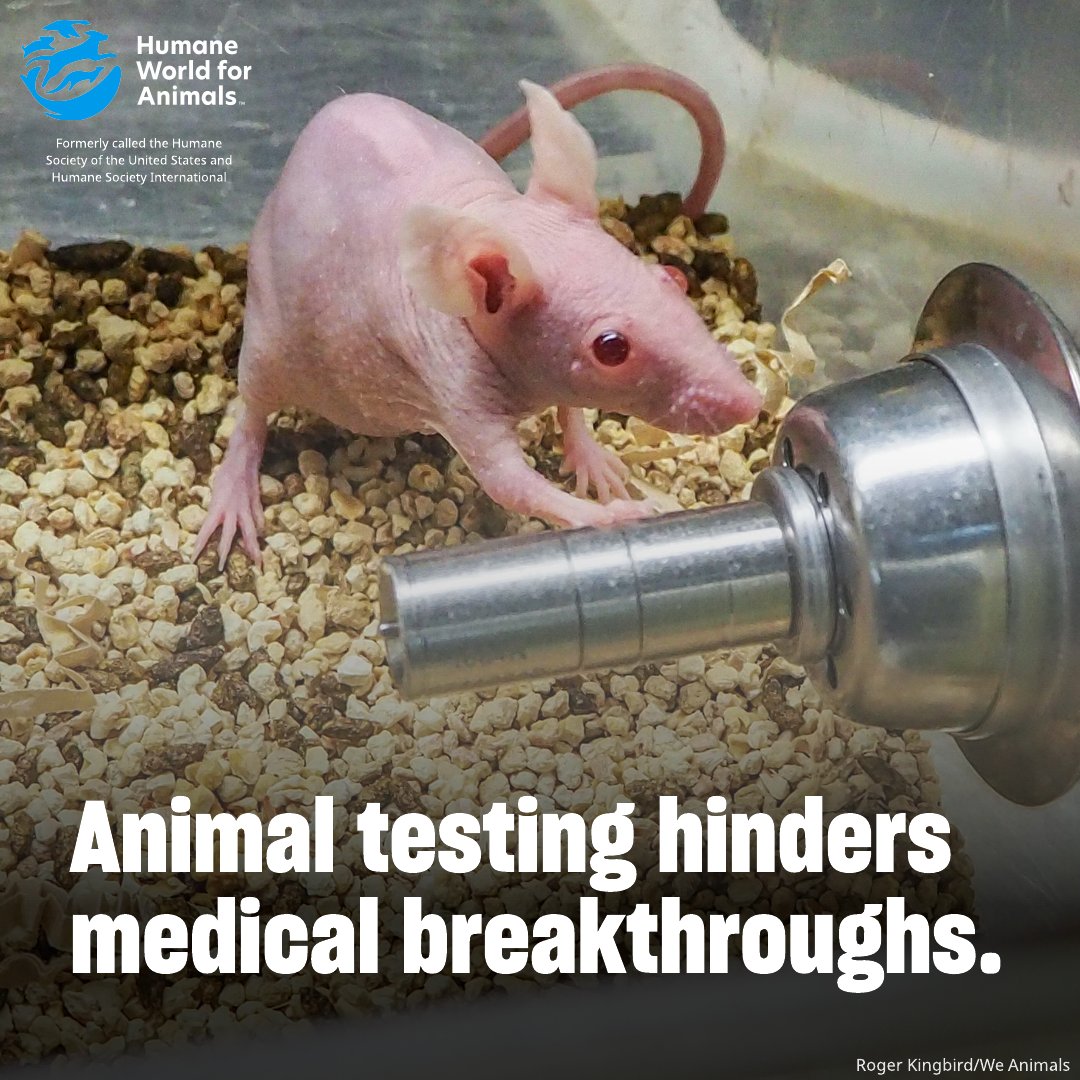

Every 90-day drug safety study can sacrifice 80 animals, but there’s a better way. Quasi Vivo® offers low-shear, human-cell systems, accurately modeling human biology without animals.
Discover ethical, reliable research at: https://t.co/daXZFh44e1
#AnimalFreeResearch

New in Advanced Science: Our Human-on-a-Chip® platform was used to create what is believed to be the first digital twin from an organ-on-a-chip, predicting human efficacy and safety for antimalarial drugs.
Read more: https://t.co/Go0mf2DnQ5
#DigitalTwin #OrganOnAChip #NAMs

.@NIH has announced that it will no longer fund new grant proposals that rely solely on animal experiments—a shift that we've been advocating for decades! 👏
This will save the lives of countless animals while also prioritizing human health! TY @DrJBhattacharya & @NKleinstreuer!

Millions of animals will be spared thanks to NIH’s shift toward non-animal, human-relevant research!
NIH’s Dr. Nicole Kleinstreuer just said what PETA has known all along: testing on animals is holding back progress for human health.
In this new review by @AFR_UK, @laurenhope97 and Dr. Jarrod Bailey discuss why species differences critically matter in biomedical research and identify strategies to advance human-relevant methodologies.
https://t.co/NB4FMHMkD8
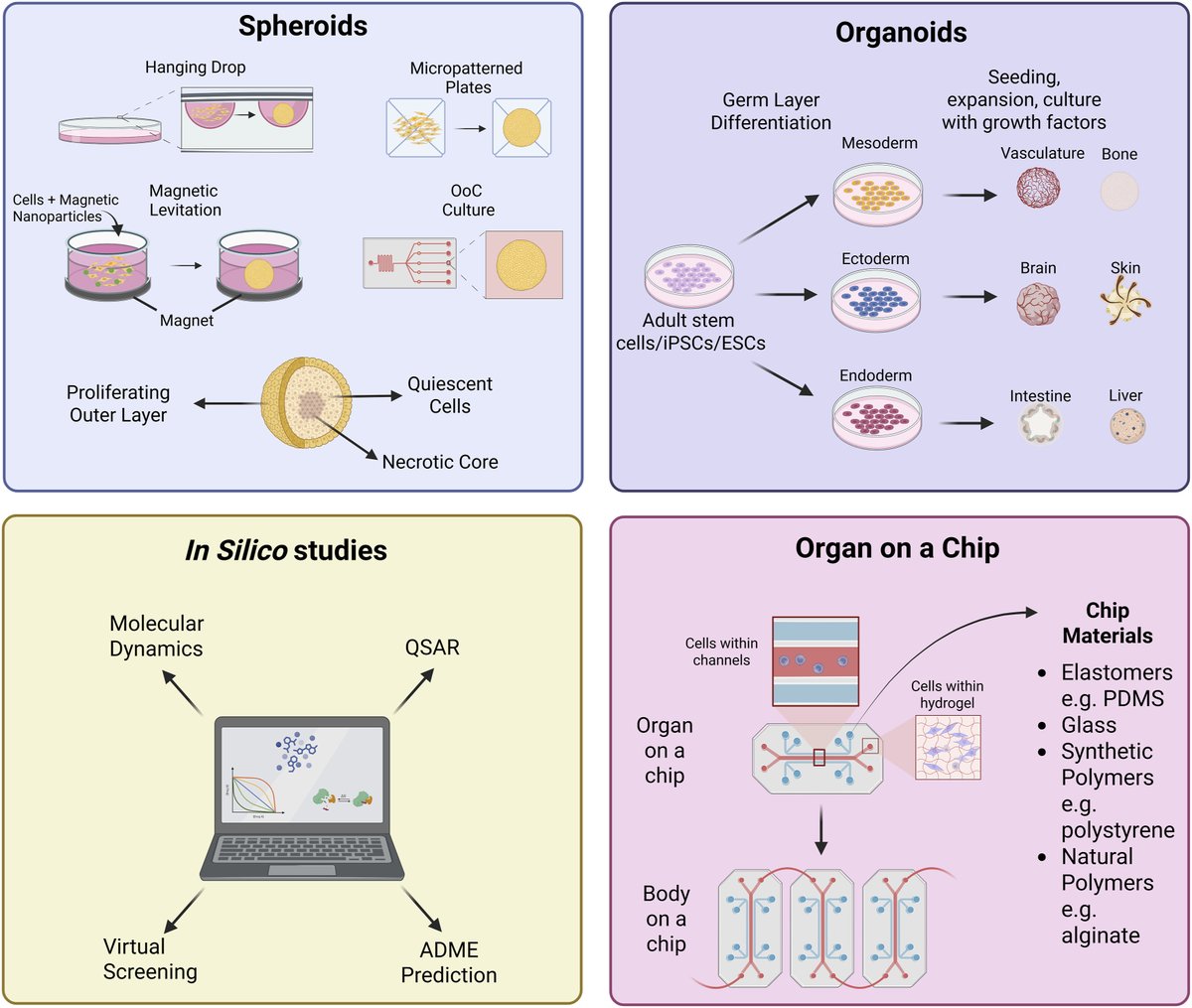

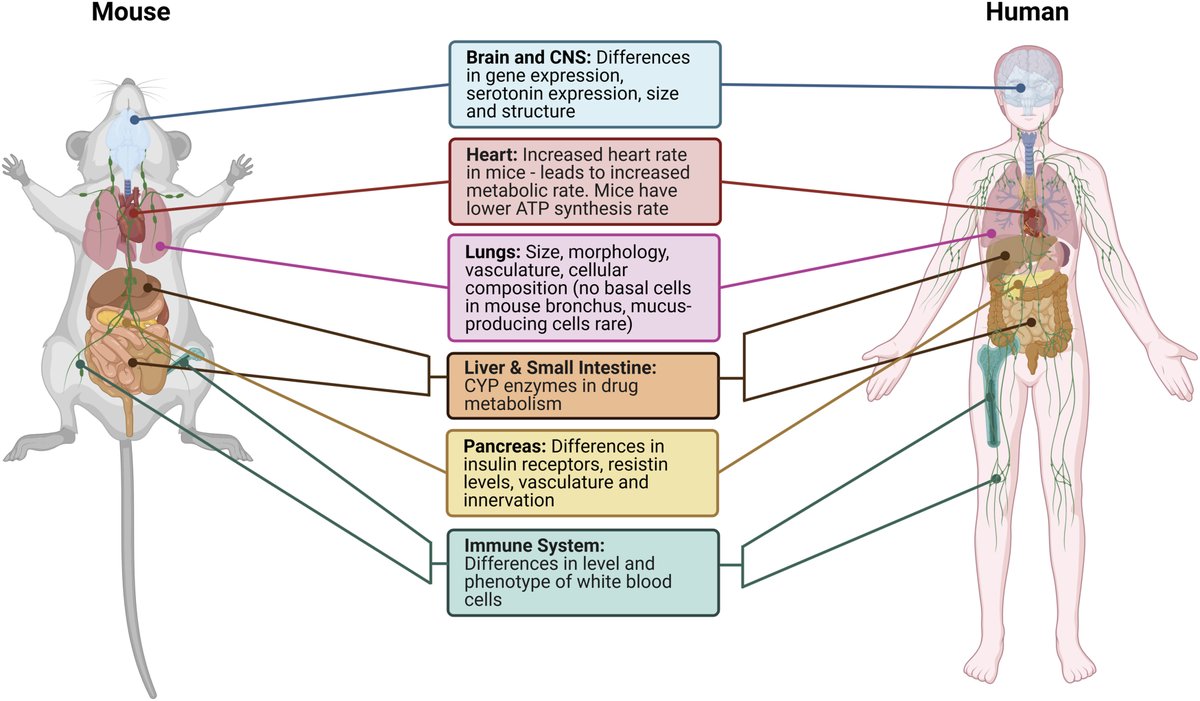

NIH is shifting its priorities away from animal experimentation and toward modern, human-relevant research methods, thanks to the dedication and work of @NKleinstreuer, @NIHDirector_Jay, & @RobertKennedyJr 👏🏾
https://t.co/br3p8RLmFp
Last Seen Hashtags on Sotwe
Most Popular Users

Elon Musk 
@elonmusk
240.3M followers

Barack Obama
@barackobama
119.3M followers

Donald J. Trump
@realdonaldtrump
111.6M followers

Cristiano Ronaldo
@cristiano
109.9M followers

Narendra Modi
@narendramodi
106.9M followers

Rihanna
@rihanna
97.5M followers

NASA
@nasa
92.1M followers

Justin Bieber
@justinbieber
90.7M followers

KATY PERRY
@katyperry
87.3M followers

Taylor Swift
@taylorswift13
81.1M followers

Lady Gaga
@ladygaga
72.7M followers

Kim Kardashian
@kimkardashian
69.6M followers

Virat Kohli
@imvkohli
69.3M followers

YouTube
@youtube
68.6M followers

Bill Gates
@billgates
63.7M followers

The Ellen Show
@theellenshow
62.5M followers

Neymar Jr
@neymarjr
62M followers

CNN
@cnn
61.9M followers

X
@x
60.9M followers

Selena Gomez
@selenagomez
60.4M followers