tl;dr @Zai_org glm-5.4:
- the loop: another looped model, like inkling. 28 middle layers of the ~750b glm-5 base run twice per token. same weights, more depth
- memory trick: the second pass reuses the first pass's sparse kv cache plus a small 128-token window, so looping barely adds memory even at 1m context
- the evals: no official benchmarks yet. in their 30b test model (same params, ~10% more training compute): aime25 19.2→30.4, gpqa-d 47.6→56.3, with 10–15% shorter answers on most reasoning benches.
- the weights: not out yet. patiently waiting for the weights.
I (jokingly) said to someone just a few months ago that opus level local
models are < 1 yr away.
Now we have Sonnel level intelligence on a MacBook Pro.
tl;dr:
- the loop: middle layers run 3x per token, so more reasoning compute with no extra weights
- 26B total, 3.4B active, ~20GB, runs on a laptop
- scores 20 on @ArtificialAnlys, tied with qwen3.8-27b and on the frontier for its active size
- open weights, apache 2.0
Specialized Intelligence Index (SII): https://t.co/5SeRAlwYUo
Kimi K3.1 Pro study: https://t.co/IstYP0J1IH
MiniMax M3.1 Flash study: https://t.co/7QpNfrvqva
One of my favorite (free!) @FireworksAI_HQ features: the Specialized Intelligence Index (SII)
• @Kimi_Moonshot K3.1 Pro + Opus 5.5 beat Opus alone at 53% lower cost
• @MiniMax_AI M3.1 Flash + Gemini 3.8 Flash: 188 vs 172 tasks, $661 → $108
Pairing models pays off 👇
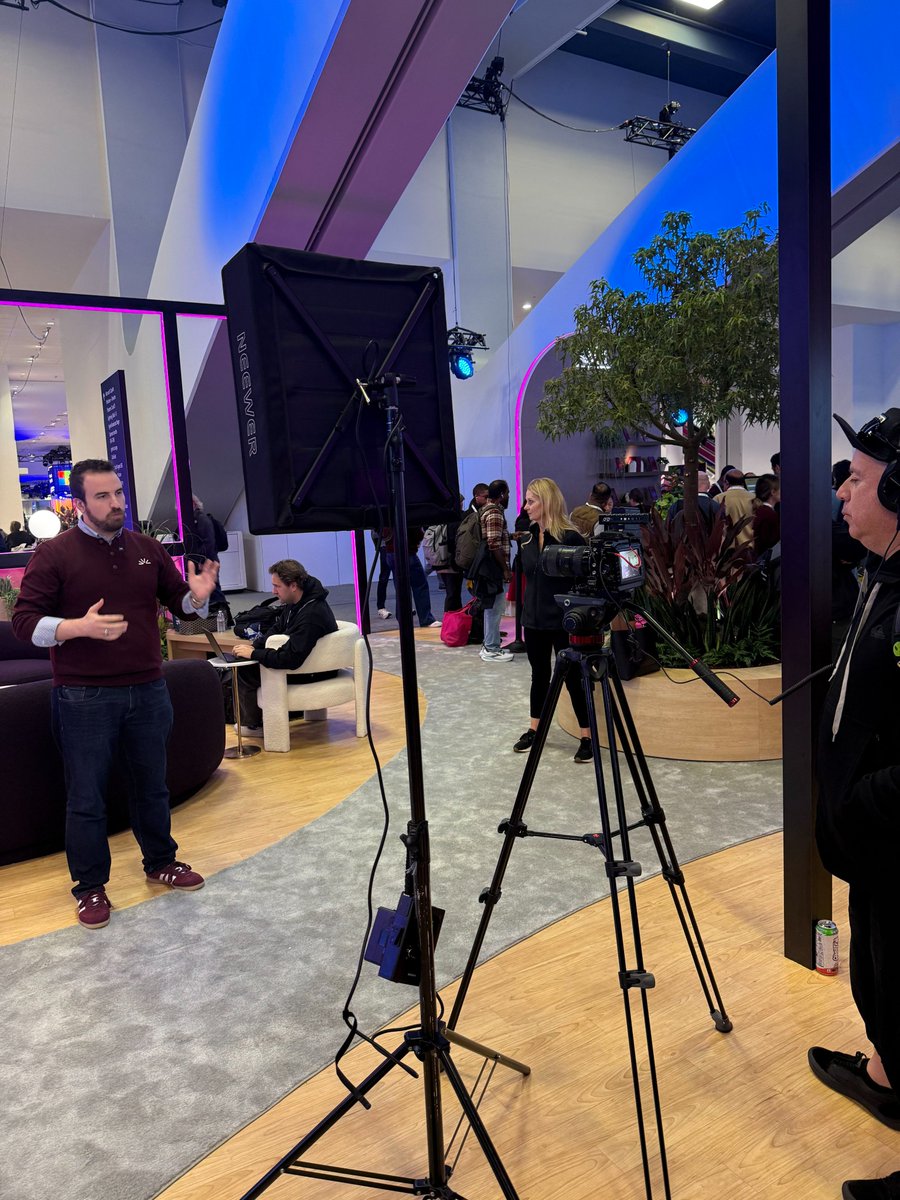
What a week at #MSIgnite! 🎆🌧️
@FireworksAI_HQ 101 booth sessions, great questions, and signing a few copies of our new Field Guide to Training Modern AI.
Thanks to the team and everyone who stopped by. Follow-up questions? Send them my way!
The frontier is pretty jagged at @FireworksAI_HQ we are putting a ton of work into understanding just how jagged. Check out some of our work for the specialized intelligence index (SII) using the latest from @Kimi_Moonshot
https://t.co/UzSau6R82s
We ran Kimi K3.1 Pro through 22 domain-specific benchmarks. Where it beats top closed models:
- τ³-Banking (Sierra, banking customer support): #1 of 21 at 63.3%, ahead of Gemini 4 Argon (58.2%), Claude Opus 5.5 (56.0%), GPT-6 Astra (44.8%) and GPT-6.1 Sol (44.7%)
- Legacy-Bench (Factory, maintaining COBOL, Fortran and Java 7 code): #1 of 14 at 63.0%, edging Claude Opus 5.5 (62.0%) at 22% lower cost and well ahead of GPT-6 Astra (55.7%)
- LAB (Harvey, first-year-associate legal work): #2 of 14, behind only Grok 4.6. Fully solves 15.4% of tasks vs 6.3% for Opus 5.5
- HealthBench Professional (clinical consults): #3 of 15, ahead of Claude Opus 5, Gemini 4 Argon and Grok 4.6
- CorporateBench (Epiq, company records from email archives) and FrontierFinance (Samaya AI, investment research): #4 on both, ahead of Opus 5.5
- Parallel Search (web research): top 5 of 22, ahead of GPT-6 Astra and GPT-6.1 Sol, and 1.9 points behind Opus 5.5 at 70% lower cost
Where it's weak:
- DAYJOB (Surge AI, everyday work in law, finance, accounting, tax, data science and healthcare): 8th–14th on all six, passing 9–40 percentage points fewer tasks than the top model. On finance and healthcare it trails 10+ closed models (17.0% vs Opus 5.5's 42.5%; 8.8% vs 48.3%)
- sudo L7 (Surge AI, changes to production codebases): 16.7% vs 46.1% for Opus 5.5 and 50.6% for Claude Sonnet 5.5
- ORCA (Traversal, production incident diagnosis): #3, but finds the exact root cause 32.9% of the time vs 50.2% for GPT-6 Astra
- FrontierMemory (Letta, writing memories for other agents): #11 of 17 at 55.6%, vs 73.3% for Opus 5.5 and 71.1% for Kimi K3
- LAB: Contracts (Harvey, contract review): #9 of 16 at 3.0%, down from Kimi K3's 8.3%
- Cost: on τ³-Banking each resolved request costs 88% more than with Opus 5.5 and takes 2.3x as long. On Big Finance (Rogo), GPT-6.1 Sol scores higher (52.0% vs 48.2%) at about a third of the cost
had promised the @FireworksAI_HQ Specialized Intelligence Index team has just started
Leaderboard averages hide the interesting part.
On Sierra’s banking-support benchmark, 12 conversations stumped nearly every model. Kimi K3.1 Pro solved 5 of them on average. No other model averaged more than 2.
these are deep dive analysis on where the new kimi model shines and struggles and how can users maximize the value out of it based on their domain and task complexity and quality needs.
interesting that pairing kimi with gpt/opus with routing can completely change the pareto frontier. try it on fireworks.
K3.1 Pro from @Kimi_Moonshot outscores K3 on 14/17 practitioner-built benchmarks on the SII.
Against Opus 5.5, it can cut costs on some workloads or improve quality at a premium on others.
Should you switch your agents? See where K3.1 Pro fits in our new SII model study: https://t.co/CZjaCbEITW
Team is starting to cook on top of SII !!
We will deliver deep dive insights on where open and closed models stand on actual domain specific tasks contributed by leading companies in AI.
You can then make an informed choice to optimize across quality, cost and latency