1/Having trouble remembering how to differentiate dementias on imaging?
Is looking at dementia PET scans one of your PET peeves?
Here’s a thread to show you how to remember the imaging findings in dementia & never forget!
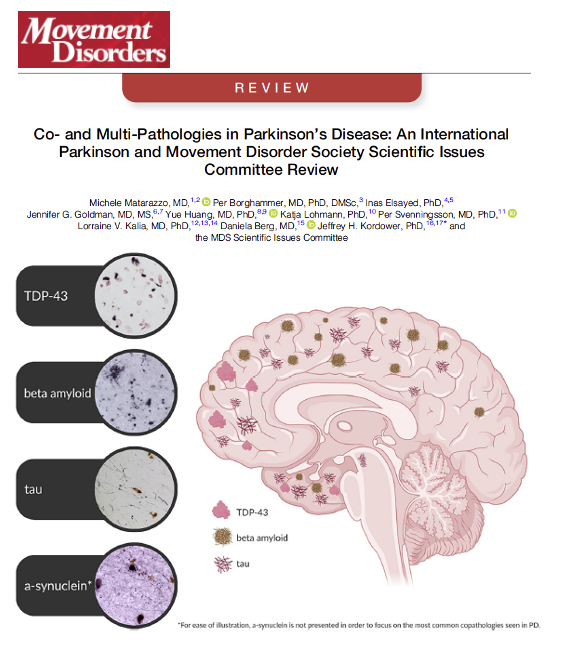
Parkinson’s disease may not be just one disease protein. Co-pathology means multiple abnormal proteins and disease processes may exist together in the same brain. Matarazzo and colleagues describe in a new paper in Movement Disorders how Parkinson’s disease frequently includes overlapping pathologies such as tau, beta amyloid, TDP-43, vascular disease and inflammation, in addition to alpha-synuclein.
Key points:
- Most folks w/ Parkinson’s disease appear to have multiple co-existing brain pathologies rather than a pure alpha-synuclein disorder.
- Tau, beta amyloid and TDP-43 pathologies were linked to faster progression, cognitive decline and more severe symptoms in many studies.
- The review highlights how genetics, inflammation, vascular disease, microbiome changes and immune dysfunction may all interact to shape Parkinson’s progression.
My take: This paper is important because it challenges the old idea that Parkinson’s disease is simply a dopamine disorder or just a synuclein disorder. The future of Parkinson’s treatment may require us to target multiple biological pathways simultaneously. We may need to think less about a single culprit and more about an entire ecosystem of interacting disease processes.
Here are 5 points that resonated w/ me:
1- Parkinson’s disease is likely more biologically complex than we previously imagined.
2- Co-pathologies may help explain why symptoms and progression differ so dramatically between folks.
3- Tau and beta amyloid pathology may contribute importantly to thinking and memory decline in Parkinson’s disease.
4- Inflammation, vascular disease and immune dysfunction may not just accompany Parkinson’s disease, they may actively shape progression.
5- Precision medicine approaches that combine biomarkers, genetics and pathology may ultimately help us personalize therapies and improve outcomes.
https://t.co/B3kZC2Mmmf @movedisorder
We recently saw two people with lesions of the right mid to posterior insula.
What do you guess – they lost all desire to enjoy which of these guilty pleasures:
A. gambling
B. sex
C. eating junk food
D. getting massages
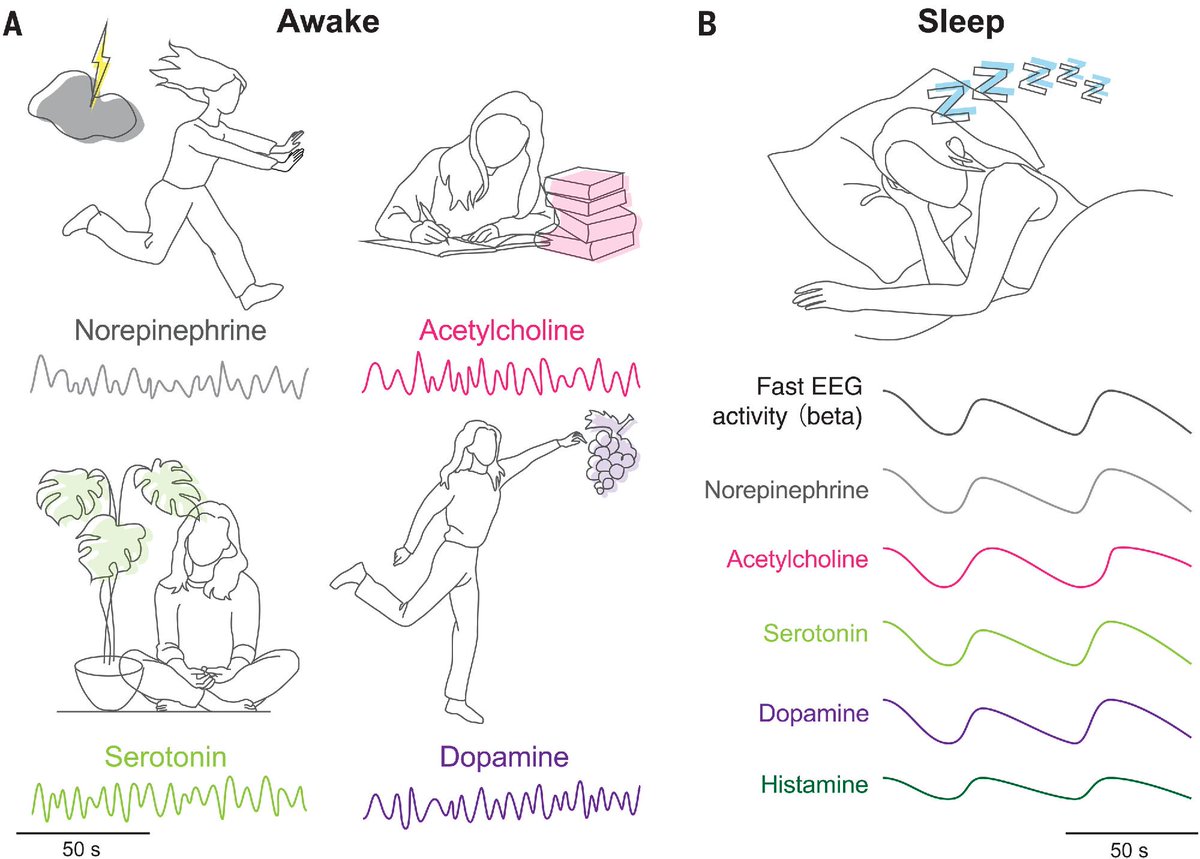
Recent studies have revealed the synchronization of neuromodulators including norepinephrine, serotonin, acetylcholine, dopamine, and histamine during sleep.
A new #ScienceReview explores what potential role the synchronization of these oscillations may play in health. https://t.co/fcDdHm1SDP
Behind every major cancer breakthrough is a researcher who just needed a chance.
These are the raw, real reactions of scientists finding out their research is officially funded by Conquer Cancer.
You can be the reason a scientist gets to say, "we found a way." Make a donation to support vital cancer programs today! https://t.co/B6Vvq9gyew
@hafaydeefe@incmnszmx @INCMNSZ_DirIn @YorlenyVicioso@EphremMD@Nakul2234@lalo_glez8a@Cary_Weiss #ASCO26 #ResearchConquersCancer #ConquerCancer #YoungInvestigator #HopeLives Here #OncologyLife
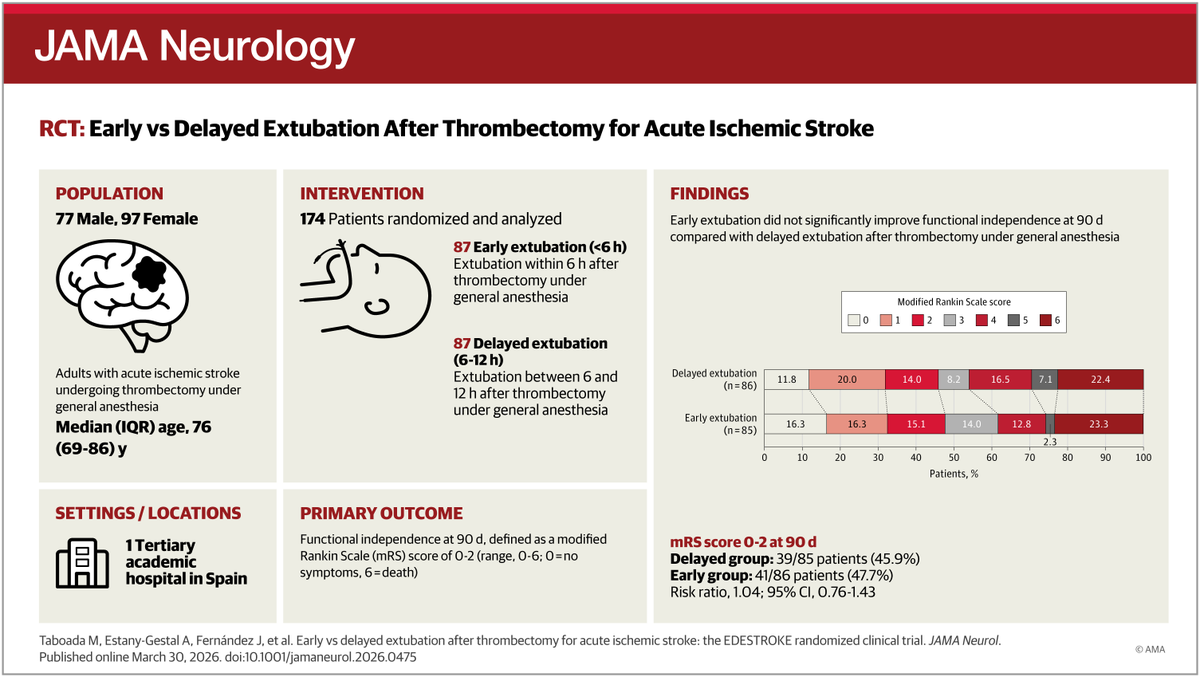
Among patients undergoing endovascular #thrombectomy for acute #Stroke, early (<6 hours) vs delayed (6–12 hours) extubation did not improve 90-day functional independence, hospital stay, complication rates, or mortality. https://t.co/tb5gUOgeh9
Amyotrophic lateral sclerosis (#ALS) is an adult-onset neurodegenerative disorder characterized by progressive muscle weakness due to degeneration of upper motor neurons in the brain and lower motor neurons in the brainstem and spinal cord.
Diagnosis relies on clinical criteria with mixed upper and lower motor neuron features, and is often supported by electromyography and genetic testing, which may direct treatment.
📌 Learn more in this JAMA Review: https://t.co/2gvxr8EQUA
🧠 Esclerosis Múltiple (EM) en 2026: el paradigma cambió drásticamente. El objetivo terapéutico ya no es solo evitar recaídas clínicas.
Perlas de la actualización internacional en Neuroinmunología: 👇🏻
La revisión de hoy de Esclerosis Lateral Amiotrófica (ELA), una interesante y fatal enfermedad en la que hemos avanzado... casi nada. De JAMA (2026). Puntos clave:
🔴 La sospecha inicial debe enfocarse en la coexistencia progresiva e indolora de signos de motoneurona superior (espasticidad, hiperreflexia, reflejos patológicos) y motoneurona inferior (atrofia, debilidad, fasciculaciones, hiporreflexia). Primero suele ser focal, pero se disemina con el tiempo.
🔴El diagnóstico sigue siendo predominantemente clínico. La electromiografía es la herramienta de apoyo principal para demostrar denervación activa y reinervación crónica, pero sobre todo, es vital para excluir diagnósticos diferenciales (miopatías, neuropatías, miastenia). No existe ningún biomarcador diagnóstico definitivo.
🔴 Idealmente incluir paneles genéticos a todos los pacientes diagnosticados con ELA, no solo a los que tienen historia familiar. Aunque el 85% de los casos son esporádicos, identificar variantes genéticas es importante. El gen SOD1 tiene una diana terapéutica ya.
🔴 Hay +60 genes asociados a la ELA, pero el hallazgo neuropatológico en 97% es la mislocalización nuclear y la agregación citoplasmática de la proteína TDP-43
🔴 Sigue siendo fatal con una supervivencia de 3-5 años. Los fármacos orales aprobados (Riluzol y Edaravona) ofrecen un beneficio clínico apenas marginal. El manejo sintomático mediante equipos multidisciplinarios impacta más en la supervivencia. Tofersén es prometedor, una terapia antisentido intratecal que disminuye la progresión exclusivamente en el subgrupo de pacientes con mutación SOD1.
Pueden leerlo completo en el canal (https://t.co/3O93s10Td0).
#DLB incidence and prevalence rise steeply with age and are higher in men, but diagnostic variability and underrecognition limit global estimates, highlighting the need for standardized, population-based assessment. https://t.co/s38Hu6UVJa