Zero emissions? Not quite. 🚗💨
Electric vehicles don’t have tailpipes, but they still produce pollution in unexpected ways. #VirginiaTech researchers are exploring the full picture of vehicle emissions.
Learn more about their findings ⬇️
https://t.co/bVM5sUG2l2
Hesham Rakha & Hosein Foroutan are part of a study that developed a model to measure emissions of electric vehicles. "The model we developed proved that battery electric vehicles, in the right conditions, have more environmental advantages," said Rakha.
https://t.co/wUIQ5r29Ya
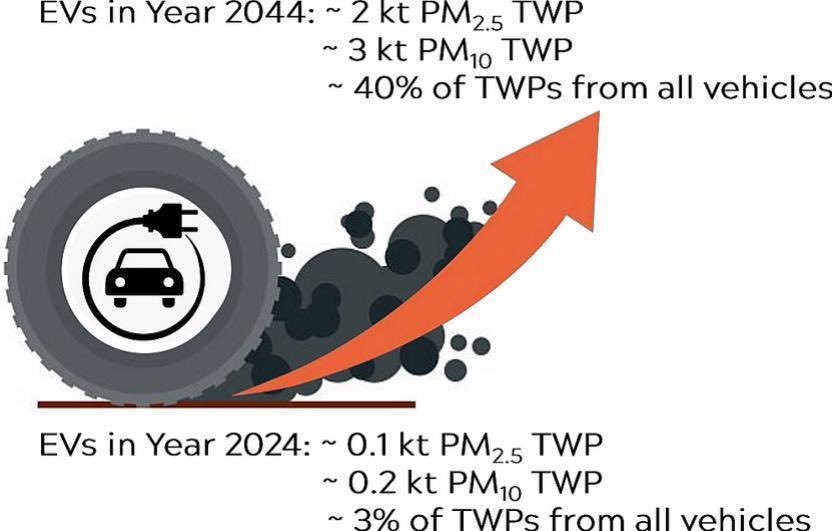
🚗⚡️How will #EVs shape airborne tire pollution in the US over the next 20 years?
We estimated that by 2044, EVs could contribute up to 40% of #Tire Wear Particle emissions, with total EV-related TWP emissions rising 17-fold.
https://t.co/J3iW6FB46q
#Microplastics#AirQuality
New Paper: We analyzed 14 years of trans-Atlantic #dust plume data and found that African dust reaching the Amazon in winter originates from more diverse sources and offers better conditions for microorganism survival than plumes reaching the Caribbean in summer.
Exciting new work in #ESATMOS from @hforout & colleagues studying the seasonal variations in travel path, altitude & ambient meteorological conditions along dust transport trajectories across the Atlantic Ocean!
Read this #OpenAccess work now ⬇ https://t.co/46uXOTSSqr
Additionally, we published our methodology in a detailed step-by-step #OpenAccess tutorial format. Check it out here: https://t.co/vI4HOGoQc9 #Microplastics#PlasticPollution
We provided the first evidence of atmospheric #microplastic deposition in “pristine” areas of eastern United States. We estimated that every year tons of tiny plastic fragments and fibers fall down in #Appalachia#OpenAccess in ES&T Air: https://t.co/gJEUF02ScD #PlasticPollution
I am excited to announce that I've been awarded the NSF CAREER Award for my project “The Plastisphere of Pond Ecosystems: Understanding the function and fate of novel carbon in biogeochemical hotspots”, funded by @NSF DEB! Will be recruiting for a Postdoc and PhD student soon!
In the 20 years since the term “microplastics” was first coined, a rapidly growing body of research has consistently shown how pervasive and problematic the pollutants have become.
A new #ScienceReview provides an overview of this research and the progress made in understanding #microplastics. https://t.co/X3wSYVsJBS
Congratulations to my PhD student Salahuddin Setu of @VirginiaTechCEE who received the BEST poster award at the 2024 #CMASConference for his work on Airborne Tire Wear Particles #Microplastics
Congratulations to all of our attendees honored at the 2024 CMAS Conference Awards Ceremony!🏆
We were proud to recognize all of our winners, especially for our student poster competition
🥇Salahuddin Setu, Virginia Tech, USA
🥈Yi-Ju Lee, National Central University, Taiwan
A 🧵on how far wind-dispersed Cannabis / hemp pollen travels in the U.S., and the unintended cross-pollination risk, from our new paper in Scientific Reports https://t.co/uR0DlnTr4W, led by Virginia Tech PhD student Manu Nimmala
1/
Saharan dust clouds are a regular occurrence affecting four continents. Our recent work sheds light on hidden atmospheric structures shaping the largest, "Godzilla" dust plume of 2020.
Read more: https://t.co/ttkd9vfPB5
Announcing two exciting research initiatives in my lab: 1. Analyzing the evolution of #dust mineralogy in the atmosphere using @NASA#EMIT data 2. Partnering with @USDA_NRCS to model #N2O emissions from ag #soil in the US #climate#agriculture#air
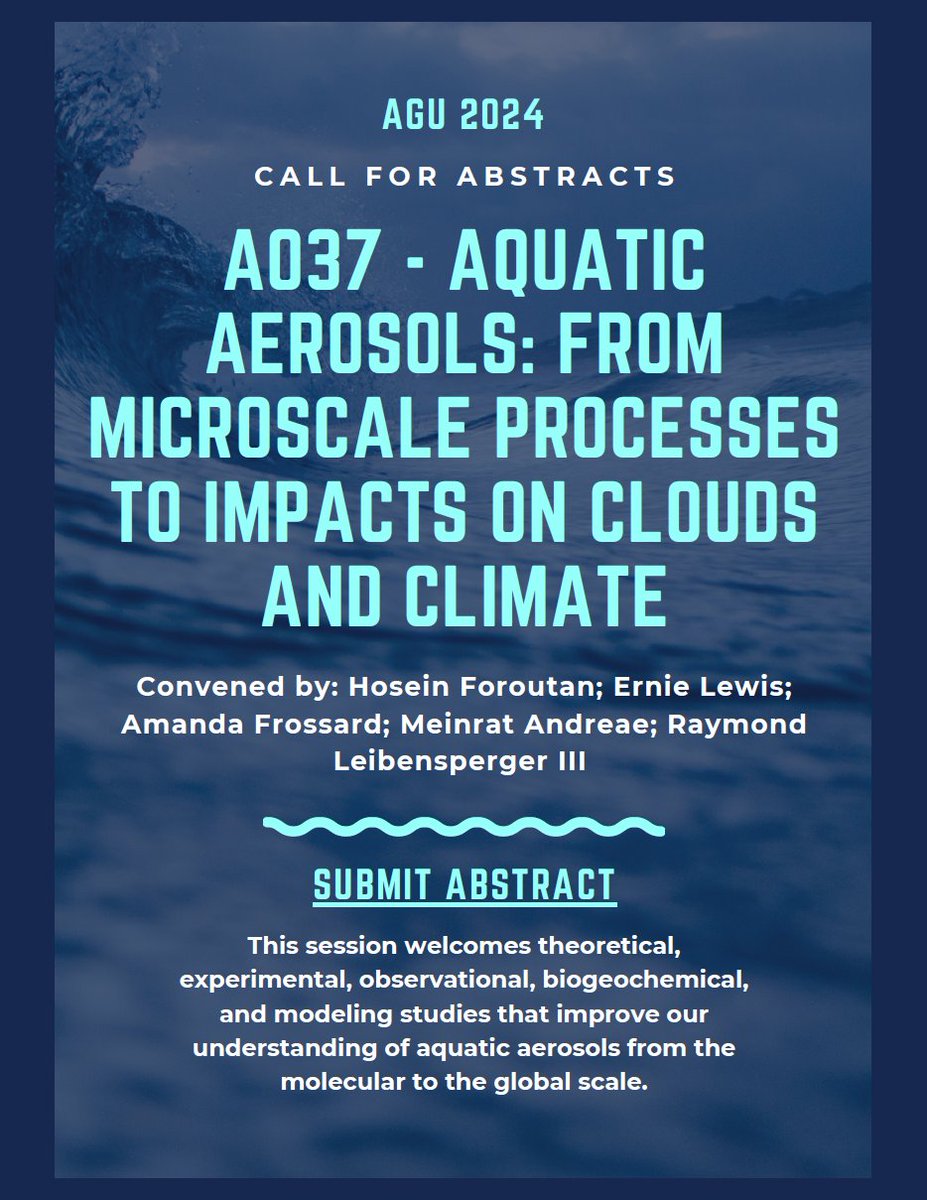
Excited to announce our invited speakers @kprather88 & @SciHannah for our #AGU24 session on Aquatic Aerosols! Submit your abstract and join us this December in Washington D.C. https://t.co/V3bMOknamL
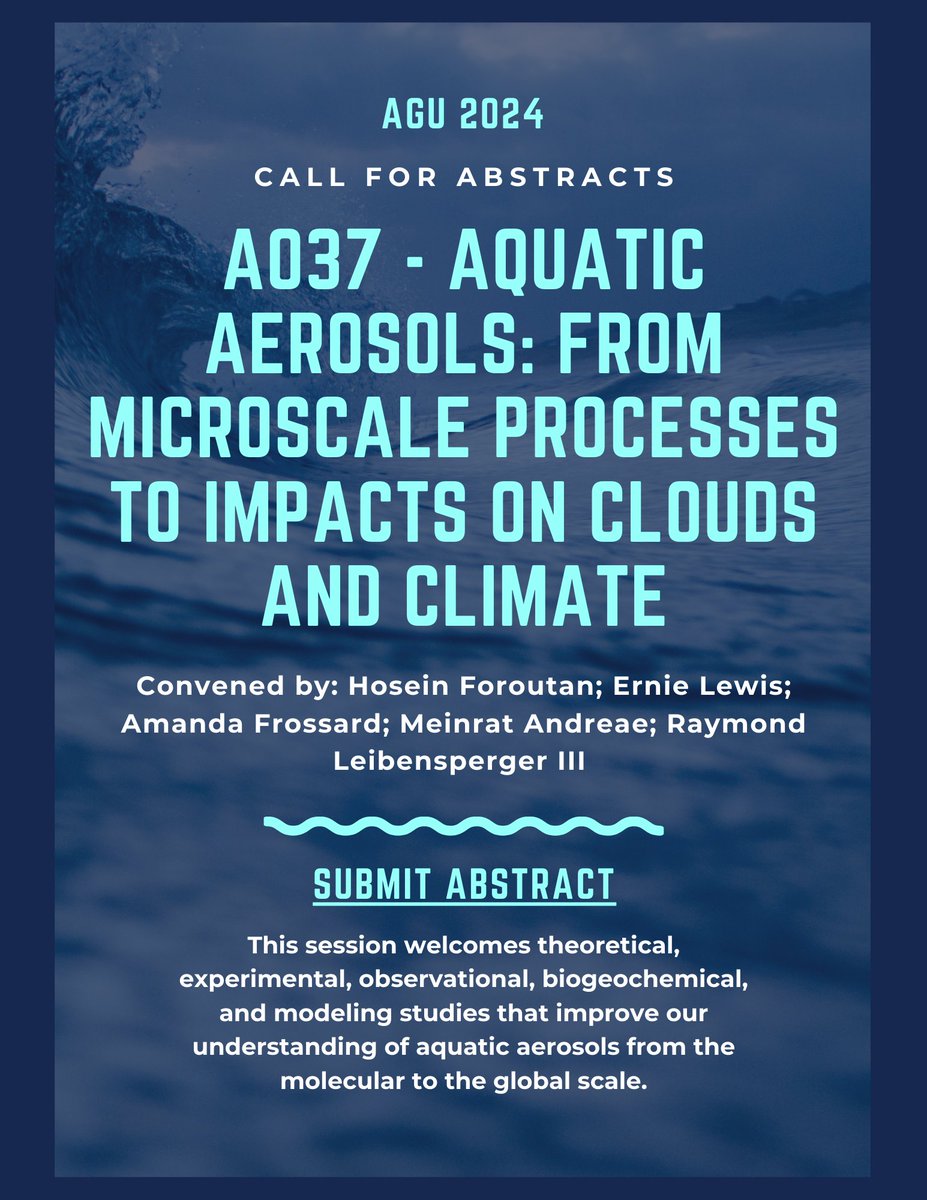
Call for abstracts for @theAGU 2024!
A037 is calling for abstracts detailing advancements in the areas of aquatic aerosols spanning scales. Convened by yours truly and other greats in the field, please submit if this sounds of interest to you!
Kicked off the Microplastic Summer Research Experience this week. Students from @VT_Biology@vtgeosciences spent orientation week learning about marshes, ecotox, field sampling, and microplastic extraction procedures. Next week they will be on the coast collecting sediment cores!
Plastics, unlike other substances, don’t break down — they simply break up into smaller and smaller pieces.
Some of those particles enter our body when we breathe. They can become entrenched in our cells, threatening our health. https://t.co/Xc4KPZciy0