I've weighed in on the great vocational education debate.
From what we can see of the govt plans, I think they will repeat mistakes of the past.
Also, we need to retire the phrase "parity of esteem". It's not helping.
https://t.co/CTIOp8WFWR
No.
But there is something wrong with a change in the system that will allow schools to dump these kids under the ruse that they are ‘seeking a trade’ when the reality is that we have failed them and never taught them to be literate/numerate.
My latest is a review of "The Science of Discipline," by Nathan Maynard who wants us to view student misbehavior as an unmet need, a form of communication, and an opportunity to teach new skills. It's a humane idea but ultimately does kids a disservice.
https://t.co/NOyz1X9aPw
Each July for the last few years, I've published a #LeadershipHandbook.
It started as a collection of what I thought was important for leaders to know about and included various models, research digests and ways of thinking about school leadership that I had created.
1/7
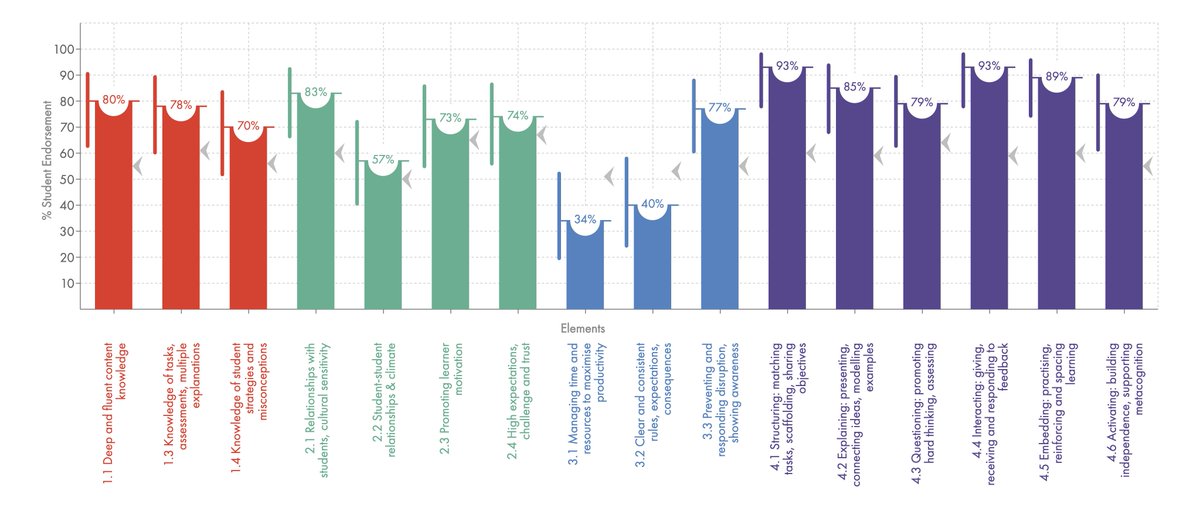
"Where should I focus my professional learning to optimise student learning?”
The Great Teaching Toolkit helps to answer this question. Receive feedback on the classroom environment in each dimension of the Model for Great Teaching.
Want access to tools that give you feedback like this ?👇
Find out more about the Toolkit here https://t.co/7fXtQ7dil7
@stephenbodman Thank you, yes I resd this in April and am mostly in the 'setting is best' camp.
Few keep my mind open to mixed ability, including Bruno Reddy, who wrote about it on LinkedIn when the EEF report was published.
I might rewatch this...
https://t.co/iUbqEI3lV2
NEW EPISODE
This week, we are joined by the legend that is @Ruth_Ashbee to discuss inclusion, national trends and policy, curriculum, ofsted, school culture and more!
Not to be missed, please share if you can 🙏
https://t.co/2eeOiBYP1v
Vygotsky's 'Zone of Proximal Development' is perhaps the most misunderstood idea in education. It was never a teaching method but a metaphor for how teaching can pull thinking upward, from the everyday to the scientific. ⬇️ 🧵
In 𝘏𝘰𝘸 𝘞𝘦 𝘓𝘦𝘢𝘳𝘯, Stanislas Dehaene—one of the world’s leading cognitive neuroscientists and winner of the Nobel-equivalent Brain Prize—identifies the 4 Biological Pillars of Learning. Without all 4 of these pillars in place, learning is fragile and will not last: 🧵
@amypento@AlexJQuigley@EnserMark I enjoyed reading Mark's substack. It was really well written. I put up the word "move" today. This is the result. A structured vocabulary curriculum can help scale up teacher knowledge and make vocabulary stick for students. Elementary schools must build the foundation.
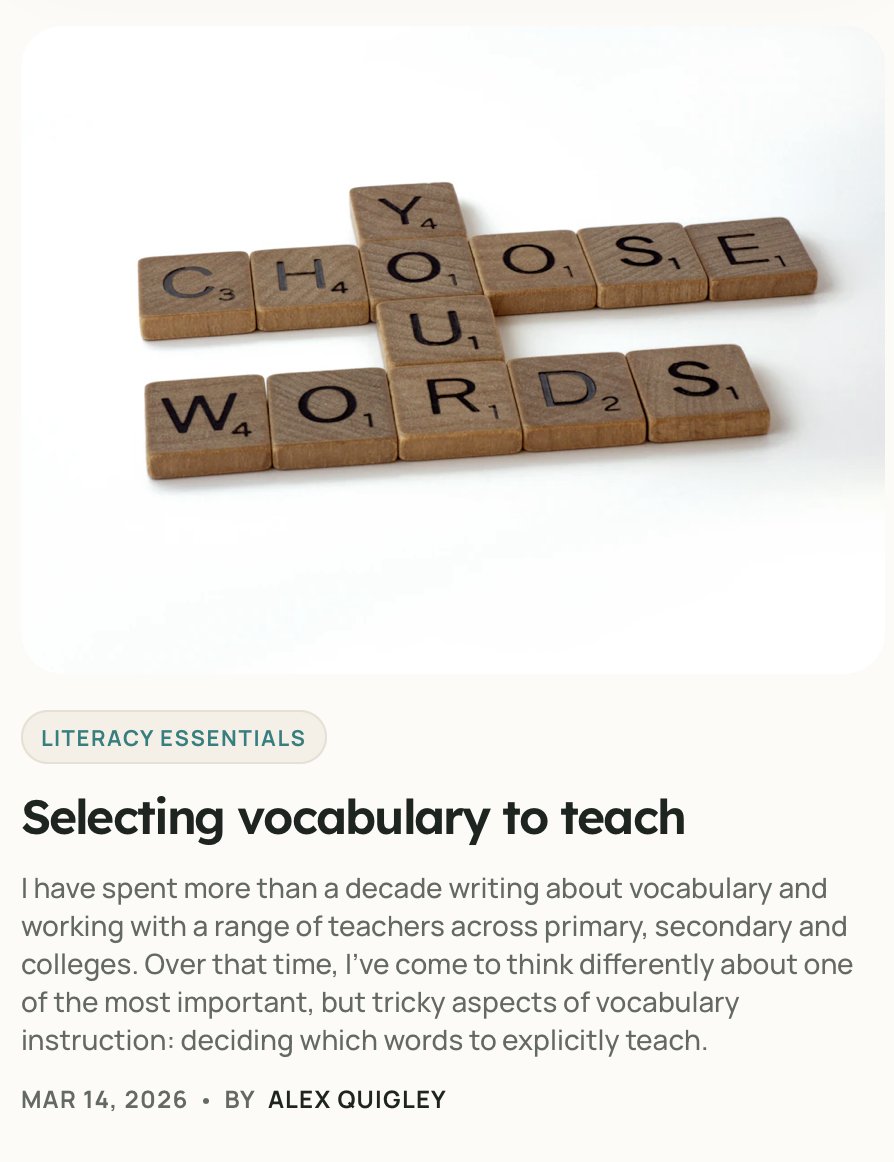
One of the trickiest questions in vocabulary instruction is deceptively simple:
Which words should we explicitly teach?
After years working with schools on vocabulary, I explore that challenge here:
https://t.co/FRpWuHalAM
The first edition of the Deans' for Impact "Science of Learning" document was hugely influential on me. Very excited to see a second edition published - all teachers should read this!
H/T @New_Old_Paul
https://t.co/Me2uJ9TBkK
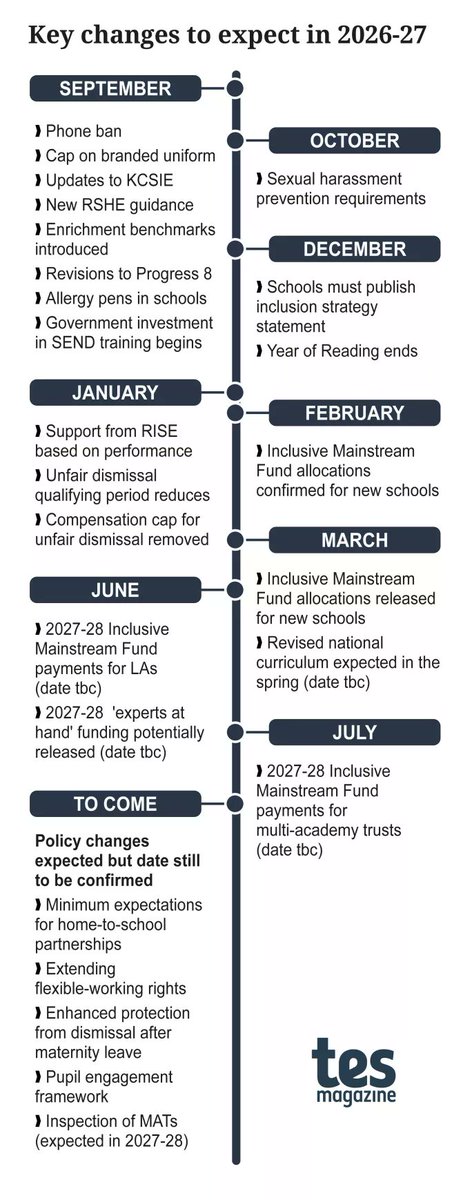
The next academic year brings a huge amount of change for schools to manage and implement.
Is your school ready?
@jasminenorden has all the details here: https://t.co/rzfi8nns6N
(A fantastic timeline from our art director Nige, too!)
Great paper from @PepsMccrea@Josh_CPD & @Barker_J.
Key phrase: Embrace Cognitive Similarity
“While every student brings unique experiences, strengths, and needs to the classroom, understanding the fundamental similarities in how we all learn provides a powerful foundation for inclusive teaching. This principle recognizes that the core mental processes involved in learning—how we pay attention, process information, and build understanding—are remarkably consistent across individuals. In short, how we learn is more similar than it is different (Willingham, 2012). Focusing on these shared mechanisms doesn't ignore individual differences; rather, it allows us to design core instruction that is effective for the widest possible range of students from the start.”
https://t.co/SYl40cdY6N
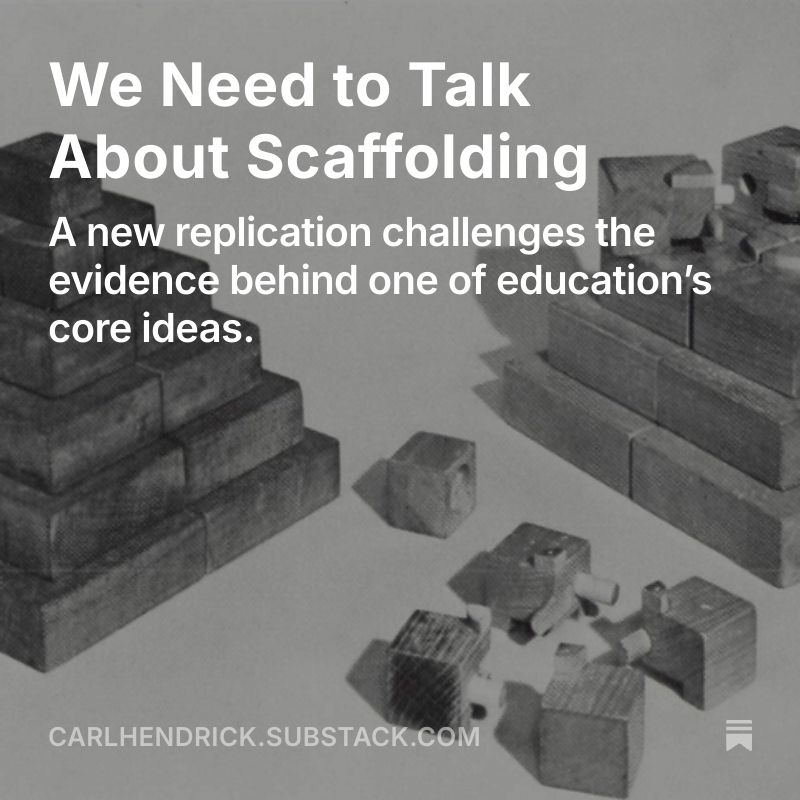
The most influential study on scaffolding timing just failed replication. My latest on why this matters and what the evidence actually shows. Link in reply 👇