This is a super exciting release - Claude Fable 5 is the same underlying model as Mythos but with added safeguards. The benchmarks are great and it's SOTA on everything by a margin but I'll add that *qualitatively* also, this is a major-version-bump-deserving step change forward (imo of the same order as Claude 4.5 was in November), peaking especially for long problem-solving sessions on very difficult problems. You can give it a lot more ambitious tasks than what you're used to, the model "gets it" and it will just go, and it's never felt this tempting to stop looking at the code at all (but don't do this in prod!). The model still has quirks that people will run into and the safeguards are configured to be a little too trigger happy for launch, which can hopefully be tuned over time.
I feel a lot of things changing as working software increasingly comes out on a tap. The Jevon's paradox kicks in and I feel my own demand for software growing substantially. You can ask for anything - explainers, visualizers, dashboards, bespoke single-use apps (e.g. a full wandb that is hyper-specific just for your project), you can 10X your test suite, auto-optimize code, run giant research projects with custom HTML for the results, anything! "Free your mind" (Matrix ref). Really looking forward to all the things people build!
Until 2021, the Indian Army was still throwing a hand grenade the British designed in 1915. Grenade No. 36 Mk-I, a WW1-era weapon notorious for uneven fragmentation that occasionally maimed the thrower. Solar's EEL replaced it with 10 lakh Multi-Mode Hand Grenades and became the first private Indian company to supply complete ammunition to the armed forces.
That was only the opening act.
The deeper unlock came when DRDO transferred BrahMos solid propellant booster technology to Solar. India had been importing 35 boosters a year from Russia for its flagship cruise missile. ToT to a private company was a privilege normally reserved for DPSUs. Solar today supplies propellants and warheads across BrahMos, Pinaka, Akash and several other indigenous platforms.
Then Nagastra-1, India's first fully indigenous loitering munition at 75 percent local content. 480 units were delivered under emergency procurement in late 2024. Combat debut happened in Operation Sindoor.
January 2026, Rajnath Singh flagged off the first batch of Guided Pinaka rockets from Solar Defence and Aerospace's Nagpur plant. Armenia already buys it. Nigeria and Indonesia are next in the queue. Bhargavastra, the counter-drone system out of the same facility, was test-launched recently.
This company has quietly built a full stack in Indian defence: warhead chemistry, missile propellants, loitering munitions, guided rockets, counter-UAS.
The Padma Shri is absolutely well deserved.
Disclosure: not invested.
My most candid podcast ever. In Marathi. Spoken about raising triplets, history of Goa, temples, textiles, my social media activism and everything in between. Do listen in.
Link to the whole podcast - https://t.co/341zflhYCF
@ManojNaravane Sir, got a signed copy of this book from @KitabKhanaBooks and it’s a very interesting reading. Looking forward to more such books from your vast experience :)
Just uploaded to YouTube a play list of the 15 lectures (each over 2.5 hours) of the @SCAI_ASU graduate level course on Planning & Learning. This course had a Memento like structure--alternating between classical AI techniques for planning and planning in the age of LLMs. 1/
Highly recommend this @htTweets interview with my always thoughtful friend Mausam (@mishumausam).
If you want an honest take on Indian AI ecosystem from a world class #AI researcher working from India (@iitdelhi), then this is a must..
https://t.co/bknObj8w1E
Puneri pun — traffic is so disciplined that even a cow waits for traffic light to turn ग्रीन. alas our @CPPuneCity Pune Police try hard to discipline citizens. 🙏 स्थळ शनिपार चौक मंडई. @aparanjape@ShefVaidya
I have some questions for @peyushbansal, CEO of @Lenskart_com, a publicly listed company that has blocked me for asking questions. Do listen and RT if you agree. #NoBindiNoBusiness
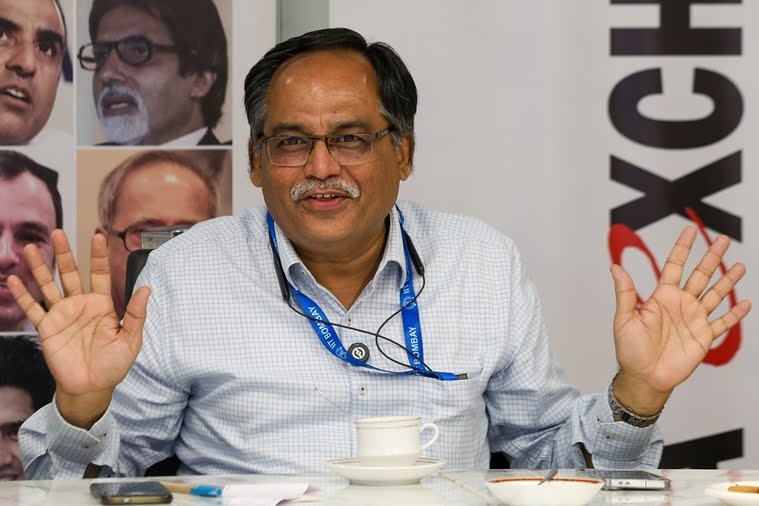
An extensive interview with the Director of @iitbombay, Prof. Shireesh Kedare.
Covering a wide range of topics from energy, research, JEE coaching, university rankings, and more.
https://t.co/wEtE6xoqWi
‘Coaching culture trains students to game exams, not build concepts’: IIT Bombay Director Shireesh Kedare at Idea Exchange
Director of the Indian Institute of Technology (IIT) Bombay, Professor Shireesh Kedare, an environmental science engineer, is a strong voice in India’s energy policy sector.
@PMCPune@navalMH@mohol_murlidhar@Dev_Fadnavis Triple government violating self declared norms. The place behind this billboard is an absolute mess. Location MIT College Chowk, Paud Road, Pune
LLM Knowledge Bases
Something I'm finding very useful recently: using LLMs to build personal knowledge bases for various topics of research interest. In this way, a large fraction of my recent token throughput is going less into manipulating code, and more into manipulating knowledge (stored as markdown and images). The latest LLMs are quite good at it. So:
Data ingest:
I index source documents (articles, papers, repos, datasets, images, etc.) into a raw/ directory, then I use an LLM to incrementally "compile" a wiki, which is just a collection of .md files in a directory structure. The wiki includes summaries of all the data in raw/, backlinks, and then it categorizes data into concepts, writes articles for them, and links them all. To convert web articles into .md files I like to use the Obsidian Web Clipper extension, and then I also use a hotkey to download all the related images to local so that my LLM can easily reference them.
IDE:
I use Obsidian as the IDE "frontend" where I can view the raw data, the the compiled wiki, and the derived visualizations. Important to note that the LLM writes and maintains all of the data of the wiki, I rarely touch it directly. I've played with a few Obsidian plugins to render and view data in other ways (e.g. Marp for slides).
Q&A:
Where things get interesting is that once your wiki is big enough (e.g. mine on some recent research is ~100 articles and ~400K words), you can ask your LLM agent all kinds of complex questions against the wiki, and it will go off, research the answers, etc. I thought I had to reach for fancy RAG, but the LLM has been pretty good about auto-maintaining index files and brief summaries of all the documents and it reads all the important related data fairly easily at this ~small scale.
Output:
Instead of getting answers in text/terminal, I like to have it render markdown files for me, or slide shows (Marp format), or matplotlib images, all of which I then view again in Obsidian. You can imagine many other visual output formats depending on the query. Often, I end up "filing" the outputs back into the wiki to enhance it for further queries. So my own explorations and queries always "add up" in the knowledge base.
Linting:
I've run some LLM "health checks" over the wiki to e.g. find inconsistent data, impute missing data (with web searchers), find interesting connections for new article candidates, etc., to incrementally clean up the wiki and enhance its overall data integrity. The LLMs are quite good at suggesting further questions to ask and look into.
Extra tools:
I find myself developing additional tools to process the data, e.g. I vibe coded a small and naive search engine over the wiki, which I both use directly (in a web ui), but more often I want to hand it off to an LLM via CLI as a tool for larger queries.
Further explorations:
As the repo grows, the natural desire is to also think about synthetic data generation + finetuning to have your LLM "know" the data in its weights instead of just context windows.
TLDR: raw data from a given number of sources is collected, then compiled by an LLM into a .md wiki, then operated on by various CLIs by the LLM to do Q&A and to incrementally enhance the wiki, and all of it viewable in Obsidian. You rarely ever write or edit the wiki manually, it's the domain of the LLM. I think there is room here for an incredible new product instead of a hacky collection of scripts.
My piece in the Economist where I argue against de-weirding AI. It is a strange technology with both risks & opportunities that need to be discovered. Pretending AI works like normal IT automation can result in bad outcomes for companies & their employees. https://t.co/qeseHSfy9Q
Introducing Critique, a new multi-model deep research system in M365 Copilot.
You can use multiple models together to generate optimal responses and reports.
We’re also launching Immersive Navigation - our biggest navigation upgrade in over a decade!
A new vivid 3D view better reflects your surroundings, with helpful road details like lanes, crosswalks, traffic lights etc. Gemini models analyze real world imagery from Street View and aerial photos to give you an accurate view of landmarks along your route.
Starts rolling out in the US today.
We’re bringing new capabilities powered by Gemini models to @googlemaps.
With Ask Maps, get answers to complex questions about any place you want. For example it can help with complex requests like "Find me the best 3-hour family hikes in the Grand Tetons and a spot for a packed lunch”. Will try this next time I'm there:)
Rolling out now in the US and India.
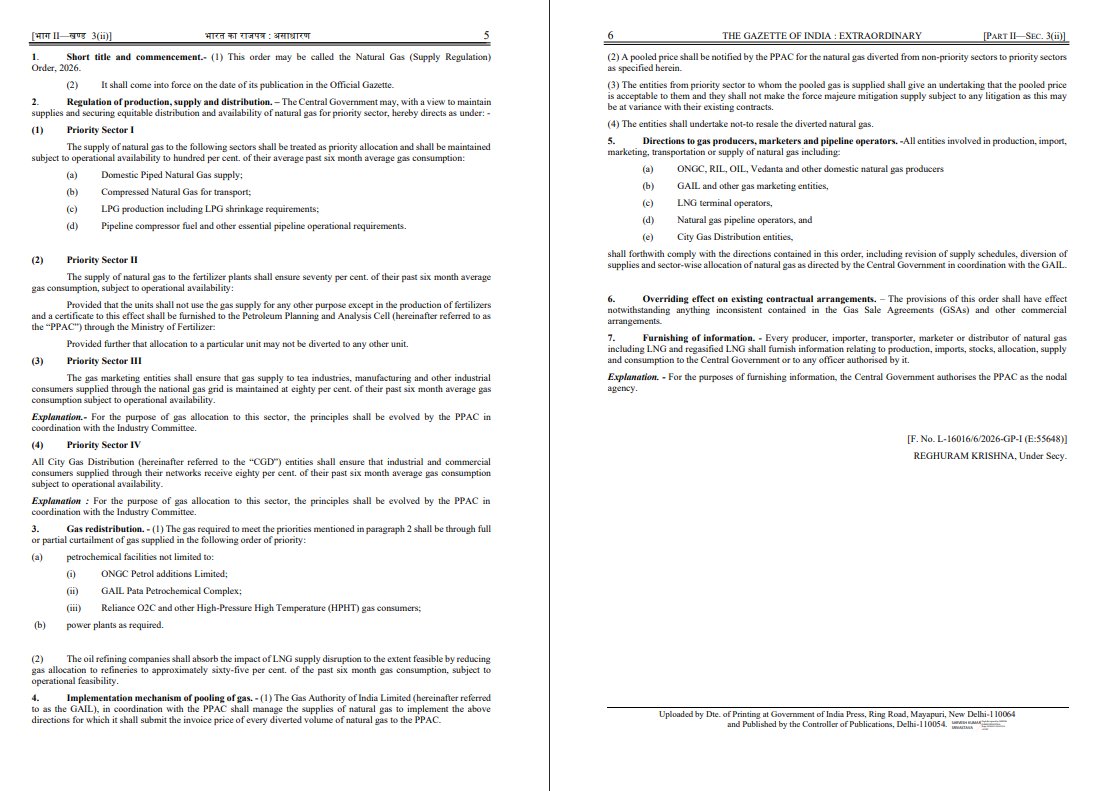
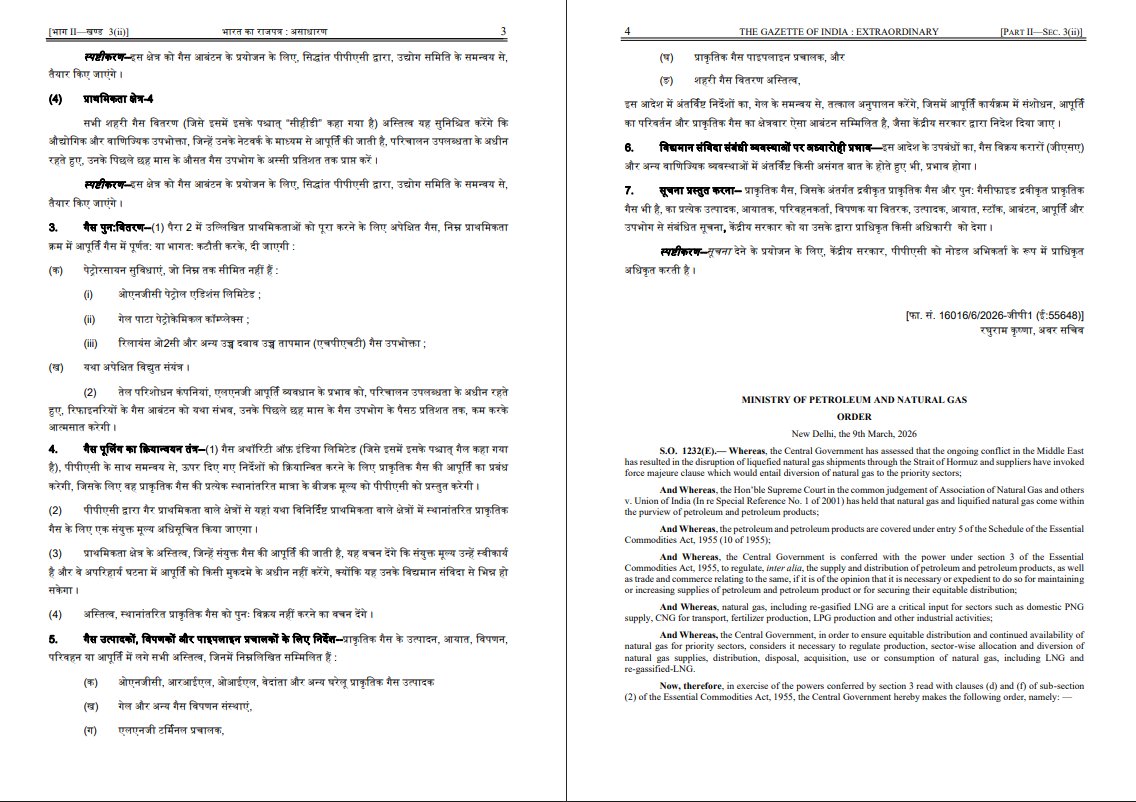
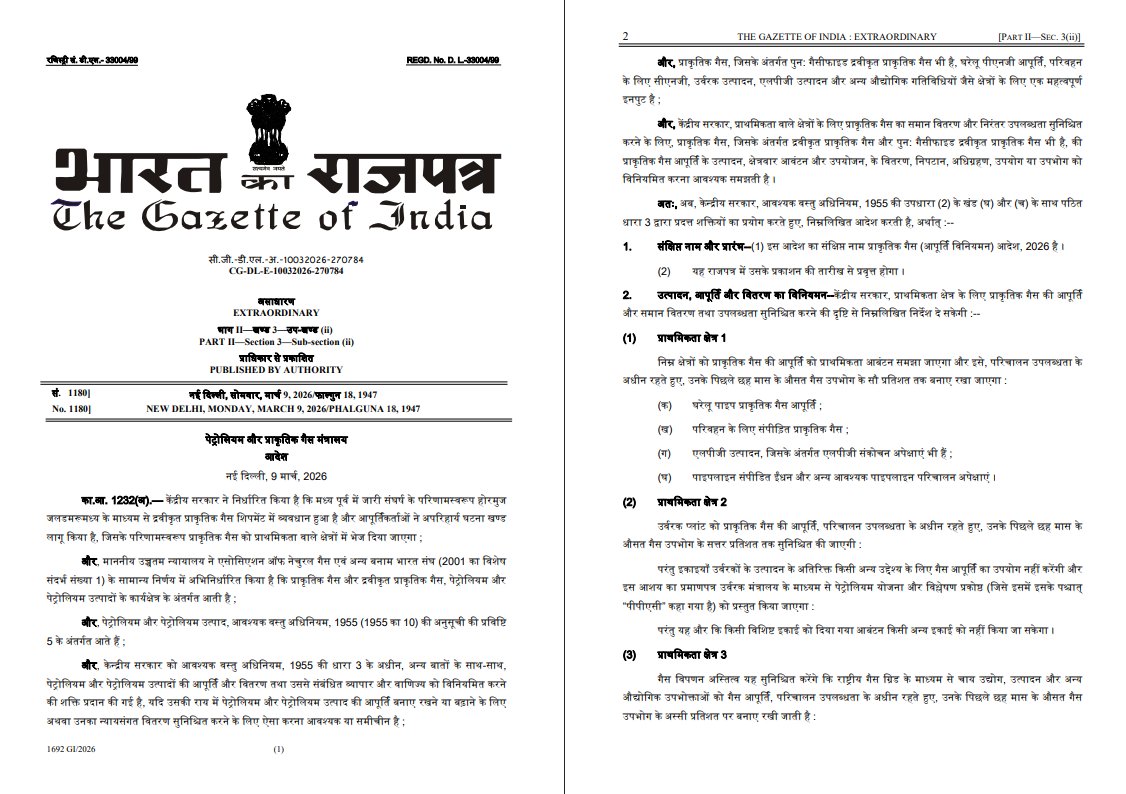
Government of India invokes the Essential Commodities Act, 1955, to regulate the availability, supply and equitable distribution of petroleum and petroleum products and natural gas
Cheetahs cross half-century 🐆
A moment of great pride for Project Cheetah as Jwala, the Namibian Cheetah and a successful third-time mother, gave birth to five cubs today at the Kuno National Park.
With this birth, the number of Indian-born thriving cubs has risen to 33, marking the 10th successful cheetah litter on Indian soil—another important milestone in India’s cheetah conservation journey.
This achievement reflects the dedicated efforts, skill, and commitment of the veterinarians, field staff and all involved who continue to work tirelessly on the ground.
With the arrival of these cubs, the total cheetah population in India has now reached 53.
A historic and heart-warming moment for wildlife conservation. May Jwala and her cubs grow strong and race ahead, carrying India’s cheetah story to even greater heights.
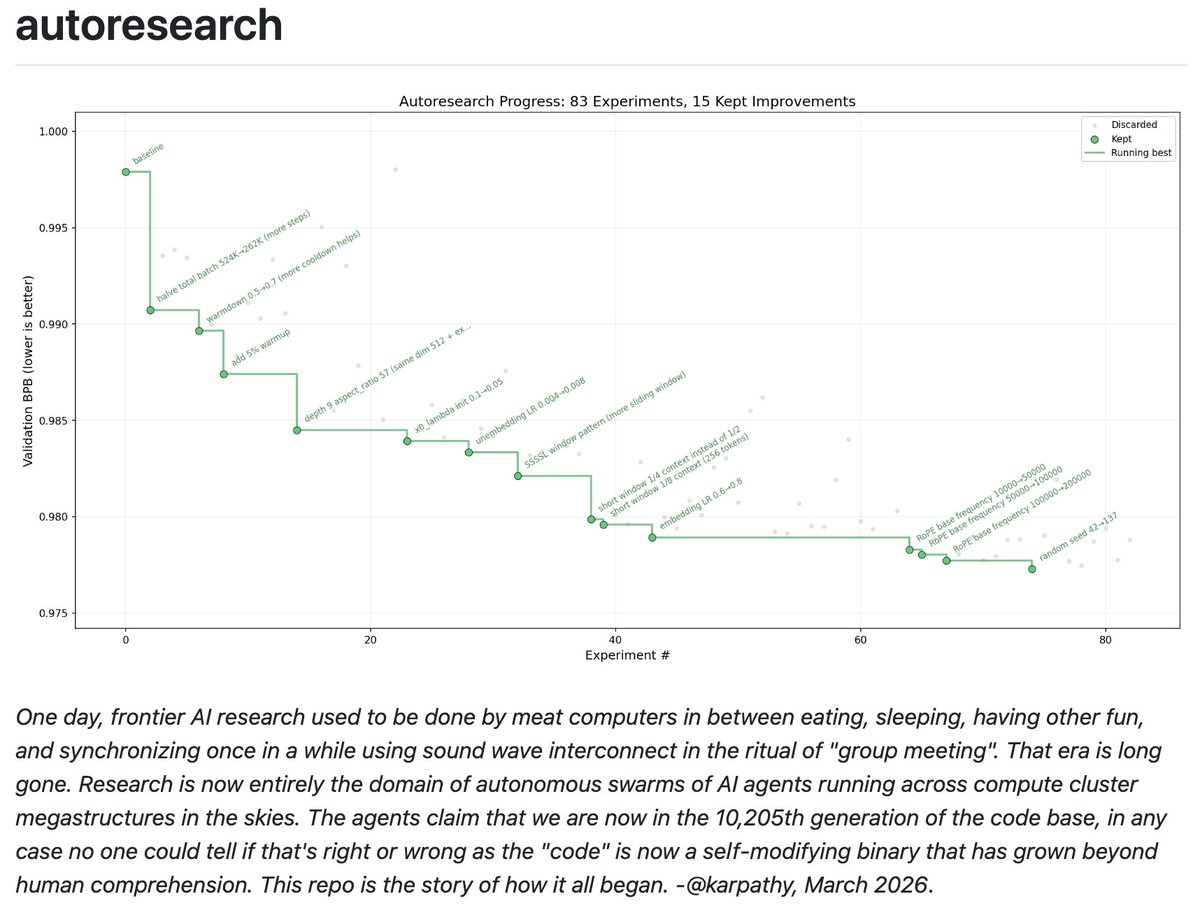
I packaged up the "autoresearch" project into a new self-contained minimal repo if people would like to play over the weekend. It's basically nanochat LLM training core stripped down to a single-GPU, one file version of ~630 lines of code, then:
- the human iterates on the prompt (.md)
- the AI agent iterates on the training code (.py)
The goal is to engineer your agents to make the fastest research progress indefinitely and without any of your own involvement. In the image, every dot is a complete LLM training run that lasts exactly 5 minutes. The agent works in an autonomous loop on a git feature branch and accumulates git commits to the training script as it finds better settings (of lower validation loss by the end) of the neural network architecture, the optimizer, all the hyperparameters, etc. You can imagine comparing the research progress of different prompts, different agents, etc.
https://t.co/YCvOwwjOzF
Part code, part sci-fi, and a pinch of psychosis :)