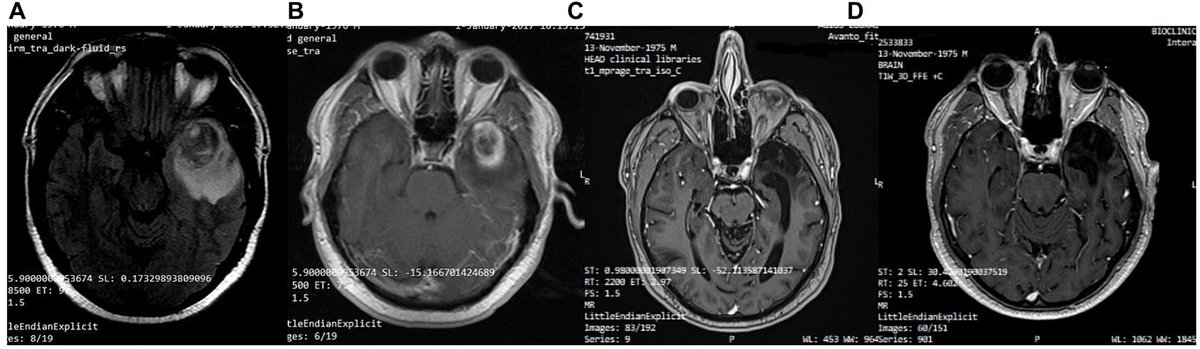
Scientists just cracked the multiple sclerosis code after decades of searching.
Two specific gut bacteria are triggering the disease, and they've proven it using identical twins and mice.
This changes everything we know about MS:
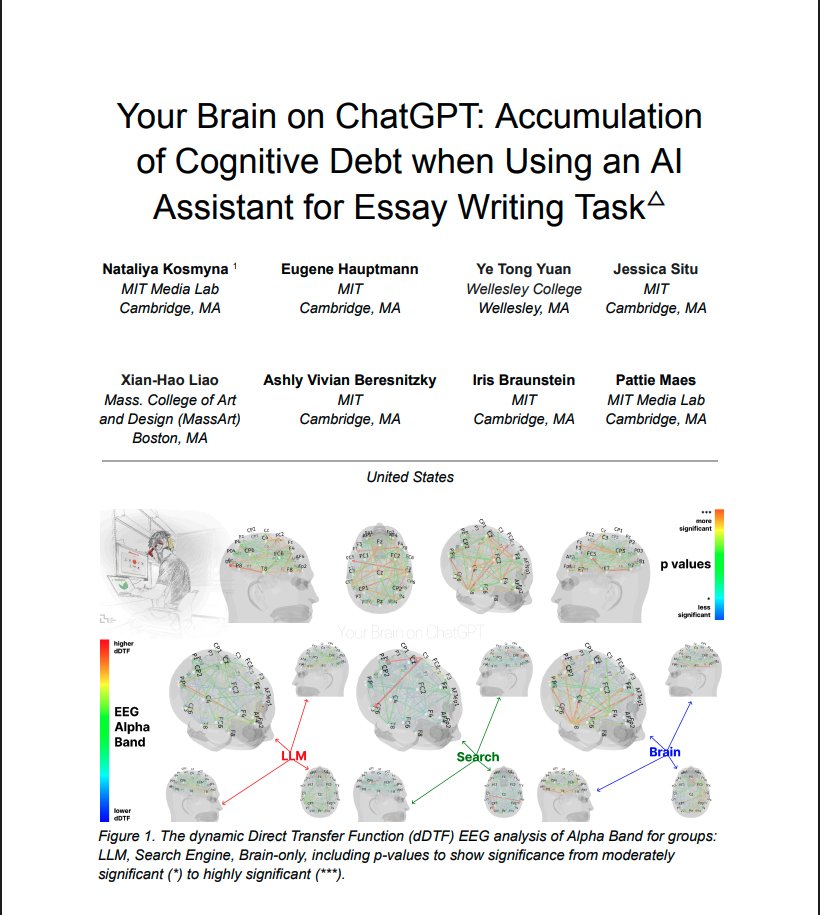
BREAKING: MIT just completed the first brain scan study of ChatGPT users & the results are terrifying.
Turns out, AI isn't making us more productive. It's making us cognitively bankrupt.
Here's what 4 months of data revealed:
(hint: we've been measuring productivity all wrong)
Private practice is under siege.
Hospital consolidation, CMS cuts, and insurance lobbyists are squeezing independent physicians harder than ever.
But if you run your practice like a business, not a legacy, you can survive and potentially thrive!
Here’s how👇
This Harvard MD/PhD lowered his LDL cholesterol more with Oreo cookies than with a statin.
Yes, you read that right...
But before you panic (or celebrate), here's the science behind one of the most fascinating self-experiments I’ve ever seen… 🧵
This is Dr. Patrick Soon-Shiong.
He’s a surgeon who’s dedicated 50+ years to researching cancer.
His message? Cancer isn’t bad genes or random mutations—it’s your immune system failing.
This changes everything you’ve been told about how to fight & prevent cancer: 🧵
I’m no revenue cycle expert, but I know a little bit about how physicians are paid.
They don’t just submit an invoice from Quickbooks.
They have to submit a CMS1500, or in certain circumstances, a UB-04 form.
The 1500 claim has 33 mandatory fields. It’s purposefully designed to “adjudicate soft denials” simply by incorrect coding or sequencing of coding. You know - the procedure code, the diagnosis code, the modifier codes, the place of service codes…they not only must be present, but present in the correct sequence.
And all payers require the same codes and sequencing, right? No. In fact, it is widely variable from payer to payer.
Oh - and you don’t submit that directly to the payer. What a silly goose! That makes too much sense.
You have to pay for a clearinghouse to submit the claim and receive the remittance advice on your behalf.
But before you submit to the clearinghouse, it has to be “scrubbed” in a “claim scrubber” - that costs money too.
A 2018 study estimated that billing and insurance-related activities cost $20.49 for a primary care visit and up to $215.10 for an inpatient surgical procedure. That was in 2018.
Today, a primary care physician pays about $33 to get $67.
Of course, that’s if they get paid - about 34% of their claims are denied.
Remember, they still have to pay for the claim submission even if they get denied. And every time they resubmit the claim - it costs the same amount.
@CMSGov@DrOzCMS@DOGE_HHS@HHSGov@SecKennedy
GROK JUST GOT GOOGLE DRIVE SUPPORT — NOW READS DOCS, SHEETS & SLIDES
Grok now plugs directly into your Google Drive.
Whether it's a doc, spreadsheet, or slide deck, you can drop it right in—and Grok will read, analyze, and collaborate with you on it.
Need help editing a doc, summarizing a spreadsheet, or refining a presentation?
Grok’s got it covered.
No uploads, no hassle—just instant AI collaboration with your cloud files.
Source: @grok
The fact that GLP-1 receptor agonists (like Ozempic and Mounjaro) are the most powerful weight loss drugs ever is NOT the most interesting thing about them. More stuff keeps coming out - and the effects are just wild. This week? A reduction in dementia risk. Breakdown below.
I would like to introduce a concept called math this morning.
I’ve done just a couple of pro formas for clinics over the past 22 years.
It costs about 750K a year for 1 FTE family physician to run a clinic. That’s lease, insurances, employees - the whole enchilada.
They make about $67/encounter. This is an all payer clinic.
If you see one patient every 15 minutes and take a 30 minute lunch - you will see about 32 patients a day. Typically, family medicine clinics are open about 228 days a year (8 federal holidays typically, maybe a week of vacation, 2-3 sick days).
228x32=7,296 encounters a year. (As an aside the CMS benchmark for primary care per year is 4,700 encounters per year).
7296x$67.00=$488,832
And people wonder why family physicians are selling vitamins, fillers, coolsculpting, plate lunches, wash and fold laundry…
It’s a crime that this is not disclosed to people prior to entering residency. I do not understand how physicians make this work.
It’s just Wednesday and I’ve already gotten 7 calls from family practice clinics about what they can do to increase revenue. They’re desperate.
This is obscene.
Here’s a fun little factoid:
Since the inception of Medicare (1960) - our healthcare spend has increased 17,900%
But physician reimbursement - since 1960 - has DECREASED by 26% (inflation adjusted).
Read that again.
Yes, that’s correct. You read it right.
It’s all a game - and physicians are just the pawns.
Big news: A new bill supporting Physician-Owned Hospitals just dropped.
It is a turning point.
If passed, this bill removes key restrictions on physician-owned hospitals, especially those that serve rural and underserved areas.
What can you do?
•Contact your representative
•Join advocacy groups like the PHA.
•Share this post to spread awareness
•Build or partner with POHs in your region
We don’t need fewer hospitals.
We need better ones—physician-led, transparent, efficient, and community-focused.
Let’s bring healthcare back to the hands of those who deliver it.
https://t.co/MwH3DUdxNn
#physicianled #ruralhealth #POH #healthcarefreedom
@RepLouCorrea@RepMGriffith@RepKevinHern@RepGonzalez@RepJohnJoyce@gopdoctors@physicianhosp
holy shit
MIT researchers just turned skin cells directly into neurons without stem cell intermediate, 100-fold efficiency boost, and they actually worked when transplanted into mouse brains
1/
The independent practice of medicine is about more than business, it’s about better outcomes.
Health systems prioritize profits over patients.
They impose quotas, cut visit times, and dictate care based on contracts, not clinical judgment.
Independent physicians?
They don’t receive special funds from the federal government.
They also don’t receive special bond raises from municipalities.
They answer to patients, not corporate executives.
That’s why outcomes are better, prices are lower, and trust is higher.
That’s #healthcare