Who’s in your #NASAMoonCrew? 🫵
Crews bring together the right mix of skills to make missions happen! Just like the Artemis II crew working together on their journey around the Moon, NASA’s space telescopes use their different strengths to observe the universe.
Your turn: Tell @NASA who you’d bring on a journey around the Moon! Details here: https://t.co/AqlreZvfvc
BREAKING: This is Richard Carrington, the first person to document solar flares on the Sun & suggest their influence on aurora at Earth. The largest solar storm on record, the Carrington Event, bares his name. But, there has been no photograph available of Carrington – until now!
The Philippine Space Agency (PhilSA) is hiring one (1) Chief Science Research Specialist for the Earth Sciences Space Mission Studies Division.
Deadline of application: 28 February 2026
SWPC staff will provide decision-support for the Artemis II mission. Space weather is a risk that must be considered for astronaut safety & mission success, and SWPC is proud to provide this specialized support: https://t.co/utPHj8FmOR
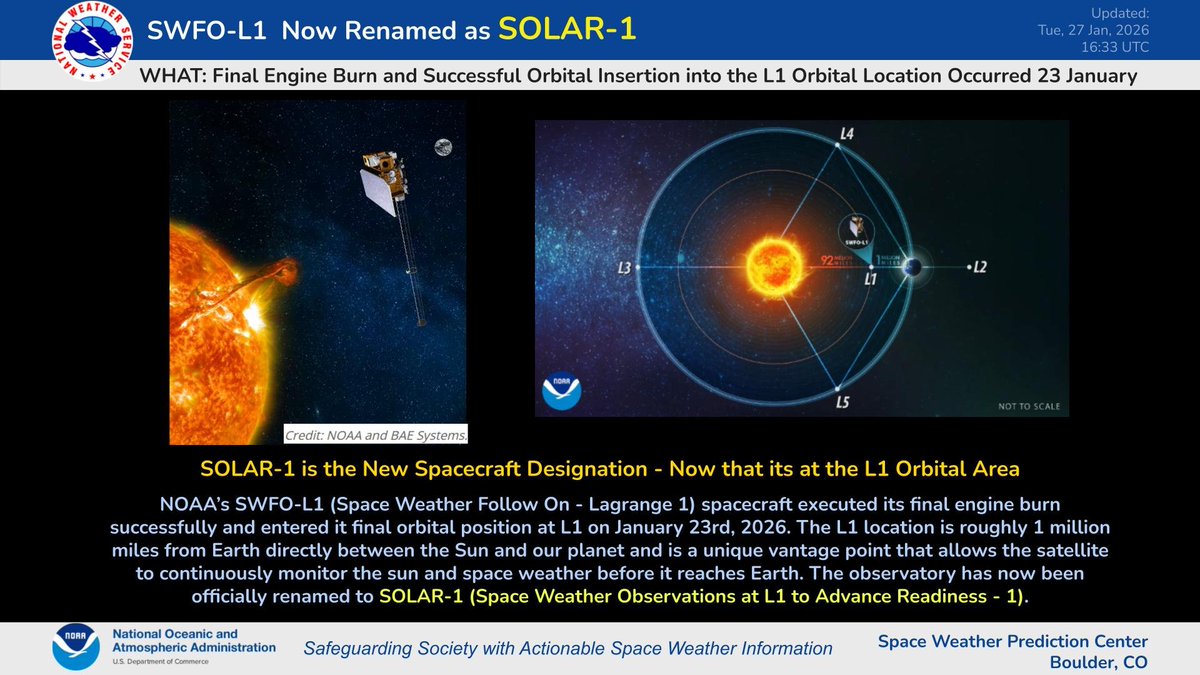
NOAA’s SWFO-L1 observatory executed its final engine burn, successfully entering its final orbital position at Lagrange point 1 and is now renamed SOLAR-1. Full story at https://t.co/5iSlVTpntd
His Excellency President Ferdinand R. Marcos, Jr. has appointed Gay Jane P. Perez, Ph.D. as the Director General of the Philippine Space Agency (PhilSA).
Dr. Perez previously served as Officer-in-Charge of PhilSA beginning Sept. 2025. Prior to this, she held the position of Deputy Director General for Space Science & Technology from 2021, bringing with her extensive experience in space science, R&D, and institutional leadership.
The Philippine Space Agency (PhilSA) confirms the launch of the Long March 7A rocket from the People's Republic of China on 31 December 2025, at around 06:40AM PhST, from the Wenchang Space Launch Site in Wenchang, Hainan.
Read the full advisory ⬇️
https://t.co/MtjiRLuTQ8
📣 PhilSA confirms the launch of the Long March 8A rocket from the People’s Republic of China. Expected debris from the rocket launch was projected to have fallen within the identified drop zones: https://t.co/19jBC3ZYr8
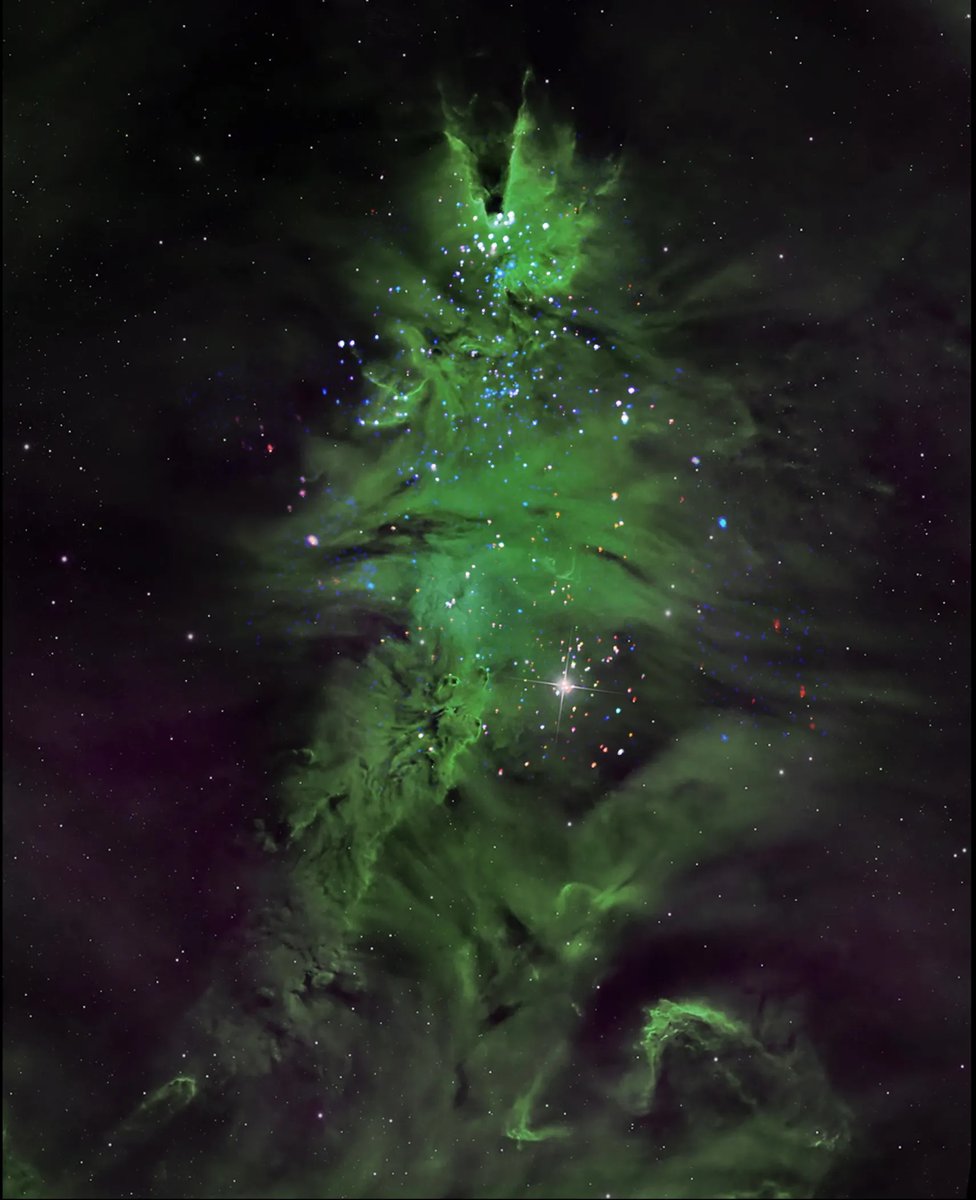
O Christmas tree, o cosmic tree 🎄
Located about 2,500 light-years from Earth, NGC 2264 is a cluster of young stars between one and five million years old. The stars appear as blue and white lights surrounded by swirls of gas—the “pine needles” of the tree—with green representing light in the visible spectrum.
Learn more:https://t.co/srOrqOnBqe
The Philippine Space Agency (PhilSA) is hiring one (1) Science Research Specialist II for the Spacecraft Electrical and Computing Systems Development Division.
Deadline of application: 02 January 2026
Simula bukas, December 21, 2025, may calorie labels na ang mga menu!
Sa bisa ng City Ordinance SP-3254, S-2024, ipapatupad na ang PHASE 1 ng Calorie Labeling Ordinance ng Quezon City.
Ibig sabihin, magkakaroon na ng calorie labels ang mga menu at menu boards ng mga restaurant at fastfood chains na may 5 o higit pang branches.
Para sa iba pang katanungan o suhestyon, maaaring magpadala ng email sa [email protected]
Basahin ang buong detalye ng Quezon City Calorie Labeling Ordinance dito: https://t.co/68fZmHjdHh
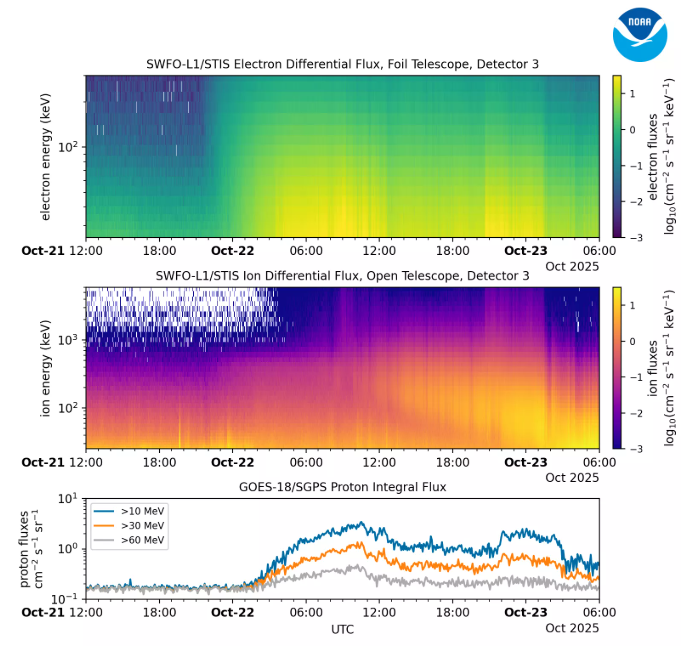
.@NOAA’s newest satellite, Space Weather Follow On – Lagrange 1 (#SWFOL1), has begun sending back preliminary data!
Its Suprathermal Ion Sensor (STIS) is now taking measurements of particles from the sun as the observatory makes its way to the Lagrange point 1 region. It is expected to arrive in Jan 2026.
Read more: https://t.co/uLQwCNWXOQ
Here is a 3D visualization of the coming solar storm using model parameters from NASA's run, NOAA's run (shown below), and the coronagraph views from STEREO-A/COR2 and SOHO/LASCO. The storm is expected to hit Earth early December 9. The 3D visualization clearly shows the low inclination orientation of the solar slinky core inside the larger storm envelope. Of course, the earlier eruption that erupted to the northeast, might deflect this structure a little bit, but likely that will only make the structure move more towards the ecliptic plane, which will give us a larger chance of crossing through the solar slinky core. One nice thing about low inclination flux rope cores is that they almost ALWAYS have southward field in them at some point. So this is good news for aurora photographers-- as long as this solar storm stays true to its launch trajectory and inclination, we could see some organized southward pointed magnetic field. Considering this solar storm is fast-- that usually indicates the storm will not deviate much from its original launch trajectory! Here is the link to a static frame of the 3D frame visualization so you can fly around it yourself: https://t.co/dCbiRoCdMW
The Philippine Space Agency (PhilSA) warns the public against individuals falsely presenting themselves as personnel or officials of the Agency in an attempt to solicit money from suppliers.
Report all suspicious or unauthorized activities to [email protected]
Read 👇
FACT: “Imperial Manila”, generating up to 80 PERCENT of national revenues w/ just over 1/3 of total population, been HELPING MINDANAO for a long time. Sadly, TRAPOS GOBBLED UP much of those resources that should directly EMPOWER our KABABAYANS from Mindanao to Visayas!