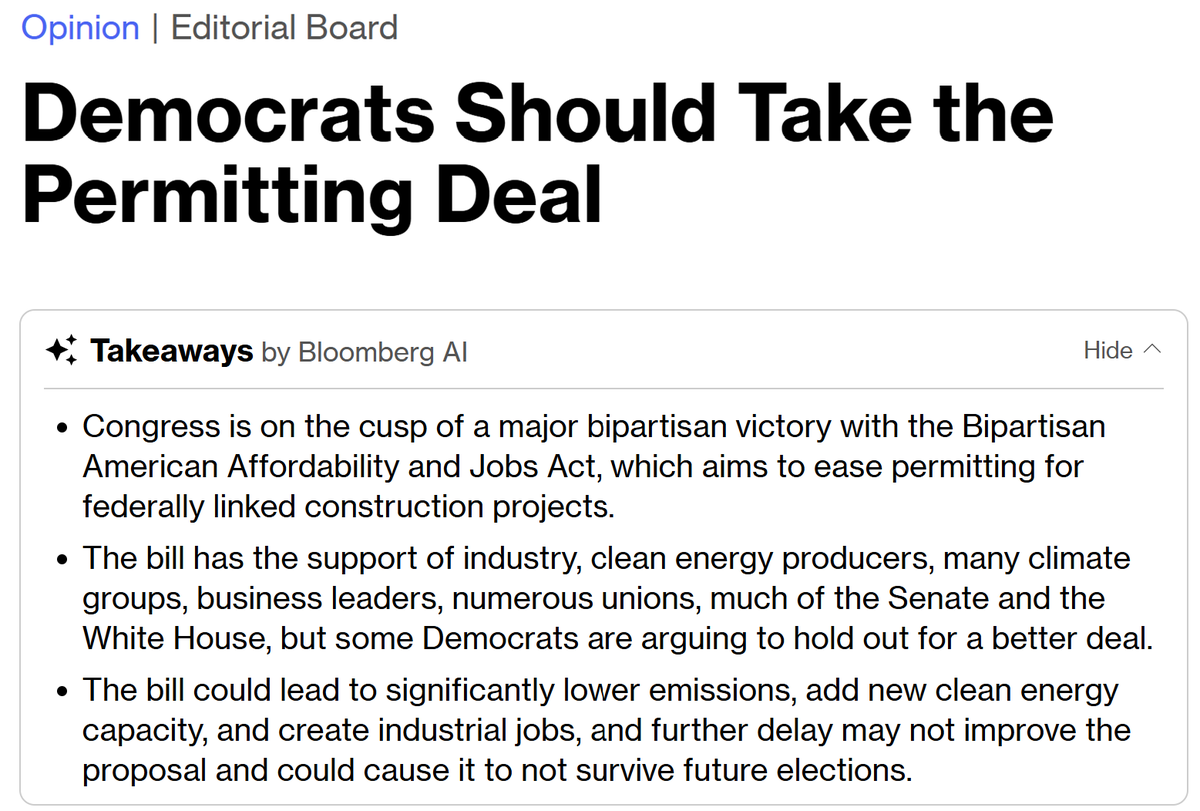
Exactly. BAAJA opponents are deploying the exact same tactic against it that they deploy against housing, rail lines, transmission lines, and wind farms. Demand delay after delay, amendment after amendment, hearing after hearing until its supporters give up.
It's not going to work this time.
Amazing: Thanks to the MTA's well-funded local capital plan, they don't rely on federal funds for all buses
That lifts the onerous federal "Buy America" mandate abused by America's terrible electric bus monopoly
MTA will test superior buses from our European & Asian allies👇
One of the biggest challenges facing transit in America is it’s run by people who view it primarily as a jobs program and are disinterested at best and hostile at worst to both transit and cities.
Good riddance.
some fascinating insights into the conservative mind coming out of the amendment 3 debacle. taxes, apparently, do not fund services, they go straight to glonzo, the money-eating demon. if taxes are slashed, glonzo will be put on a diet. anything else is malicious compliance
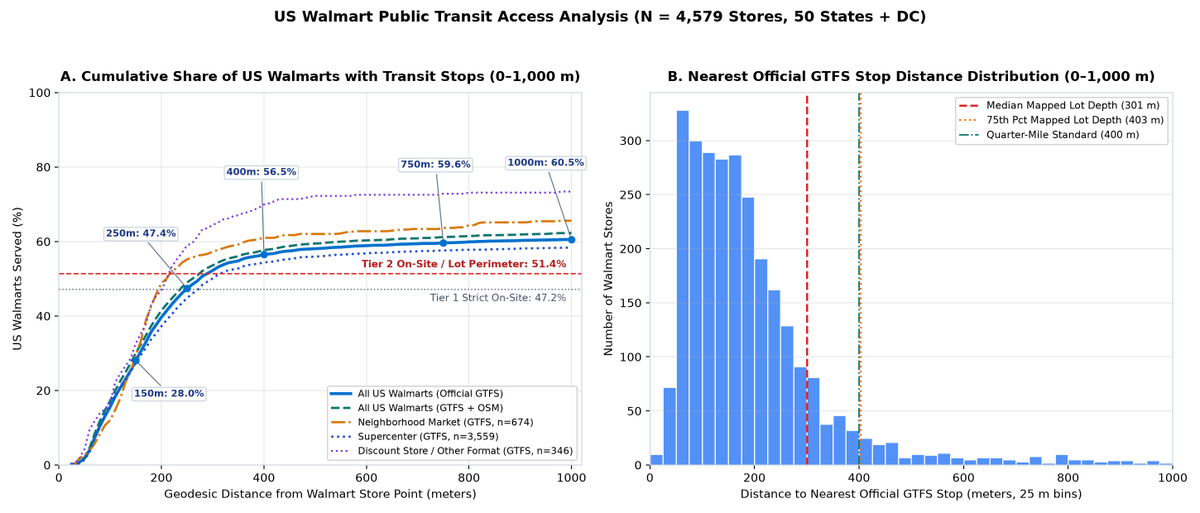
@humantransit@Walmart Without weighing on on the larger "Walmart Good v Bad" conversation, some analysis backing up your intuition of it being a popular transit destination: 60% of US Walmarts have bus stops within 1km and 50% ~on-site (OSM+GTFS data)
The @FAANews stopped every departure in the country today.
Seemed like a good time to play around with the @EnhancedRadar API, so I built this: a live feed of what pilots and controllers are saying about it on the radio, updated live.
Check it out: https://t.co/uyr4CdI73i
The Federal Railroad Administration (FRA) makes it illegal to operate a train faster than 110mph, unless the route is "grade separated", ie, has no level crossings between trains and cars. This requirement was one of the big reasons California's high speed train was doomed.
California has built a surprising amount of bullet-train related things. (Cynic though I am, I too would be surprised if they had managed to spend $13 billion on *literally nothing*.) However, people don't realize anything has been built because the things are, in practice, 92 overpasses which have to be finished before they can install track on them.
The 110mph rule is ostensibly for safety, but in practice has negligible apparent benefits. Furthermore, instead of looking for ways to safely raise this speed limit, the FRA has instead tried to lower speed limits for otherwise-compliant infrastructure hosting Acela operations on the Northeast Corridor.
My personal assessment, for what it's worth, is that if all crossings are protected by quad gates, grade crossings are *probably* safe up until at least 150mph. But ultimately, we can't really know what safe speeds are until we investigate, perhaps by crash-testing the retiring Acela trainsets. Since the FRA has expressed near-zero willingness to do so, we may never know.
For a more thorough treatment of this subject, I've written about this before, here: https://t.co/31vvDz1auo
it drives me up a wall that people who spent the entire Biden administration calling for a climate emergency because waiting even one more day to solve climate change was an existential risk and now saying "why are you RUSHING!?!"
"staffers are grappling with how well BAAJA polls vs the litigation groups flooding them with negative messaging"
What's going to be amazing when we pass BAAJA is Dems realizing there are no consequences to rolling the groups.
They're full of sound and fury, signifying nothing
The bipartisan permitting bill, BAAJA, has underappreciated implications for public health.
SEIA estimates the permitting deal could save *6,700 lives* by reducing air pollution.
Air pollution doesn't just kill; it's also linked to a wide variety of diseases like alzehimers and dementia.
And a growing research literature shows surprisingly widespread cognitive impacts from air pollution as well:
- Chess players make more mistakes on more polluted days;
- Baseball umpires make worse decisions on more polluted days;
Politicians use less complex speech on more polluted days.
By making it easier to build clean energy, permitting reform can not only lower energy costs but also save lives and improve public health.