The world deserves confidence that American companies developing increasingly capable AI will act responsibly, especially as the trajectory of progress has steepened. Every frontier lab must deliver on this, and there is no reason any of us should come to work if we cannot.
We welcome a federal framework that sets consistent safety requirements for frontier AI. But we do not believe we need to wait for an anti-trust exemption or legislation to begin the work of providing this confidence. Consistent rules to manage frontier risk so that we can maximize the benefits are a good idea (and we are excited by ideas like independent auditors).
Years ago, companies like ours developed things like Responsible Scaling Policies and Preparedness Frameworks. Those were good for that moment, and focused primarily on the deployment of completed models, not what happens during their development process.
Today's shift to focusing on safe development and evaluation will need new tools. For example, at OpenAI we now formulate explicit safety cases in advance of frontier reinforcement learning runs we expect to significantly increase capability, in addition to the safety work we have long done in advance of model releases.
We hope that other companies will learn from our approaches and propose their own; we think shared standards for misalignment, monitoring, and safety will lead to better outcomes. We look forward to collaborating with our colleagues across the industry to formulate the best version of these.
When we talk about “pacing”, we do not mean “stopping”. Progress has been rapid and will continue to be. But it should be slower than it otherwise could be; interventions like safety cases and monitoring have significant costs.
Pacing will be well worth this cost; no amount of American competitive pressure should justify recklessness, or let capabilities get ahead of alignment and monitoring.
Where we will need the help of our government is for international coordination. But first we should do what we can ourselves.
Our paper in @Nature today 🥳 We tracked 6,438 mice from puberty to death and mapped the genetics of *when* you die, not just whether a gene associates with lifespan.
https://t.co/EoeexqJoHk
59 loci. Two decades of data. Thread 👇
#Longevity#Aging#Genetics#Healthspan
David Sinclair says he is a co-author of a paper with an AI system.
It did not just validate what the field already knew. It found a new way to model biological age.
The argument that AI can never be creative is just human arrogance.
<끊임없는 반인권적 반국제법적 행동으로 고통받고 힘들어하는 전 세계인들의 지적을 한번쯤은 되돌아볼 만도 한데 실망입니다.
내가 아프면 타인도 그만큼 아픕니다.
나의 필요 때문에 누군가 고통받으면 미안한 것이 인지상정입니다.
아닌 밤중에 홍두깨라고 아무 잘못없는 우리 국민들께서 뜬금없이 겪고 있는 이 엄청난 고통과 국가적 어려움을 지켜보는 마음이 매우 불편합니다.
보편적 인권과 대한민국의 국익을 위해 할 수 있는 일을 더 열심히 찾아봐야겠습니다.>
이스라엘, ‘전시 살해=유대인 학살’ 李대통령 발언에 “용납 못해” https://t.co/R9OOeMDSr3
How Pakistan made the world over 3 trillion dollars richer
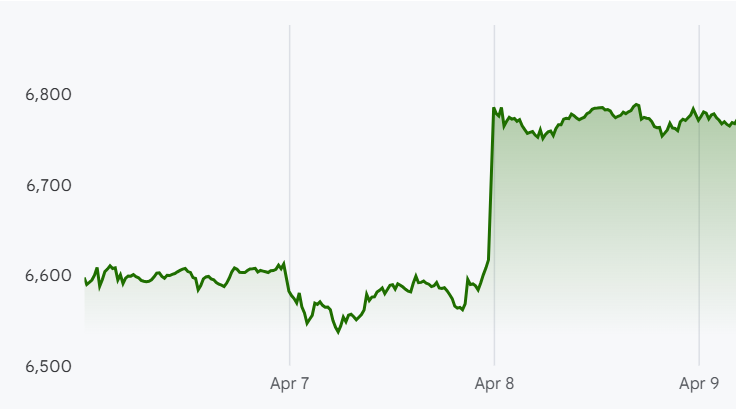
On April 7, the world edged toward Trump's 8pm ultimatum that "a whole civilization will die tonight." By mid-afternoon, Polymarket gave less than a 5% chance for a ceasefire. But then in a flurry of last-minute diplomacy led by Pakistan's PM Shehbaz Sharif, ceasefire odds shifted from near-impossibility to 100%, as both U.S. and Iranian leadership publicly acknowledged the important role played by Pakistan.
The sharp shift in probability of ceasefire from near-zero to certainty, allows us to estimate cleanly the market value of Pakistan's successful diplomacy. There was a sharp jump of 2.9% in S&P500 around the ceasefire announcement. The reaction was similar the world over.
Global markets represent about $125T, so a 2.9% jump represents a gain of 3.6 trillion dollars for the world. Pakistan helped create TEN times its own GDP for the world!
For me, the best part is not the trillions of dollar, but seeing Pakistan on the world stage as a peace maker.
I hope Pakistan runs with this new identity by promoting peace not only abroad, but also at home. That means moving away from politics of division and exclusion, and treating every citizen as its own.
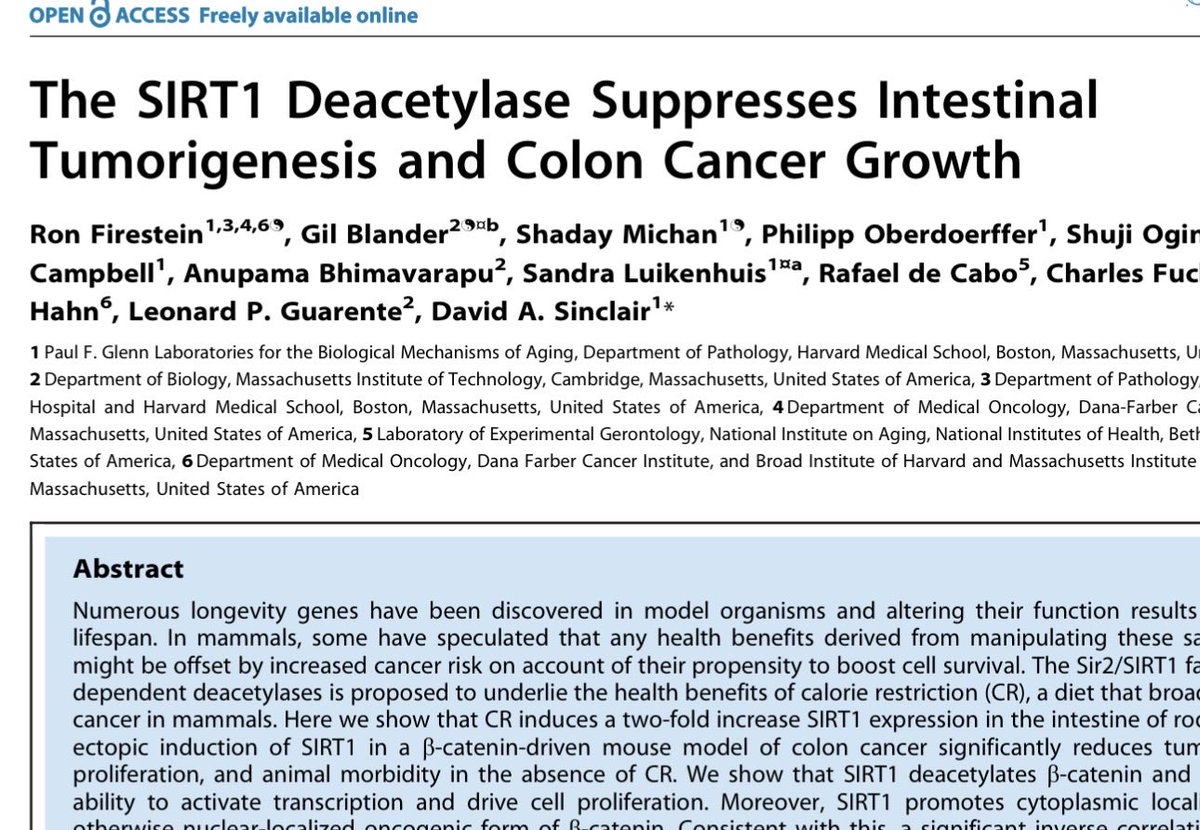
Fun fact: in 2008, when we published that NAD-dependent SIRT1 suppresses cancer, almost no one believed us. How could a longevity gene suppress cancer? they asked
This piece argues IQ isn't everything and implies people with high IQ are dangerous. Professor Sternberg's unrelenting grin while explaining it creeps me out....
Also, there is no perfect metric. Is IQ an accurate measurement of how people will succeed in life? Yes 🤷♂️
@AzadChaiwala “follow his page for how to raise his daughter in real time”, this is the intellect of that person and dumbfuck like you who is promoting him