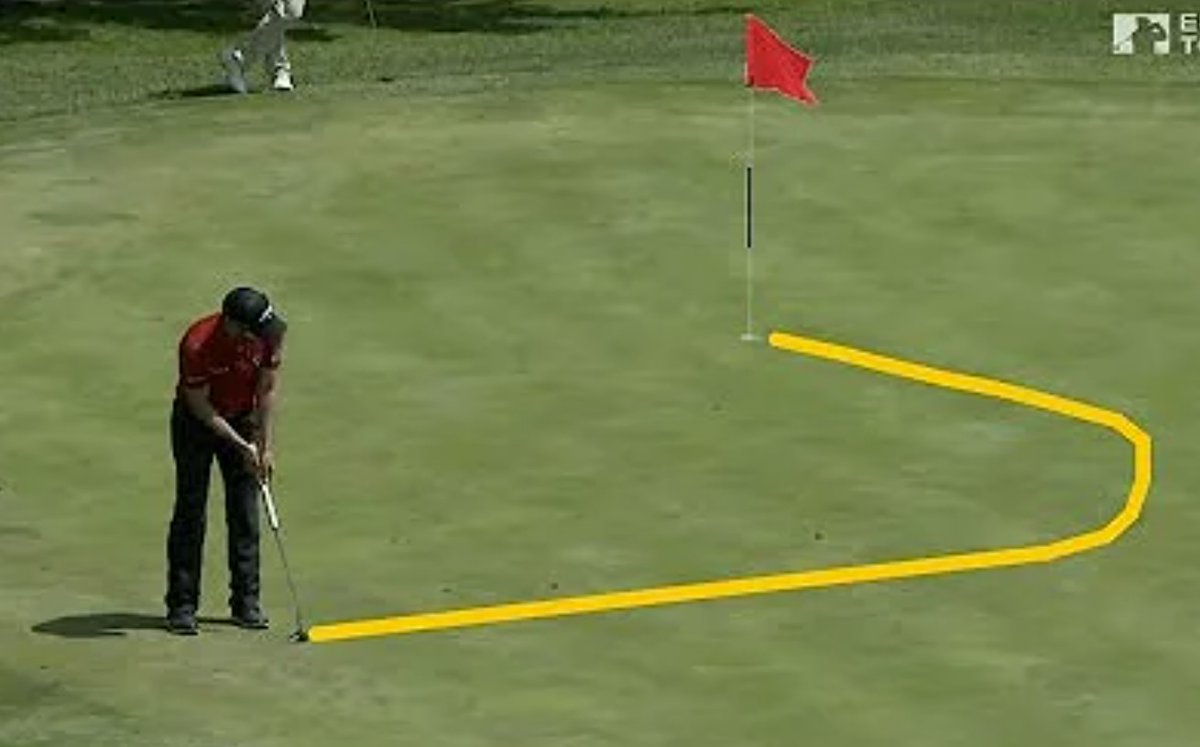
What’s the relation between this golf shot and dynamic coding in PFC? Hint: the hole is an attractor state and the path of the ball is a trajectory in neural state space. Just as it’s often suboptimal to hit the ball directly at the hole, it’s the same in neural circuits! 1/4
We're looking for an exceptional computational neuroscientist to join my team at @Opto_bio in Cambridge, UK. If you're passionate about combining computational modelling with lots of amazing data to develop cutting-edge neurotechnology then apply now!
https://t.co/5jJjGeFulM
Continuous-time RNNs are used in neuroscience to model neural dynamics. CNNs are used in vision neuroscience for image processing. So what's the right architecture to model the biological visual system? We propose a hybrid. (#NeurIPS2024 spotlight!)
https://t.co/IJV5H1NVuW
Our review on the computational foundations of dynamic coding is out now in TICS: https://t.co/xUDBAFiKOK
We review dynamic coding in neural recordings, classical working memory models, and task-optimized networks.
We conclude that dynamic coding results from an optimality principle of robust working memory maintenance. We hope you enjoy reading it and thanks to my co-authors @lengyel_m and John Duncan!
We find that dynamic coding is ubiquitous in neural recordings and task-optimized networks. We show that two key aspects of a neural network determine whether it exhibits dynamic coding: the connectivity of the network and the inputs it receives.
Great to see this out now in Elife: https://t.co/JXU3lhRUqi
Thanks again to all my co-authors, our anonymous reviewers, and everyone who us along the way.
Neural population analyses often focus on task-relevant stimulus representations. But what about task-irrelevant stimuli? Should they simply always be ignored? What if they become relevant later? We study this question in optimized RNNs and PFC recordings: https://t.co/uC7p2UuCe5
Great to see this out:
Optimal information loading into working memory explains dynamic coding in the prefrontal cortex | PNAS https://t.co/EuUejI3hEG
See my original twitter thread here: https://t.co/7oCqZmmi0j
What’s the relation between this golf shot and dynamic coding in PFC? Hint: the hole is an attractor state and the path of the ball is a trajectory in neural state space. Just as it’s often suboptimal to hit the ball directly at the hole, it’s the same in neural circuits! 1/4
It is challenging to train continuous-time biological RNN models to learn long-term dependencies. In our latest paper (in #NeurIPS2023) with @NeuroGoudar@xjwanglab, we propose several solutions. 1/8
https://t.co/YHMlJsMhRR
Neural population analyses often focus on task-relevant stimulus representations. But what about task-irrelevant stimuli? Should they simply always be ignored? What if they become relevant later? We study this question in optimized RNNs and PFC recordings: https://t.co/uC7p2UuCe5
Thanks to all of my amazing collaborators: @MichalJWojcik, @KrisTorpJensen, Makoto Kusunoki, Miki Kadohisa, John Duncan, @StokesNeuro, and @lengyel_m and everyone else who helped us with the paper.
We confirmed our theoretical predictions using new learning-resolved recordings from PFC. We found that neural activities in PFC changed in line with a minimal representational strategy - corresponding to networks optimized with high levels of noise and metabolic cost.