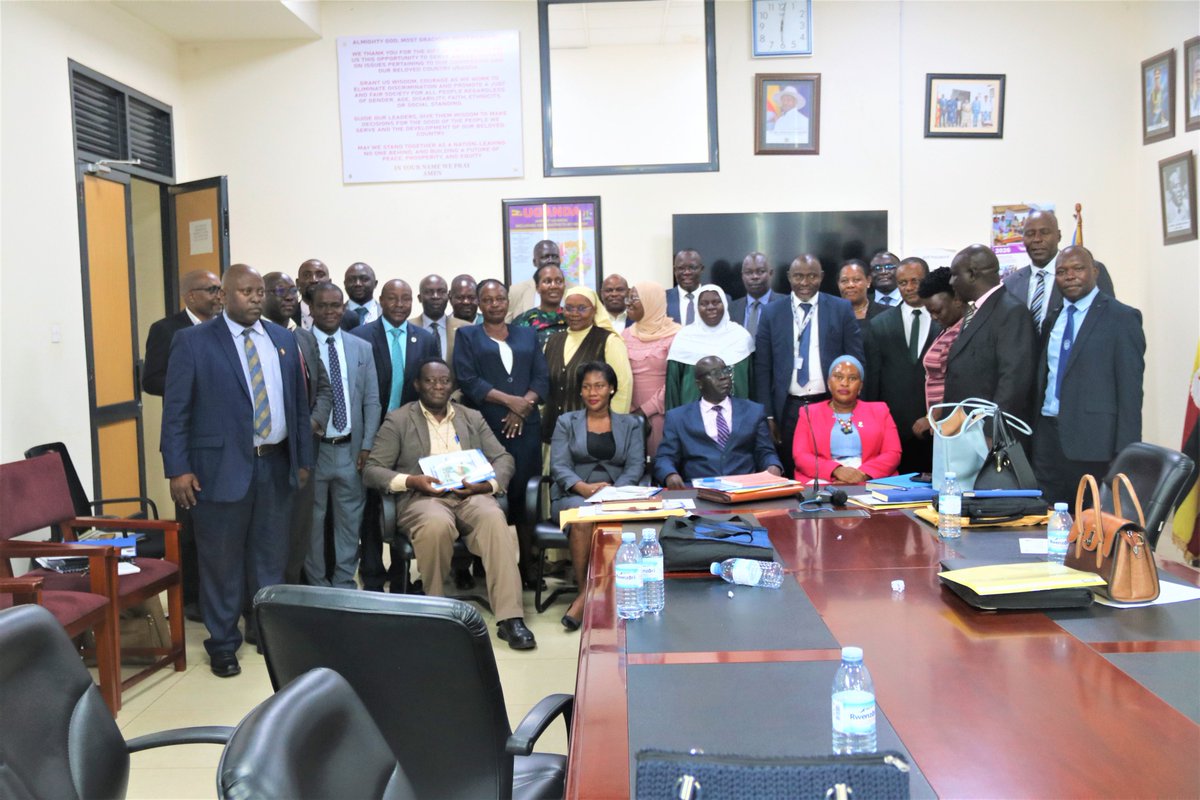
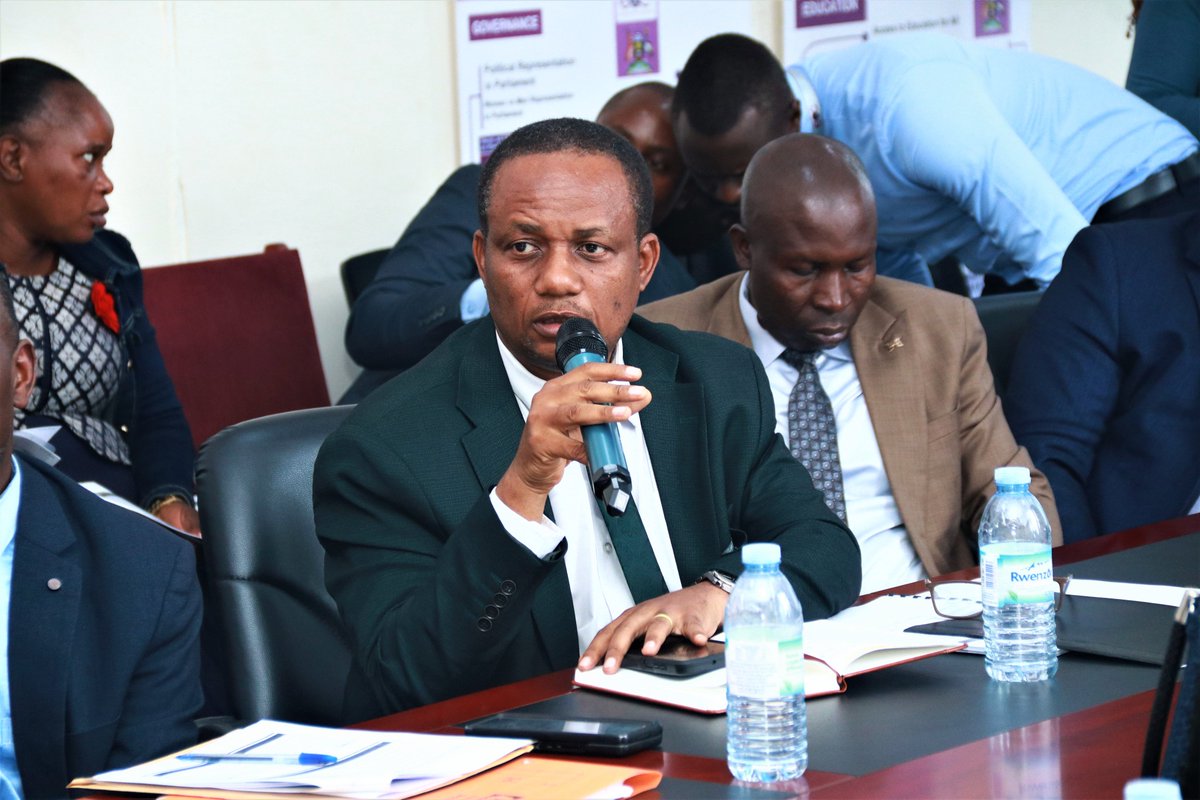
This morning, the @EOC_UG, held a consultative meeting with stakeholders in the Education sector on the cost of education and school fees in government-aided schools, held at the Commission's head offices at Kingdom-Kampala.
Opening the session, Senior Education and Training Officer, Mr. Sasaga John Peter outlined the Commission's constitutional mandate under Article 32 of the 1995 Constitution of Uganda (as amended) and the Equal Opportunities Commission Act, Cap 7. He explained that the Commission's mandate is to eliminate discrimination and inequality while promoting affirmative action for marginalized groups, including women, youth, older persons, persons with disabilities, ethnic minorities, refugees, and people living in poverty. He provided that the Commission's role is to investigate complaints, review laws and policies for compliance with equal-opportunities' principles, conduct public awareness campaigns and research, issue implementation guidelines, hear and determine discrimination-related complaints. He further distinguished between discrimination, unfair treatment without legal justification, marginalization, the long-term denial of an opportunity and also stressed that affirmative action and gender equity must also account for the needs of boys and men alongside girls and women.
The Secretary to the Commission, Dr. Shaft Nasser Mukwaya, then presented findings from a Commission study on school fees in government-aided institutions. He noted that the engagement was convened under Section 14 of the Equal Opportunities Commission Act, following petitions from parents, youth leaders, and other stakeholders concerned about the cost of education in Government-aided schools. The study found that fees in Universal Secondary Education (USE) schools, intended to be free or minimally charged, ranged from UGX 30,000 to UGX 364,000 per term, while non-USE government-aided schools charged fees comparable to, and in some cases higher than, private schools.
Dr. Mukwaya raised several questions arising from the findings, including why government-aided schools, which receive salary and infrastructure support, would charge fees similar to self-financing private schools, why some higher-fee government schools did not consistently outperform lower-fee private schools academically and whether admission criteria based purely on academic merit was unintentionally excluding students with disabilities, from ethnic minorities, or from surrounding local communities. He also raised concerns drawn from complaints about admission fees, procurement practices that bypass marginalized local suppliers, and isolated cases involving denial of admission on grounds of disability or religion.
In the discussion that followed, head teachers pushed back on several points, citing chronic under-staffing relative to government-approved staffing caps, ageing infrastructure requiring costly maintenance, unfunded utility bills, and the burden of paying non-government teachers and support staff from school fees. Several noted that the study's figures did not reflect their current fees and asked the Commission to verify data directly with schools before finalising its report. Others called for a comparative study of academic performance between USE and non-USE government schools, greater government provision of procurement and support staff, and subsidies for utilities such as water and electricity. A recurring appeal was for the Commission to visit schools in person before drawing conclusions.
Responding, Principal Research Officer, Ms. Susan Atukunda clarified that the Commission's concern was not simply whether fees were high, but the structural disadvantage this creates for poorer families, including cases where girls are withdrawn from school to prioritise a brother's education. She acknowledged that the study had primarily compared non-USE government-aided schools with private schools due to comparable fee levels, and agreed that extending the comparison to USE schools would strengthen the analysis. Further, she also acknowledged discrepancies between the 2023 study data and current fees, attributing this partly to the time elapsed since data collection and differing accounts from parents versus schools, and committed to verifying figures before the final report is issued.
Closing the session, the Commissioner Compliance and Enforcement, Mr. James Mugisha, thanked participants for their candour and invited written recommendations on staffing, funding formulas, and affirmative-action admission policies for marginalized groups. He noted that the Commission's findings would feed into planned engagements with the Ministry of Education, the Ministry of Public Service, and the Office of the Prime Minister ahead of the 2027/2028 budgeting cycle.
Editor-@DenisNsubuga10 #EqualOpportunitiesForAll
Today, the Equal Opportunities Commission held a constructive engagement with Justices of the Supreme Court of Uganda on advancing the shared values of justice, equality and access to justice.
The engagement provided an opportunity to exchange perspectives on strengthening the rule of law, nurturing the next generation of legal professionals, and deepening appreciation of equality, dignity and inclusion within Uganda’s justice system.
The Commission appreciates the continued engagement and commitment of the Judiciary to these important ideals.
#EqualOpportunities #AccessToJustice #RuleOfLaw #Justice #EOCUganda
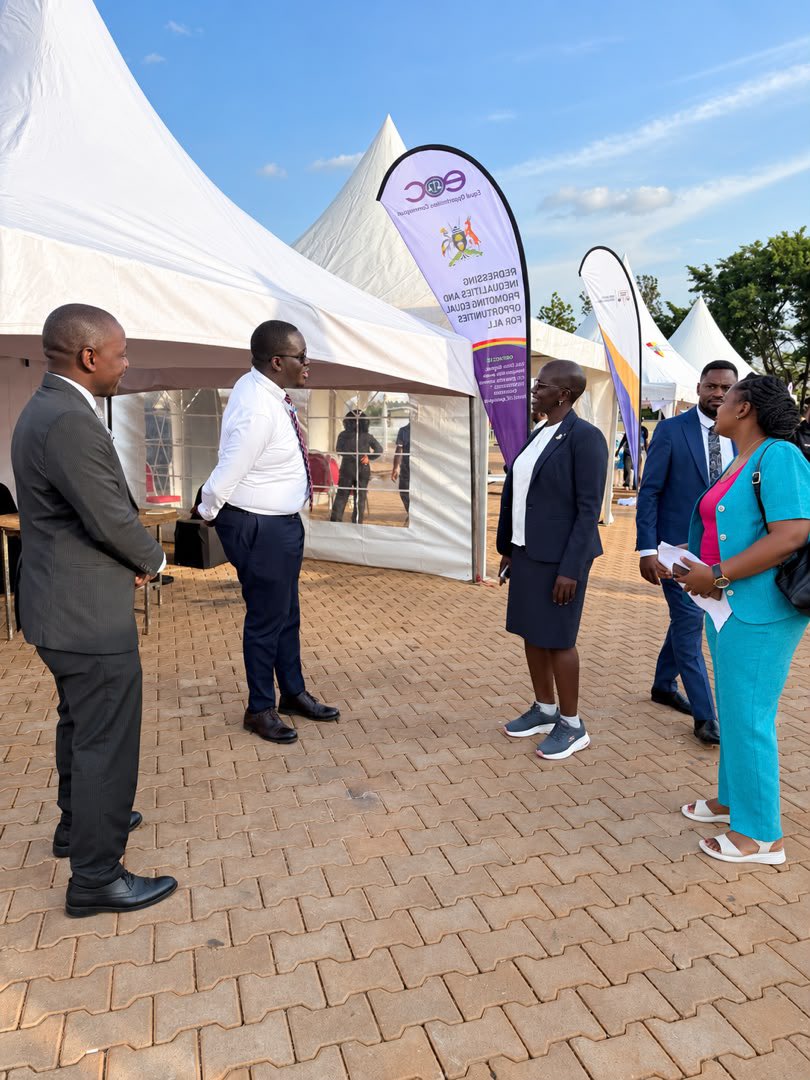
The Equal Opportunities Commission is ready for the Court Open Day at Kololo tomorrow! ⚖️
Today, the Principal Judge passed by our stall to check the Commission’s readiness to receive members of the public.
We are ready to engage, listen and provide information on equal opportunities, discrimination and access to justice.
Come and visit us tomorrow! Learn about your rights, engage with the Commission and discover how we can help.
#CourtOpenDay #EOCUganda #EqualOpportunities #AccessToJustice
The @EOC_UG, this morning convened a stakeholders' engagement for the review of Local Government Budget Framework Papers (BFPs) on compliance with Gender and Equity requirements, bringing together technical officers, planners, and gender specialists from Local Governments across the country.
Opening the engagement, the Commissioner for Compliance and Enforcement, Mr. Mugisha James, welcomed stakeholders and outlined the purpose of the review: aligning the Gender and Equity Compliance Assessment Tool with the Fourth National Development Plan (NDP IV, 2025/26–2029/30) and the Programme-Based Budgeting framework. He noted that the exercise, guided by the Public Finance Management Act, is aimed at strengthening how Local Governments across Uganda's 16 sub-regions are assessed for Gender and Equity compliance. Mr. Mugisha called on stakeholders to offer constructive, technical input to ensure the revised tool is both practical and effective in advancing equal opportunities for all Ugandans.
The Principal, Compliance and Enforcement, Mr. Manase Kwihangana, then took participants through the tool's background and rationale, drawing on lessons from ongoing assessments across Uganda's 176 Local Governments. He explained that the tool is anchored in the 1995 Constitution, the Equal Opportunities Commission Act, and the Public Finance Management Act, which forms the basis for issuing Gender and Equity Compliance Certificates.
Mr. Kwihangana noted the tool is currently being revised to align with NDP IV's Programme Implementation Action Plans, the Programme-Based Budgeting structure, and the plan's anchor sectors of Agro-Industrialisation, Tourism, and Minerals. He highlighted several persistent challenges affecting the assessment process, including delayed submission of BFPs, limited capacity among Local Governments to internalize gender and equity issues, and significant gaps in disaggregated data. He also walked participants through the tool's six-Assessment section, with a scoring framework of 155-point, which is used to grade the level compliance and guide more inclusive planning and budgeting nationwide.
Discussion then turned to how well the tool captures Local Governments' actual contributions to NDP IV. Participants raised the need to maintain long-term development goals within the tool, while improving visibility for specific government projects, such as the Presidential Initiative on Banana Industrial Development (PIBID), that are implemented within Local Governments but do not always appear clearly in their Budget Framework Papers.
Mrs. Kisembo Agnes, commended the progress made in promoting equity through the tool, while acknowledging that understanding of gender equality remains comparatively weaker among Local Governments. She proposed developing a simplified checklist to guide assessments of specific gender issues, such as gender-based violence, to make the tool clearer and more effective in tracking progress for women, men, and other vulnerable groups.
A separate segment of the discussion focused on enhancing the Programme-Based System (PBS) to better capture and assess Local Government performance on gender equity and data systems. Suggestions included introducing a dedicated budget code for gender-related spending, improving sensitisation efforts, and developing an operational manual to clarify assessment parameters for both assessors and Local Governments.
Participants stressed the need for a more comprehensive tool to track gender-related interventions, noting the ongoing challenge of integrating cross-cutting issues such as gender into existing budgeting systems. The discussion also underscored the importance of clear accountability for budget allocations, as well as adequate human resource capacity to ensure gender and equity initiatives are effectively implemented.
On capacity building, it was noted that only four of Uganda's 176 districts were identified as underperforming in the previous financial year, reflecting overall progress but also highlighting the need for continued support to the few lagging behind districts. Participants also welcomed the increase in the character limit for planning documents from 200 to 2,500, noting that it addresses a longstanding constraint on how much detail Local Governments could previously include in their submissions.
Discussion also centred on the need for a clear, evidence-based approach to any proposed budget code, along with a stronger emphasis on mainstreaming gender and equity considerations across all planning processes rather than isolating them. Participants identified inconsistent data collection, a lack of uniformity in mid-term reporting, and weak tracking of commitments and outcomes as key challenges. The group agreed to prioritise refining the existing tool, focusing on specific, relevant areas for each Local Government, before considering the development of any entirely new instrument.
Further discussion focused specifically on refining the BFP assessment tool's scoring mechanism. Participants raised concerns about the current standardised BFP format, calling for a more detailed and specific scoring checklist. It was suggested that the checklist reference specific supporting documents and clearly capture relevant gender and equity elements. Facilitators clarified that assessments are based strictly on the Budget Framework Paper itself, rather than on District Development Plans, in line with the legal framework governing the process.
Delegates agreed to harmonize the scoring checklist to ensure it clearly and consistently captures the issues assessors are looking for, and a request was made for a section-by-section review of the tool to ensure thoroughness. The overarching goal is to improve the accuracy of planning and assessment, ensuring Local Governments remain aligned with national development priorities.
The engagement closed with a discussion on how specific interventions, such as an irrigation scheme benefiting local farmers, including women, connect to broader gender and equity outcomes. Participants emphasized the importance of clearly understanding the underlying goals of any intervention, whether that is about participation, empowerment, or food security, and how these in turn address challenges such as gender-based violence and malnutrition.
It was agreed that assessments must be grounded in the context of national development plans, budget strategies, and broader government approaches aimed at improving the well-being of vulnerable groups.
#EqualOpportunitiesForAll
CONDOLENCE MESSAGE
The Equal Opportunities Commission (EOC) joins the Royal Family, the Kingdom of Tooro, and the entire nation in mourning the passing of His Royal Majesty, Rukirabasaija Omukama Oyo Nyimba Kabamba Iguru Rukidi IV, King of Tooro.
We received the news of His Majesty's passing with deep sadness. King Oyo's life and reign, from ascending the throne at the age of three to becoming a respected voice on issues of health, culture, and social development, remain a source of inspiration to many Ugandans.
On behalf of the Commission, we extend our heartfelt condolences to the Royal Family, the Queen Mother, the people of Tooro, and all who mourn this profound loss. May the memory of his leadership, humility, and service continue to guide the Kingdom of Tooro in the days ahead.
Rest in eternal peace, Your Majesty.
#RIPKingOyo #TorooKingdom
USJM Inaugural Mass for the Academic Year 2026/2027
It was a joyful moment at Our Lady of Perpetual Help – Nyamitanga Cathedral as the USJM fraternity gathered for the Inaugural Mass for the Academic Year 2026/2027, with Archbishop Lambert Bainomugisha as the main celebrant
1/6
On behalf of @UNAIDS_UG, Ms. Constance Nyasha welcomed the Stakeholders' dialogue on Advancing inclusive access to HIV, TB and Malaria services in Uganda, stressing the importance of treating health as an integrated service.
She commended the Equal Opportunities Commission for its leadership in conducting the underlying assessment and convening the dialogue to move "From Evidence to Action," noting that despite Uganda's progress against HIV, TB and Malaria, groups such as women and girls, children, persons with disabilities, older persons, key populations, and hard-to-reach communities still face barriers linked to stigma, poverty, distance and structural inequalities.
She emphasised that ending AIDS by 2030 requires more than biomedical advances alone, it demands equitable, people-centred health systems that protect human rights and ensure dignified access to services for all. #EqualOpportunitiesForAll
Dr. Shaft Nasser Mukwaya, Secretary to the Commission, welcomed the Director General of the Ministry of Health, various development partners, representatives from Government MDAs, district leaders, health service providers, civil society organisations, community leaders of key and vulnerable populations, EOC staff, and all other invited guests to the stakeholders' dialogue.
He expressed gratitude for the opportunity to convene the meeting and pledged the Commission's full support in ensuring that the resolutions and recommendations arising from the dialogue would be integrated into its policies, programmes and interventions. He specifically thanked @UNAIDS_UG for its financial support in facilitating the engagement.
Dr. Mukwaya reaffirmed the Commission's mandate as established in 2010, to give effect to government's commitment to eliminating discrimination and marginalisation based on age, disability, gender, ethnicity, religion, geography, political affiliation and social standing, ensuring that no Ugandan is left behind in national planning and development. He noted that this mandate places the Commission at the centre of efforts to mainstream diversity, inclusivity and equity across all government programmes.
While acknowledging government's progress in responding to HIV, TB and Malaria, he pointed to the findings from an EOC study covering over 40 districts, which revealed that populations in boarder areas, islands and mountainous regions continue to face disproportionate barriers while accessing services, compounded by disparities in gender, age and ethnicity. He further called for affirmative action and deliberate planning to address these gaps.
He outlined the expected outcomes of the dialogue, identifying evidence of access barriers, reaffirming previously agreed recommendations, and securing stakeholder commitments towards their implementation. He concluded by thanking all participants for their attendance and wishing them fruitful deliberations, reaffirming the Commission's commitment to supporting the implementation of resulting recommendations.
📢 Happening Now!
@EOC_UG is holding a Stakeholders' Dialogue on Commitments to Implementing Recommendations on Inclusive Access to HIV, TB and Malaria Services by Key and Vulnerable Populations in Uganda.
Theme: "From Evidence to Action: Implementing Recommendations to Advance Equitable Access to HIV, TB and Malaria in Uganda."
📍 Silver Springs Hotel
#EqualOpportunitiesForAll #HealthForAll #NoOneLeftBehind
Attended the farewell reception for H.E. @SwedEnvoyUganda 🇸🇪🇺🇬
Her time in Uganda has been marked by humility, transformational leadership and meaningful impact. A true lover of young people and a champion of their potential.
I’m especially grateful that when she first arrived in Uganda, we had a #FeministFriday coffee where we spoke about economic empowerment and I shared some of my big goals with her. She has since seen me achieve some of them, with many more to come. ❤️
Wishing you every success in your next assignment, Ambassador. Thank you for believing in young people and for the impact you leave behind. 🌍
Today, the Equal Opportunities Commission (EOC) conducted a Legal Aid Clinic for older persons in Nakawa Division, Kampala, as part of its mandate to promote equal opportunities and protect the rights of persons experiencing discrimination and marginalisation.
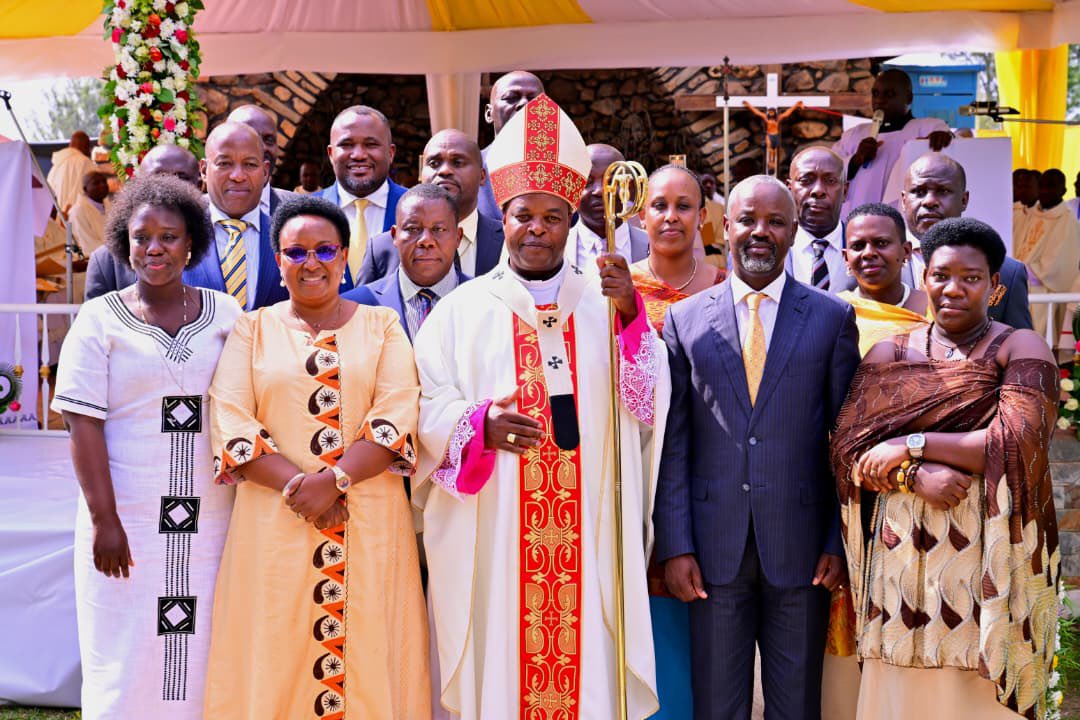
It was a great joy to join the Christian faithful of Mbarara Archdiocese at Nyamitanga Cathedral for the ordination of 8 priests and 16 deacons this morning.
I congratulated the newly ordained priests and deacons and advised them to embrace their calling with humility, compassion, and a strong commitment to serving all people without discrimination. They will be ambassadors of the Church in fulfilling its important role of promoting unity, peace, and social cohesion.
I commended the Church for heeding the NRM Government’s call to invest in programmes and projects that address poverty at the community and household levels. These initiatives are making a meaningful contribution to improving the livelihoods of Ugandans.
As government, we will continue working with the Church and other stakeholders to address the challenges affecting our people. Together, we should call out and fight corruption in the Parish Development Model (PDM), corruption in recruitment and the allocation of jobs, corruption in government health facilities, as well as corruption in other sectors. Public resources and opportunities must serve the people for whom they are intended.
I also thanked the Church for its continued support for the NRM Government, including during the recent elections, and for its prayers for H.E. the President, Mama Janet Museveni, our leaders, and the nation.
Just in;
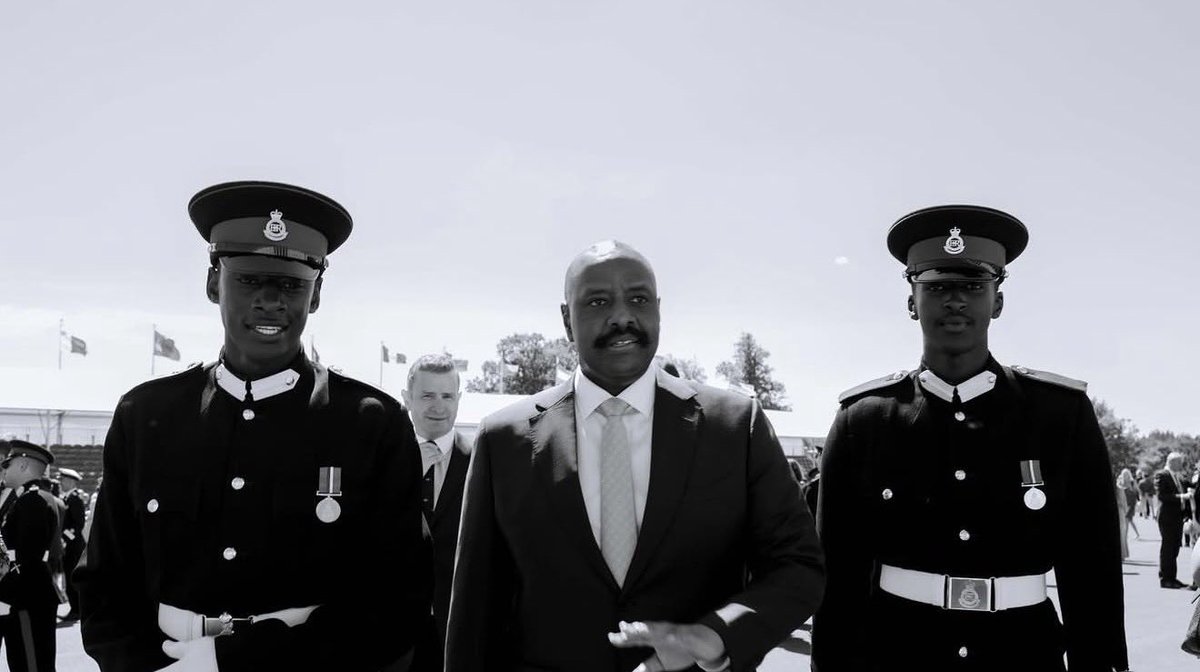
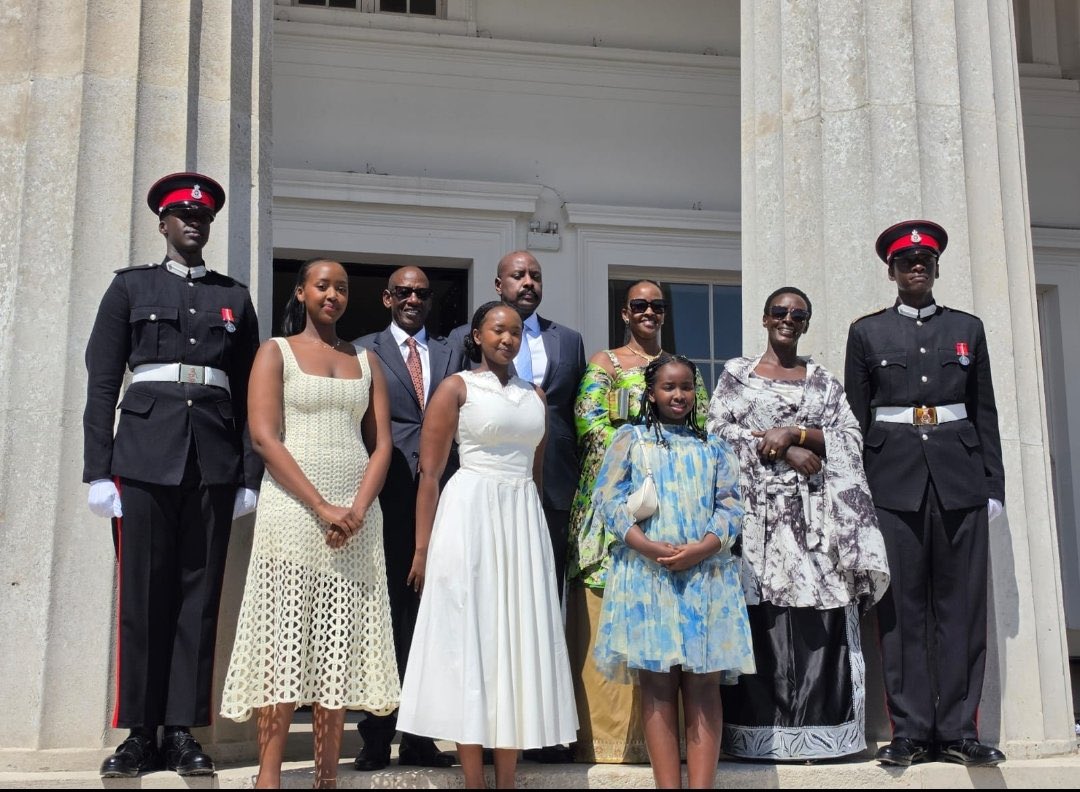
Ruhamya Kainerugaba and Bakira Ruyondo have successfully completed their training at the prestigious Royal Military Academy Sandhurst.
The proud moment was shared with Afande CDF, Gen. @mkainerugaba, and the family as they celebrated this remarkable achievement.
Congratulations to both officers on this outstanding milestone. 🇺🇬🎖️