Retired senior librarian Statistics Norway (SSB). Reads code. Interested in politics, economics, IT, music and travelling. Support on SSBs external APIs.
@Jensen2k Hei, det dere har gjort inspirerte meg. Men det er en god del feil i common-tables.md. Over halvparten av tabellreferansene er enten feil tabell, avslutta serie eller ikke-eksisterende ID.
Dere kan verifisere ved å hente label + discontinued fra https://t.co/wHtEOC318R{id}
(🧵1/11) For the past year and a half, I've been investigating OpenAI and Sam Altman for @NewYorker. With my coauthor @andrewmarantz, I reviewed never-before-disclosed internal memos, obtained 200+ pages of documents related to a close colleague, including extensive private notes, and interviewed more than 100 people.
OpenAI was founded on the premise that A.I. could be the most dangerous invention in human history—and that its C.E.O. would need to be a person of uncommon integrity. We lay out the most detailed account yet of why Altman was ousted out by board members and executives who came to believe he lacked that integrity, and ask: were they right to allege that he couldn't be trusted?
A thread on some of of our findings:
Just a reminder that everyone should check out the BCA Research Hormuz Crisis dashboard, which we have now made available to non-cients.
https://t.co/2w3YrSrMuA
The rise of AI-powered library software is inseparable from the offensive against education. Our essay of the week unpacks how AI tools sideline librarians’ expertise and enable the mass filtering of “sensitive” content.
By @jason_koebler in @404mediaco
https://t.co/Zr9hgcHp5c
Structured outputs are now available on the Claude Developer Platform (API).
Available in public beta for Sonnet 4.5 and Opus 4.1.
Read more: https://t.co/ICn9HC3jsT
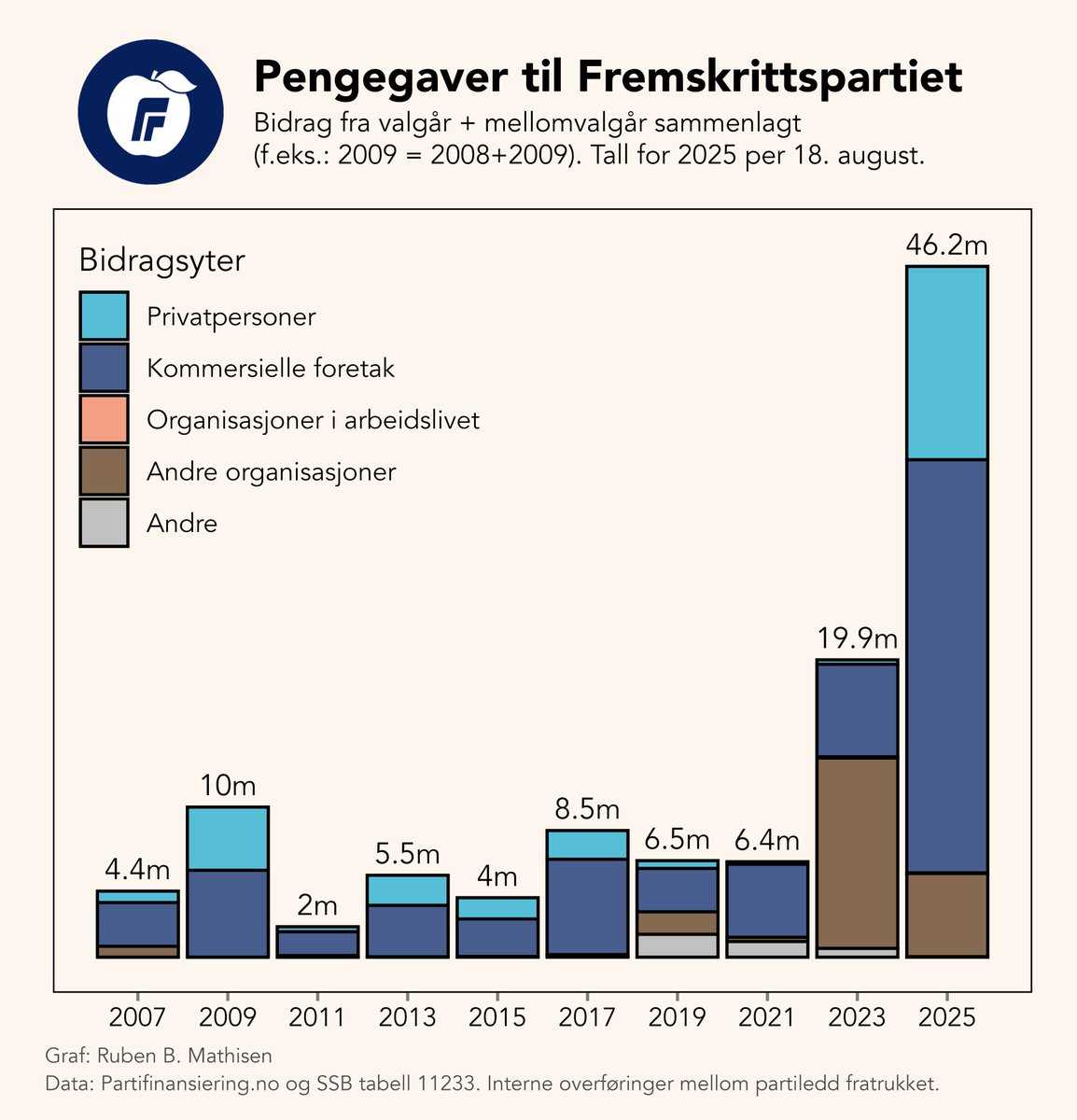
💰Partienes Pengegaver: Del 2
Jeg går gjennom hvert parti sine pengegaver over tid. I dag er det FRP.
Til årets valg får FRP langt mer pengegaver enn tidligere (x7 av hva de fikk i 2021). Pengene kommer i hovedsak fra selskaper og individer.
Imorgen: Arbeiderpartiet
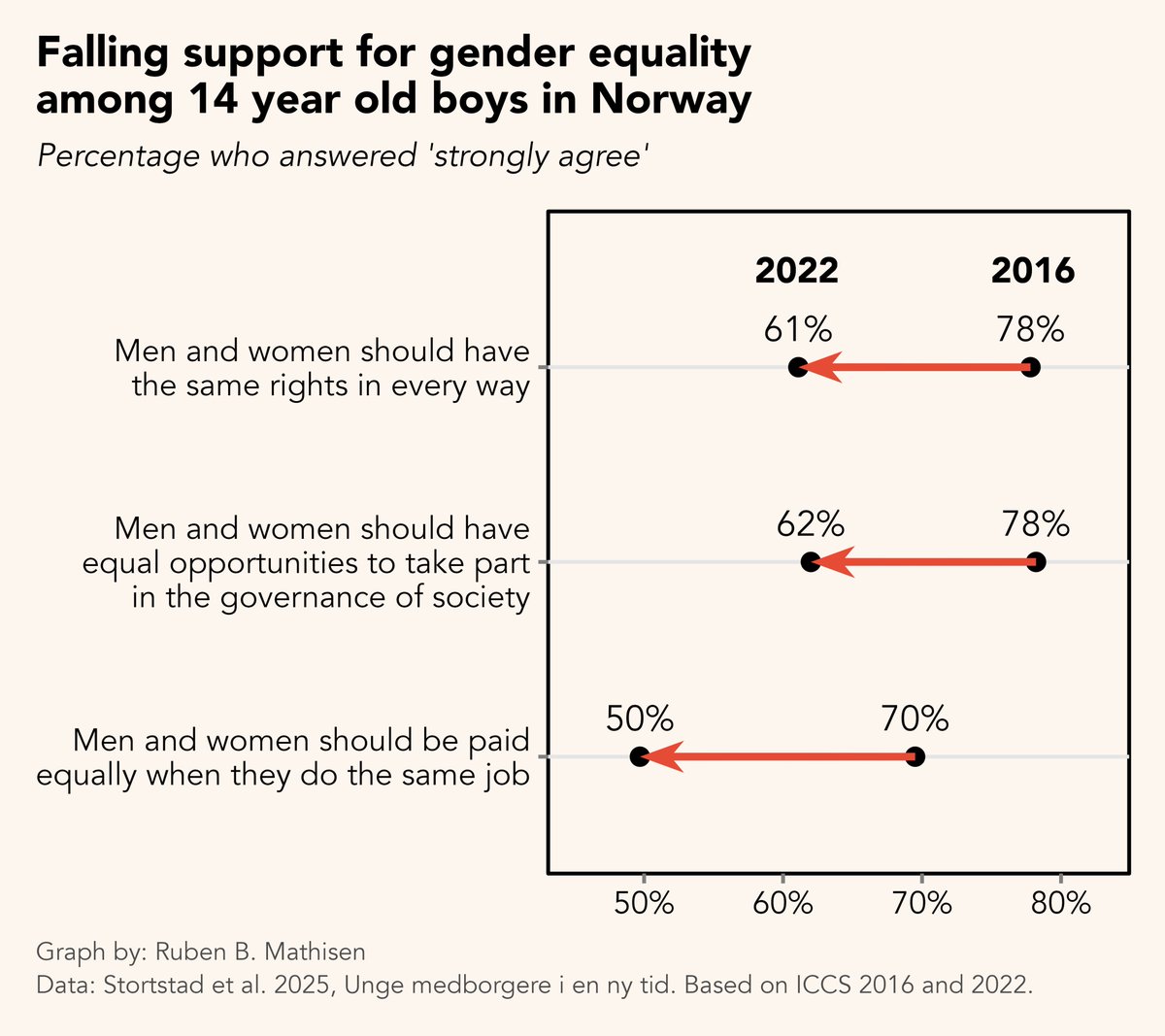
New data for Norwegian 9th graders confirm a worrying trend:
Young boys are increasingly sceptical of men and women having "same rights", "equal opportunity" and "equal pay".
👉🧵My research suggests this shift explains a lot of the recent polarization between boys and girls
I routinely do multiples of this in a day. And it’s really good code following best practices that solves hard problems reliably and performantly, with world-class UI/UX.
And I also have zero interest in hiring any humans, it would just slow me down.
The JSON-stat JavaScript Toolkit version 2 is out. The Toolkit has been rewritten to adapt to make more efficient.
#opendata#stats#library#cub#jsonstat#json#data
https://t.co/m4KvUWUJom
@Cackalackyman@oysteinbogen Dekningen på DAB er nye dårligere. En billig dabradio får ikke signal i min leilighet sentralt i Oslo. Aldri problem med FM.
It has been said that AI is the new oil, the new electricity, and the new internet. And the once nimble and highly profitable software companies (MSFT, GOOG, ...) became like utilities, investing in nuclear energy, among other things, to run AI data centres. Open Source and the #DeepSeek #Sputnik have once again shown that such companies "have no moat" in the field of AI.
In many talks over the last decade, I mentioned the rich guy I knew when I was young. He had a Porsche with something incredible: a mobile phone. He could call other people who had such a Porsche via a satellite. But 40 years later, everyone had a cheap smartphone in their pocket, which is far superior to what he had in his Porsche.
And it's the same with AI. Every five years, compute becomes ten times cheaper - a trend that has continued since the first general-purpose computer was completed in 1941. The basic techniques of modern AI were developed in the last millennium, when compute was still very expensive, but this trend has made them so cheap that AI has been on your smartphone since the 2010s.
The trend will not break in the coming decades (the physical Bremermann limit is still a long way off). An AI data centre that is worth 100 billion today will only be worth 1 billion in ten years' time. Soon, small, cheap computers with increasingly efficient open source AI software will do what the large data centres do today.
So AI will not be controlled by a few big AI utilities. No, everyone will own cheap but powerful and transparent AI that improves their lives in many ways. See the old motto of @nnaisense founded in 2014: ‘AI∀’ or ‘AI For All’.