A US judge just decided that ambient clinical audio recordings that physicians use to help create their final clinical notes serve an “administrative purpose” and patients don’t have a legal right to the recording.
As contradictory decisions come out every week about patients accessing AI scribe notes, let me ask a question: wouldn't it have been great if policy- and law-makers could have had the chance to get prepared for such questions before the technology got implemented?
This is exactly where futures methods can help. I'm not saying that every single person in healthcare should use them daily, but a policy-maker body could have easily used it to forecast such challenges and maybe try to get a legal consensus about it before it gets widely adopted in the industry.
I'll keep talking about the practical importance of futures methods until you really get fed up with me.
Source: https://t.co/QZE5Vcn9E6
Practical pathways for delivering new #BladderCancer therapies in community #urology. @HafronJason joins @UroDocAsh explaining how independent urology practices can reliably adopt new intravesical bladder cancer therapies, using gemcitabine intravesical system (TAR-200) that carries a J-code, as the primary example for BCG-refractory disease. #WatchNow > https://t.co/4RMwnsbmgK
Off Script: Why Some CAR T Patients Develop Enterocolitis—and How to Treat It
Researchers discovered why some #CARTtherapy patients develop severe intestinal inflammation and a repurposed oral inhibitor to treat it
@MountSinaiNYC#colitis#antibodies
https://t.co/4edRJIzAcN
Tautomer-Predictor AI Tool Identifies Stable Molecules for Drug Discovery
Researchers have released their method as an open-source tool that can rapidly analyze very large molecular libraries
@nyuniversity#AI#drugdiscovery#tautomer
https://t.co/7VFQNzUqkb
Scottish deep-tech company secures £22 million in grants
https://t.co/28F9IKzO9N
Follow DDW; Business insights for the global scientific community
#DeepTech
El director del Museo de Ciencias de la Universidad de Navarra (@microBIOblog ) ha publicado un artículo en @Conversation_E sobre cómo la IA es capaz de diseñar genomas de virus que funcionan. 🦠
¡No te lo pierdas!👇
https://t.co/mscU96vLTN
Jornada de Divulgación Científica Naukas Donostia 2026
«Passion for Knowledge»
San Sebastián 🇪🇸: @Naukas_com, 1 y 2 de octubre.
Info: https://t.co/XS2FMfCVZi
cc @microBIOblog@farmagemma@HelenaBigVan
Hereditary cancer NGS workflows are built to detect SNVs and indels. But what about clinically significant CNVs?
Join our webinar to learn:
- Why CNVs deserve closer attention in hereditary cancer testing
- How one lab integrated SNV, indel and CNV detection into a single workflow - What a large real-world cohort revealed about pathogenic PALB2 CNVs Register now: [link]
- How one lab integrated SNV, indel and CNV detection into a single workflow
- What a large real-world cohort revealed about pathogenic PALB2 CNVs
Register now: https://t.co/EGeFbVytfS
⚡ How might EVOO phenolic compounds influence mitochondrial health?
Explore evidence on hydroxytyrosol, oleuropein, oleocanthal, oxidative stress, and energy metabolism
María Ángeles Silva-Soto et al.
https://t.co/mrlixTlpec
#OliveOil#Mitochondria#Nutrition
Last chance—GEN's State of Biotech is tomorrow.
Maraganore. Orkin. Google Cloud's Shweta Maniar. The Biotech Hangout hosts. And John Sterling's exit interview after four decades as GEN's Editor in Chief.
Free registration: https://t.co/j8SYMpSeHX
#biotech#stateofbiotech
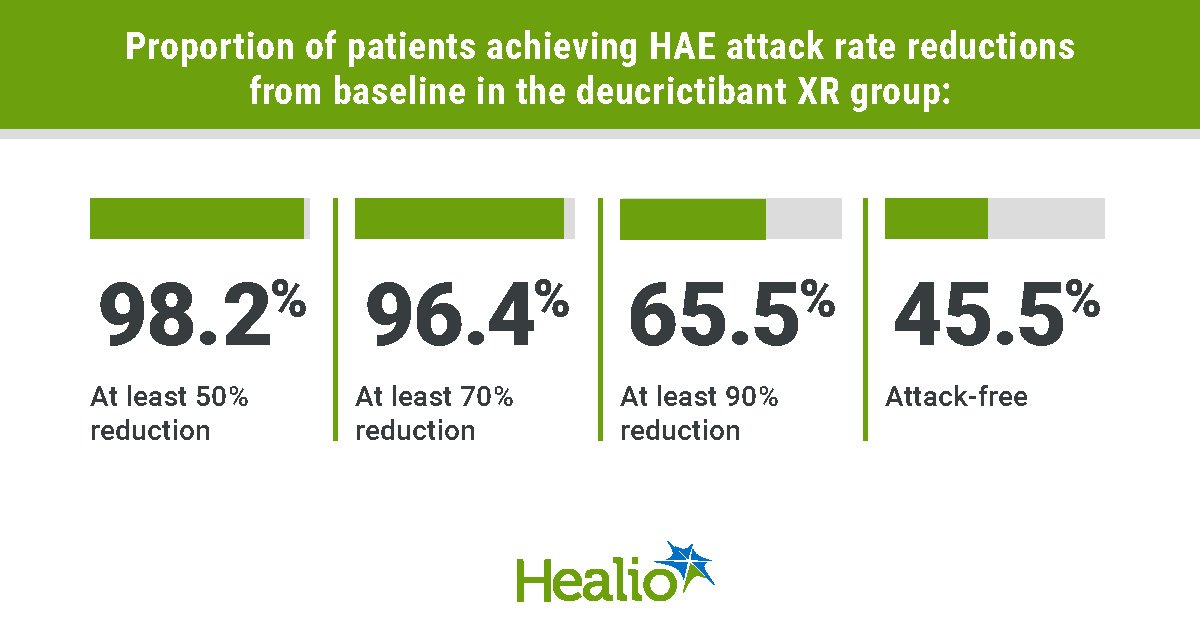
Patients with #hereditary#angioedema receiving daily #deucrictibant extended-release tablets as long-term prophylactic therapy had a reduced monthly attack rate vs. placebo of 83%. https://t.co/zsHSZ3mgH7
What if a tissue sample could help reveal which #cancertreatment is most likely to work for a patient?
Meet Julie Deutsch, MD, a 2026 CRI STAR at @JohnsHopkins, who uses #pathology and machine learning to match patients with the right therapy. https://t.co/VNaY0p2cDH
Arrowhead’s RNA therapy silences two genes simultaneously
https://t.co/ZCLLA0ulHD
Follow DDW; Business insights for the global scientific community
#RNA
🧶🪡⚔️💀☀️🐦⬛Puede que ellos protagonizaran los mitos. PERO ELLAS GOBERNABAN EL DESTINO.
Mucho antes de que Odín y Thor reinasen en el imaginario nórdico, hubo mujeres que bailaron alrededor del sol, diosas que gobernaron la fertilidad y la muerte, hechiceras capaces de alterar el futuro y seres sobrenaturales que decidían quién vivía y quién moría.
Siempre estuvieron allí. Poderosas. Imprescindibles. Ni siquiera los dioses escapaban de sus hilos.
Desde las misteriosas figuras femeninas de la Prehistoria hasta las bailarinas solares de la Edad del Bronce; de Nerthus y su carro, Freyja y Frigg a las völur, las valquirias, las dísir y las nornas, te invito a seguir desafiando todo lo que creías saber sobre el norte y emprender un fascinante viaje a través de la arqueología, la historia, la literatura, la mitología y el folklore para reconstruir el poder femenino en el mundo nórdico y descubrir cómo fue transformándose durante milenios.
✨Puedes borrar sus nombres de la historia. PERO NO PUEDES ESCAPAR DEL DESTINO QUE TEJIERON✨
Tejedoras de destinos es un libro en el que nos embarcarnos otra vez en la increíble —y no siempre amable o sencilla— tarea que es explorar para qué sirve la historia, cómo se usa y se escribe, y qué hay detrás de muchas narrativas y decisiones. Quiero que reflexionemos sobre el pasado, pero también sobre el presente. Porque, nuevamente, este libro va mucho más allá de sus protagonistas. Es para sentarnos a pensar en algo mucho más profundo y, para ello, voy a usar como hilo conductor aquello en lo que soy experta. Si en La huella vikinga fueron los vikingos y las vikingas, en Tejedoras de destinos vamos a usar a las diosas del norte de Europa. Y, como a los primeros, a ellas también les vamos a hacer justicia.
Gracias Sara, @RocaEditorial y @penguinlibros por darme la oportunidad de hacer esto TAN MARAVILLOSO y gracias a @jonaslaumarkussen por la portada de mis sueños.
🔗Ya en preventa y en librerías el 12 de noviembre.
https://t.co/tt9TyytYyN








![FLGenomics's tweet photo. Hereditary cancer NGS workflows are built to detect SNVs and indels. But what about clinically significant CNVs?
Join our webinar to learn:
- Why CNVs deserve closer attention in hereditary cancer testing
- How one lab integrated SNV, indel and CNV detection into a single workflow - What a large real-world cohort revealed about pathogenic PALB2 CNVs Register now: [link]
- How one lab integrated SNV, indel and CNV detection into a single workflow
- What a large real-world cohort revealed about pathogenic PALB2 CNVs
Register now: https://t.co/EGeFbVytfS](https://pbs.twimg.com/media/HS5G2q2XcAAHiI9.jpg)