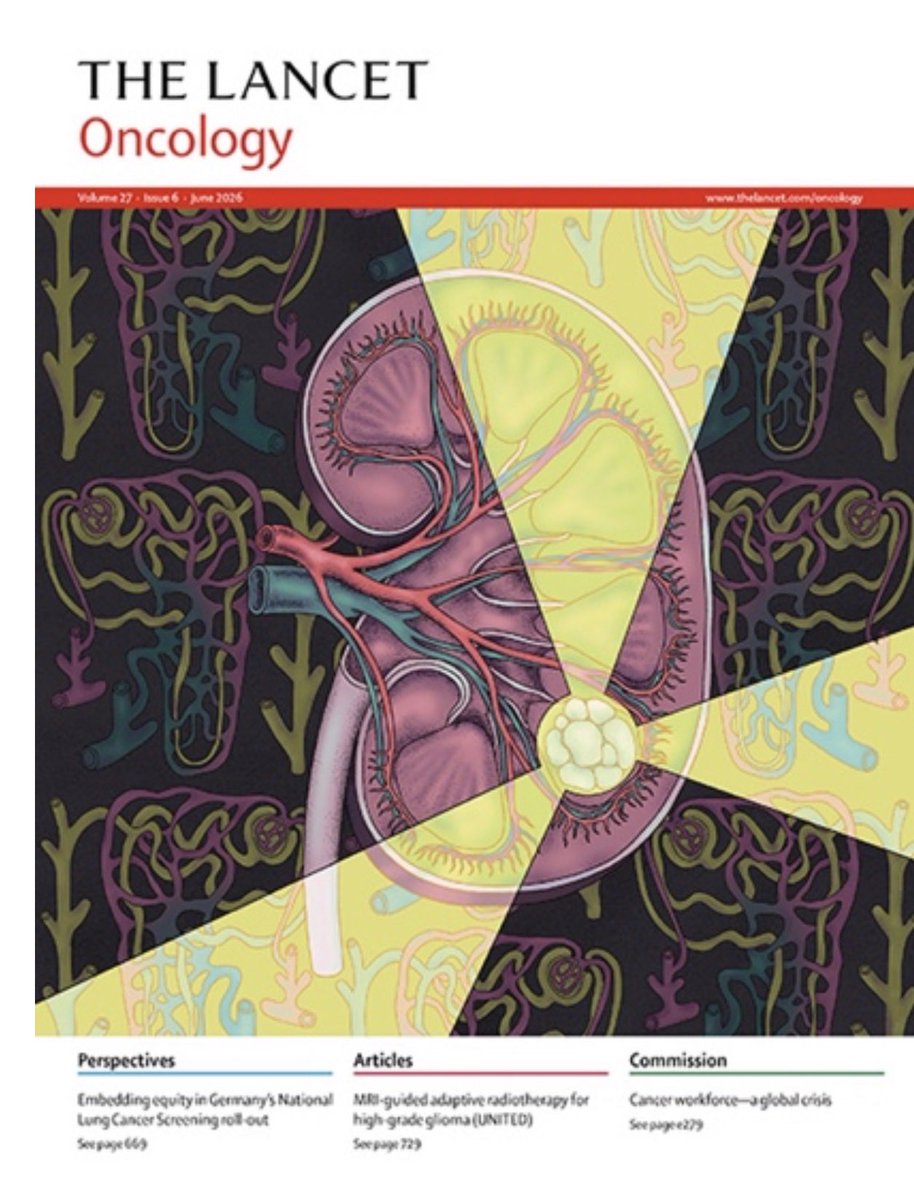
Kidney SABR on the front cover of @TheLancetOncol. A well-deserved recognition for @_ShankarSiva for his work and efforts over the past 10+ years.
https://t.co/07jeA1lQMb
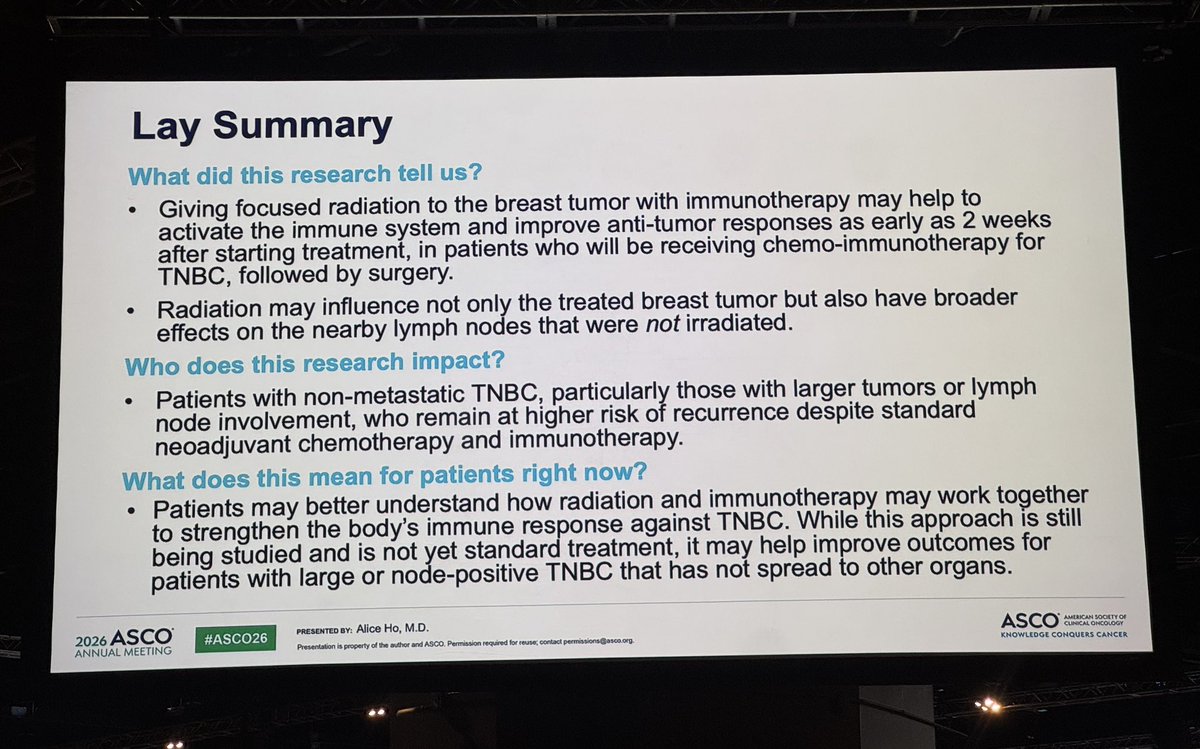
Promising results from the TNBC cohort of P-RAD: the addition of preoperative RT + pembro led to significantly increased T-cell infiltration and descriptively higher pCR rate c/w pembro alone. #ASCO26@TheTBCRC
The entire @Sunnybrook spine #SBRT team has come together to share 17 years of research and clinical observations in this review for @NatRevClinOncol. We are a true multidisciplinary team that have had a singular focus to develop the technique and evidence https://t.co/IHALJ97ZCa
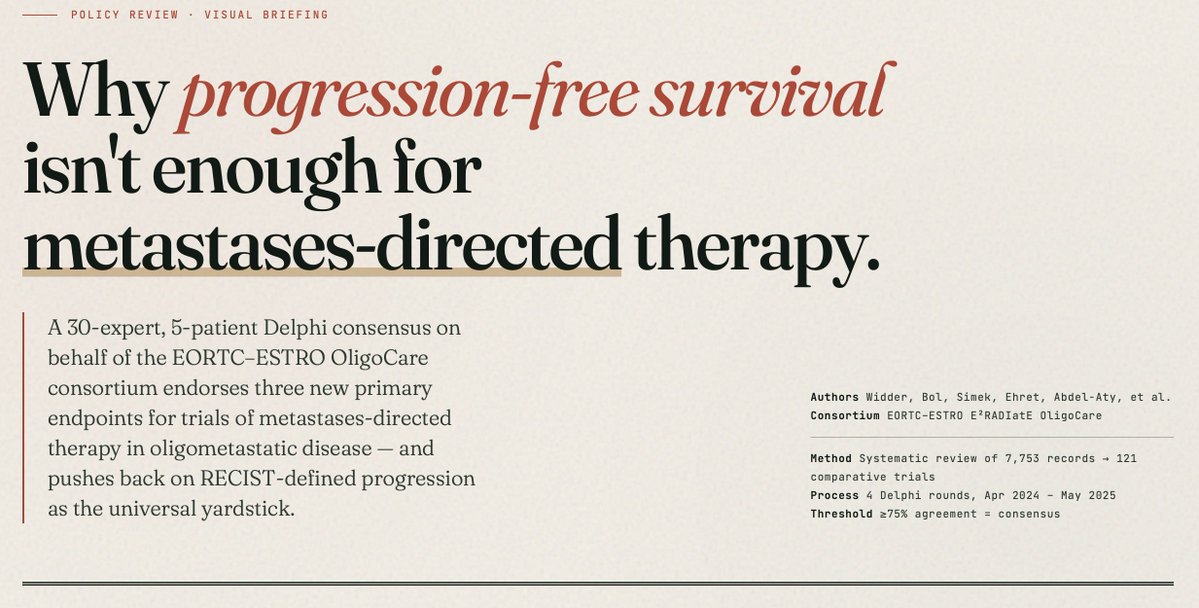
1/7 🧵 New in @LancetOncology: we built a Delphi consensus on primary endpoints for MDT trials in oligometastatic cancer — because the endpoints we've been using were designed for drugs, not for ablation.
On behalf of the EORTC–ESTRO OligoCare consortium.
🎉 After 3 yr of work, our paper is finally accepted in @IJROBP!
https://t.co/9IGKRfnkgG
MDT for breast OMD remains highly controversial — NRG-BR002, CURB, and EXTEND all came back negative.
So we asked: What actually happens when MBC progresses and can ctDNA predict it?
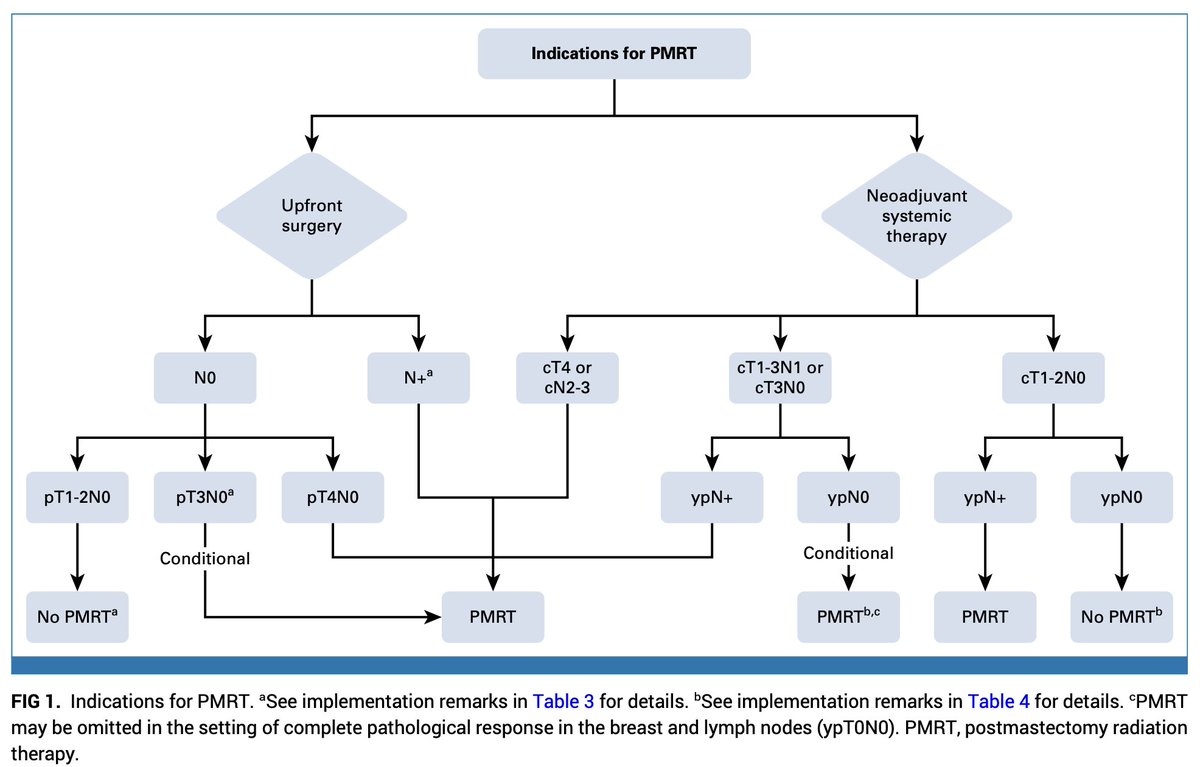
Postmastectomy Radiation Therapy: An ASTRO-ASCO-SSO Clinical Practice Guideline-2025
PMRT in ≥4 LN+, T4, residual ypN+; consider in cN1→ypN0 or T3N0; omit in T1-2N0 low-risk.
Hypofractionation is SoC, IMRT & DIBH↓ cardiopulmonary toxicity.
https://t.co/bymMnapHMt @OncoAlert
Exciting new data from the BWEL trial on @JAMAOnc!
A 2-year telephone-based lifestyle intervention achieved significant weight changes: -4.3 kg (-4.7%) at 1y vs +0.9 kg (+1.0%) in controls, among 3,180 women w/ stage II-III breast cancer and excess adiposity
🔗 https://t.co/b3X6ALWXh2
ctDNA analysis of SONIA published on @NatureMedicine. 34% of the patients had high ctDNA before entering the study, and derived a PFS2 benefit from an early (first line) use of CDK4/6-inhibitors. Patients with low ctDNA, instead, derived no benefit. https://t.co/9DMLLo8lOn
Important prediction modeling for patients with oligometastatic cancer based on distant metastases velocity (DMV). Great collaboration and proud to contribute our @Sunnybrook data. No doubt that #SBRT is critical to advancing outcomes for these patients. https://t.co/Ib1WK4x3kn
🔥⚡️🚀 Proud to be part of the PEACE V–STORM trial paper in The Lancet Oncology!
MDT vs elective nodal RT in oligorecurrent nodal prostate cancer.
Thanks to @PietOst, @ZilliThomas & team for the great work and for including me!
Free access:
https://t.co/HrIBFsm1iV
🔥 Supercharged Spinal Metastases SBRT: SIB Boost Scores High Local Control 🔥@OncoAlert
🎯 Objective
• Evaluate if GTV dose escalation via SIB-SBRT ⬆️ local control in spinal metastases without ⬆️ toxicity
🏥 Methods
• PH II, single-arm trial; 25 👥 (28 vertebral segments)
• 30 Gy to PTV; 40–45 Gy to GTV via simultaneous integrated boost in 5 fx over 1 wk
• VMAT/IMRT planning; MRI & neurologic exams at 3, 6, 12 mo
📊 Results
• 1-yr LC 100%; 2-yr LC 95%
• 1-yr OS 92%; 2-yr OS 72.8%
• VCF incidence: 1-yr 3.6%; 2-yr 15.6%
• N🚫 grade ≥2 myelopathy; only 1 case grade 2 pain
🔬 Clinical Relevance
High efficacy and acceptable toxicity support larger comparative trials!
‼️ GROUQ-PCS 9
CRPC: ADT + enza vs ADT + Enza + SBRT to the conventionally (CT/MRI/bone scan) identified oligometastatic sites
Primary endpt: rPFS =
4.6 years in the SBRT group and 2.3 years in the ADT and Enza arm, HR 0.5 (0.28-0.88)
https://t.co/3caK0UG8vi
@ISRSy guideline for SBRT to non spine bone metastases is published as pre proof in @RO_GreenJournal. Thanks to Dr. Tim Nguyen from London, Ontario, for leading this and @alison_tree from Royal Marsden, UK, and the guideline committee of global experts.
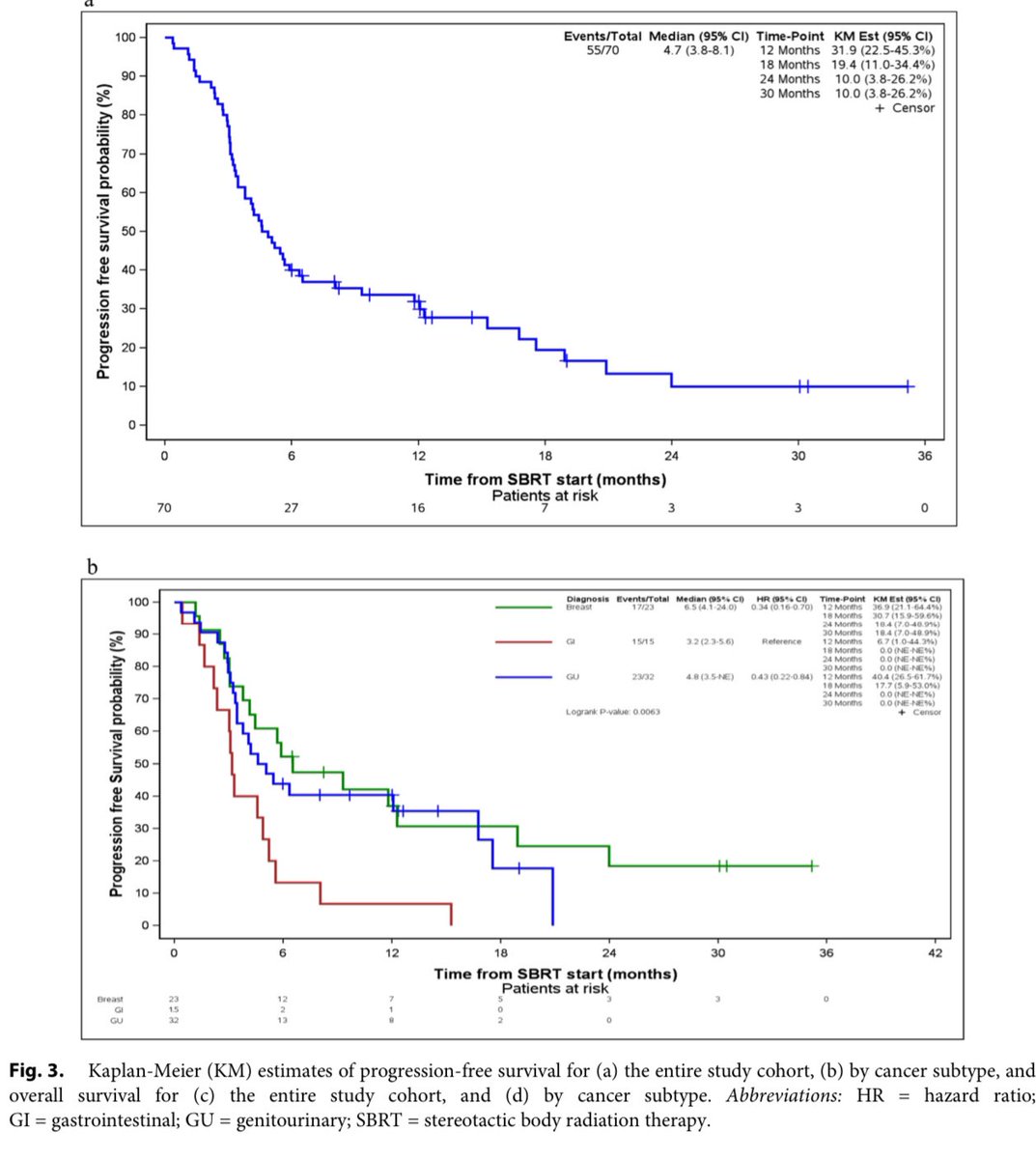
🎙️Can SBRT delay systemic therapy chances in oligoprogressive cancer? 🤔 @OncoAlert
🩺 Objective
•Assess SBRT’s ability to delay systemic therapy (ST) changes in 👥 with ≤5 progressing sites under ST
🔬 Methods
•70 👥 (GU, breast, GI cancers)
•Intervention: SBRT (1-5 fr) + continued ST
•Endpoints: ST changes, survival, toxicity, QuoL
📊 Outcomes
•ST Changes: Avoided by 46% at 1 year.🕒
•PFS: GU (4.8m), breast (6.5m), GI (3.2m)
•OS: GU 86%, breast 96%, GI 22% at 1 y
•Toxicity: Minimal side effects. N🚫Gr4+
Takeaway
SBRT offers a safe, effective option for delaying ST changes, especially in GU and breast cancers
#RadOnc #SBRT