Exciting to see how naturally DVA extends to new modalities! Most robot policies still learn without touch, even though it matters most when vision falls short: occlusion, contact, etc.
It was so much fun to see this come together, congrats @leooeld@AndrewEJXie@DaveLindell!
What can a robot do without vision?
We gave our robot a sense of touch and showed it can recognize and retrieve objects with its cameras blindfolded.
Introducing Rhoda’s new tactile sensor—it feels pressure, texture, vibration, slip, and temperature, just like your fingertips.
Continuing our RhodaAtWork series with another look at Direct Video-Action (DVA) in action.
This time, a single model handles multiple tasks across two home appliances: refrigerator EPS foam installation and washing machine drain hose routing.
More industries. More real customer work.
Introducing RhodaAtWork, a series on the customer workflows our robots are learning to handle across manufacturing and logistics.
First up: unpacking, scanning and stacking component reels for electronics manufacturing.
Rhoda AI checked whether scaling web video pretraining actually helps real robots, using a real customer task. Unpacking 10kg boxes of bearings and sorting the packaging.
Turns out yes. Bigger models do better, more pretraining compute does better, and the compute gap is widest when you don't have many robot demos.
Refreshing to see a company display this amount of rigour. Rare these days.
One of the most thorough studies I’ve seen on scaling laws for *real robots* doing genuinely hard tasks. Exciting to see scaling on general web video translates into better post-trained policies!
Does scaling pre-training on general web video improve a complex manipulation task in real deployment?
We scale model size and pre-training compute, and test on one industrial task.
Yes. The better a pre-trained model predicts web video, the better its post-trained policy. 🧵
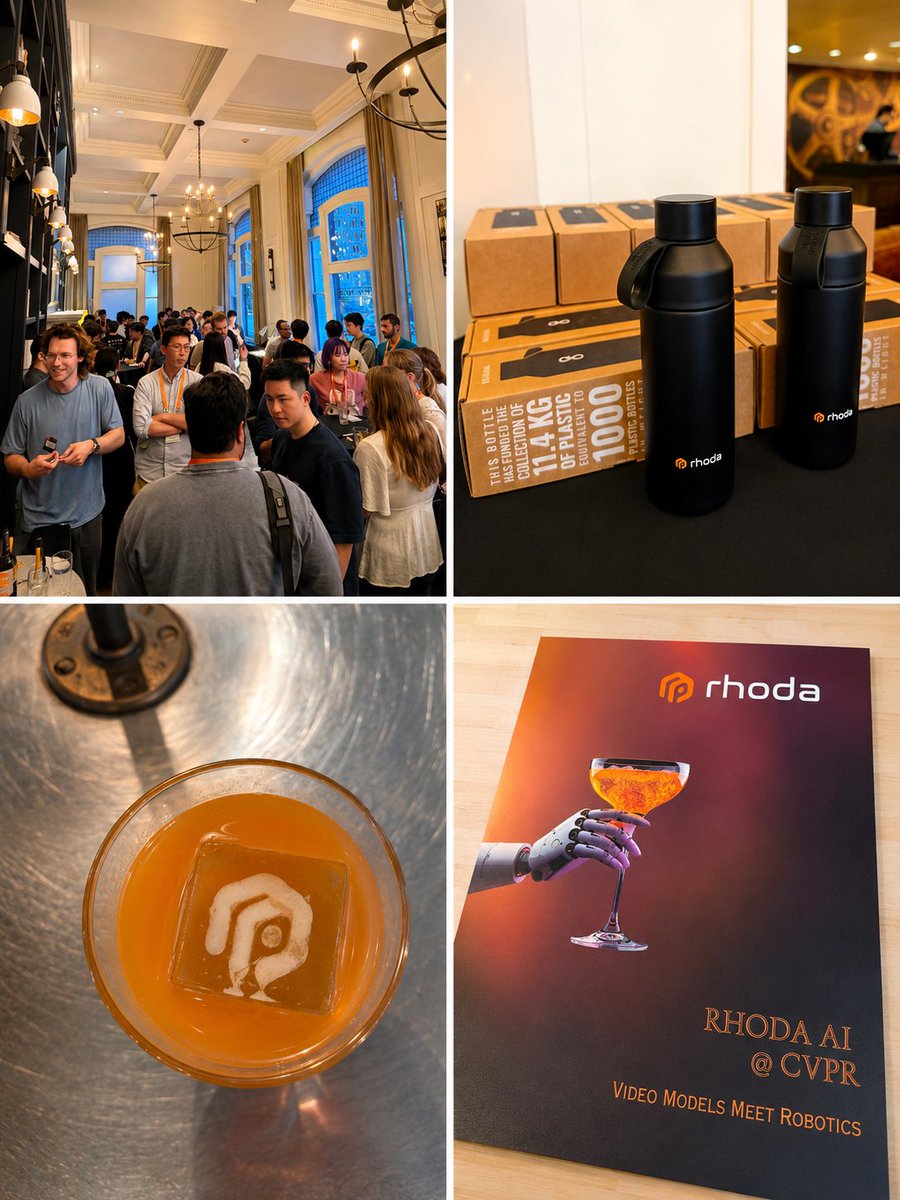
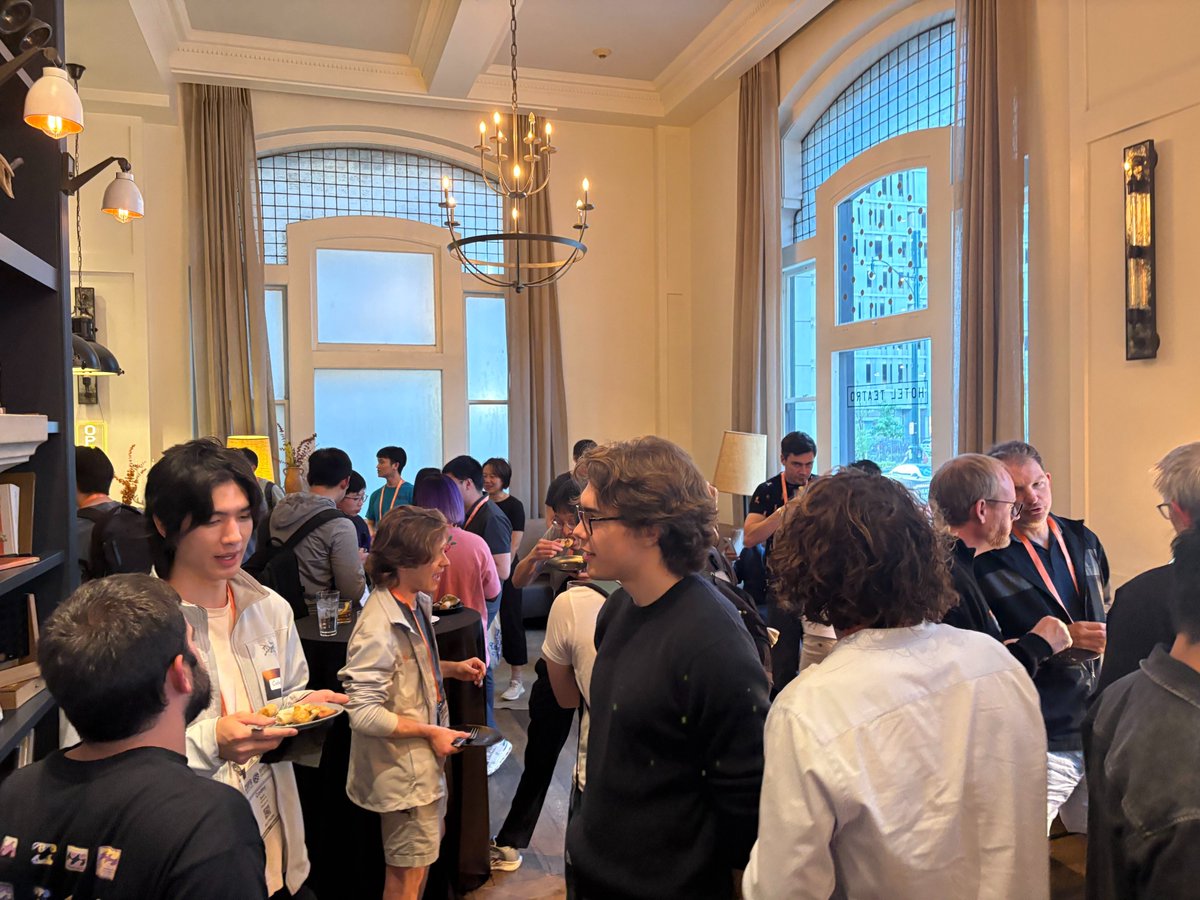
I'll be at CVPR next week (6/3–6/7). If you’re working on or exploring opportunities in video models for robotics (research or engineering), happy to chat 🤖
We’re also hosting a Rhoda party Thursday night with many of our technical team in town. DM me for an invite 🍻
Can a large foundation video model run as a real-time robot policy at the edge, on a single RTX 5090?
• ✅ No quantization
• ✅ No distillation
• ✅ Full denoising (all the way from noise to clean video)
We just proved it's possible. 👇🎬
Teaching a robot a new task typically means stopping operations, collecting teleoperated demonstrations, and retraining. That process takes hours at a minimum. We wanted to know if we could collapse it to seconds — from a single human demo, on the fly, no retraining required.
Early research preview: we can.
Well done to everyone who was recognized on Tuesday at the annual @gtcomputing award ceremony!
🏆Dissertation award: @joannetruong
🏆Outstanding faculty leadership: @nehakumar
🏆Donald V Jackson Fellowship: Sagar Sadak
🏆Marshal D. Williams Fellowship: Maulishri Bhandari
(1/2)
Announcing the 2nd Earth Rover Challenge: an "AI vs Gamers" global navigation competition (to be held #ICRA2025 in May in Atlanta)
Co-organized with researchers from Deepmind, Meta & academia
A thread 🧵 - 1/n
The 1st Earth Rover Challenge (3 AI teams vs 7 Human Gamers taking on real-world robotic navigation missions in 8 cities) has finally ended! Humanity prevailed (for now)!
Here's what went down in the 2-day competition held at #iros2024 - 1/n 🧵:
So proud of @shravika_mittal and @naokiyokoyama0 on being named to the second cohort of the @QuadFellowship! This fellowship recognizes the top international minds in STEM, and they've eached earned $40,000 for their research!
https://t.co/hjhKhuENb4
Excited to share that I defended my PhD and joined Meta in the Embodied AI team :)
Huge thanks to my advisors @DhruvBatraDB and Sonia for their incredible mentorship and support throughout this journey! ♥️