Fun idea from @bennstancil — That productivity gains from AI come from making work fun.
"What is AI for if not to make us productive?
But that's not the only way you can describe it. Because there could be another half to the story:
That AI makes the actual work actually fun"
PRDs are dead, specs and docs are dead..
Build real prototypes instead..
But, have we talked about how clean and efficient it is to just use AI to prototype in ASCII these days? ❤️
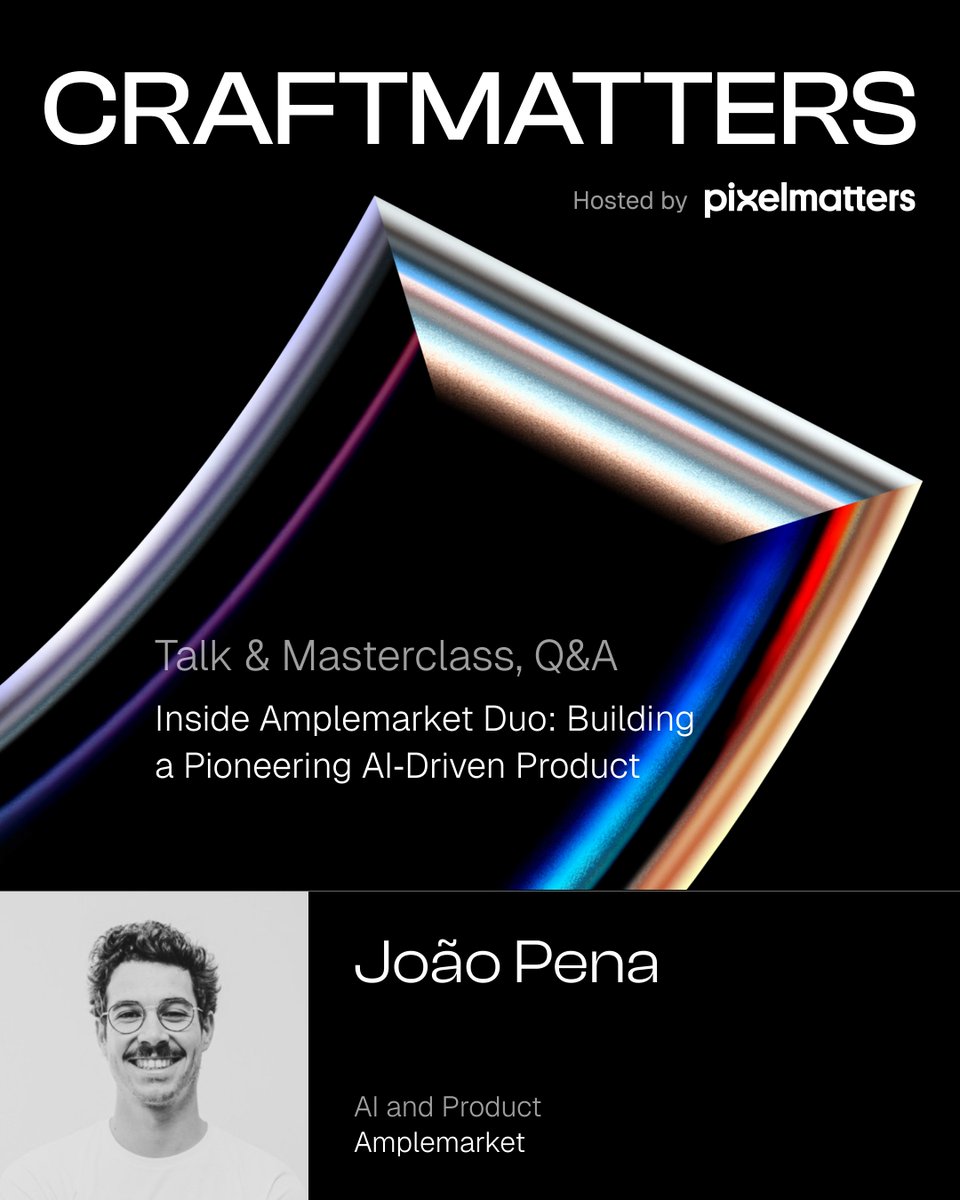
A massive thank you to everyone who attended Craftmatters 2025 and made it a day to remember! 💫
To the speakers who accepted our invitation and went on stage to share their wisdom and perspectives — we couldn’t be more grateful: @JooCamarate1, @joaompena, @HenrM_Cruz, @FabioMartins87, Marília Moita, @emanuelsa, @carvil_ , @dscape 👏
We left the room feeling inspired, challenged, and more connected to the craft than ever, and we hope you did too.
Craftmatters was a first for us, but definitely not the last. Until next time — let’s keep raising the bar, together. ✨
#Craftmatters2025
What happens when you stop building features and start building intelligence into your product?
@joaompena, Senior Product Manager at @amplemarket, is helping reshape how modern go-to-market teams work by shipping AI-native products that don’t just assist users, but accelerate them. From prompt engineering to onboarding flows that write themselves, João brings a hybrid mindset rooted in product, design, and engineering. 🧠
At 𝐂𝐫𝐚𝐟𝐭𝐦𝐚𝐭𝐭𝐞𝐫𝐬 2025, he'll lead the masterclass “𝐈𝐧𝐬𝐢𝐝𝐞 𝐀𝐦𝐩𝐥𝐞𝐦𝐚𝐫𝐤𝐞𝐭 𝐃𝐮𝐨: 𝐁𝐮𝐢𝐥𝐝𝐢𝐧𝐠 𝐚 𝐏𝐢𝐨𝐧𝐞𝐞𝐫𝐢𝐧𝐠 𝐀𝐈‑𝐃𝐫𝐢𝐯𝐞𝐧 𝐏𝐫𝐨𝐝𝐮𝐜𝐭”.
If you’re building with (or around) AI and want to hear from someone in the trenches — this is your session.
📍 Join us at Craftmatters 2025 → https://t.co/SdnSTX6QIK
🎟️ Tickets going fast!
People talk about how AI is going to make design obsolete, and/or make pixel perfect designs not be a thing anymore. I don't think so.
Pixel-perfect design mostly existed in designers’ minds anyway. The mocks might perfect but the final product rarely was. Most of the time, those designs were shipped sloppily because the product organization didn’t have the patience to see the polish through. How many truly pixel-perfect products do you see out there?Especially with growth focused companies. There are exceptions, but not many.
The idea that AI might ruin visual quality feels like a non-issue since wasn’t much quality to ruin in the first place.
I also don't believe AI makes design obsolete but I believe it will raise the floor. That it’ll lift the skill level of product teams, and I hope it will free up time for the kind of polish that usually gets cut. So ideally we continue see more overall better design and the more "handcrafted" polished designs as well.
My general view of AI is that it will just let us do more things, not take away things. We didn't stop writing less when email was invented.
Few aspects:
1. AI as a skill multiplier. LLMs can elevate frontend and design quality for companies that historically couldn’t hire strong talent—or for individuals who haven’t built those muscles yet. In a way that way, it’s not that different from using UI kits, Tailwind, or shadcn.
2. Rethinking design systems. Design systems were a product of the ZIRP era, when teams scaled quickly and you couldn’t trust every person to design and build a decent button. So systems enforced quality through components and rules. But AI flip can this, and Instead of assembling rigid blocks, you can quickly build good scaffolding and refine with AI or by hand. LLMs might even enforce standards even better than design systems because they could be trained to spot inconsistencies and fix visual bugs automatically. The kinds of things that usually get deprioritized.
3. Designing closer to code.
I think AI will allow us to design more in code. I think it’s a good thing if we move away from pixel-perfect Figma files. The way I’ve always designed: Figma is where you design the vibe. Code is where you make it perfect. The real product is the one in production, not the mock. So that’s where polish should happen. Future design tools should make that process easier.
4. Taste still matters. For teams that already care about design, teams like @linear, none of this really changes the hard part. Achieving a polished UI is not that hard if you just have the practice. The hard part is conceptual. It’s figuring out how features fit together, how ideas map across the system. That’s where most of the iteration happens. That’s the part AI still can’t do for you.
So yes, AI will make things faster. It will increase the volume of output, but maybe it will also shift the baseline.
Holistic quality still depends on taste, systems thinking, and the willingness to care about the final experience.
@bmfteixeira Yup! My bet is that the most interesting agent like interactions will actually happen thru a more “robots.txt” like interface like MCP. But for sure not all flows and apps will be ready for that and that’s where those more skeuomorphic interactions will have to step in
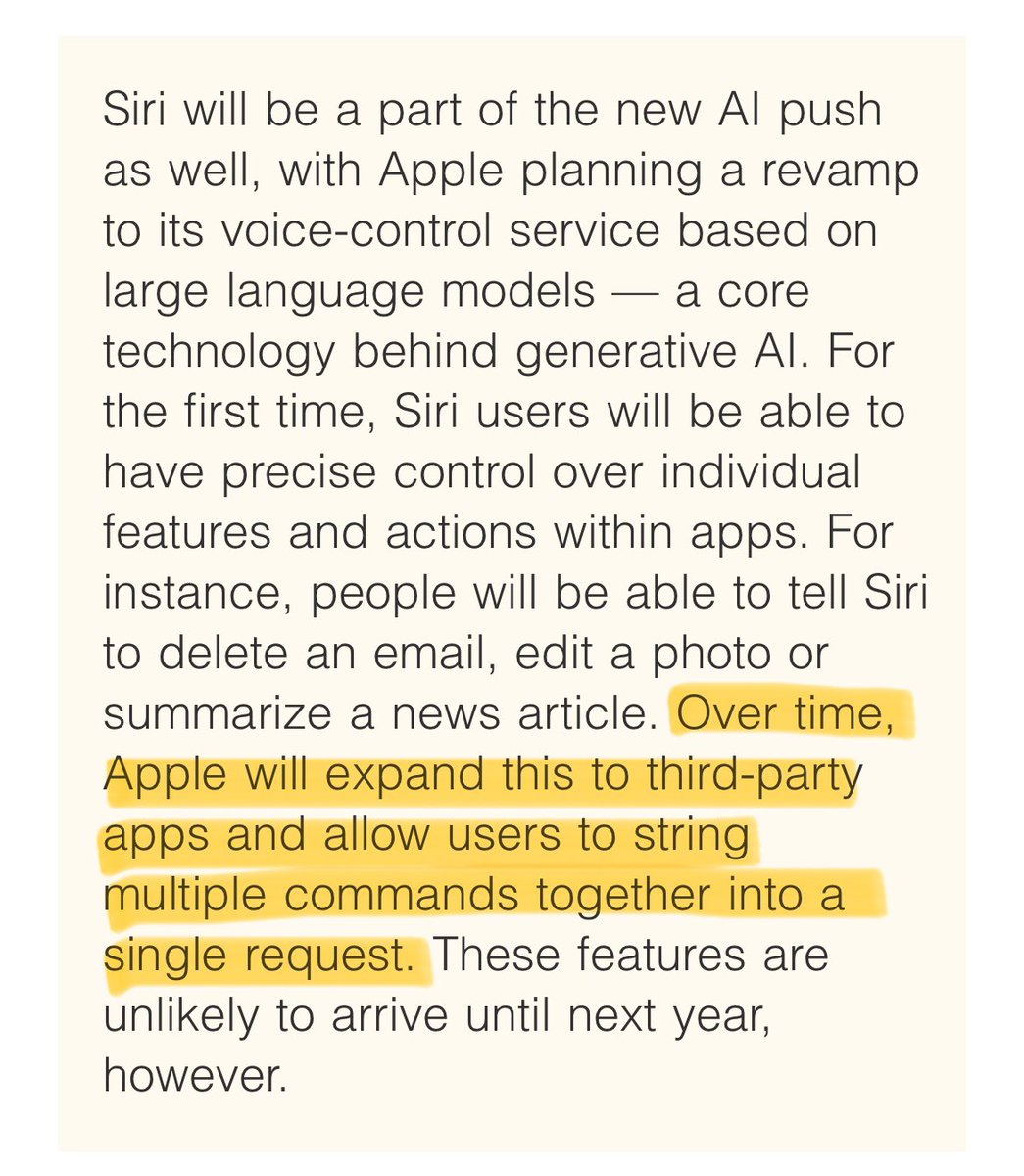
A Siri style tool one could easily plug into their own website or app (think as easy as plugging an Intercom helpcenter) to help users complete any arbitrary action would be a damn good product
@bmfteixeira Yup I agree. More actions being taken for you on the background (see Superhuman’s latest launch https://t.co/nGaFcT5chO) and much less having to click through interfaces to get work done 👍 All very exciting if you ask me :)
The next evolution of Superhuman AI 💖
Superhuman AI already helps you read, write, schedule, and search faster than ever before.
And today, it is getting so much better!
We are thrilled to announce our biggest evolution yet… 👇👇👇