@DdelAlamo@nanogenomic Same issue in TCR–target complexes. Non-binders can get high ipTMs and static interface energies (e.g. Rosetta) on Boltz-2 structures, poorly separate binders from non-binders. Possibly a bias issue: the models learn what binds, but have a much weaker notion of what doesn't.
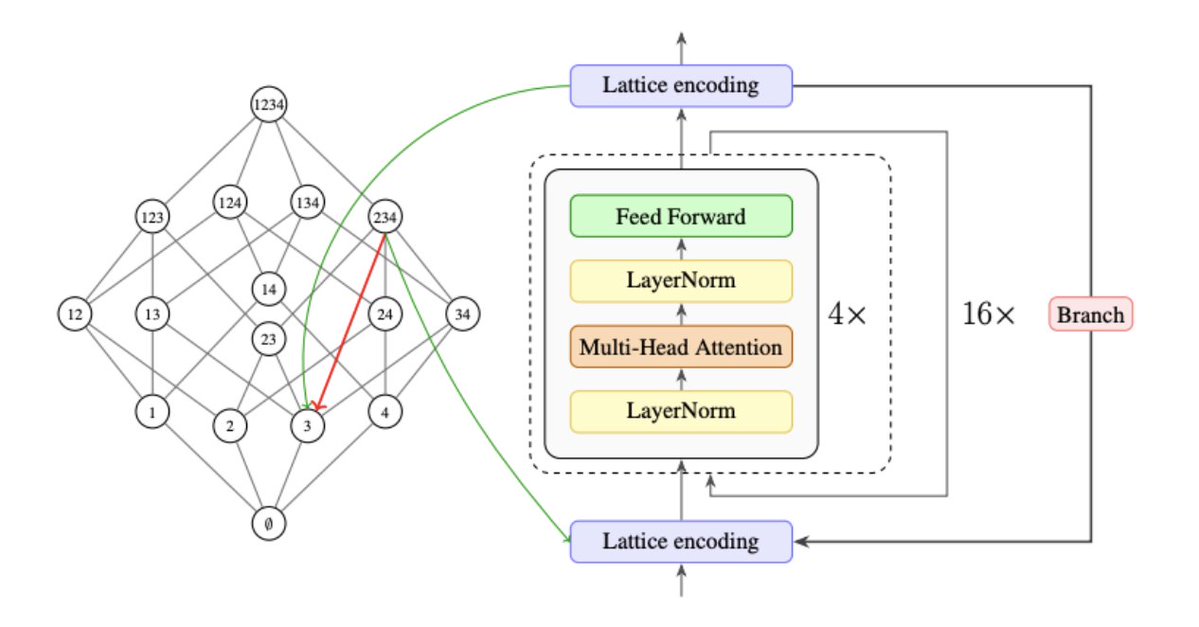
Introducing Lattice Deduction Transformers: An 800k-parameter looped transformer that reasons like a SAT solver achieves 100% on Sudoku-Extreme with only 15 minutes of training.
A collaboration between @axiommathai, @AmherstCollege and @BarnardCollege.
Training protein structure prediction models should not be restricted to well-funded companies/labs
If you're an independent researcher in this area, check out NanoFold on HuggingFace
10k chains, sampled to ensure generalizability
Preprint coming soon
https://t.co/9edb22KOuR
@mathhub_vn Sure 😂. Besides, it looks like in America they teach some very obscure math topics, such as: Diatistics, Yestors, Electromogratical, Bos, Cryotography, and Thpology. We definitely don't have those in Europe.
MINT32: A Minimum-Image INT32 Coordinate Representation for Fast and Accurate Molecular Dynamics on GPUs #MolecularDynamics
https://t.co/lPzU0DDKt2
#JCIM Vol66 Issue8 #compchem
@WokeFloridian@beffjezos Chill out, my boy. I think you need some ice cream… and a web browser too. You know, those magical apps with the fat white rectangle where you type a question and they give you information. People usually use those to avoid confidently spitting nonsense. But you do you.
@beffjezos Haters come and go, but this one feels very specific. I think some of us may have missed something. Would you feel comfortable sharing what happened?
@pmddomingos Fuck yeah. And nothing says "making the world a better place" quite like deciding to help out Venezuela, Greenland and Iran! Everyone's just loving it 😍🎉🥳