1/7 We are pleased to report the 2026 VDJdb release, just published in Nucleic Acids Research: 203,230 TCR:pMHC records over 2,090 epitopes and 236 MHC alleles, 37-fold the first release, 4-fold our 2022 COVID-19 compendium.
#immunology#bioinformatics
https://t.co/8AgCLYy3JF
@nntaleb@karimbitar Immunology? I've seen this from the side of making yet another deep transformer model that learns batch effects. Swamped by mishandled/dirty data and clinical records - definitely.
1/7
How should we choose an appropriate FDR control method for omics data analysis?
Sequencing-based and mass spectrometry-based omics have developed different approaches, often relying on different assumptions.
Our new Comment in @NatureBiotech:
https://t.co/P90Vp3BiNZ
One map to find them all transposons
New research in the November #G3journal issue provides a correlative map as a critical baseline for understanding the functional impact of transposable elements and their interactions. 🔗 https://t.co/vuJzoHBdJ6
📷️ Daniil Nikitin
Targeting neoantigens, the proteins or peptides on the surface of cancer cells, is the basis for personalized cancer vaccines. What is the ideal neoantigen? @Cancer_Cell https://t.co/fa8dXOV6Sm
Which model can best distinguish which TCR-pMHC pairs show validating reactivity? Very excited to find out!IMMREP26 is now live and will be running until 2nd November!
https://t.co/e8vKZOzzR3
Filling the massive AI drug discovery data gap
https://t.co/kUk1Tz3C3T
Charlotte Deane, co-leader of the OpenBind initiative, discusses the need for more protein–small molecule binding data
The trogocytosis plot of T cell-B cell interactions thickens!
T–B interactions yield CD3+ B cells and CD20+ T cells with pathogenic features in multiple sclerosis
https://t.co/04h0z1rz6j
The emerging reproducibility crisis in AI-driven biomedicine will only intensify unless the community redefines multiomics data quality https://t.co/EMBmmfKYNe
https://t.co/TUtIcjYjaz
@3DiMMUNE If I'm not mistaking last update on progress with this (or similar project from Adaptive) is https://t.co/R0UqoUiLlT Still TRB only I suppose, similar to Emerson et al 2017 Nat Genet with more complex statistics
Can we predict which T cell receptors will recognise which targets?
That's the challenge being tackled by team MATCHMAKERS.
Their latest research has shown that this may be more feasible than previously thought. Their work, built on a rigorously validated TCR dataset, reveals early predictive capabilities.
There's still much more to do, but findings like these are helping to lay the foundations for a future where data-driven approaches can accelerate progress against cancer.
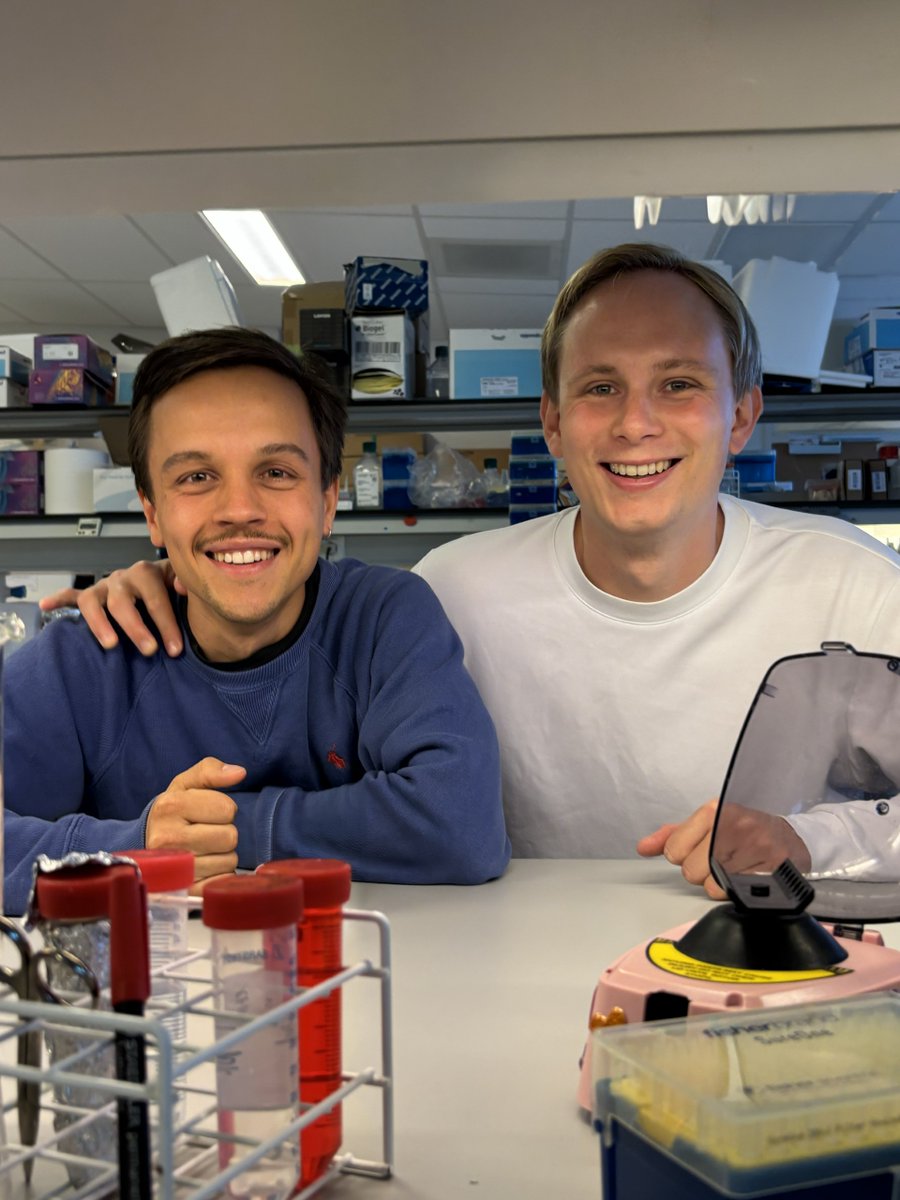
Congratulations to @MariusMessemak1 (pictured right), Bjørn Kwee (pictured left) and Ton Schumacher from @NKI_nl, and all collaborators for publishing this latest research in @ImmunityCP.
🔗 Read the paper: https://t.co/h3T0XUxZEq
Hi, we would like to introduce PAIR-Scan, an HLA-agnostic library-on-library screening technology that can identify reactive TCR–antigen pairs with optimal killing activity among up to ~100,000 possible candidate pairs in a single-step.
🧵(1/7)
https://t.co/oPHVCp0JCP
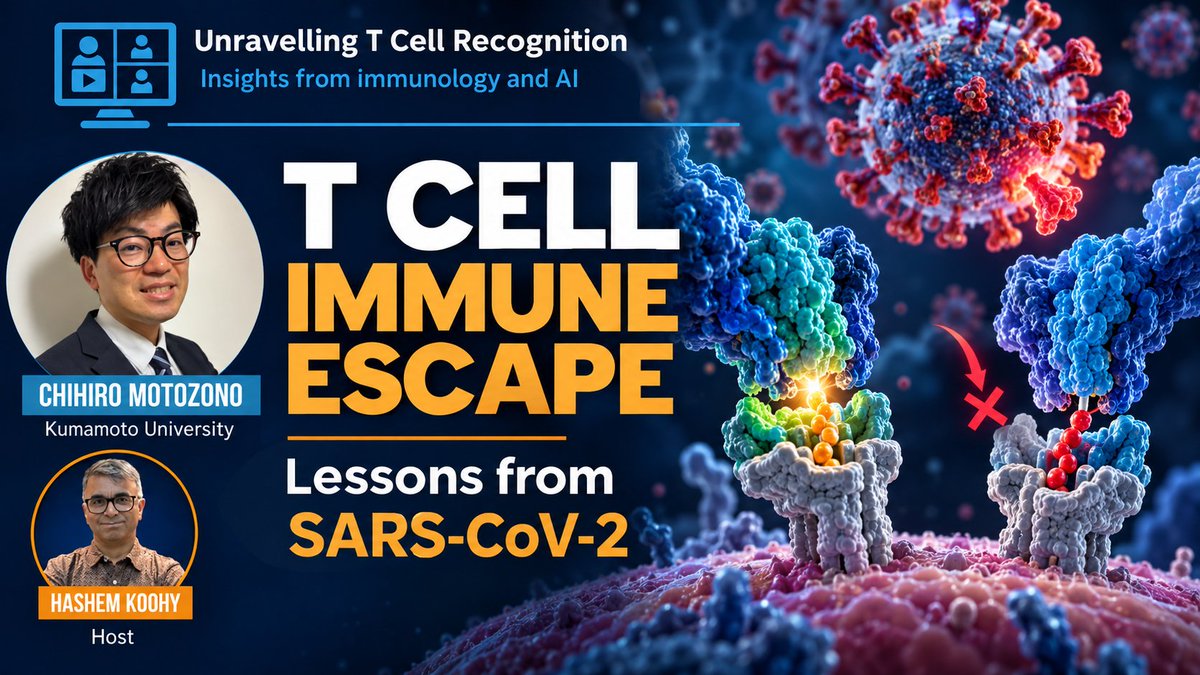
Missed our latest Unravelling T Cell Recognition seminar?
Prof Chihiro Motozono, discusses the molecular basis of T cell antigen recognition and immune escape in viral infections, with lessons from SARS-CoV-2.
The full seminar is now freely available 👇
https://t.co/6NK5LM0PYu
Anthropic's discovery of array-associated reverse transcriptases?
Turns out it was already done by a Danish scientist. He used Claude for administrative tasks, but not in an agentic manner for the discovery. He already filed a patent and gave talks on it
https://t.co/kR1pZQqKoT