Breaking: New study using observational constraints projects that the Atlantic Ocean circulation #AMOC will weaken ~50% by 2100, even for medium emissions and without Greenland melting. Seriously bad news.
https://t.co/PZTZJlqsFN
Butterfly populations across the U.S. are in alarming decline, according to a 2025 Science study, with total abundance falling by 22% in just 20 years.
Such widespread and worrisome losses portend broader environmental threats and emphasize the urgent need for conservation action. https://t.co/Un9IacvMKN #ScienceMagArchives
For the second consecutive year, winter sea ice in the Arctic reached a level that matches the lowest peak observed since satellite monitoring began in 1979.
On March 15, Arctic sea ice extent reached 5.52 million square miles, @NASA and @NSIDC report. https://t.co/ZzCduqnQfM
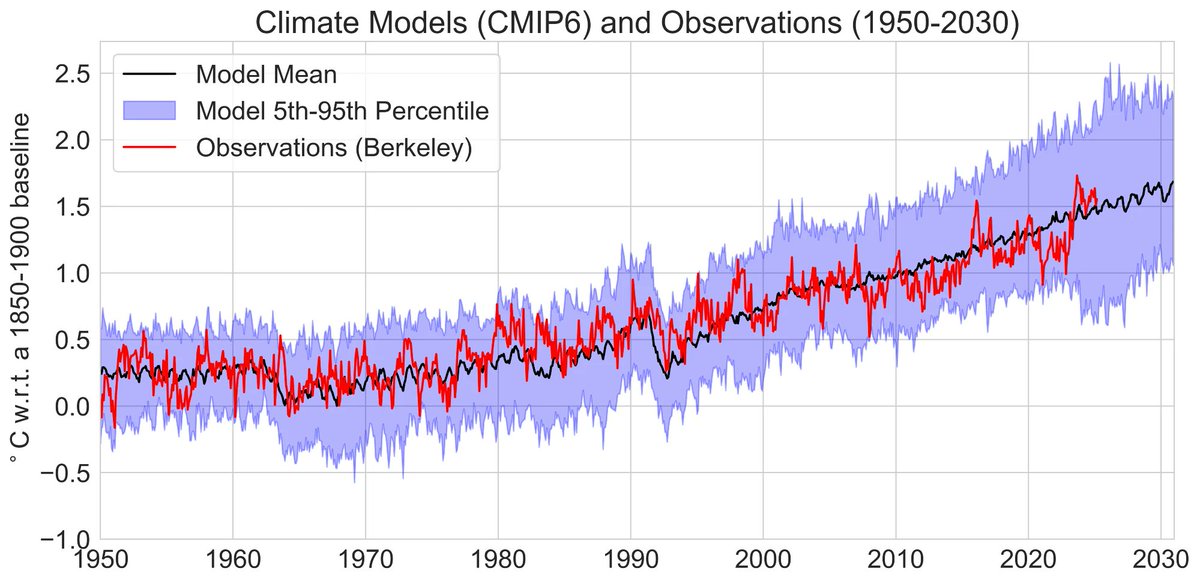
@HillStarry@MrMatthewTodd Over the past 10 years the observations are remarkably consistent with the standard (#CMIP6) model projections, including the 2023-2024 El Nino-driven global temperature spike. Watch this space for more on this soon...
Not to sound like a broken record but... Over 200 new record high temperatures are forecast this week. 🥵
Record warmth will persist across portions of California, the Southwest U.S., the central Great Basin and will return to areas of the central/southern Plains and mid-lower Mississippi Valley later this week.
Stay cool this week, check https://t.co/qk3BcVP5M8.
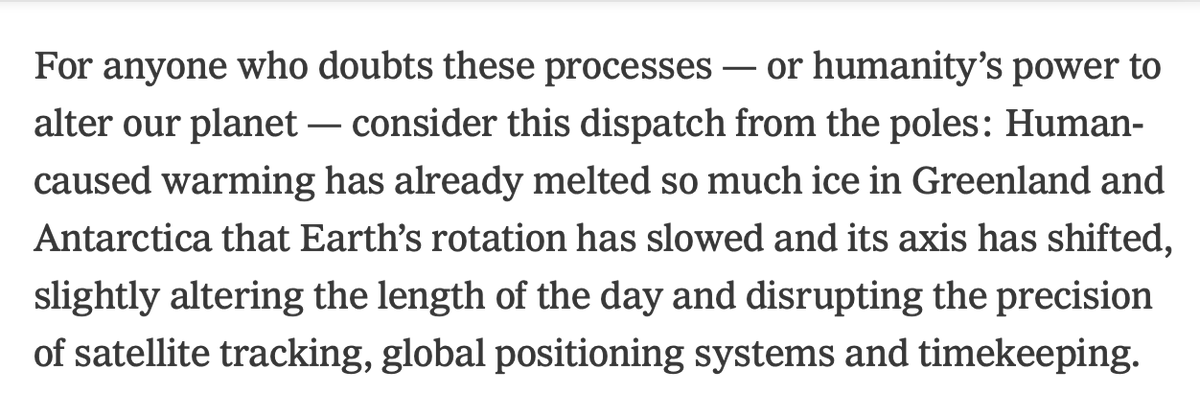
"Human-driven climate change is slowing Earth's rotation at a rate not seen in 3.6 million years" by @SIPappas for @LiveScience: https://t.co/NGg6BxEfj1
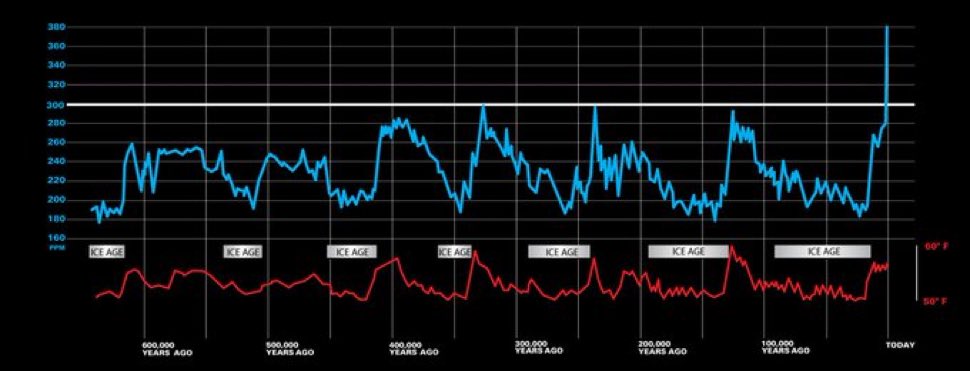
Climate deniers keep posting ice-age graphs as if they weaken the case for CO2. They do the opposite.
If tiny orbital changes can help flip the planet when amplified by feedbacks, that’s evidence of a high-gain climate system — not a low-sensitivity one. CO2 is part of the amplifier stack.
New study finds the current heat wave in the West would be "virtually impossible" without human-caused climate pollution. We're on the verge of breaking an all-time March heat record for the US today/tmrw. https://t.co/vzwUAMlizv
🚨: This isn’t our Galaxy. 😳
You’re looking at billions of stars in the Andromeda galaxy, captured by the Hubble Space Telescope—and almost every one likely has planets. Let that sink in.
@aimezcreer@PIK_Climate@rahmstorf Do us a favor: look at the money poured into what’s been warming the planet for a century and compare it to climate change research funding and get back to us. Thanks.
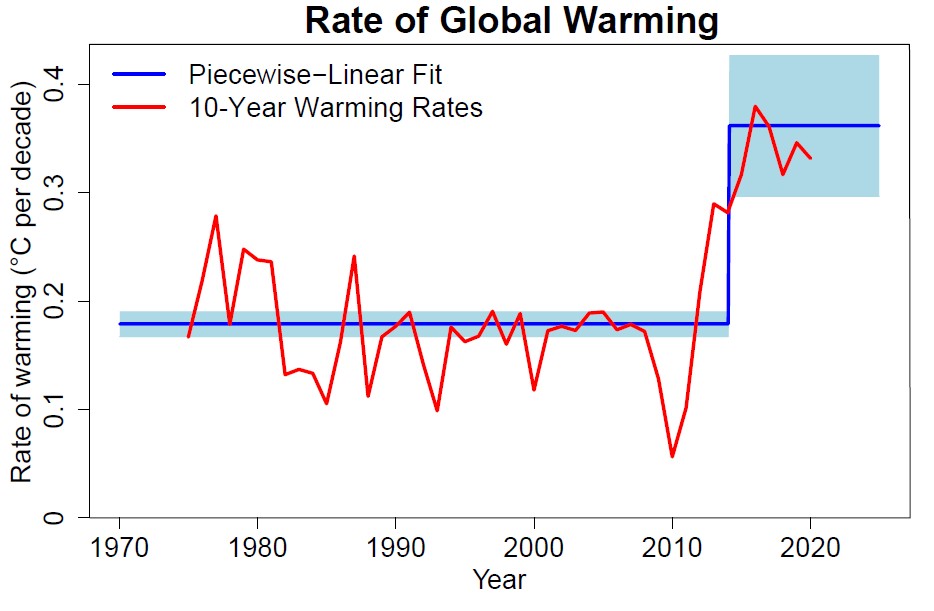
Significant acceleration of global warming since 2015, finds news PIK study with @rahmstorf
Recent warming: around ~0.35°C per decade.
1970–2015 average: just under 0.2°C per decade.
➡️Current rate is higher than in any decade since records began in 1880.
https://t.co/rmpIWmg4K6
"Warming has already melted so much ice in Greenland and Antarctica that Earth’s rotation has slowed and its axis has shifted, slightly altering the length of the day and disrupting the precision of satellite tracking, global positioning systems and timekeeping."