Open Source is winning bigly
Tokens will be 100x cheaper in 24 months
You’re going to run 50% of tokens on your local hardware unmetered
@Dell, @nvidia and @Apple are the big winners in this trend
Since the main current intervention for menopause needs to happen around age 25 and is extremely expensive, it seems relevant to even Gen Z to think about this immediately
Every woman on earth should be demanding solutions for menopause - your heart, your bones, your connective tissue, beauty, mental health, intellect - And no one tells u about this
Whoever invests in this now will be rich. Please God spare the millennials
I worked on light reactive proteins in grad school, so Andrew reached out to me about this. Really interesting unappreciated discovery of magnets affecting quantum biology.
Seems like it is going the pharma route because otherwise biotech money is hard to get, damn
Keeping our biotechnology industry on shore is a bipartisan issue !
Great to be in DC today and see the awesome leadership from @RepMoolenaar and @RepDebDingell — love to see US Congress helping protect strategic US jobs and technology. This is how it’s supposed to work ! Let’s add biotech to the COINA Act list!
Frustrating part of AI models for bio is lack of clarity in what types of data we should be collecting and the sampling rate that provides biological significance.
If you look at autonomous driving, progress in that field wasn’t just due to algorithms. Companies had a lot of continuous training data.
Imagine training a self driving car with some snapshots from intersections. This is close to the types of data we currently have in biology (sparse snapshots and yet ppl are trying to dynamic systems).
Need more/different types of data (more tech?tools?), better sampling rate in many cases (including more informed ways of modeling it).
If we have a country full of PhDs in a data center, those PhDs are going to want to run empirical experiments. Interesting business idea: bring together a bunch of scientific equipment and then charge for it per use via API.
New Science Blog: Why has AI advanced faster in coding than in biology?
To agents, bio databases are like cities built before cars—maddening to drive in because they're designed for different traffic.
How do we build infrastructure agents can use?
https://t.co/PQaNQ4GRJZ
An interesting constraint for theoretical binder design is limiting the amino acids that can be used.
In this example, ESMFold2 was tasked with generating potential binders for GLP-1R using only:
- 8 amino acids: SALTYGEK
- 6 amino acids: YAKLEG
- 3 amino acids: LEK
The goal for the design was just to place candidate mini-proteins near the GLP-1R extracellular-domain groove where semaglutide/Ozempic contacts. Fun to see the structures that resulted!
Codex put together this nice presentation of the results.
Everyone in tech talks about building unicorns. We’re literally making one
The first directly gene edited horse embryos in history. The initial step.
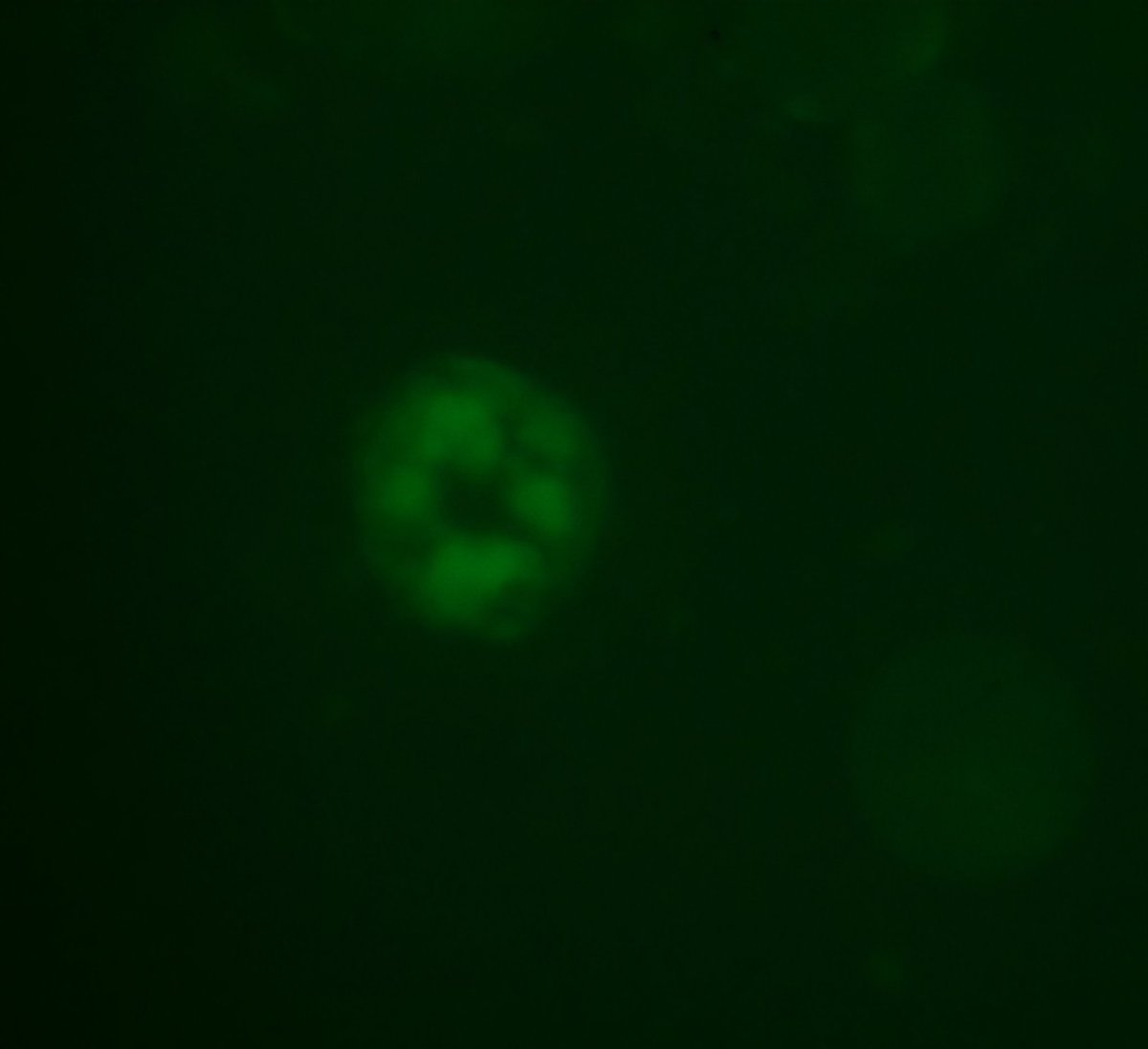
Fluorescent jellyfish gene(GFP) inserted into MC1R at zygote stage using multiple techniques
I have never been this bullish on biotech.
- peptide adoption going vertical :what started in grey markets is now heading toward federal policy in under 18 months
- the first human trial designed to reverse cellular aging is running right now. Results expected this year.
- AI is designing drugs that are outperforming anything a human research team has produced
- RAS just got drugged after 40 years of scientists calling it undruggable
by the time these reach the consumer at $100 a pop, the window to move early will already be closed.
that's exactly why Superhuman Fund II is backing this wave now.
Characterizing AI-designed proteins requires quantitative biochemistry at massive scale. Enter Amplicon/Protein Bead Display (APB-Display), a fully in vitro platform that quantifies Kd's for >100,000 variants in <3 days (preprint link below!) @Stanford_ChEMH@czbiohub (1/n)
AI for structural biology: given the right harness, tools, and compute, your preferred AI agent can tackle tasks such as building a protein structure from a cryo-EM density map.
In this case, Claude assembled a structure, compared its reconstruction to the published structure, then used ChimeraX to create these visuals and make this short presentation video.
Training protein structure prediction models should not be restricted to well-funded companies/labs
If you're an independent researcher in this area, check out NanoFold on HuggingFace
10k chains, sampled to ensure generalizability
Preprint coming soon
https://t.co/9edb22KOuR