New preprint! 🚨
Why has maximal human lifespan barely changed while median lifespan has doubled?
We used a mechanistic mathematical model of aging to find that fundamental aging rates are strikingly conserved across individuals and over time.
https://t.co/9jARhFWnP8
🧵1/n
What if RNA had a molecular twin?
Our new study w/ the Bedford Lab (MD Anderson) shows poly(ADP-ribose) (PAR) competes with RNA for the same proteins—creating RNA–PAR crosstalk.
Unlike RNA, PAR’s info isn’t in sequence but chain length.
🔗 https://t.co/0WIjbkiHb7
#PARcode
1/ Excited to share our new study with @Brumbaugh_JB, now out in @NatureBiotech! P-bodies selectively sequester RNAs encoding cell fate regulators, often from the preceding developmental stage. Releasing these RNAs can drive changes in cell identity. 🧵https://t.co/D7fnkJgNQ6
Simultaneous measurement of intrinsic promoter and enhancer potential reveals principles of functional duality and regulatory reciprocity https://t.co/LeXnsRNbEc #biorxiv_genomic
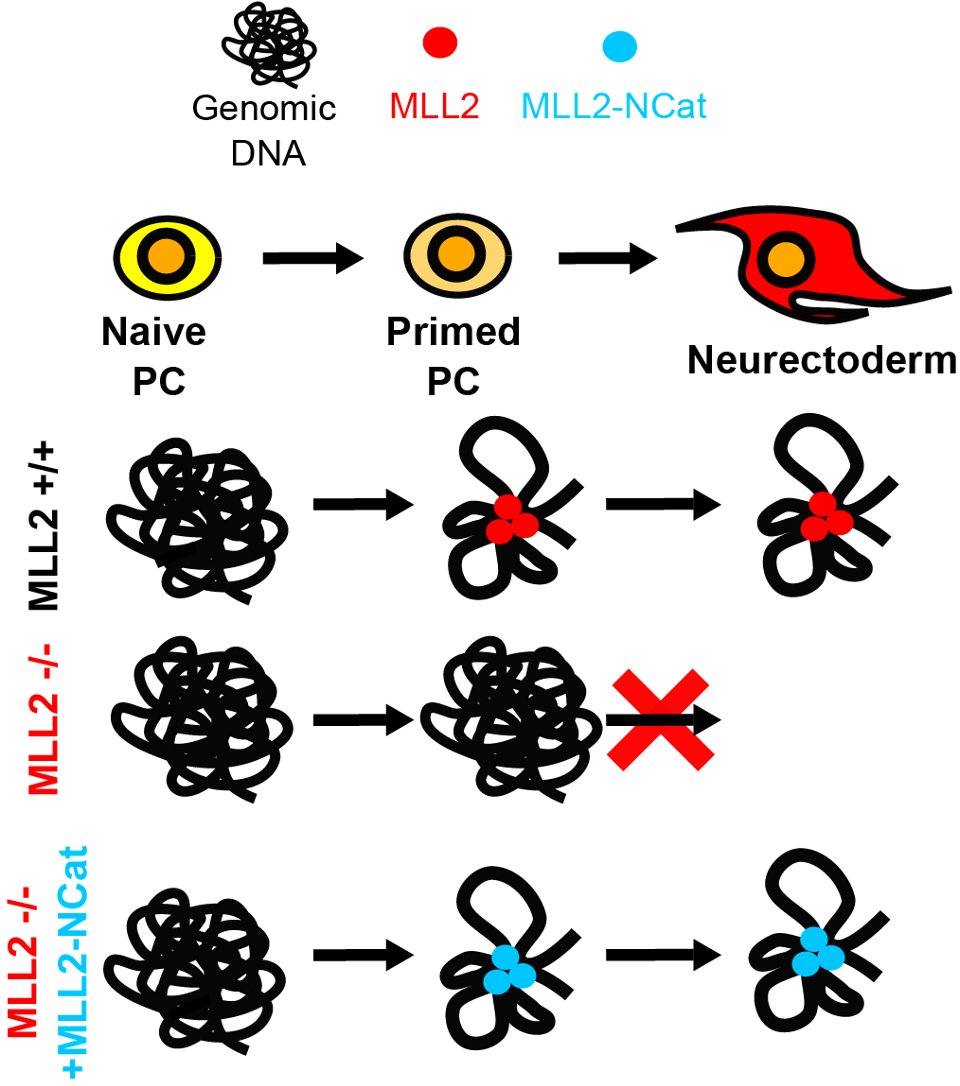
New #preprint from the Basu & Stewart labs! We discover a non-catalytic role for H3K4me3 methyltransferase MLL2 in modulating 3D chromatin organisation and mobility as pluripotent cells are primed for differentiation.
https://t.co/iuBeiP6b5H
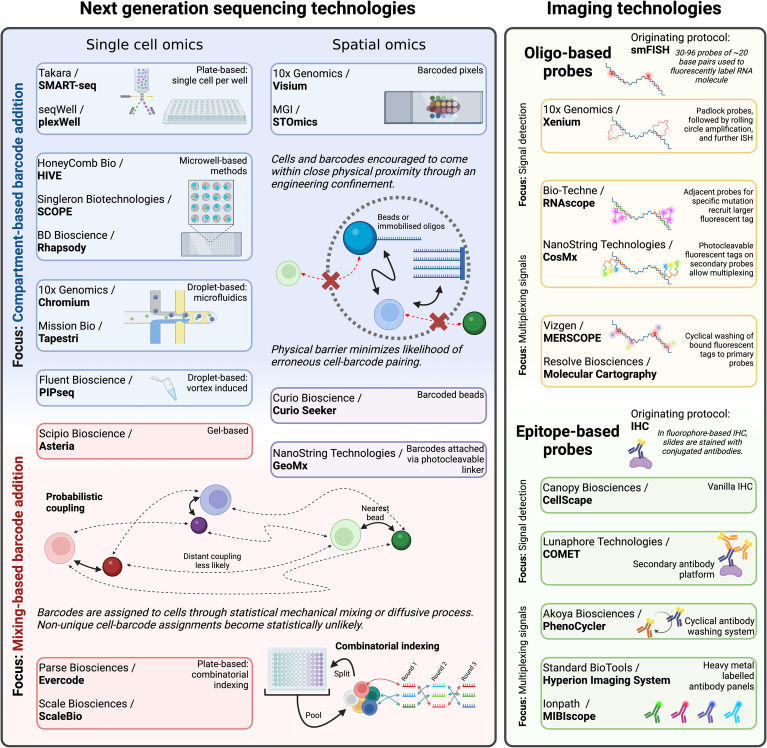
Our latest @scTrends_update article is now in @CellGenomics: https://t.co/HRaUAjqXbP
Paired with this is our end of year round up:
https://t.co/faq6ASYyCY
Get in touch if you want to be involved!
Chromatin architecture mapping by multiplex proximity tagging [Delamarre et al. 2024] https://t.co/4AhPJf9jR9
▶️Nucleosome maps in 3D with Proximity Copy Paste (PCP)
▶️Connectivity of nucleosomes in S. cerevisiae
▶️Chromatin is predominantly organized in regular nucleosome arrays
Thrilled to share our latest manuscript on smOOPs, a highly interconnected class of condensation-prone mRNAs with signs of coordinated regulation, encoding functionally related proteins. Shoutout to the incredible team @IraIosub, Jona & @KlobucarTajda. https://t.co/7m80OqIVTl
A bit of advertising for our review. Please take a look - we definitely spent a lot of time on this and dipped our toes well outside our comfort zone!
Orchestrated centers for the production of proteins or “translation factories” - WIREs RNA https://t.co/j5QnZKAltN
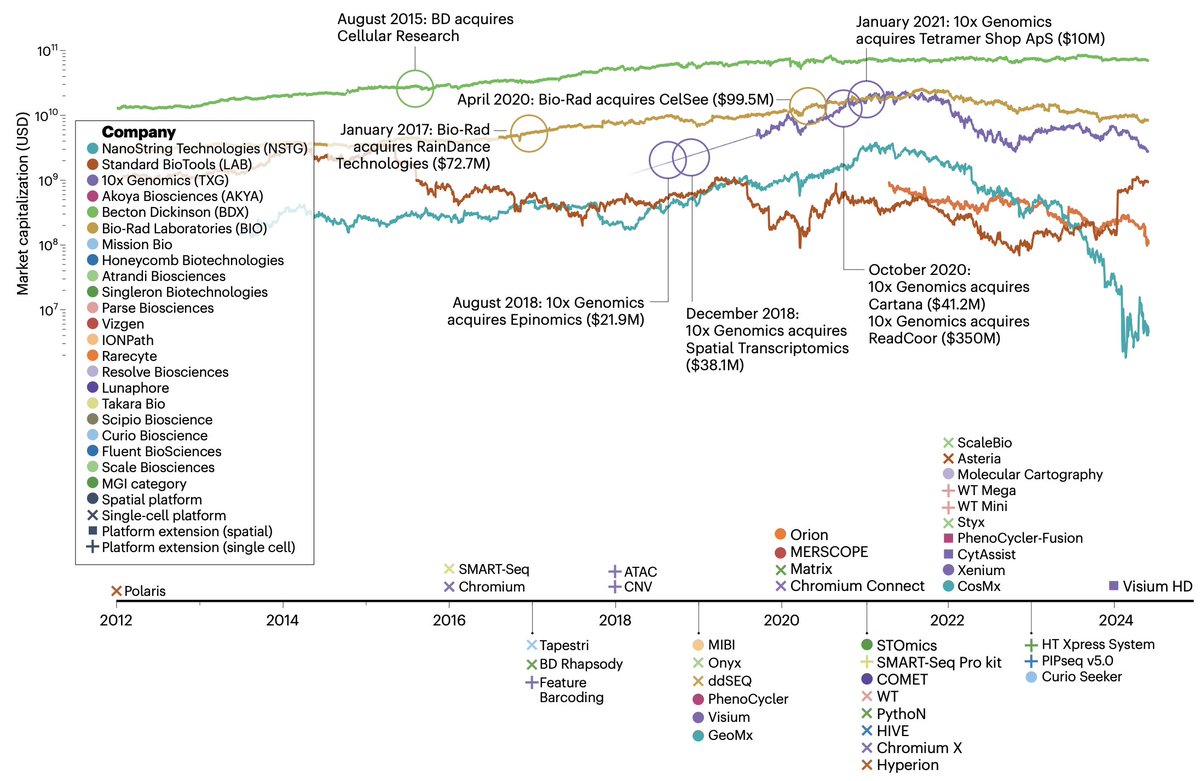
Today is the go live day for @scTrends_update! A consortium to both review *commercial* technologies, but also study market trends to assess angles for how technologies may differentiate themselves.
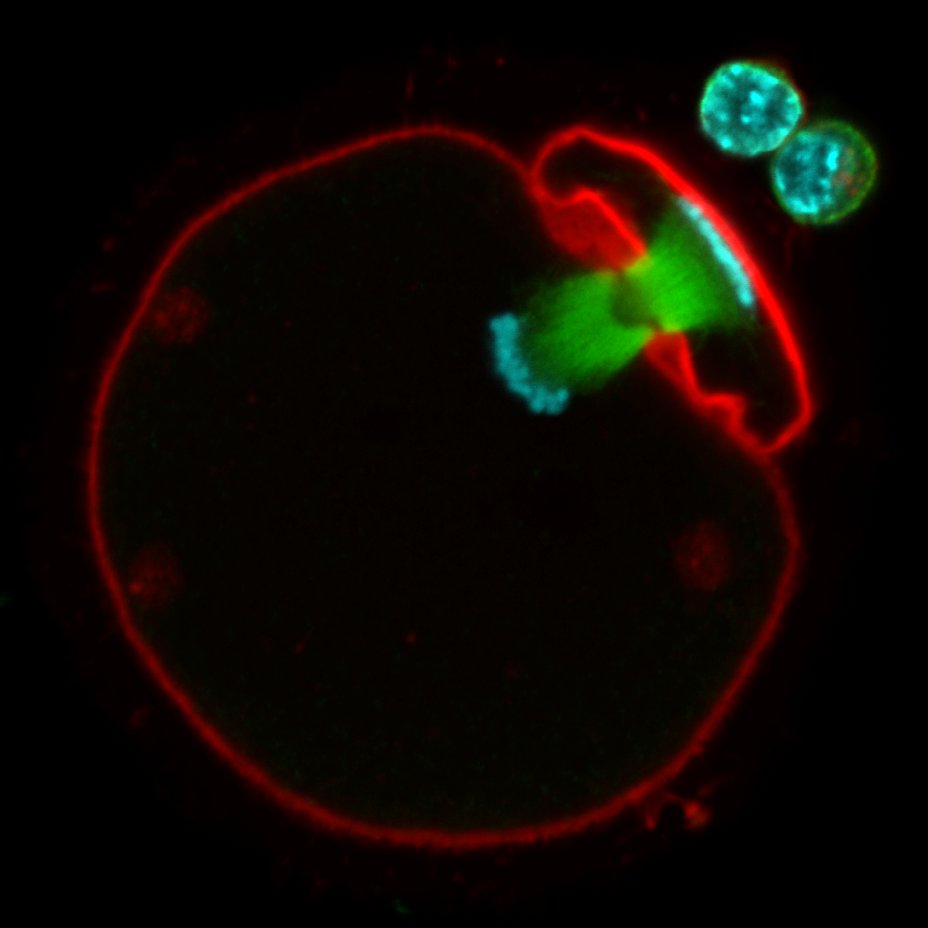
Women are born with all their oocytes, which need to stay viable for decades to ensure fertility. How are they maintained for that long?
Our latest research in @NatureCellBio reveals that oocyte maintenance involves exceptional protein longevity. https://t.co/ZiByc9F4hS (1/9)
What if we used sedimentation to look at RNAs instead of proteins? Behold: @ewjwallace created Sed-seq! And Sed-seq immediately revealed a bunch of surprises. First, whereas a small set of proteins (~15%) condense during stress, nearly all RNAs condense. 6/n
How do cells efficiently respond to stress? Transcriptional stress responses are well-known—and in our latest study, we discover that cells use biomolecular condensation to redirect translation from old to new mRNAs 1/n https://t.co/pc9v3TdFQU
Finally out!
We found that mRNAs are not uniformly distributed across the cytoplasm.
mRNA architecture is the strongest determinant for localization.
Subcytoplasmic location of translation controls protein output.
https://t.co/CJW80etwG7
Very sad news that Takao Kondo, a great scientist and pioneer of the Cyanobacterial clock system has passed away. RIP. @SRBR_Outreach 訃報 近藤孝男先生(本会名誉会員)がご逝去されました | 日本時間生物学会 https://t.co/9bVRW0w8lK



![generegulation's tweet photo. Chromatin architecture mapping by multiplex proximity tagging [Delamarre et al. 2024] https://t.co/4AhPJf9jR9
▶️Nucleosome maps in 3D with Proximity Copy Paste (PCP)
▶️Connectivity of nucleosomes in S. cerevisiae
▶️Chromatin is predominantly organized in regular nucleosome arrays https://t.co/H7wWAzxX8M](https://pbs.twimg.com/media/GchK9yDXUAA7fBR.png)



![generegulation's tweet photo. Chromatin architecture mapping by multiplex proximity tagging [Delamarre et al. 2024] https://t.co/4AhPJf9jR9
▶️Nucleosome maps in 3D with Proximity Copy Paste (PCP)
▶️Connectivity of nucleosomes in S. cerevisiae
▶️Chromatin is predominantly organized in regular nucleosome arrays https://t.co/H7wWAzxX8M](https://pbs.twimg.com/media/GchM9JpXIAAUemJ.png)