Finally published:
“Top-down and bottom-up neuroscience: overcoming the clash of research cultures”
https://t.co/oQU40t0vTX...
Looking for ways to better understand different neuroscientific perspectives and enable productive collaborations
@RubenLaukkonen@RCarhartHarris If EB is basically "v meaningful insight", it wouldn't be surprising if it's a stronger predictor. But insight has the benefit of being a long-studied construct, characterised at various (neural/theoretical/etc) levels of analysis, and relevant across different domains and scales
@RubenLaukkonen@RCarhartHarris Our focus on insight was top-down (ie theoretically motivated). We didn't systematically collect/compare EBI data. In our unpublished data (RCT of psilocybin for GAD), EBI and PIQ correlate strongly.
@SeanPGoldy Interesting study. Great work @SeanPGoldy and team. Would be great to understand what accounts for the facilitator effects. Also, are facilitators allocated basically randomly or is there any selection (e.g. matching more "complex" patients with more experienced facilitators)?
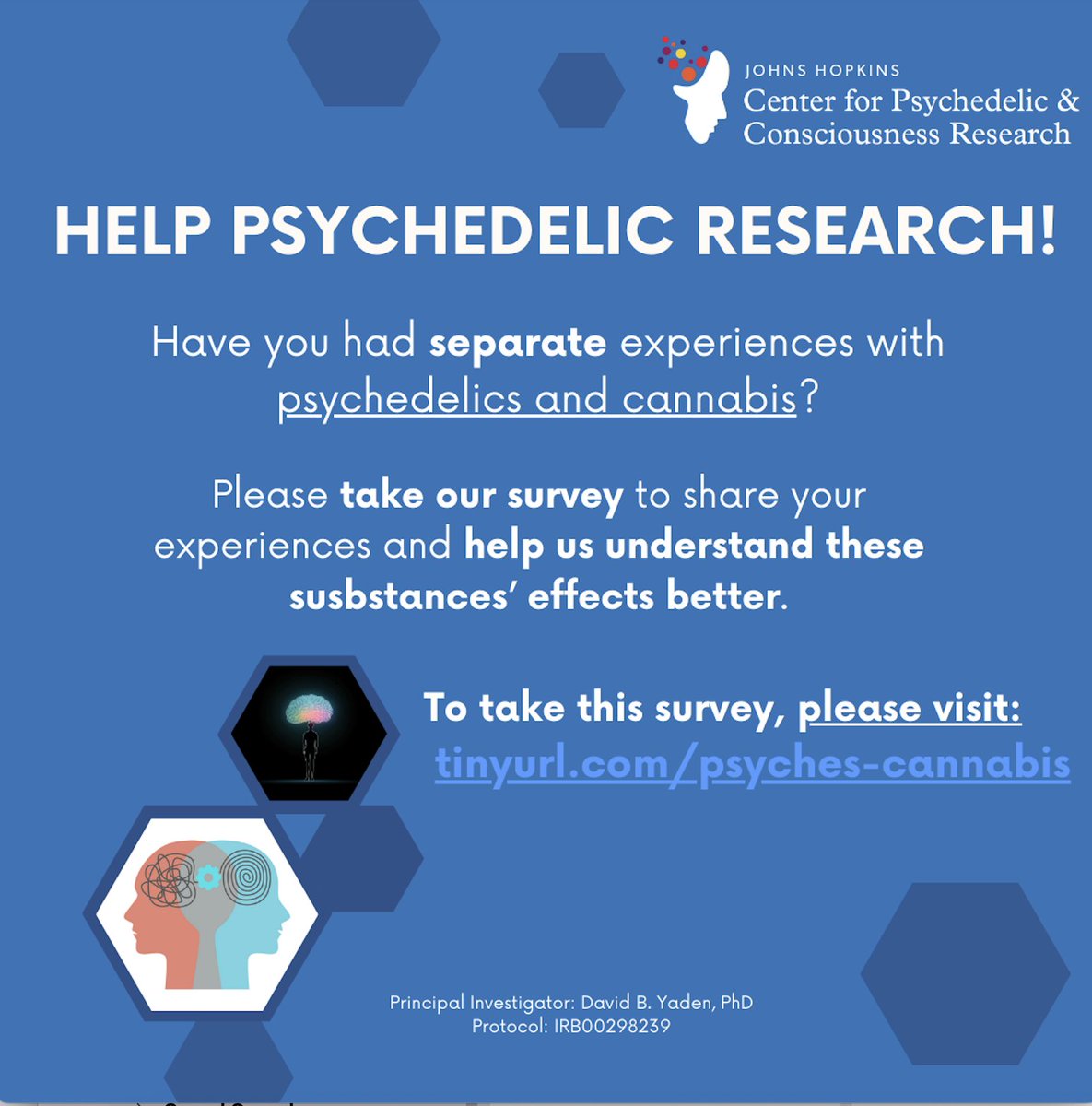
Have you had separate experiences with psychedelics and cannabis (i.e., a time when you experienced psychedelics and a separate time when you experienced cannabis)? If so, take our survey! Your responses help us understand these compounds better, so that we can continue to expand the science of psychedelics and knowledge about their risks and benefits. https://t.co/JZn0iCjGFd
Keen to read two new papers connecting insight and mystical experiences: "From flow to mystical experiences" by Beyköylü, Vervaeke & Meling, and "Realization experiences: a convergent account of insight and mystical experiences" by Kim, Tulver, Aru, Laukkonen & colleagues
Launching The Classic Books of Psychotherapy Project, which from early-2026, will facilitate small online discussion groups exploring classic works across psychotherapy traditions.
If this interests you, join so we can read, discuss, and learn together.
https://t.co/7P9qeumWix
Launching The Classic Books of Psychotherapy Project, which from early-2026, will facilitate small online discussion groups exploring classic works across psychotherapy traditions.
If this interests you, join so we can read, discuss, and learn together.
https://t.co/7P9qeumWix
Launching The Classic Books of Psychotherapy Project, which from early-2026, will facilitate small online discussion groups exploring classic works across psychotherapy traditions.
If this interests you, join so we can read, discuss, and learn together.
https://t.co/7P9qeumWix
@Katherine_Chg@TheYadenLab Great work! I’m curious whether, beyond frequency, the outlined risks fully capture the range and seriousness of potential adverse effects. I'd also love to see an analysis of how trial staff convey the content of ICDs.
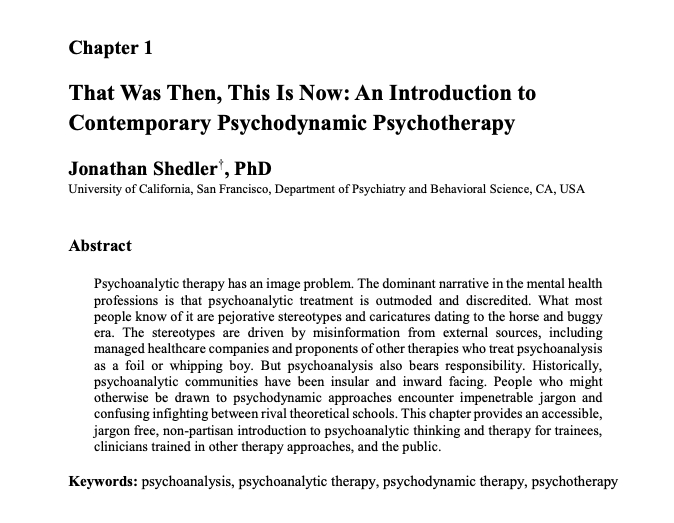
Impressed by this clear, succinct and accessible outline of core psychoanalytic ideas, aims and methods. The vivid case studies struck me - psychoanalysts seem to grasp our depth and complexity in ways that were often absent from the CBT-dominant environment I was trained in.
“Ultimately, there are basic truths of human psychology most people understand intuitively:
1️⃣ we do not fully know ourselves
2️⃣ the things we don't know can cause suffering
3️⃣ there is benefit in self-knowledge”
The truth about psychoanalytic therapy:
https://t.co/JN8JjSEj6P
we're looking for a clinical trials manager for two trials focused on compassion and MDMA for post-disaster PTSD, apply by 19th of may! live and work in one of the most beautiful regions on the planet:
https://t.co/yxcYtGDFyy
Participate in the Global Psychedelic Survey 2025 (GPS 2025), a large global study on psychedelic use.
Sponsored by Uni of Michigan, closes May 16!
Win 1 of 15 $100 Amazon gift cards.
Take part: https://t.co/W72hy38ENk
#GPS2025#PsychedelicResearch#GlobalSurvey
Of greatest clinical relevance, 86% of studies found insight was associated with therapeutic benefit. Notably, the relationship was often stronger than mystical-type experiences, which have received more research attention.