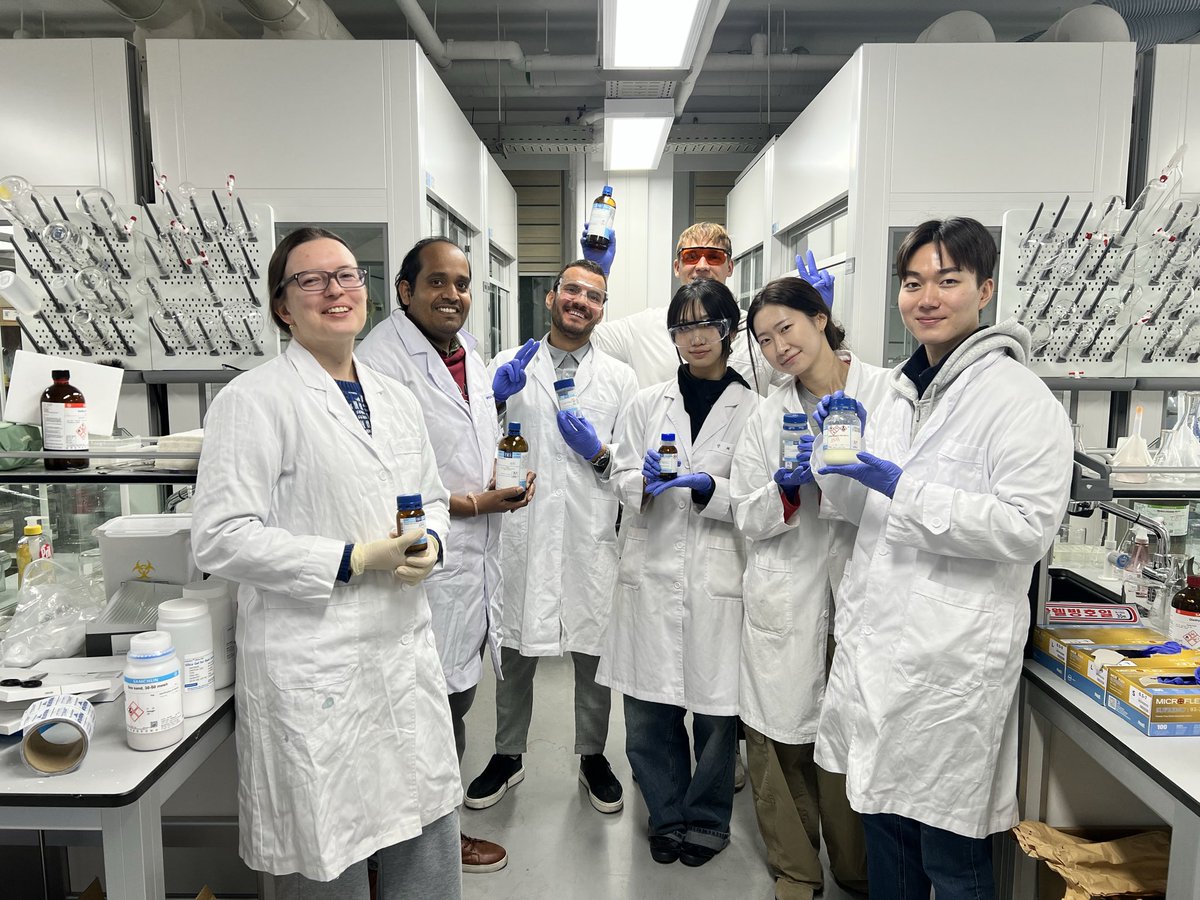
A great moment with our research team at Seoul National University!!
Proud to be part of Prof. @junseoklee’s research group, where collaboration, scientific curiosity and shared dedication drive us forward
Looking forward to more discoveries together!
@kostia_kozoriz
Very interesting multi-BODIPY macro-cyclic molecule. I have dreamed about similar structures but never dare to jump in. :-) Thank you for such a elegant work. @WerzLab
“Codex, please design some small molecules to fight malaria.”
In this tool calling demo, Codex with GPT-6 Astra used LDDM to generate candidate molecules which might bind Plasmodium falciparum's dihydroorotate dehydrogenase, an enzyme the malaria parasite needs to make pyrimidines. Disrupting this enzyme can stop the parasite from replicating.
Codex used LDDM in two ways:
1) de novo molecule generation
2) extending a fixed fragment of the existing dehydrogenase inhibitor, DSM265
DSM265 was reported by Coteron et al in 2011. This demo uses its experimentally determined binding pocket in PDB 4RX0. The attached vid shows the LDDM generation steps.
The LDDM generated candidates had no exact matches in Astra's PubChem and ChEMBL searches, and the de novo molecule had no >85% similar hits.
Codex used retrosynthesis tools (AiZynthFinder, Syntheseus, and SynPlanner) to search for routes to make these, but no complete routes were found during the demo.
Codex used RDKit and PoseBusters to check geometry and protein/cofactor clashes (no severe clashes). Codex also used AutoDock Vina to score fit in the pocket and these computational candidates scored similarly to DSM265.
2026 Mooju·Ssen Distinguished Scholars Symposium
Join us at SNU on Sept. 23, featuring 2021 Nobel Laureate David MacMillan, Tehshik P. Yoon, W.-J. Xiao, M. Inoue, W. J. Song, S. Y. Hong, H. G. Lee, and K. T. Kim!
Can AI take proteomics to a virtual cell? Our new perspective maps the path — from better peptide/protein ID to spatial & perturbation proteomics to AI Virtual Cells — and calls for an AI-friendly data ecosystem to get there. @guomics and Zhang lab.
https://t.co/KRXg4kPy44
Drug candidates that form covalent bonds with their targets were historically avoided because of toxicity concerns. However, covalent drugs with controlled reactivity are now recognized as promising agents that combine manageable safety with substantial advantages, including enhanced potency, prolonged target residence times, and access to challenging targets.
This shift is reflected in recent covalent drug approvals, particularly those targeting protein-phosphorylating enzymes (kinases) and cancer drivers such as the oncogenic protein KRAS. A central feature of these drugs is a “warhead” reacting with an amino acid residue in the target protein to form a covalent bond. Yet the repertoire of drug-like, chemically accessible reactive moieties remains limited.
In a new Science study, researchers report streamlined access to an underexplored warhead type with well-tempered reactivity that can be appended to complex scaffolds late in synthesis, enabling practical use in drug discovery.
Learn more in a new #SciencePerspective: https://t.co/zvnUNfkBNP
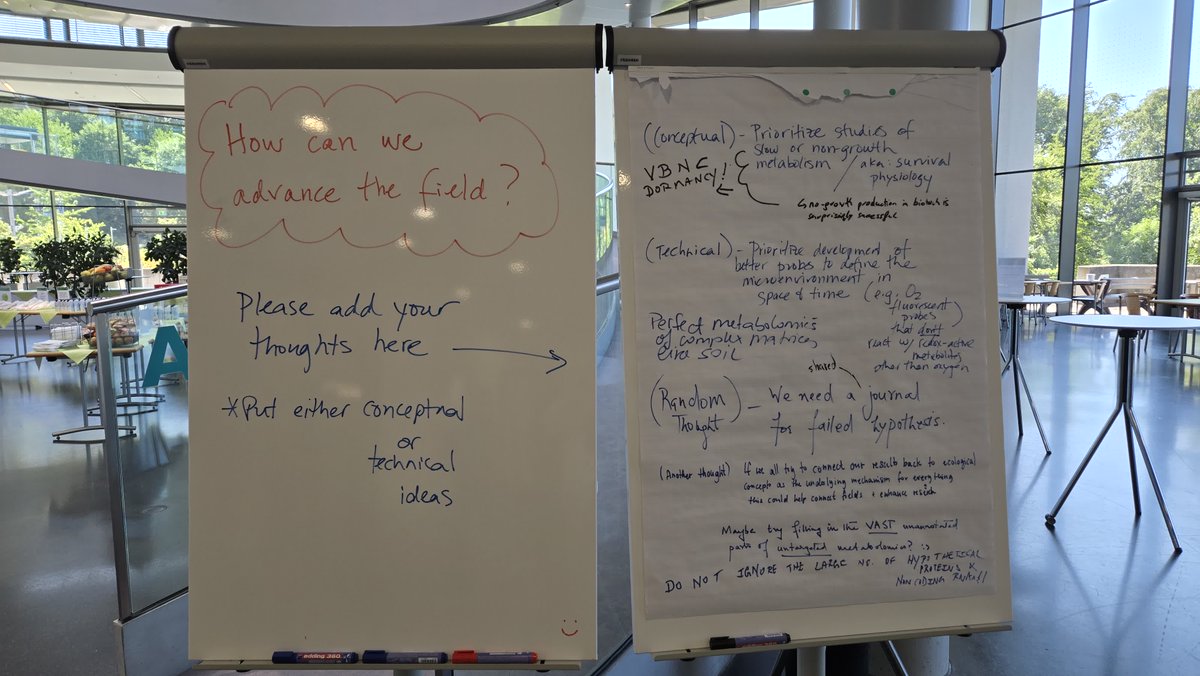
That's a wrap on #EESMetabolicEco! 🙌
A huge thank you to all of our amazing participants, speakers, and organisers for an inspiring 4 days of discussions on the metabolic interactions that shape ecosystems across every scale. From exchanging ideas to building new collaborations, your contributions made this meeting a fantastic forum for sharing ideas across disciplines.
Scientific organisers:
Kathrin Fenner, Eawag, Swiss Federal Institute of Aquatic Science and Technology, Switzerland
Dianne Newman, California Institute of Technology, USA
Mohammad R. Seyedsayamdost, Princeton University, USA
Michael Zimmermann, EMBL Heidelberg, Germany
Conference organiser:
Inna Bösselmann, EMBL Heidelberg, Germany
Excited to share our latest work
We introduce a reversible photo-crosslinking strategy that enables spatiotemporal control of protein conjugation while overcoming the irreversible limitation of conventional photocrosslinkers.
https://t.co/JZ7ibKEqUu
#JACS
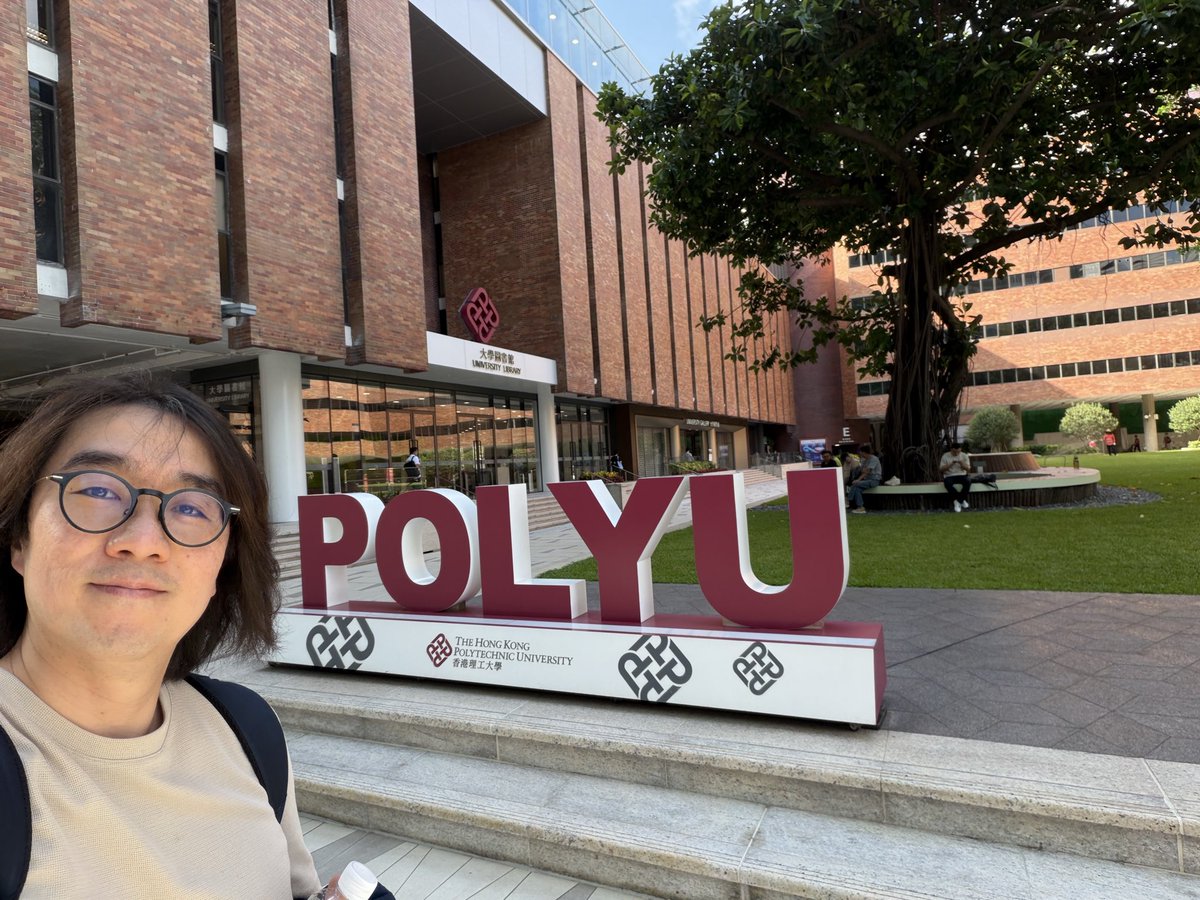
Chemical & Biomedical Imaging (CBMI-II) conference just started at the Hong Kong polytechnic university. Beautiful campus at the center of HK, full of inspiring speakers!