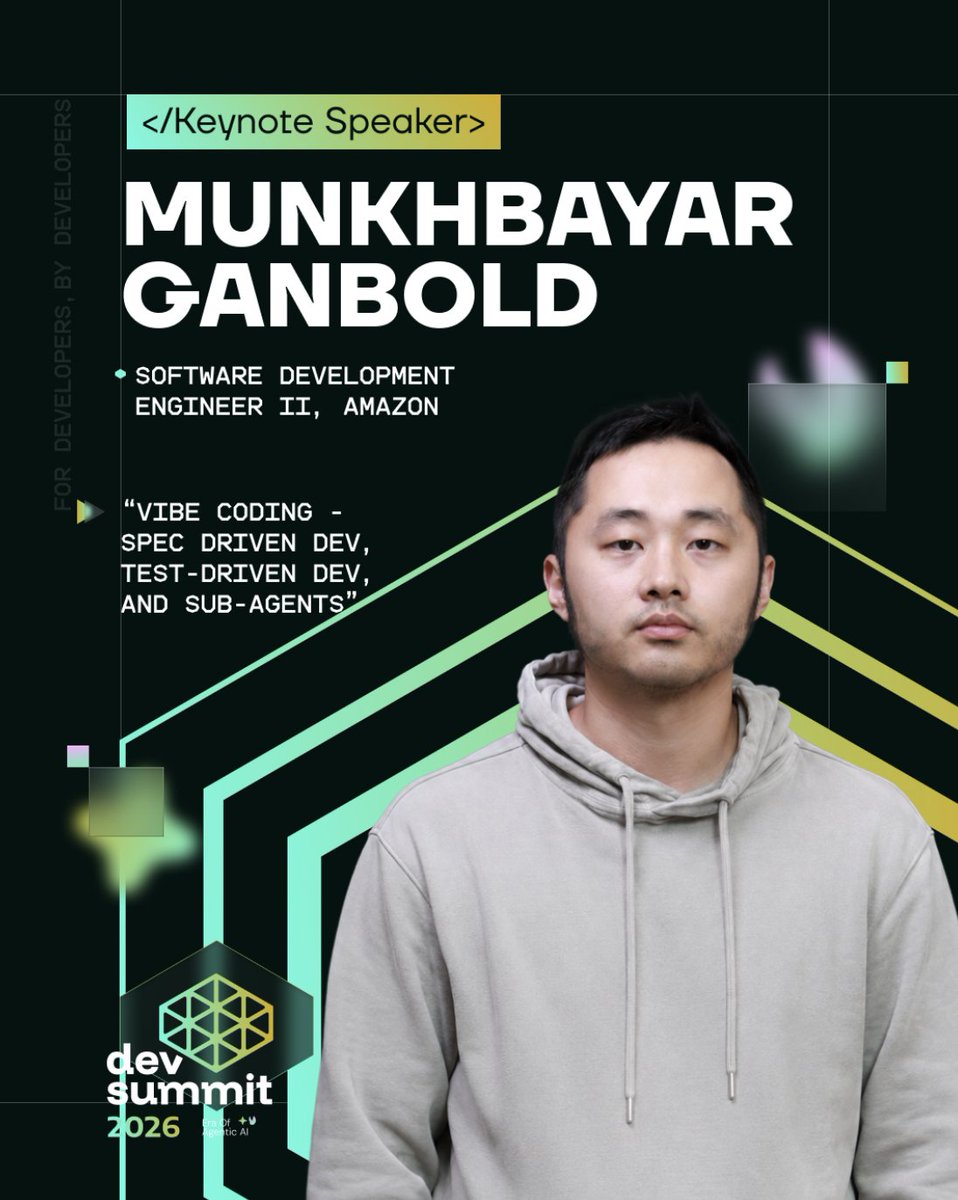
서울에서도 할 수 있는 이야기를 굳이 광주까지 내려가서 나눈 이유가 있습니다.
광주는 AI 반도체를 중심으로 NPU부터 AI 모델, 서비스까지 연결되는 K-AI 풀스택 생태계의 핵심 거점입니다.
중요한 것은 기술 개발을 넘어 실제 산업 현장에서 성과를 만드는 것입니다.
https://t.co/BXhEsEp4Kl
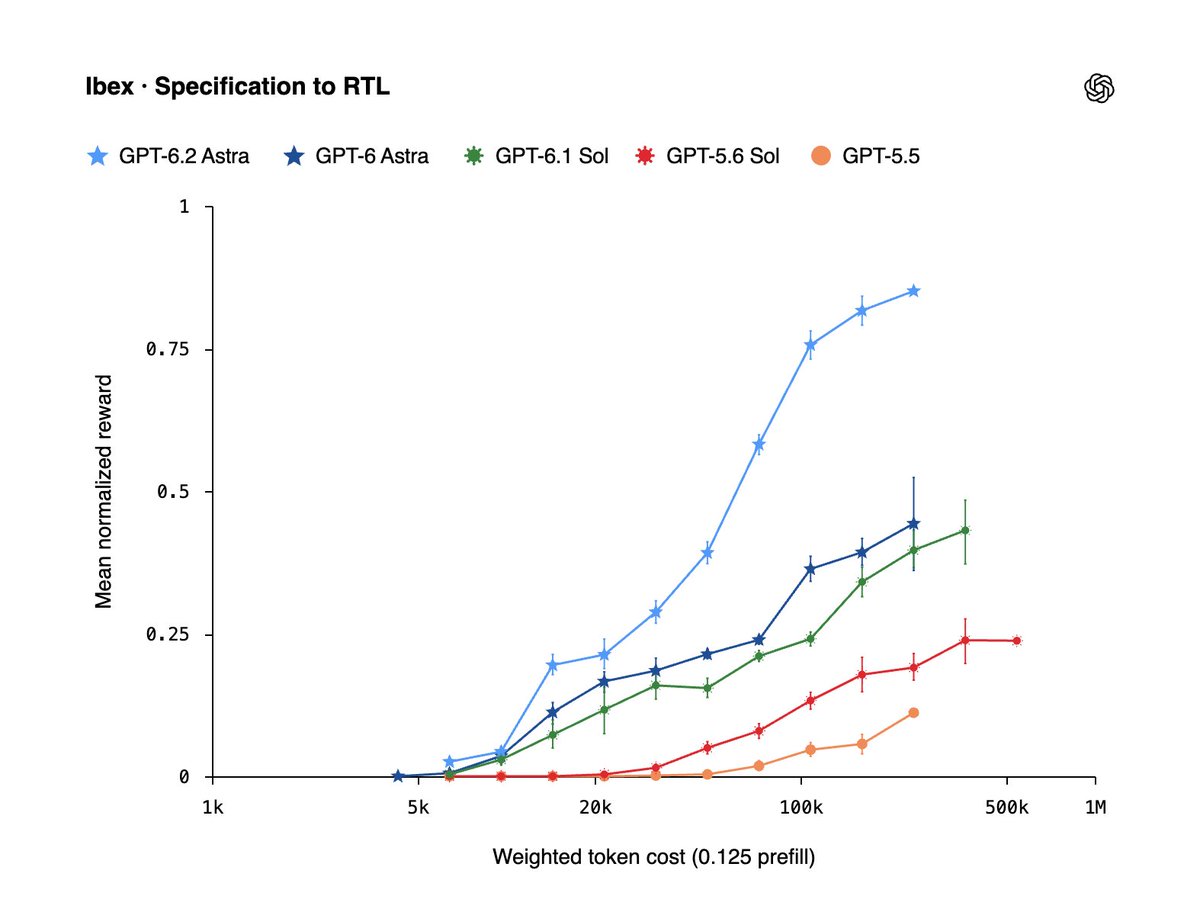
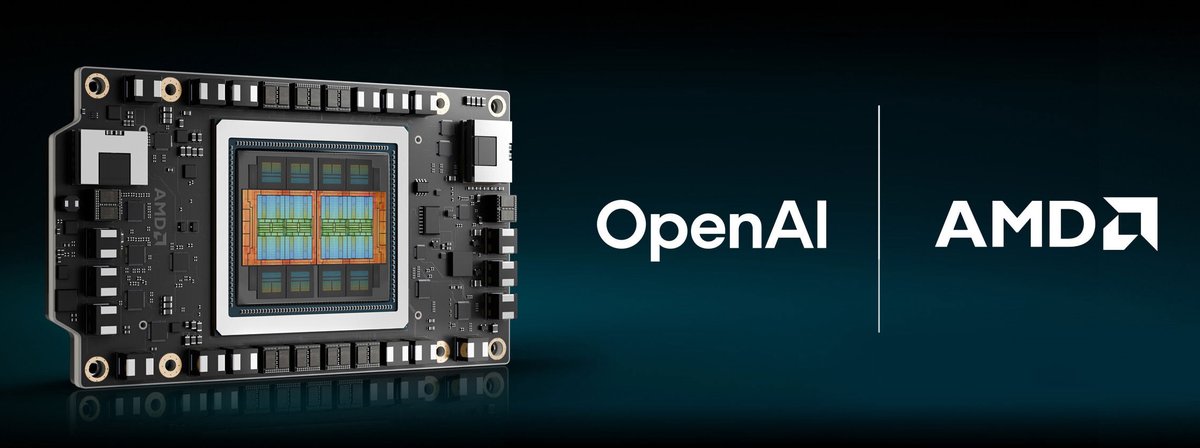
Working with @AMD, our models identified up to 14% PPA improvement on flagship GPU IP in less than five months—building on designs AMD’s engineers had already spent years optimizing.
The same approach helped improve Jalapeño, our first custom inference chip, with gains verified on real silicon.
New evaluations also show our models getting better at certain chip design tasks.
We’re sharing these results and how we’re working with @Synopsys to bring our model capabilities and their trusted EDA design and validation tools to more chip designers.
https://t.co/4BNcPIqfIQ
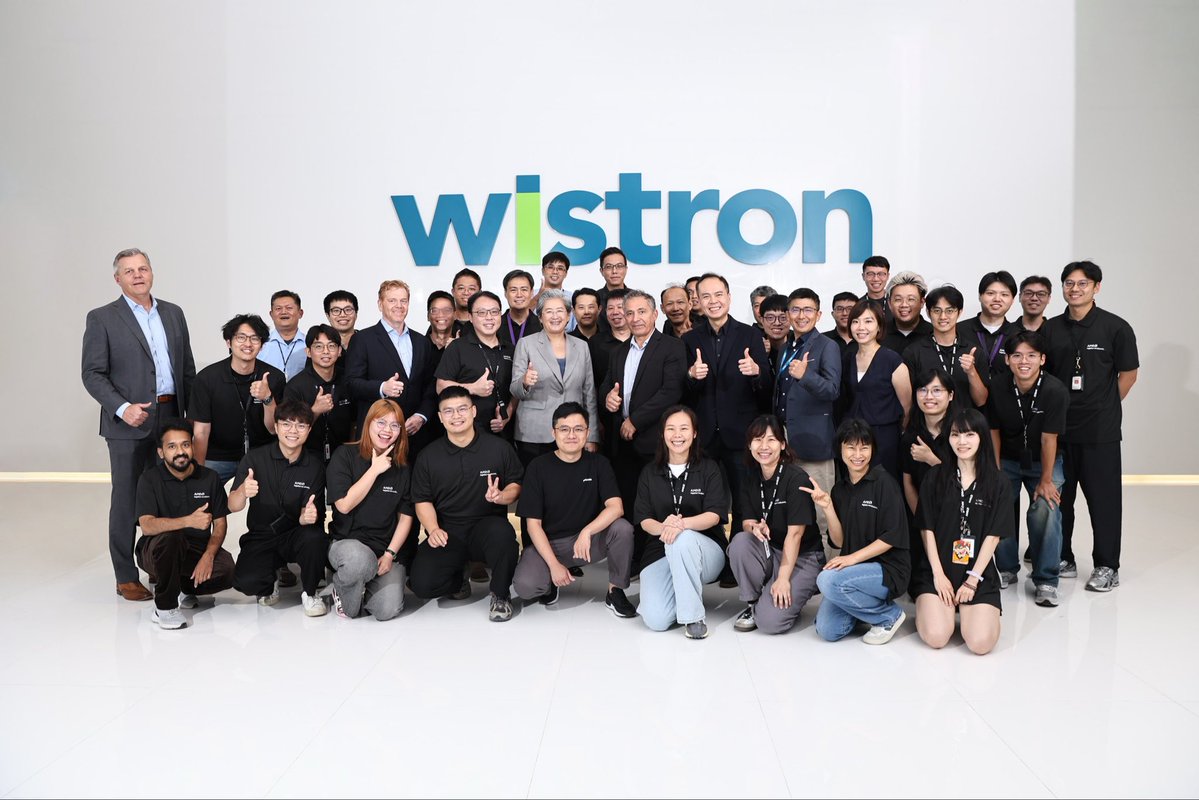
Always wonderful to be back in Taiwan spending time with our customers and partners this week. Thank you for the warm welcome and the tremendous partnership!
$AMD OpenAI VP/Head of Hardware Richard Ho said in an interview that OpenAI is deploying Jalapeño with AMD EPYC Turin hosts, each with 1.5 TB of DRAM. Ho called the choice “pragmatic” and cited Turin’s maturity versus Nvidia Vera.
This news alone should add $300B+ to AMD's market cap. As custom AI silicon proliferates, the CPU controlling memory, networking and orchestration remains valuable asset. AMD now can monetize the shift away from GPUs into this CPU super cycle.
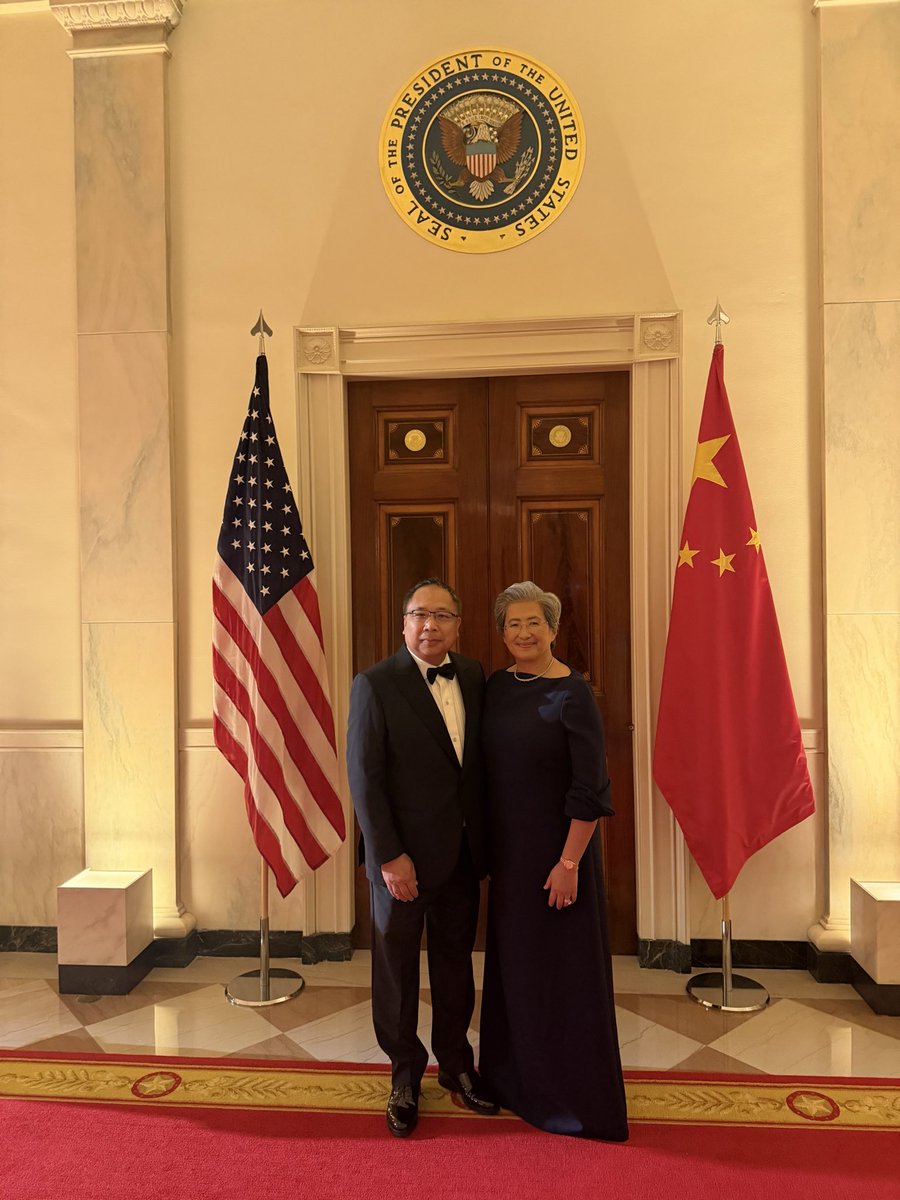
Thank you @POTUS and @FLOTUS for a truly remarkable evening at the White House State Dinner welcoming President Xi and Madame Peng. Honored to be part of such a special occasion.
This is the most powerful workstation in the world.
Designed and engineered for a completely new era of computing.
A machine capable of running AI models with more than a trillion parameters right on your desk.
We call it the Threadripper Halo Station.
• 96 cores of Threadripper PRO
• 2 MI350P Instinct accelerators with a path to 4
• Up to 2 TB of system memory
• Up to 576 GB of HBM3e
• Liquid cooled so all that power stays super quiet
This is about as close as you can get to a personal supercomputer.
¿Cómo puede la #IA transformar a México? 🤖🇲🇽
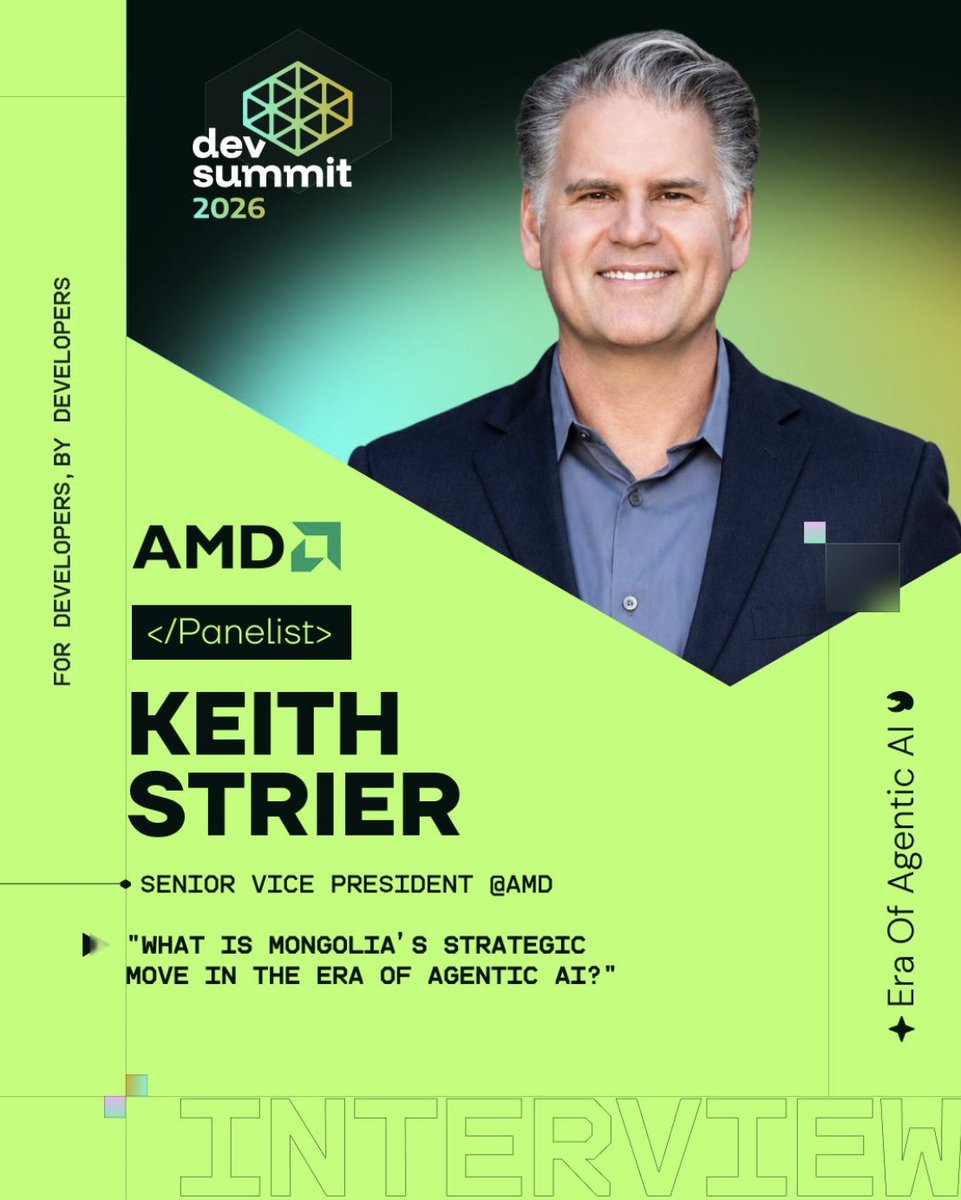
@kbsdigital, vicepresidente senior de Mercados Globales de Inteligencia Artificial de @AMD, comparte su visión sobre el papel de la IA, el desarrollo del talento y las oportunidades que se abren para el futuro de nuestro país.
@AskWithings i am clearly one of many asking same question, cant complete installation, pairs and then fails to download update, all suggested approaches - try again, factory reset - fail. Just checking other options before I disappointedly return this product to you
"Each generation has seized its opportunity to expand the frontiers of knowledge & lay down the paving stones of progress. Now it is our time to build the scientific enterprise that will carry America forward and bring prosperity to Americans through the 21st century & beyond" 🇺🇸
Great spending time with Rick Mershad, CEO of @microcenter, to talk about an exciting milestone for builders.
Ryzen AI Halo systems are now shipping from Micro Center.
💪 @AMD is the #1 desktop CPU at Micro Center with Ryzen X3D.
🎮 Radeon powers approximately 1 in every 3 desktop gaming GPUs sold at Micro Center.
Now we are extending that same momentum into a new era.
Ryzen AI Halo gives AI developers and builders the ability to run larger models locally, iterate faster, and unlock powerful new AI experiences while keeping more of their work on device for greater privacy and security, without cloud limits.
The Agentic PC is here 🚀
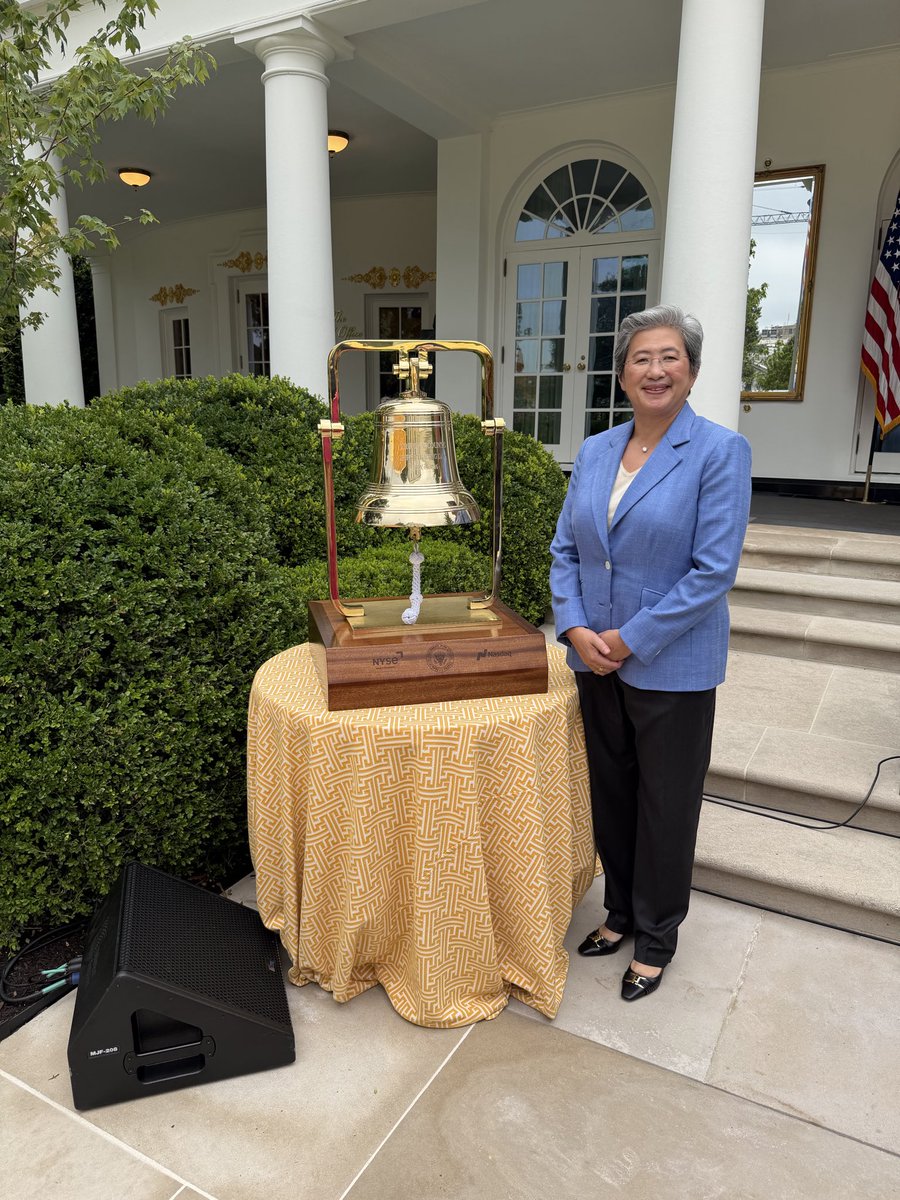
Honored to join @POTUS, @InvestAmerica24 and leaders from across industry and government at the White House today. As America celebrates 250 years, @AMD is proud to support @TrumpAccounts and help build a stronger foundation for our employees' families and the next generation of American innovators.
$AMD & Oriole Networks work to beat $NVDA GPU🚀
The Oriole Networks and AMD £50 million (~$68M) UK ARIA Scaling Inference Lab delivers significant strategic benefits to AMD by deploying its Instinct GPUs and EPYC CPUs in the world’s first large-scale pure photonic AI network. This high-profile project showcases AMD hardware in a revolutionary networking environment that dramatically improves performance, achieving an 81% reduction in network power consumption, slashing GPU idle time from ~60% to under 1%, and delivering up to 10x higher inference throughput and interactivity.
By solving critical communication bottlenecks that plague traditional GPU clusters, AMD’s accelerators appear far more powerful and efficient, strengthening its competitive position against NVIDIA’s dominant networking solutions. The partnership provides real-world validation for AMD in next-generation, xPU-agnostic photonic fabrics, lowers total cost of ownership for customers through major energy and cooling savings, and creates a compelling sales pipeline as Oriole scales deployments in 2027. Overall, AMD gains market credibility as an innovator in sustainable, high-performance AI infrastructure, boosts demand for its chips in frontier-scale inference, and positions itself at the forefront of energy-efficient computing.
Source : https://t.co/slqwwAmwuM
BREAKING $AMD Agentic AI Rack At SCALE is out! 🚀
AKA CPUs Dense Rack for Fleets of Agents!🆕🆕🆕
I been talking about this for years & it is HAPPENING
Not Financial Advice! DYOR!
Today, @AMD published a detailed technical blog emphasizing that the future of agentic AI autonomous, multi-step AI systems requiring heavy orchestration, databases, caching, APIs, and control planes demands massive CPU-dense rack-scale infrastructure, not just GPUs. The catalyst prominently positions their upcoming 6th Gen EPYC "Venice" processors as the key enabler for next-generation dense racks, delivering leadership throughput under real-world power, cooling, and density constraints.
AMD's EPYC-powered "dense rack" (primarily the Helios platform with Venice CPUs) is on track for volume availability and deployments in the second half of 2026 (H2 2026).
Timeline:
Venice production ramp May 2026
Helios Previews/showcases Jan-June 2026
Customers testing Q2-Q3
Vol deployments From H2 2026
Accelerated Ramp Q4 2026 and onward
UBS Note is completely false and misleading!
Key highlights:
~EPYC Venice (Zen 6 architecture, up to 256 cores / 512 threads per socket) is projected to deliver exceptional rack-level performance. In AMD’s modeled 100 kW rack comparisons, Venice-powered systems are expected to achieve ~3.30x the throughput of NVIDIA’s Vera (88-core Olympus) baseline across a broad mix of agentic-supporting workloads.
~This builds on current-generation 5th Gen EPYC "Turin" (up to 192 cores), which already delivers ~2.37x rack throughput vs. Vera and ~1.6x vs. Intel’s Xeon 6980P (128 cores).
~ Liquid-cooled Turin deployments already support >27,000 CPU cores per rack today. Venice is architected to push this beyond 36,000 cores in the same rack class, dramatically increasing concurrent agent capacity and overall infrastructure efficiency.
1. The Helios AI Rack Platform
Venice CPUs are a cornerstone of AMD’s Helios reference design, the company’s flagship open, standards-based rack-scale AI platform. Helios integrates:
~EPYC Venice CPUs for orchestration and CPU-bound services.
~Instinct MI400-series GPUs ( MI455X) for AI acceleration.
~Pensando Vulcano AI networking for high-bandwidth, low-latency scale-out.
Each compute node in Helios typically pairs one Venice CPU with four MI455X GPUs, enabling full liquid cooling and extreme density. The platform is on track for multi-gigawatt deployments in the second half of 2026, targeting hyperscalers and large enterprises running production agentic AI
2. Key Performance Advantages for Agentic AI
AMD’s analysis normalizes everything to 100 kW racks using dual-processor (2P) servers, focusing on real deployable capacity rather than isolated chip benchmarks. Workloads modeled include:
~SPEC CPU 2017 Integer Rate
~Server-side Java
~NGINX web serving
~Redis / Memcached
~MySQL OLTP (TPROC-C
Venice is also projected to maintain strong single-threaded/per-core performance (critical for latency-sensitive database and orchestration tasks), with up to +27% per-core advantage vs. competitors at comparable configurations. Additional benefits include up to 1.6 TB/s memory bandwidth per socket and advanced I/O.
Conclusion:
AMD stresses deployability today on standard x86 platforms (no proprietary architectures required), full software compatibility, and open standards. This positions Venice + Helios as a practical, high-density alternative to competing solutions while underscoring that agentic AI shifts the balance toward CPU-rich racks alongside GPUs.
In her recent public remarks and earnings commentary, AMD Chair and CEO Dr. Lisa Su has been clear and bullish: the rapid rise of inference-heavy, agentic AI workloads represents a major inflection point, one that is poised to trigger a steep J-curve acceleration in demand for high-performance CPUs and balanced CPU+GPU infrastructure.
“We always believed that inference would actually be the driver of AI going forward, and we can now see that inference inflection point,” Su stated. She emphasized that as AI adoption scales from simple chatbots to autonomous agentic systems, which continuously orchestrate tasks, access data, reason over long horizons, and operate in real time the compute requirements shift dramatically. These workloads demand far more CPU resources for orchestration, data movement, caching, databases, and head-node control planes alongside GPU acceleration.
This shift is already reshaping the economics of AI infrastructure. The current CPU TAM forecast to more than $500 billion by 2030 where analysts are expecting AMD to be biggest winner. Dr. Su noted that customer demand across cloud and enterprise is running “stronger than expected,” with agentic AI and large-scale inference driving both larger GPU clusters and significantly higher CPU density per rack.
The result is a classic J-curve for AMD: modest but visible gains today from 5th Gen EPYC Turin dense racks, followed by a sharp upward trajectory as 6th Gen EPYC Venice and the Helios rack-scale platform (Venice CPUs + MI400-series GPUs) ramp in the second half of 2026. With Venice enabling >36,000 CPU cores per liquid-cooled rack and Helios delivering rack-level performance leadership, AMD is positioning itself at the center of the next phase of AI buildout, one where balanced, CPU-rich, open-standards infrastructure becomes the dominant architecture.
Dr. Su’s message is confident: the industry is still in the “early innings” of unlocking AI’s full potential, with global compute needing to grow ~100x in the coming years to reach yottascale. For AMD, the combination of leadership in EPYC server CPUs, a strong Instinct GPU roadmap, and open rack-scale solutions like Helios places the company squarely on the steep part of the J-curve.
Not Financial Advice! DYOR!
AMD Blog Source: https://t.co/E0C28fBRkl
We've made a breakthrough in self-evolving AI scientists moving from "search" to "principled discovery": Scientific discovery requires that the search space itself changes, and an AI scientist must perceive this shift without intervention. We built an AI that achieves this for the first time with the ability to discover the scientific vocabulary it reasons in. Evidence, tools, artifacts, verifiers, failures & claims become typed provenance. We show three distinct modalities: 1) retrieval, adding known objects; 2) search, exploring a fixed schema; and critically: 3) discovery, a verified regime transition.
We solve the open-endedness evaluation problem by lifting agentic workflows into a typed copresheaf and proving, via a Kan obstruction, that true discovery is not unbounded generation but a verifiable schema expansion: old evidence is transported by Left Kan extension, and genuine novelty is mathematically quantified by the pointwise residual beyond the transported image - separating discovery from mere search and making novelty objective and measurable rather than a subjective judgment or benchmark delta.
Our AI scientist is built in a way that does not pre-conceive the approach it chooses; instead, we endow the system with formal power to adapt, evolve, and reason from first principles. Case studies include:
1⃣Builder/Breaker model that discovers mode-conditioned compliance in proteins;
2⃣CategoryScienceClaw that finds anisotropic fiber-network stiffness rules.
Great work in collaboration with my graduate student @fwang108_@MITdeptofBE
F.Y. Wang & M.J. Buehler, Self-Revising Discovery Systems for Science: A Categorical Framework for Agentic Artificial Intelligence, arXiv:2606.01444, 2026