One way you can recognize AI slop is when the ideas and the diction don't match — when the ideas are completely ordinary, but the diction is that of someone announcing a brilliant discovery that they're really excited about.
This is free advice from an expensive psychologist. If you’re an anxious person, do everything for fun. Go to a job interview for fun. Submit documents for fun. Start a blog for fun. Anxiety feeds on importance. Don’t make everything a matter of life and death.
i spoke to a founder yesterday - their CTO finally read their agent-made codebase after months and panicked when he realized it was impossible to understand wtf was going on
my rule of thumb is: if your codebase starts written by agents, don’t try to understand it
instead, align at the architectural level before any building happens, and ask the agent to maintain a living architecture diagram of how the system works
there are three altitudes that matter:
- Top-level: architecture
- Mid-level: patterns & abstractions
- Low-level: file-level code
in today’s world, a CTO should be deeply concerned with #1. #2 matters too, but not as critical as #1.
if #1 and #2 are dialed in, #3 is where most of the high leverage agentic gains live.
as long as you understand the architecture and critical interfaces, it becomes much easier to reason about ground truth and meaningfully iterate
understanding and informing the architecture / patterns / abstractions give your codebase maximum longevity and agent maintainability
What gets missed with AI productivity gains is that by and large, most roles will continue to be as sophisticated as the tools allow.
This is why also thinking through “today’s jobs will be replaced with AI” is a fallacy. Everyone thinks the market is static, but it’s not.
As a result of everyone having access to the same technology which augments our work, then users of the tools will increasingly raise their level of output to the point where the prior definition of the job is no longer relevant. Thus, those that understand their particular field and grow in their skills will continue to be differentiated vs. others.
If you can do far more, then you start to tackle bigger and harder problems. If you do that, then the expertise still is required to get the job done fully.
The engineer with AI is going to be far more productive and capable with AI than the non-engineer trying to build the same piece of software. Building a lightweight app is no longer the definition of getting by in software development. Reviewing a contract will no longer be the definition of a paralegal. Splicing a video won’t be the definition of a video editor. Providing basic financial research won’t be the job of the financial analyst in the future.
Simply put, AI will naturally cause most roles to actually grow in complexity rather than reduce in complexity, because we can do far more with the tools.
One of the highest ROI activities you can do in your life is to deeply internalize that building good habits is a short term investment that compounds to lifelong gains.
Any new good habit requires overcoming initial friction, but techniques like habit stacking and starting small help.
The trick is to realise that after a while, habit becomes effortless. So it’s just that initial dip you have to overcome. After that, all what you’re trying to do becomes automatic (that’s why it’s called a habit).
So if you’ve been sitting on reading, programming, exercising, dieting or anything else, know that mastering the meta-skill of habit building will probably change your life forever.
@buccocapital Problem we are facing is with adoption and alignment. Now everyone is shipping and this has unleashed an internal race to get buy in and consistently market your tools
dude computers are actually so fucking insane when you really think about it. we literally figured out how to write some fake-ass rules called code and somehow convinced rocks to follow them. like actual rocks. sand, melted, purified, carved into tiny pathways where electricity just flows in patterns. that’s it. that’s the whole magic.
and yet from that we get operating systems, compilers, kernels, networks, distributed systems, machine learning models, entire virtual worlds running inside other virtual worlds. billions of tiny electrical decisions per second, all because we defined some abstract logic.
humans basically invented a language of instructions and taught matter itself to execute it.
The secret to becoming who you want to be is just pretending you already are.
As a neuroscientist, it's action that rewires the brain. not the other way around
Computer science is gradually returning to the domain of physicists, mathematicians, and electrical engineers as large language models automate much of what we currently call software engineering.
The field’s center of gravity is shifting away from manual code writing and toward deeper theoretical thinking, mathematical insight, and systems-level reasoning.
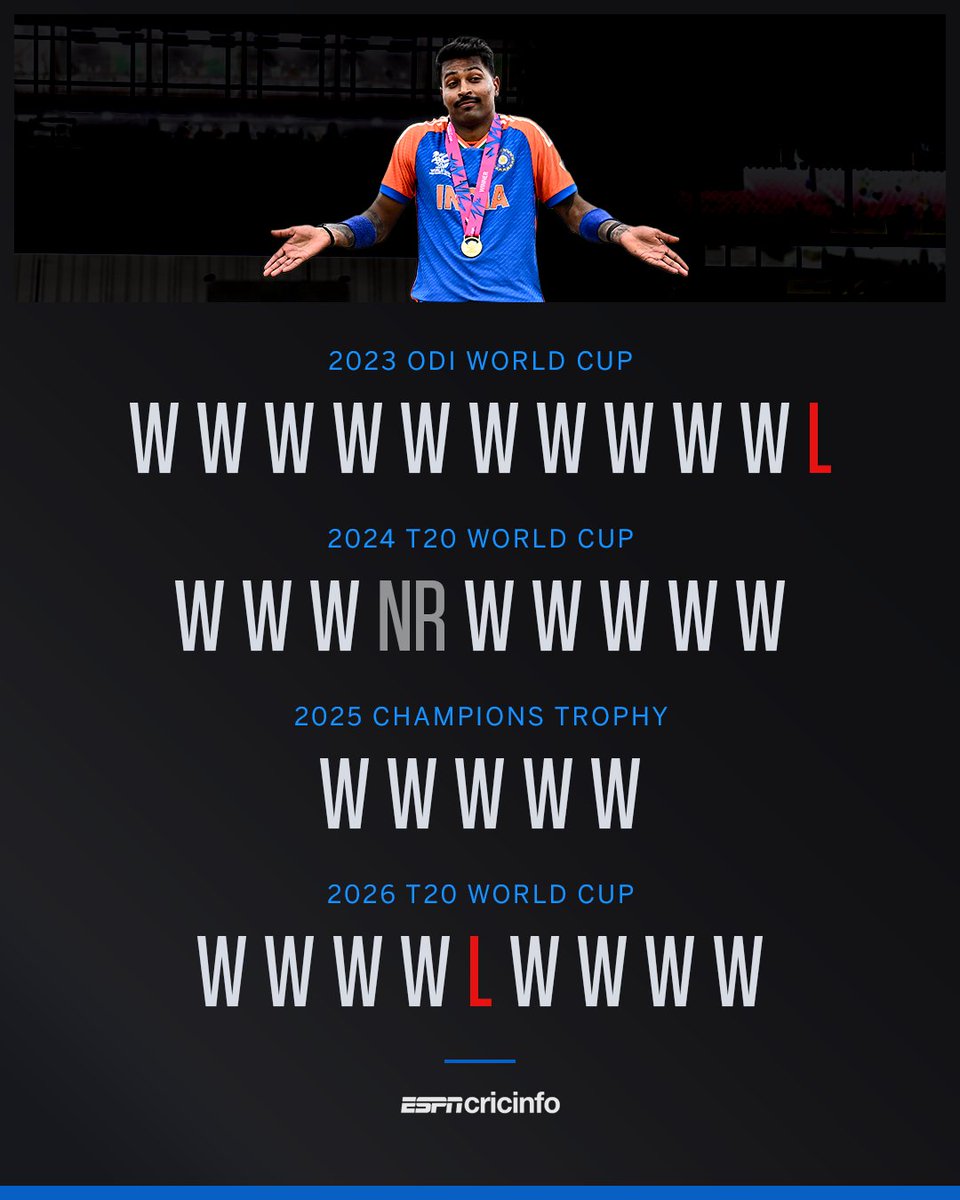
Cricket is a crazy game man. Sanju has been playing this game for more than a decade and was labelled a failure, and it only took him a week to completely flip his entire legacy and win the streets.